Münster
Münster's Top Attractions: The 10 Finest Highlights
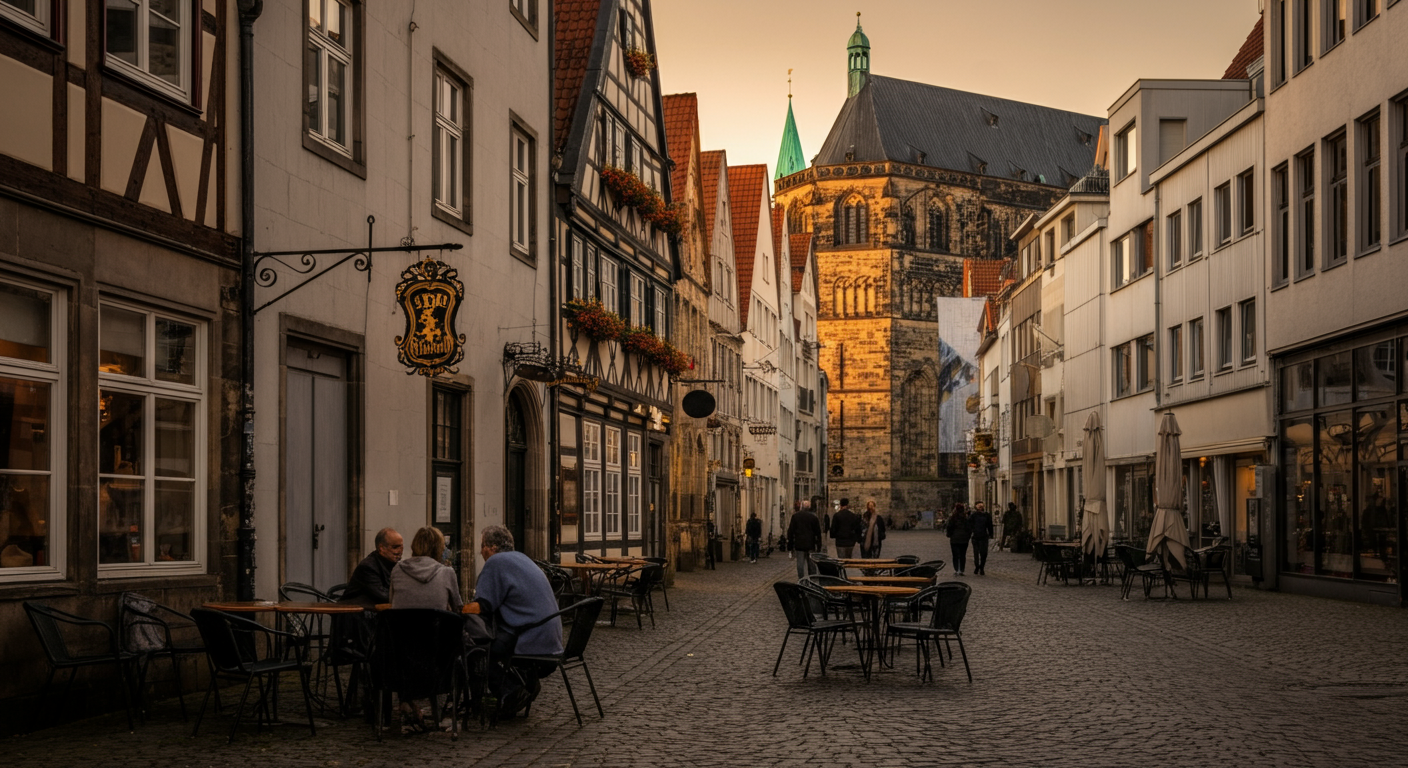
Münster, the vibrant university city in the Münsterland region, enchants visitors with a unique blend of history, culture and modern flair. The sights of Münster offer something special for every taste - from Gothic churches to charming lanes and green oases. Whether you're visiting the city for the first time or have lived here for years, these ten remarkable attractions will delight you and give you unforgettable moments.
Sights in Münster: The Majestic St Paulus Cathedral
St Paulus Cathedral stands at the heart of the old town and is regarded as the landmark among Münster's sights. This imposing Gothic cathedral, dating back to the 13th century, impresses with its 61-metre-high spire and magnificent façade.
Architectural Masterpiece
The cathedral's construction history spans several centuries:
- Foundation stone laid in 1225
- Gothic hall church with three naves
- Impressive west façade with a rose window
- Astronomical clock from the 16th century
💡 Tip: The best time to visit the cathedral is in the morning, when the light shines particularly beautifully through the stained-glass windows.
Inside, you'll find one of Germany's most significant astronomical clocks. This technical masterpiece shows not only the time but also the phases of the moon, planetary positions and religious feast days.
Top Attractions in Münster: The Historic Town Hall
The Gothic Town Hall on Prinzipalmarkt is one of Münster's most important sights and a place of world-historical significance. It was here that the Peace of Westphalia was signed in 1648, ending the Thirty Years' War.
Hall of Peace and City History
The famous Hall of Peace on the first floor features:
- Faithfully restored 17th-century furnishings
- Historic paintings of the peace negotiations
- Authentic furniture and wood panelling
- Guided tours in German and English
The Gothic façade, with its characteristic gables and arches, makes the Town Hall one of the most photogenic buildings in the city. It's especially striking in the evening, when the lighting highlights its details.
Prinzipalmarkt Atmosphere
The Prinzipalmarkt, with its historic gabled houses, stretches out around the Town Hall. These arcades invite you to stroll and are now home to cafés, restaurants and shops.
Sights in Münster: Lamberti Church
Lamberti Church towers over Münster's old town with its 90-metre-high spire, offering a spectacular view over the entire region. This late Gothic hall church, dating from the 14th century, tells dramatic stories from the city's history.
The Famous Anabaptist Cages
Three iron cages hang from the tower of Lamberti Church:
- A memorial to the Anabaptist rule of 1534-1535
- The bodies of the leaders were displayed here
- A symbol of the religious conflicts of the 16th century
- An important historical testimony today
💡 Tip: Climb the tower for an unforgettable panoramic view over Münster and the Münsterland.
Münster's Tower Keeper
A special tradition makes Lamberti Church unique: every evening between 9pm and midnight, the tower keeper blows a horn from the tower to announce the time. This centuries-old tradition is still alive today.
Must-See Münster: The Palace and Botanical Garden
The Baroque Münster Palace, now the main building of the University of Münster, is one of the city's most magnificent sights. This imposing three-wing complex was built in the 18th century to plans by Johann Conrad Schlaun.
Baroque Splendour and University Life
The palace impresses with its elegant architecture:
- Distinctive red sandstone façade
- Symmetrical Baroque layout with a courtyard of honour
- Grand interiors with stucco decorations
- A harmonious blend of history and modernity
Botanical Garden - A Green Oasis
Right next to the palace lies the university's Botanical Garden:
- Over 8,000 plant species from around the world
- Tropical houses with exotic plants
- Systematic section organised by plant families
- Medicinal herb garden with native herbs
- Rose garden with historic varieties
Especially in spring and summer, the garden turns into a paradise for nature lovers and photographers.
Highlights of Münster: Erbdrostenhof and the Art Museum
Erbdrostenhof, another masterpiece by Johann Conrad Schlaun, is now home to the renowned LWL Museum of Art and Culture. This combination of Baroque architecture and modern museum design makes it one of the most fascinating sights in Münster.
Artistic Treasures and Architecture
The museum presents art from the Middle Ages to the present day:
- A significant collection of Westphalian art
- Works by August Macke and other Expressionists
- Medieval sculptures and goldsmith's work
- Rotating special exhibitions by international artists
Modern Museum Extension
The spectacular new building from 2014 extends the historic Erbdrostenhof with modern exhibition spaces. The combination of old and new creates a unique museum experience.
💡 Tip: Admission to the museum is free on the first Friday of every month.
Sights in Münster: Aasee Lake and Recreation
Aasee Lake forms the green heart of Münster and is one of the most popular sights among locals and visitors alike. This artificial lake was created in the 1970s and has since become an important local recreation area.
Water Sports and Relaxation
Around Aasee Lake, you'll find a wide range of leisure activities:
- A 5.5-kilometre circular path for walking and jogging
- A sailing school and boat hire
- Pedalo rides for the whole family
- Sunbathing lawns and playgrounds
Skulptur Projekte
Every ten years, Münster transforms into an art metropolis when the world-famous Skulptur Projekte take place. Many of the artworks remain permanently in the cityscape, turning Münster into an open-air museum.
Mühlenhof Open-Air Museum
On the southern shore of Aasee Lake, the Mühlenhof Open-Air Museum invites you on a journey through time:
- Historic buildings from the Münsterland region
- Craft demonstrations and markets
- Traditional gardens and livestock keeping
- Seasonal events and festivals
Picasso Museum: Modern Art in a Historic Setting
The Picasso Museum in Villa ten Hompel presents one of the largest Picasso collections in Germany and is one of the cultural highlights among Münster's sights. The combination of modern art and a historic villa creates a special atmosphere.
A Unique Collection
The collection comprises over 800 lithographs by Pablo Picasso:
- Works from all of the artist's creative periods
- Rare artist's books and illustrations
- Rotating exhibitions on related artists
- Educational programmes for all age groups
Villa ten Hompel
The villa itself tells the story of 20th-century German history and now serves as a historical site commemorating and examining the Nazi era.
Allwetterzoo: A Family-Friendly Attraction
Allwetterzoo Münster is one of the most modern and family-friendly sights in Münster. Its covered walkways allow visitors to observe the animals in any weather, making the zoo a year-round destination.
Innovative Animal Husbandry
The zoo focuses on species-appropriate care and education:
- Over 3,000 animals from 300 species
- Walk-through enclosures and petting areas
- A tropical hall with a rainforest atmosphere
- A horse museum and seal enclosure
BioCity and Research
The adjoining BioCity combines zoology with science, offering interactive exhibitions on biodiversity and nature conservation.
💡 Tip: Set aside at least half a day for your zoo visit so you can explore all the areas at a relaxed pace.
📍 Discover more: Explore further recommendations for Münster on our city page.
Conclusion: Experience the Sights of Münster
The sights of Münster offer a fascinating blend of history, culture and nature that makes every visit special. From the Gothic towers of the cathedral to the modern artworks of the Skulptur Projekte, the city spans centuries.
The key takeaways for your visit to Münster:
- St Paulus Cathedral and the historic Town Hall form the historic centre
- The Palace and Botanical Garden combine architecture with nature
- Aasee Lake offers relaxation and leisure activities
- Museums and the zoo provide cultural and family-friendly variety
- The compact city centre is ideal to explore on foot or by bike
Plan for at least two to three days to discover Münster's main sights at a relaxed pace. The city rewards curious visitors with unforgettable impressions and that special Westphalian hospitality.
Frequently Asked Questions
Which sights in Münster are an absolute must-visit? The absolute must-sees are St Paulus Cathedral, the historic Town Hall on Prinzipalmarkt, Lamberti Church and the Palace with its Botanical Garden. These four attractions give you a perfect impression of Münster's history and character.
How much time do you need for the main sights in Münster? You should set aside at least two full days for the main attractions. On one day, you can explore the old town with the cathedral, Town Hall and Lamberti Church, and on the second day visit the Palace, museums and Aasee Lake.
Are Münster's sights easy to reach on foot? Yes, most attractions are located in the compact city centre and can be reached on foot. For Aasee Lake and the zoo, it's best to use a bike or public transport.
Which sights in Münster are suitable for families with children? Allwetterzoo, the Mühlenhof Open-Air Museum by Aasee Lake and the Botanical Garden are particularly family-friendly. Climbing the tower of Lamberti Church also delights children.
Are there any free sights in Münster? Many attractions can be visited free of charge: the cathedral (except for the tower climb), Prinzipalmarkt, the exterior of the palace, the Botanical Garden and the walking paths around Aasee Lake are all freely accessible.
Sophie Wolf