Tübingen
Hidden Gems: Insider Tips in Tübingen

Tübingen, the picturesque university town on the Neckar, is famous for its medieval old town, its punts and its lively student atmosphere. But away from the well-known postcard scenes, this south-western German city holds a wealth of hidden gems that let visitors dive into the deeper layers of this fascinating place.
A particularly special spot is the small, tucked-away botanical garden belonging to the university, above the old town. While most visitors flock to the better-known Bebenhausen monastery garden, this green gem often gets overlooked. Along narrow, sometimes steep paths, you'll discover several thousand plant species packed into a small area, including an impressive collection of native orchids and an alpine garden with plants from the Swabian Alb. Admission is free, and on summer weekends there's an almost meditative stillness here.
Equally little-known is the small village museum in the Weststadt district, a former farmhouse that offers insights into nineteenth-century rural life and, with its cottage garden and lovingly restored living spaces, provides an authentic contrast to academic Tübingen. Just a ten-minute walk away is the small art gallery housed in a converted Neckar mill, which presents changing exhibitions of young, mostly still-unknown artists from the region and hosts a studio evening with music and wine on the first Saturday of every month.
Culinary explorers should make a detour to the Französisches Viertel, where a lively international restaurant scene has established itself in former barracks buildings, ranging from Syrian to Eritrean to Peruvian cuisine. Anyone wanting to experience the city from a completely new perspective can book an evening trip on a punt, where the boatman not only shares legends and anecdotes but also steers into the lesser-known side channels of the Neckar that are barely used during the day. Tübingen only reveals its hidden sides to those who take the time to look for them – but the search is well worth it.
If you want to escape the tourist crowds on the Neckar bridge, simply change your perspective: the plane tree avenue on the Neckarinsel is the city's most elegant walking route – beneath tall trees, with views of the Hölderlinturm and the old town front, yet often surprisingly empty. Early in the morning, the island belongs to the runners and the ducks.
A second classic among the quiet spots is the Österberg: the short climb up the steps is rewarded with a panorama over rooftops, the Neckar and the Alb – with a guaranteed sunset in the evening. Those who continue further end up in residential streets full of villas and gardens, showing the bourgeois side of Tübingen.
Perhaps the greatest gem lies just outside the city: Kloster Bebenhausen in the Schönbuch is considered one of the best-preserved Cistercian complexes in the region – cloister, hunting lodge and a village that seems frozen in time. The bus ride takes minutes, but the impression lasts much longer.
The Südstadt district is also worth the trip: in the Französisches Viertel, workshops, cafés and cooperative housing projects have sprung up on the former barracks site – a textbook example of vibrant urban planning that attracts visitors from across Europe. Anyone interested in modern urban history can stroll through this vision of Tübingen's future.
It stays green at the university's Botanical Garden: on the Morgenstelle campus, alpine flora, tropical greenhouse exotics and medicinal plants all grow side by side – free admission, modest crowds, high recreational value. In summer, the meadows of the Anlagenpark along the Neckar offer further spots for a break in the shade.
Water lovers needn't fall for the punt cliché: if you'd rather be active yourself, hire a canoe and paddle upstream towards Hirschau – past reeds, orchards and views of the Alb. Alternatively, the Neckartal cycle path offers an after-work loop as far as Rottenburg.
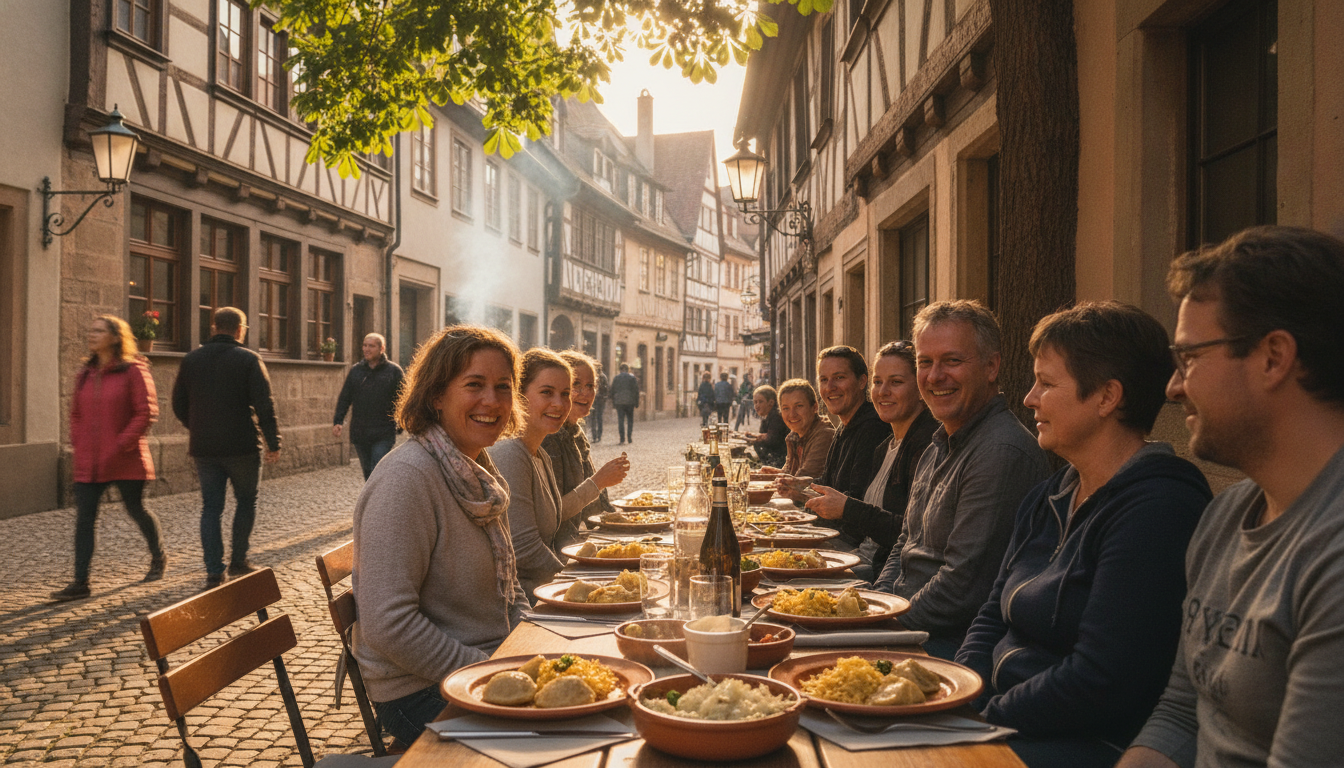
Culinary insider tips are tucked away in the side streets: wine taverns with Swabian menus off the main routes, cafés in courtyards, and old town shops selling Maultaschen, Alb lentils and regional wines to take home. At lunchtime, it's worth checking the daily specials – you can eat well here for student prices.
Anyone looking for culture beyond the classics will find it at the Nonnenhaus, in arthouse cinemas and small stages; the audience is mixed, and the programming is open to experimentation. Add to that public lectures and readings by the university – often free and open to all.
Practical note: almost all destinations are within walking distance or a short bus or bike ride away; the student-ticket crowd keeps services running frequently. The quietest times are weekday mornings and the lecture-free weeks in late summer.
So it turns out: alongside its postcard backdrop, Tübingen has a second, quieter face – island avenues, monastery stillness, neighbourhood utopias and hilltop views. Only those who know both sides truly understand why this small city holds onto so many people for a lifetime.
When to come? Best to go against the grain: in late summer, while students are still on holiday, the island and the Österberg belong to those seeking calm; in winter, empty lanes and warm wine taverns beckon. And if you do come during peak season, you now know the alternative routes.
Because that's precisely the essence of all Tübingen's insider tips: they're never far away – just a flight of steps higher, an alley deeper, or one bus ride further than the punt landing. Take this small detour, and you'll get to know the city the way its residents love it.
So off you go: fold up the map, climb the steps and make your own Tübingen discovery – it's guaranteed to be waiting just around the next corner.
And if you run out of ideas along the way, just ask the nearest person at the Marktbrunnen – Tübingen locals are remarkably generous with their favourite spots.
Die Besten der Stadt