Aschaffenburg
Schloss Johannisburg and Pompejanum in Aschaffenburg
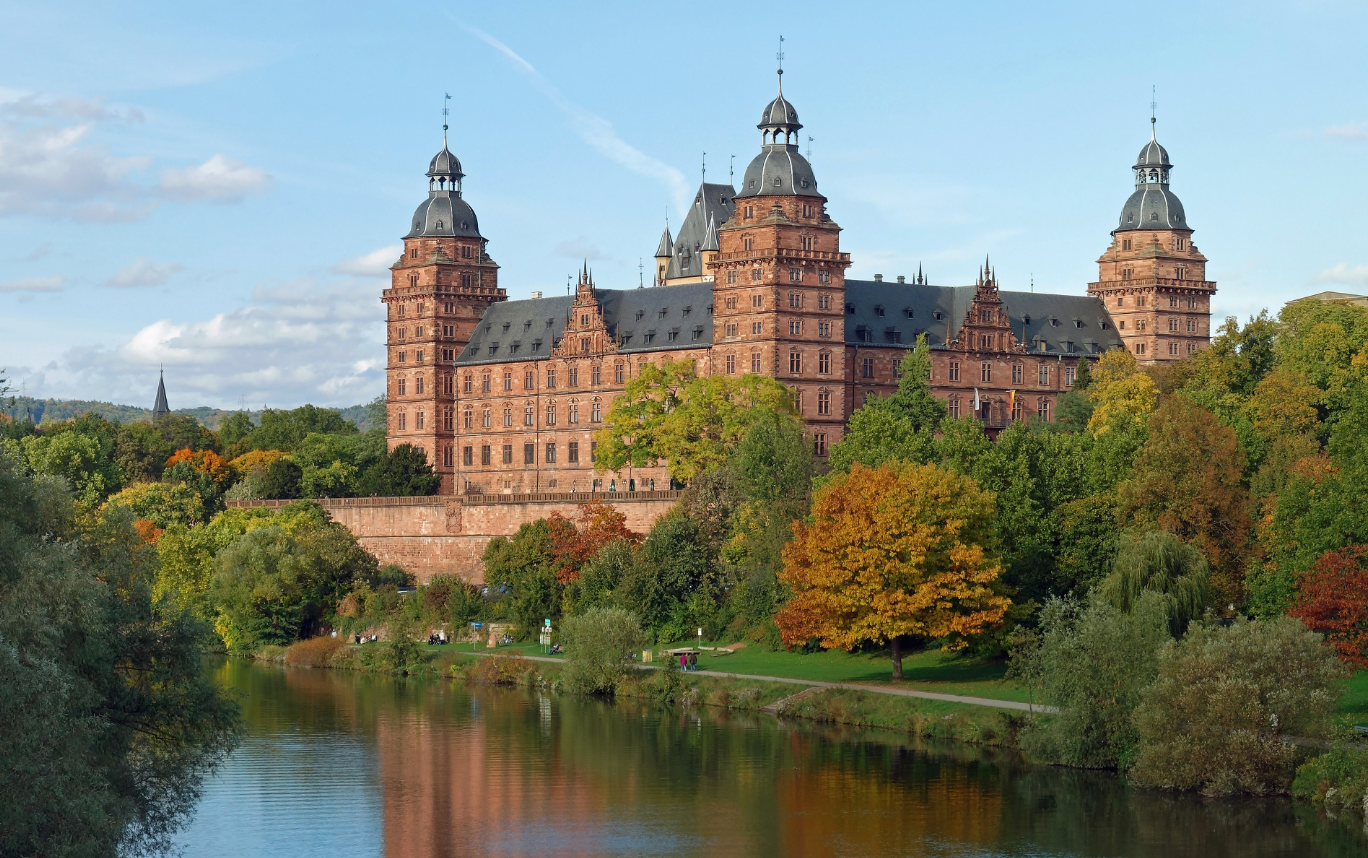
With its red sandstone façade, Schloss Johannisburg shapes the look of Aschaffenburg and stands right on the Main. The palace is among the most important Renaissance buildings in the region. Another special feature of the city is the Pompejanum, a replica of a Roman house from Pompeii. This guide shows what you should know about both sights and how to plan your visit.
Schloss Johannisburg: History and Architecture
The palace was built in the early 17th century as the residence of the Archbishops of Mainz. Construction lasted from 1605 to 1614. The architect is believed to be Georg Ridinger. Aschaffenburg was at that time an important secondary residence of the Electors of Mainz.
Structure and Façade
Typical of the palace are the four wings enclosing an inner courtyard and the four towers at the corners. The red sandstone of the façade gives the palace its striking colour. The building looks especially beautiful from the banks of the Main.
💡 Tip: The banks of the Main are a good spot for photos, as the palace shows itself in its full width from there.
The Pompejanum
The Pompejanum stands above the Main, separate from the palace, and is a replica of a Roman house from Pompeii. King Ludwig I of Bavaria had it built in the 19th century to plans by Friedrich von Gärtner. The model was the House of the Dioscuri in Pompeii. The building gives an impression of what living in Roman antiquity looked like, and offers a lovely view over the Main valley.
What to Expect There
- An atrium and a colonnaded courtyard in the style of a Roman house
- Wall paintings in the Pompeiian style
- Exhibits on Roman antiquity
💡 Tip: The Pompejanum has its own opening hours and cannot be reached via the palace tour. Find out the current times beforehand.
Collections in the Palace
The palace houses several collections that you can combine on a visit.
Staatsgalerie
The Staatsgalerie shows paintings mainly from the Renaissance and Baroque periods, including works by Lucas Cranach the Elder.
Palace Museum and Cork Models
The Schlossmuseum is devoted to the history of the city and the palace. Also well known are the cork models of ancient Roman buildings, which show an unusual piece of collection history and fit well with the theme of the Pompejanum.
The Palace Garden
Gardens around the palace invite you to take a stroll. From there you have lovely views of the palace and the Main. After a tour of the collections, it makes a pleasant finish.
Practical Information for Your Visit
Opening Hours and Admission
Opening hours, admission prices and tours change over the course of the year. You can find current information on the official website of the Bavarian Palace Administration. There you will also find out whether concessions apply.
Getting There
The palace is in the city centre of Aschaffenburg and is an easy walk from the station. If you come by car, you will find parking in the city centre. Find out about the current charges beforehand.
Accessibility
It is best to ask the palace itself before your visit whether and how individual areas are accessible. This applies especially to the Pompejanum.
📍 Discover more: Explore more recommendations for Aschaffenburg on our city page.
Frequently Asked Questions
How much time should I allow for the visit? That depends on how many areas you visit. For the palace, collections and palace garden, you should allow several hours.
Is the Pompejanum part of the palace? No, the Pompejanum is a separate building above the Main and has its own opening hours.
Are there guided tours? Tours are offered. You can find dates and prices on the official website.
When is the best time to visit? In spring and summer, the visit combines well with a stroll through the gardens.
Nicole Schäfer