Berlin
Berlin in Spring 2026: The 15 Best Activities and Insider Tips
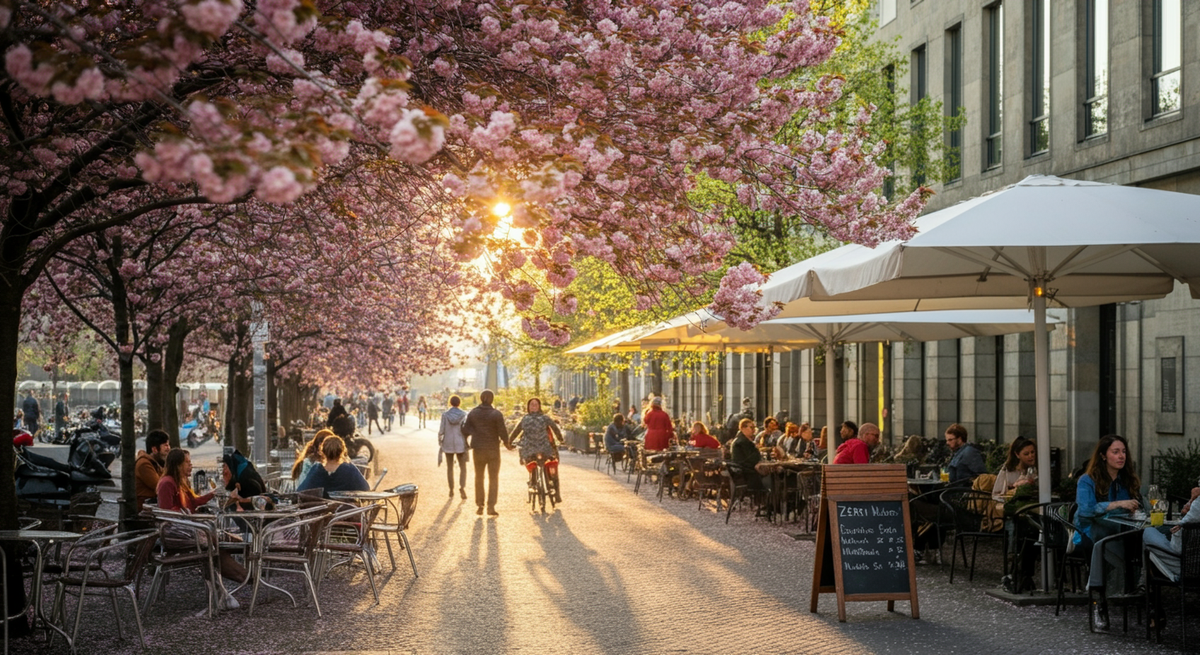
Spring in Berlin is something very special: the city wakes from its winter slumber, the pavement cafés open their terraces, and cherry and magnolia trees blossom everywhere. Berlin in spring offers as many possibilities as hardly any other city, from fresh cultural offerings to timeless classics. Here are the 15 best activities and insider tips for your spring days in the capital.
Blossoming Parks and Gardens – Nature in the Middle of Berlin
Berlin's green spaces are among the most beautiful in all of Europe. In spring they unfold in full splendour and invite you to stroll, picnic and relax.
Cherry Blossom on Bornholmer Straße
Every year the former Wall strip on Bornholmer Straße turns into a sea of pink blossom. The Japanese cherry trees were planted as a symbol of reunification and make a spectacular photo subject in April.
- Best time: mid-March to mid-April
- Location: Bornholmer Straße / Bösebrücke, Prenzlauer Berg
- Getting there: S-Bahn Bornholmer Straße
- Admission: Free
💡 Tip: Come early in the morning or during the week – it can get very crowded here on sunny weekends.
Gardens of the World in Marzahn
The Gardens of the World are one of Berlin's most underrated places. Across more than 40 hectares you will find a Chinese garden, a Japanese Zen garden and, in spring, spectacular tulip fields reminiscent of the Netherlands.
- Opening hours: Daily 9:00 am – 6:00 pm (from April until 8:00 pm)
- Admission: From €4.00 (concessions €2.00)
- Getting there: U5 Kienberg – Gärten der Welt
Britzer Garten – Tulipan Festival
Every spring the popular Tulipan Festival takes place in the Britzer Garten. More than 500,000 tulips in every imaginable colour turn the park into a colourful sea of flowers – an absolute must for flower lovers.
Cafés and Food Hotspots for Spring
Berlin is known for its lively food scene, and exciting new venues open every spring. Here are the highlights of the season.
Outdoor Breakfast on the Landwehrkanal
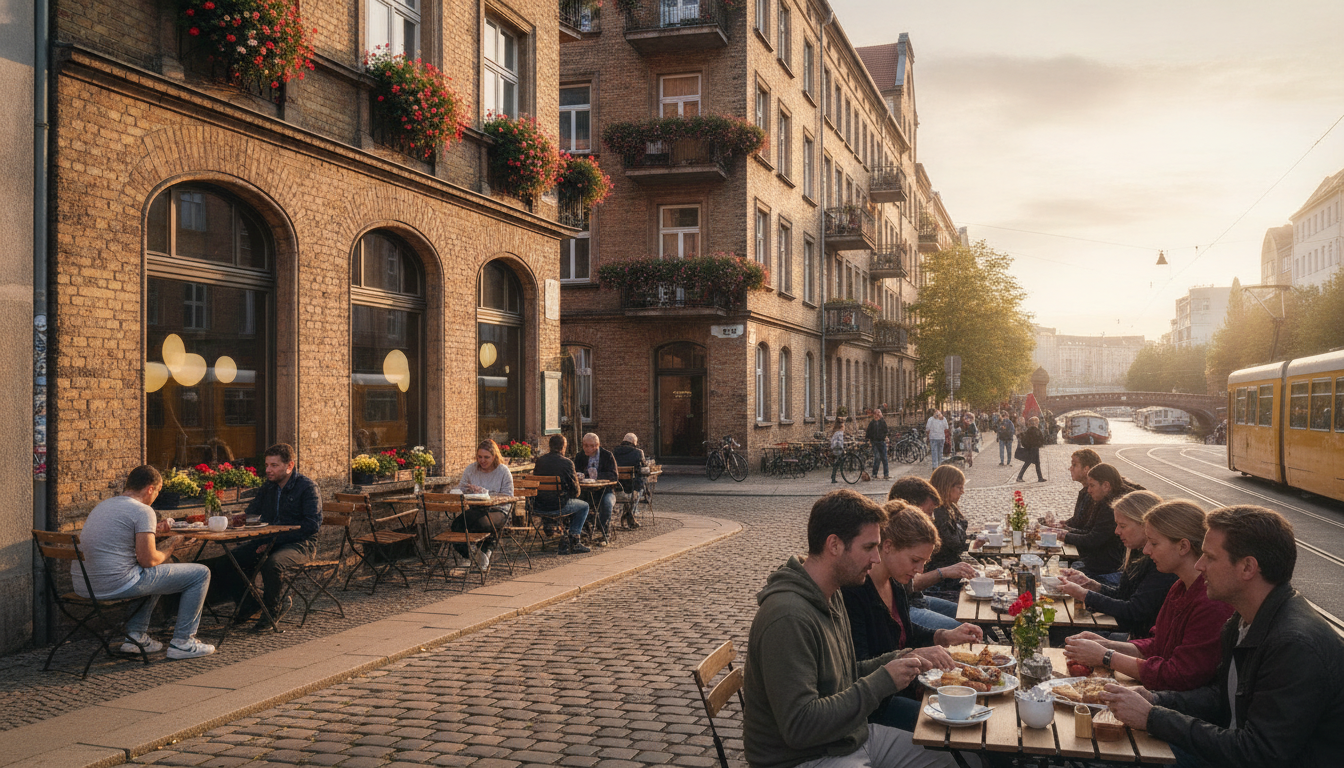
The banks of the Landwehrkanal in Kreuzberg and Neukölln are among the most popular places for a long outdoor breakfast. Numerous cafés such as Café am Ufer or Isla Coffee have terraces right on the water.
- Recommendation: Café am Ufer, Paul-Lincke-Ufer, Kreuzberg
- Best time: Weekends from 10:00 am
- Budget: €8–15 per person
Street Food at Markthalle Neun
The legendary Markthalle Neun in Kreuzberg remains a must-visit. The Thursday Street Food Thursday is an experience especially in spring, when the evenings get longer again and you can stroll along Oranienstraße afterwards.
Culture and Art – Spring Highlights
Berlin offers a particularly rich cultural programme in spring. From exhibitions to festivals, there is something for everyone.
Museum Island – World-Class Art in Spring Light
The five museums on Museum Island are a UNESCO World Heritage Site. Particularly recommended in spring: Nefertiti in the Neues Museum and the Pergamon Altar – combined with a walk along the Spree in mild spring weather.
- Opening hours: Tue–Sun 10:00 am–6:00 pm (Thu until 8:00 pm)
- Tip: The Museumspass Berlin (€32) is worthwhile for several visits
Gallery Weekend Berlin
The renowned Gallery Weekend Berlin takes place at the end of April. More than 50 galleries in Mitte, Kreuzberg and Charlottenburg open their doors at the same time and present international contemporary art. Many exhibitions are free to visit.
Karneval der Kulturen – Preparations
Even though the big Karneval der Kulturen only takes place in May, preparations and pre-events already start in Kreuzberg in spring. Workshops, music rehearsals and small street parties get you in the mood for the big event.
Insider Tips – Berlin Off the Beaten Track
If you want to experience Berlin like a local, you should not miss these hidden gems.
Tempelhofer Feld – Freedom on the Former Runway
The former Tempelhof airport is now one of the largest inner-city parks in the world. In spring, Tempelhofer Feld is the perfect place for cycling, skating, kite flying or simply picnicking on the former runway.
- Opening hours: Sunrise to sunset
- Getting there: U6 Tempelhof or Paradestraße
- Admission: Free
- Special feature: Community gardens and urban gardening projects
💡 Tip: Bring a bike – the field is so vast that it is best explored on two wheels.
Haubentaucher at the RAW Site
The Haubentaucher in Friedrichshain is a pool club that opens its season in spring. Here you can relax by the pool with a drink while DJs play – in the middle of the city and yet feeling like a holiday.
Spree Boat Trip at Sunset
A boat trip on the Spree is one of the most romantic experiences in Berlin. In spring, when the sun sets later and the banks turn green, an evening trip is especially atmospheric. Small operators such as Reederei Riedel offer relaxed tours away from the mass-tourism steamers.
Practical Tips for Berlin in Spring
To make your spring visit to Berlin perfect, here are some useful tips.
Getting There and Getting Around
- BER Airport: To the Hauptbahnhof in 30 minutes with the FEX express
- Public transport pass: Ideal for unlimited travel by bus and train throughout Berlin
- Bicycle: Nextbike and Lime are available everywhere – Berlin is a cycling city
Weather and Clothing
Berlin's spring weather is changeable. Temperatures between 8 and 18 degrees are typical for March to May. Be sure to pack layers – mornings can still be fresh, while the afternoon sun is warm.
Booking Accommodation
In spring, overnight prices in Berlin rise noticeably. Book early, especially if your visit coincides with Gallery Weekend or Easter. The districts of Friedrichshain, Kreuzberg and Neukölln offer a particularly authentic Berlin experience.
Conclusion: Why Berlin in Spring Is a Must
Berlin in spring is a city full of energy and possibilities. From the pink cherry blossom on Bornholmer Straße and new culinary discoveries to world-class culture on Museum Island, the capital has the right programme for every taste. Use the mild season to experience Berlin at its best, and discover the hidden corners that make this city so unique.
Frequently Asked Questions about Berlin in Spring
When do the cherry trees on Bornholmer Straße bloom?
The Japanese cherry trees on the former Wall strip are usually at their most beautiful between mid-March and mid-April. Because the blossom depends heavily on the weather, it is worth taking a quick look at recent photos from the neighbourhood before you set off. Visiting is free, and the Bornholmer Straße S-Bahn station is right next to it.
Which spring activities in Berlin are free?
Some of the loveliest things cost nothing in Berlin: the cherry blossom on Bornholmer Straße, an afternoon at Tempelhofer Feld, a walk along the Spree and the Landwehrkanal, and many exhibitions during Gallery Weekend. The pre-events for the Karneval der Kulturen in Kreuzberg are also free to attend.
How much time should I allow for the Gardens of the World?
For the Gardens of the World in Marzahn you should allow at least half a day, as the site covers more than 40 hectares with a Chinese garden, a Japanese Zen garden and the tulip fields in spring. It is open daily from 9:00 am, until 8:00 pm from April. Admission starts at €4.00, with concessions at €2.00.
What should I pack for a spring day in Berlin?
Berlin's spring weather fluctuates between 8 and 18 degrees, often within a single day. Layering works best: a light jacket for the cool morning, with something thinner underneath for the sunny afternoon. Comfortable shoes are a must, as the loveliest places are rarely right next to each other.
Where is the best place to stay in Berlin?
If you want to experience the city the way Berliners know it, it is best to stay in Friedrichshain, Kreuzberg or Neukölln – from there the Landwehrkanal, Markthalle Neun and Tempelhofer Feld are quickly reached. Book early in spring, because prices around Easter and Gallery Weekend rise significantly.

Tobias Reinhardt
Tobias stammt aus einer Handwerkerfamilie und weiß, worauf es bei einem guten Betrieb ankommt. Er schreibt über Tischler, Elektriker, Dachdecker und alle, die mit den Händen arbeiten. Besonders am Herzen liegen ihm kleine Familienbetriebe, die seit Generationen bestehen.