Berlin
Dental Implant Costs 2026 – Prices, Subsidies & Savings Tips
What Do Dental Implants Really Cost – and What Should You Look Out For?
Anyone thinking about a dental implant almost always has a specific reason: a tooth is missing – or several at once. Sometimes the gap bothers you when you laugh. Sometimes chewing becomes a struggle. Sometimes the mouth simply no longer feels right.
And then one question immediately comes up:
What do dental implants actually cost in 2026?
The short answer: it depends.
The honest answer: between €2,000 and €3,500 per tooth – in individual cases more.
This overview shows you what the price is made up of, what share the health insurer covers, what role supplementary insurance plays and where you can really save – without cutting corners in the wrong place.
What Exactly Is a Dental Implant?
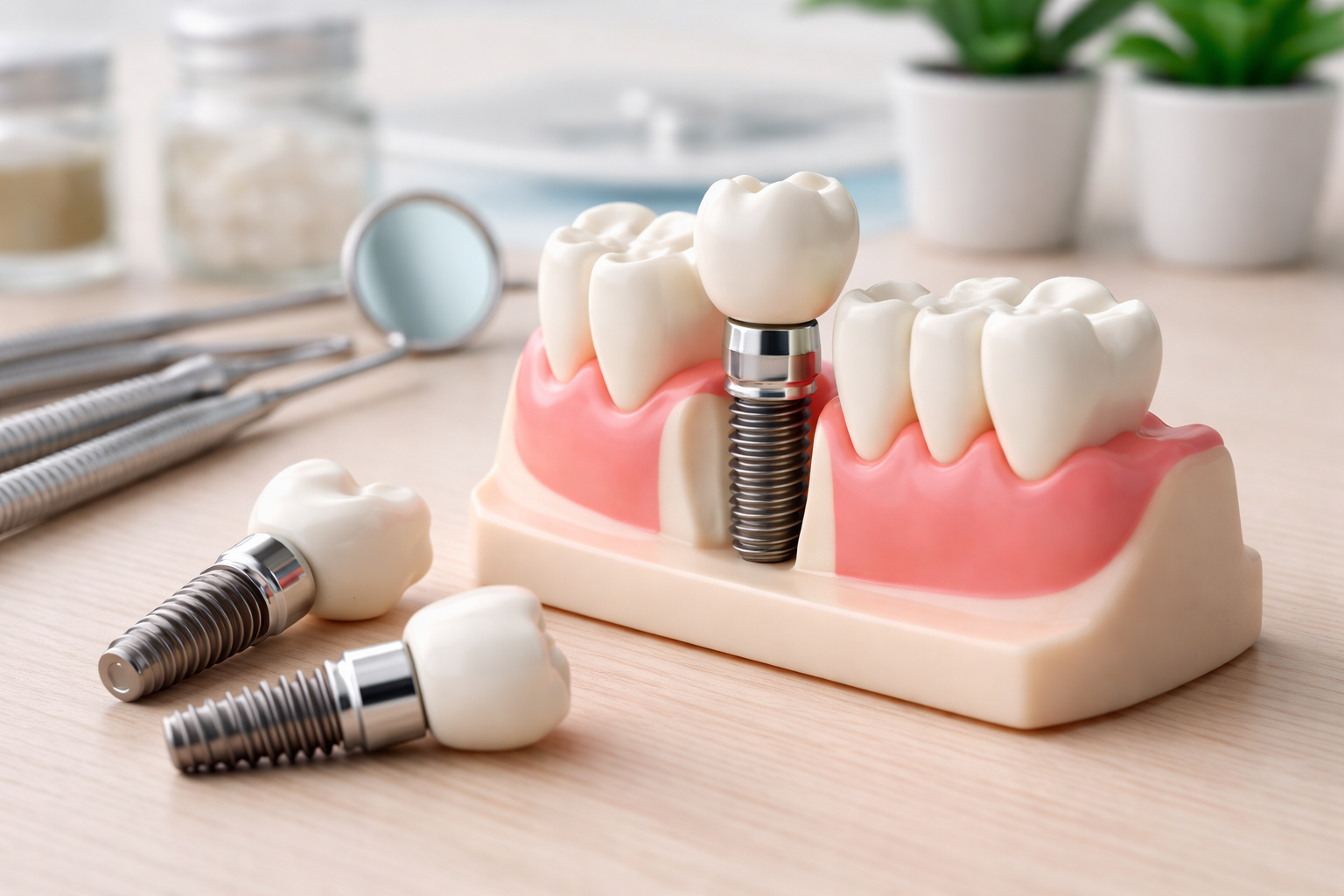
A dental implant replaces a missing tooth root. It usually consists of titanium or ceramic and is anchored firmly in the jawbone. A crown, bridge or denture is attached to it later.
In everyday life, an implant generally feels like a real tooth. It sits firmly, looks natural and allows normal chewing – even with hard or sticky foods, where removable dentures quickly reach their limits.
Why do so many people choose them?
No wobbly dentures
No grinding down of healthy neighbouring teeth
Natural appearance
Very long durability
Preservation of the jawbone through natural loading
Modern practices for dental implants in Berlin in particular now work with digital 3D planning, which allows procedures to be carried out more precisely and often more gently.
What Do Dental Implants Really Cost in 2026?
The final amount on the bill is never a single item, but the sum of several components:
Implant screw
Connecting piece (abutment)
Dental crown
X-ray or 3D diagnostics
Surgery
Follow-up checks
This is exactly why two quotes can only be compared if all items are listed. A low price for the screw says little if diagnostics, abutment and crown are charged separately.
Average Prices in Germany in 2026
Single implant, complete: approx. €2,000–€3,500
With bone augmentation: €3,000–€5,000
Full restoration (e.g. several teeth): significantly higher
These figures are realistic averages. Individual factors can raise or lower the price.
Dental Implants in Berlin – Are They More Expensive?
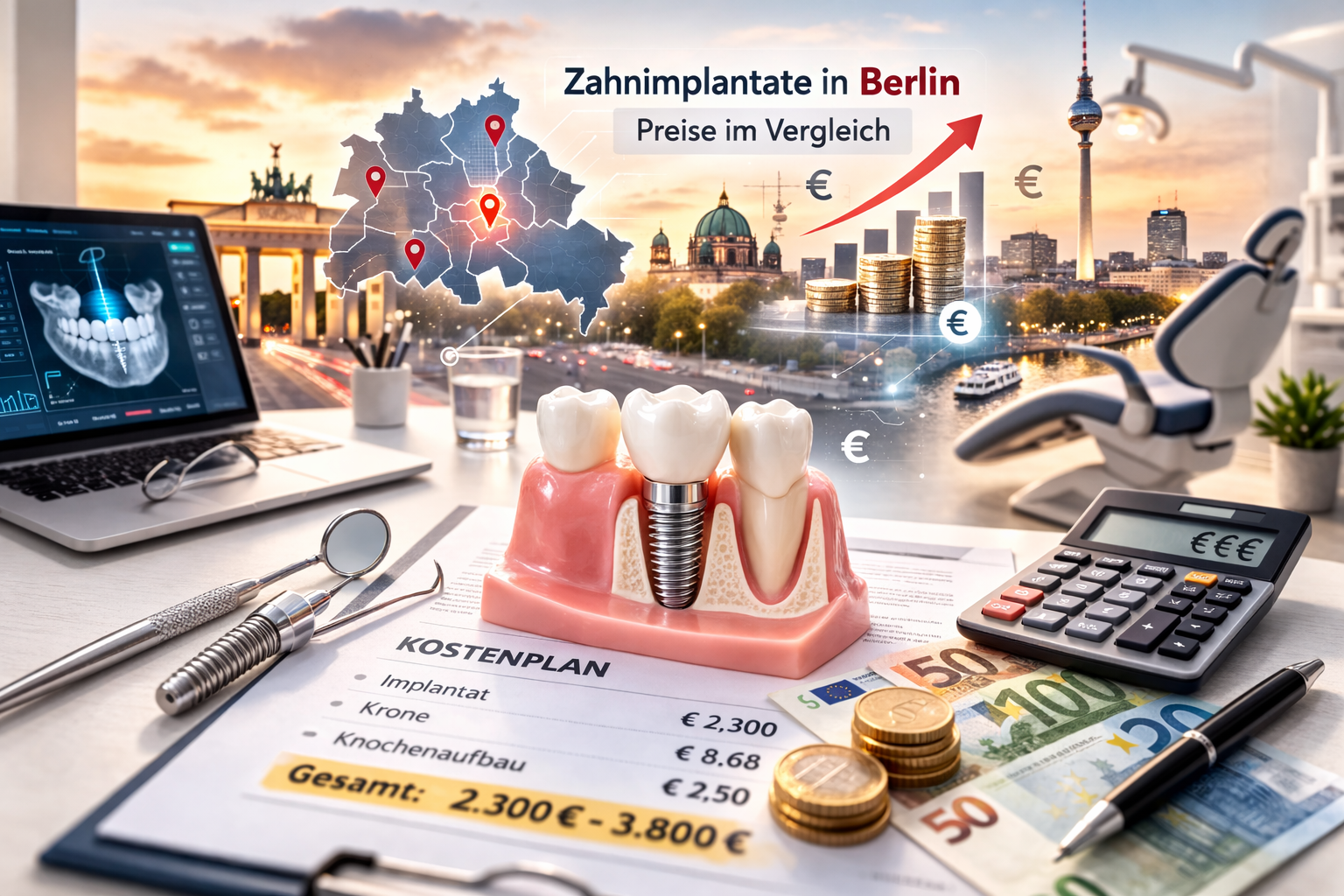
Berlin is a big city with many specialist dentists. That has advantages – but often also an influence on the price.
For dental implants in Berlin, the costs are often in the range of:
€2,300–€3,800 per tooth
Bone augmentation on top: €400–€1,500
Why is it sometimes slightly more expensive?
Higher practice costs
Modern technology
Specialist implantologists
High demand
But: competition in Berlin is fierce. That is why it is worth comparing several quotes. If you want to get an overview of the practice landscape, our list of the best dentists in Berlin is a good starting point for finding an appointment.
Which Factors Influence the Price?
1. Is Bone Augmentation Necessary or Not?
If the jawbone is not stable enough, it has to be built up. This can raise the costs significantly.
Whether bone augmentation is required depends above all on how stable and sufficient the existing jawbone is. After tooth loss, the bone recedes over time because it is no longer stimulated by the natural loading of the tooth. If the bone volume is too small or not dense enough, an implant cannot be anchored securely. In such cases, bone augmentation is carried out before or during implantation, using the body's own or artificial bone material to improve stability. This does lengthen the treatment time and increase the costs, but in the long term it ensures a safe and durable implant solution. Whether bone augmentation is necessary is determined individually by X-ray or 3D diagnostics.
2. Choice of Material
Titanium is the standard and well proven.
Ceramic implants are more aesthetic, but often more expensive.
An important cost and quality factor for dental implants is the material used. In most cases, implants are made of titanium, as this material is particularly stable, durable and well tolerated. Titanium has proven itself for decades and offers a very high success rate. Alternatively, there are ceramic implants, which are chosen mainly for aesthetic reasons. They are tooth-coloured and look especially natural, which can be an advantage in the visible front-tooth area. Ceramic is also metal-free and is often preferred by patients who value a solution that is as biological as possible. However, ceramic implants are generally more expensive than titanium implants. Which material makes sense depends on the individual situation, the budget and aesthetic expectations.
3. Type of Dental Restoration
A single implant is cheaper than complex restorations with several implants.
The type of dental restoration has a decisive influence on the total cost of an implant. If only a single tooth is replaced, generally only one implant crown is needed, which is the cheapest option. If several teeth have to be restored, however, an implant bridge may be necessary, in which several crowns are attached to two or more implants. Even more complex – and correspondingly more costly – are full restorations such as so-called All-on-4 or All-on-6 concepts, in which an entire dental arch is fixed on a few implants. The more extensive and individual the dental restoration, the higher the material, laboratory and treatment costs.
4. The Practitioner's Experience
Specialist implantologists sometimes charge higher fees – but often also offer more experience and safety.
The experience of the treating dentist plays a decisive role in dental implants. Implantology is a demanding procedure that requires precise planning, surgical skill and a good understanding of bone structure and healing processes. An experienced implantologist recognises possible risks early, plans the procedure individually and minimises complications. Especially in complex cases – such as little bone substance or pre-existing conditions – the practitioner's expertise often makes the difference. Specialist dentists may charge somewhat higher fees, but patients are thereby investing in safety, quality and the long-term success of the implant.
What Does Health Insurance Pay in 2026?
Statutory health insurance does not cover the full cost of an implant. It only pays a so-called fixed subsidy for standard care (usually a bridge).
The subsidy is approximately:
60% without a bonus booklet
70% with 5 years in the bonus booklet
75% with 10 years in the bonus booklet
That means: you bear most of the implant costs yourself. The fixed subsidy also relates to standard care, not to the implant – so it reduces your own share, but does not replace it.
Is Supplementary Dental Insurance Worth It?
A good supplementary dental insurance policy can cover 70–100% of the implant costs – depending on the plan.
What matters:
Take out the insurance before treatment begins
Note the waiting periods
Check the benefit limits
For planned dental implants in Berlin in particular, this can pay off financially in the long term. If you already have a specific treatment in view, though, you should stay realistic: once the diagnosis has been made, most plans no longer apply to that tooth.
Financing Options
Many practices now offer:
Payment by instalments
Interest-free financing
Partnerships with billing agencies
This allows the costs to be spread over several months. Ask about it actively at the consultation – not every practice points out the options on its own.
How Can You Save on Dental Implants?
Get a Second Opinion
Especially for larger treatments such as dental implants, it is worth getting a second opinion. Another dentist or implantologist can check the treatment and cost plan, show alternative treatment options or explain differences in material and approach. Especially for dental implants in Berlin, where there are many specialist practices, price and treatment approach can vary considerably. A second assessment gives certainty, creates transparency about the costs and helps you make an informed decision.
Have the Treatment and Cost Plan Checked
Before you decide on dental implants, you should have the treatment and cost plan carefully checked. This plan contains all the planned treatment steps as well as a detailed breakdown of the costs. It is worth submitting it to your health insurer to find out the exact fixed subsidy. In addition, an independent second opinion can help identify unnecessary services or inflated items. Especially with larger investments such as dental implants, a thorough check provides more transparency and financial security.
Don't Save in the Wrong Place
With dental implants, the price should not be the only decision criterion. Very cheap offers look attractive at first glance, but can mean compromises in material quality, the practitioner's experience or aftercare. An implant is a long-term solution that is meant to last many years. Anyone who looks only at the lowest price here risks complications, additional costs or repeat procedures. Quality, transparency and experience matter more with dental implants than short-term savings.
Keep a Bonus Booklet
Keeping a bonus booklet can pay off significantly for dental implants. If you go for a check-up at the dentist regularly – usually once a year – and have these appointments entered in the bonus booklet, you increase the statutory health insurer's subsidy for dental restorations. After five years of uninterrupted check-ups the fixed subsidy rises, and after ten years it rises once again. Even though implants themselves usually have to be paid for privately, a well-kept bonus booklet noticeably reduces at least your own share for the crown or alternative standard care.
How Long Do Dental Implants Last?
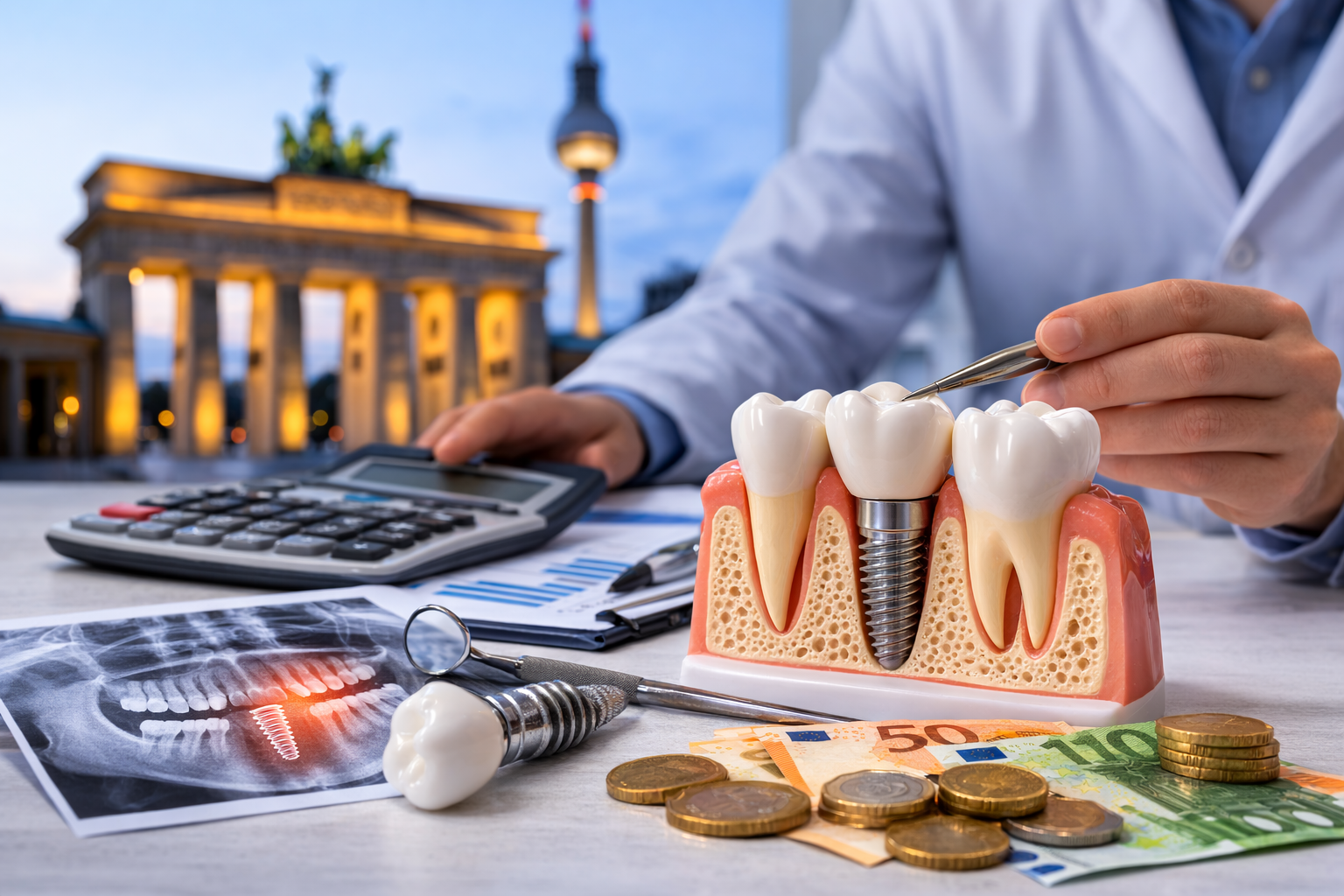
With good care, implants often last:
15 to 25 years – sometimes even a lifetime.
Prerequisites:
Good oral hygiene
Regular check-ups
No heavy smoking
Many providers of dental implants in Berlin offer special aftercare programmes. For interdental brushes, mouthwashes or painkillers after the procedure, it is worth taking a look at the best pharmacies in Berlin – many also give advice on correct implant care.
Does the Treatment Hurt?
The implantation is carried out under local anaesthetic. During the procedure, patients normally feel no pain.
After the operation, slight swelling or a feeling of pressure is possible – usually comparable to a tooth extraction. Cooling, rest and the prescribed medication are generally enough in the first few days.
Implant or Bridge – Which Is Better?
Implants are more expensive, but:
More durable
More stable
Gentler on neighbouring teeth
Bridges are cheaper, but require grinding down healthy teeth.
In the long term, implants are often the more sustainable solution – especially if the neighbouring teeth are healthy and are to be preserved.
Are Dental Implants Suitable for Seniors?
Yes, in principle they are. What matters is not age but general health and bone quality.
Many practices for dental implants in Berlin also treat older patients successfully. An open conversation about pre-existing conditions and medication taken long-term is important, because both can affect the course of healing.
The Future of Implantology
Dentistry is developing rapidly:
Digital 3D planning
Guided implantation
Ceramic implants
Faster healing times
Berlin is among the innovative locations here.
Conclusion – Are Dental Implants Worth the Money in 2026?
Dental implants are an investment. They are not cheap – but they offer long-term stability, aesthetics and quality of life.
With a good cost plan, any subsidies and smart planning, the financial burden can be reduced.
With dental implants in Berlin in particular, patients benefit from modern technology, experienced specialists and a wide range of offers.
In the end it is not just about money.
It is about quality of life, confidence when you laugh – and feeling good again.
Frequently Asked Questions about Dental Implants in Berlin
What does a single dental implant cost?
A complete single implant including implant screw, abutment and crown averages around €2,000 to €3,500 in Germany. In Berlin, quotes are often between €2,300 and €3,800 per tooth. If bone augmentation is also needed, roughly another €400 to €1,500 is added. Quotes can only be compared meaningfully if all individual items – including diagnostics and follow-up checks – are listed in the treatment and cost plan.
How much does statutory health insurance cover?
Statutory health insurance does not pay a share of the implant itself, but a fixed subsidy for standard care, usually a bridge. Without a bonus booklet this is around 60 per cent, with five years of uninterrupted check-ups about 70 per cent and after ten years around 75 per cent. Patients bear the remaining amount themselves.
When is supplementary dental insurance worth it?
Depending on the plan, supplementary dental insurance can cover 70 to 100 per cent of the implant costs. Timing is decisive: the contract must be taken out before treatment begins and before the diagnosis has been made. Also watch out for waiting periods and annual benefit limits in the first years of the contract.
How long does an implant last?
With good care, implants often last 15 to 25 years, in favourable cases even a lifetime. The prerequisites are consistent oral hygiene, regular check-up appointments and as little smoking as possible. Many Berlin practices offer their own aftercare programmes for this.
Is the treatment painful?
The procedure takes place under local anaesthetic, so normally no pain occurs during it. Afterwards, slight swelling or a feeling of pressure is possible, comparable to a tooth removal. The discomfort generally subsides after a few days.

Sarah Müller
Reise- und Lifestyle-Journalistin