Castrop-rauxel
The Best Restaurants and Cafés in Castrop-Rauxel 2026

Castrop-Rauxel has plenty to offer when it comes to food and drink — and in 2026 more than ever. The town in the northern Ruhr region is experiencing a quiet but remarkable culinary evolution, one that's unfolding away from the big Ruhr metropolises. Here are the most exciting addresses and developments in the current food scene.
Anyone who knows Castrop-Rauxel knows this: the town has reinvented itself time and again. What was once a mining town — whose Zeche Erin colliery was founded by the Irish industrialist William Thomas Mulvany, giving the town its Irish connection that endures to this day — has become a green residential town of around 73,000 residents. Structural change has left its mark, both visible, such as the preserved Hammerkopfturm, and less visible: a mentality that knows how to handle change. That very attitude is now reflected in the local dining scene.
While every new opening in Dortmund, Bochum or Essen is instantly all over social media, something quieter is happening in Castrop-Rauxel: young operators are taking over shop premises that had stood empty for years. Family businesses are modernising their menus without denying their roots. And people with a migration background are bringing cuisines to the town that you wouldn't have found here ten years ago. The result is a food scene that's surprisingly diverse — and whose greatest asset may well be that it hasn't been discovered yet.
The old town as the culinary hub
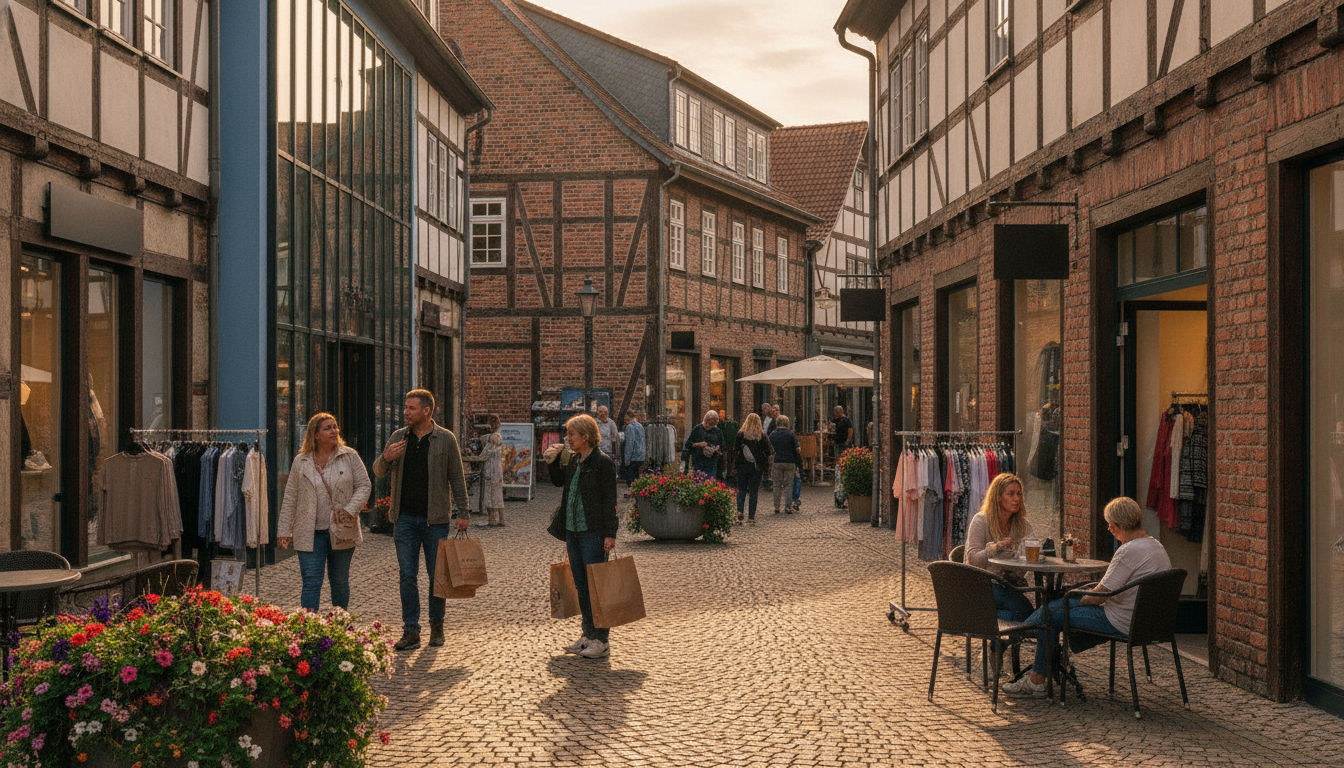
The old town has blossomed into a culinary hub. Around Lambertusplatz and along Münsterstraße, you'll find venues with all kinds of concepts side by side: from the classic Ruhr-style pub with a modernised currywurst menu, to a Syrian-German fusion restaurant, to a trendy bowl café focused on plant-based cooking. This mix reflects the town's growing cultural diversity — and at prices that are still affordable compared with Dortmund or Bochum.
This price advantage isn't just a happy side effect — it's a structural one. Rents for shop premises in Castrop-Rauxel's old town are noticeably lower than in the larger neighbouring cities. For restaurateurs, that means they can try out a concept without being under maximum pressure from week one. That's precisely why ideas emerge here that would never have been risked in a pricier location — a bowl café in a mid-sized Ruhr town, for example, would have been considered financially reckless just a few years ago.
For guests, this above all means one thing: exceptionally good value for money. A lunch that would quickly hit the higher end of double figures in Dortmund often stays noticeably below that here — with comparable quality. And because distances are short, an evening in the old town can easily be combined: aperitif in one venue, main course in the next, dessert or nightcap in a third.
It's also striking how naturally these different concepts coexist. The traditional pub isn't losing guests to the vegan café — the target groups overlap less than you'd think, and both benefit from the old town becoming more attractive overall. For a town centre that, like many in the Ruhr region, has struggled with empty shops, this revival is perhaps the most important development of recent years.
Coffee culture arrives in town
Coffee culture has well and truly arrived in Castrop-Rauxel. No fewer than three new cafés opened in the first half of 2026, focusing on hand-brewed specialty coffees, homemade cakes and a welcoming atmosphere. One standout is the former premises of an old bakery from 1928, lovingly restored with its historic tiled floor preserved, which has become a meeting point for young and old alike.
The fact that this particular café has been so well received says a lot about the place. The preserved tiled floor is more than a decorative feature — it's a piece of local history that the operators have made visible rather than built over. For older guests, it's a moment of recognition; for younger ones, it's simply lovely. And it's precisely in this overlap that something hard to plan in the hospitality trade emerges: a genuine meeting point for different generations.
In terms of substance, the development follows what's familiar from larger cities — just at a pace that suits the town. Specialty coffee means taking the origin of the bean, the roast level and the preparation seriously. Instead of a standardised espresso blend, you'll find single-origin coffees with clearly distinguishable flavours: fruity, floral beans from East Africa, chocolatey, nutty ones from South America. If you want to experience the difference for yourself, try a hand-poured filter coffee instead of your usual milky coffee.
Just as important as the drink itself is the role these cafés play in town life. They're a workplace for people working from home, a meeting point for parents after the nursery drop-off, a retreat for students, and a go-to spot for anyone who just wants to sit quietly for an hour. In a town that long lacked such places, this is a genuine boost to quality of life.
Street food Thursday: the summer meeting point
A genuine dining tip is the weekly Street Food Thursday on the market square (May to September). Rotating food trucks bring international cuisine to town — from Korean kimchi burgers to Mexican tacos to the classic Reibekuchen (potato fritters). Live music and long tables strung with fairy lights create an almost Mediterranean atmosphere right in the middle of the Ruhr region.
What makes this evening work so well is the combination of food and encounter. At the long tables, you inevitably end up sitting next to people you don't know — and that's exactly the appeal. Street Food Thursday has thus become less of an event and more of a social rhythm: people don't make elaborate plans, they simply turn up and end up meeting someone anyway.
For restaurateurs, the format also serves as an ideal test stage. A food truck requires far less capital than a permanent venue, yet still allows a concept to be tested on a real audience. More than one established address in the Ruhr region started out exactly this way — with a truck, a good idea, and the realisation that the demand was there. So if you want to know which cuisine in Castrop-Rauxel might have its own restaurant in two years' time, Thursday evenings on the market square is the place to find out.
A practical tip for your visit: if you want the full selection, come early. Popular trucks are known to sell out before the evening ends on warm days. And if you want to try several things, it's best to share portions — that way you can work through three or four cuisines in one evening instead of just one.
Regionality becomes lived practice
Particularly pleasing is the renewed focus on regional produce. Several restaurants work with farmers from the surrounding area and note on their menus which farm the meat or vegetables come from. Seasonality and transparency are no longer marketing slogans, but lived practice.
That this trend is taking hold in the Ruhr region of all places may seem surprising at first — the region is rarely associated with farming. In fact, though, the northern Ruhr region is greener than its reputation suggests: between Castrop-Rauxel, Waltrop, Datteln and the Münsterland, farms, farm shops and market gardens lie within just a few kilometres. These short distances aren't a marketing construct — they're real, they simply went unused for a long time.
This has concrete consequences for the kitchen. Buying regionally automatically means cooking seasonally, because there's simply no local asparagus growing in February. Menus become shorter as a result and change more often — a drawback for guests who always want to order the same dish, but a win for everyone else. It tastes fresher anyway, and regulars come back precisely because the offering keeps changing.
The transparency on the menu is more than a nice gesture. It makes quality verifiable and builds trust — and it also strengthens businesses in the surrounding area, which benefit from direct collaboration with the hospitality trade. This creates a regional cycle that benefits both sides.
From colliery heritage to a town to go out in
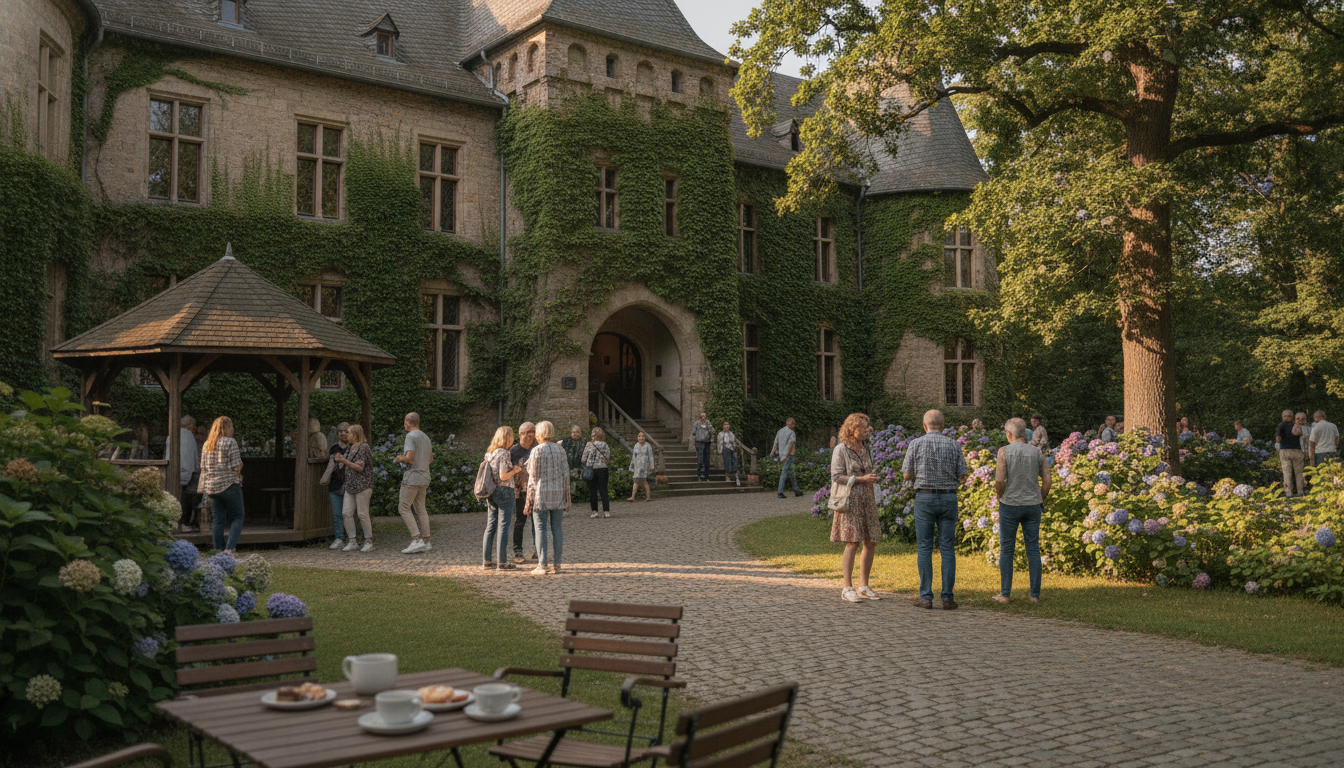
One aspect that sets Castrop-Rauxel's culinary development apart from that of other towns is its relationship with its own history. The town doesn't carry its industrial heritage as a burden — it puts it to use. The former Zeche Erin colliery site, whose name traces back to its Irish founder William Thomas Mulvany, is now a park with recreational and event spaces — and the preserved Hammerkopfturm has become a local landmark. This attitude of repurposing rather than demolishing the old is mirrored exactly in the local dining scene: in the 1928 bakery turned café, in shop premises now housing new concepts, in pubs that have kept their currywurst while still modernising their menus.
For visitors, this makes for an appealing combination. You can spend an afternoon at Erin-Park or Schloss Bladenhorst and round off the evening in the old town — industrial heritage and food culture are only a few minutes apart here. For a town long seen mainly as a place to live between its larger neighbours, this is a remarkable shift: Castrop-Rauxel is slowly becoming a place people stay in, rather than just pass through.
Practical tips for your visit
The old town is easy to explore on foot — most addresses are just a few minutes' walk from Lambertusplatz. If you're arriving by car, you'll find parking near the town centre; at weekends and on Street Food Thursdays, though, it's worth arriving a little earlier or switching to bus and train. Castrop-Rauxel is well connected to Dortmund and Bochum via regional transport, which also makes the town an appealing evening trip from further afield.
For popular venues, it's worth booking ahead at weekends — most establishments are small, and the newer addresses in particular have quickly become word-of-mouth favourites. During the week, on the other hand, you're welcome to just turn up almost everywhere, and many restaurants offer cheaper lunch menus that are ideal for a first try.
One more tip: ask questions. Especially in owner-run businesses, the people behind the counter are usually happy to chat — about the beans, the farm the meat comes from, or the history of the premises. These conversations are often what turns a meal into an evening you'll remember.
Castrop-Rauxel may not be the first destination that springs to mind for a food tour. But that's exactly its appeal: here, an honest, unpretentious food culture is emerging, one that has more to do with passion than polish — and one you should definitely discover for yourself.
Sarah Müller
Reise- und Lifestyle-Journalistin