Deutschland
Specialist Treatment for Bones, Joints and Spine
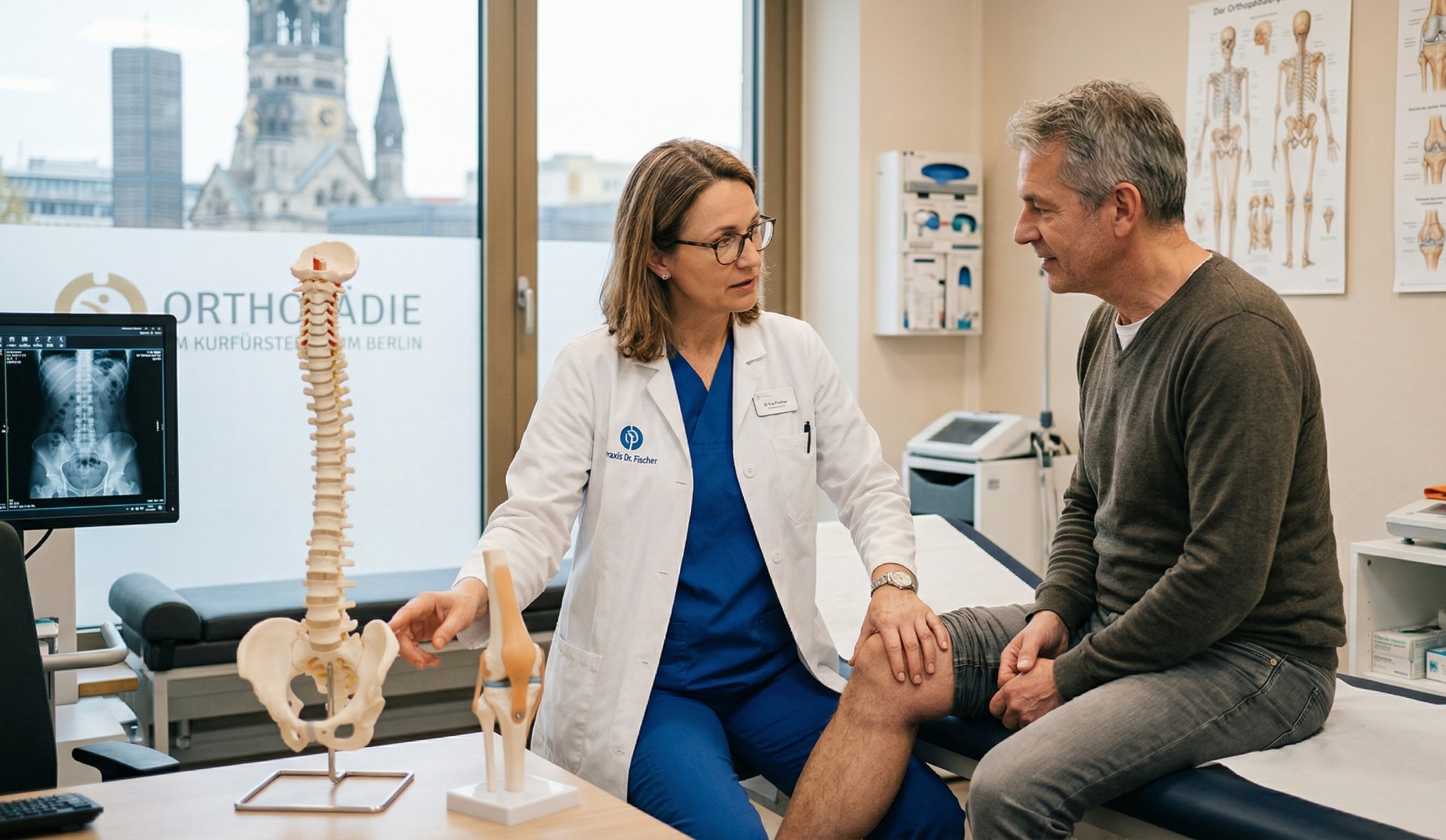
Berlin has one of the best orthopaedic care landscapes in Germany. The capital is home to renowned specialists, modern practices and specialised clinics covering every field of orthopaedics. Whether it's acute injuries, chronic complaints or preventive measures – patients will find competent help here.
Orthopaedic care in Berlin is characterised by innovative treatment methods and state-of-the-art technology. Many practices work on an interdisciplinary basis and offer holistic treatment concepts. You'll find further information on Berlin's medical care in our comprehensive doctor's guide.
Orthopaedist Berlin: Treatment Spectrum and Specialisations
Berlin's orthopaedists cover the entire spectrum of musculoskeletal conditions. From conservative therapy to complex surgery, they offer the most modern treatment methods available. Specialisations range from spinal surgery to sports medicine and paediatric orthopaedics.
Many practices have specialised in particular areas and work with the latest technologies. Minimally invasive procedures, arthroscopy and computer-assisted surgery are all standard practice. Close collaboration with physiotherapists and other specialists ensures optimal treatment outcomes.
- Spinal orthopaedics and surgery
- Joint replacement (endoprosthetics)
- Sports orthopaedics and trauma surgery
- Paediatric orthopaedics
- Hand surgery
- Foot surgery
- Rheumatoid orthopaedics
- Tumour orthopaedics
Common Orthopaedic Complaints in Berlin
Back pain tops the list of orthopaedic complaints in Berlin. Due to office work and an urban lifestyle, many Berliners suffer from spinal problems. Joint complaints caused by sport or age-related wear and tear are also common reasons for treatment.
Berlin's orthopaedists are increasingly seeing stress-related muscle tension and postural damage too. Preventive measures and early intervention are therefore a key focus for many practices. Modern diagnostic procedures allow for precise identification of causes.
Sports injuries are also an important area of treatment. As a sport-loving city, Berlin sees a corresponding number of injuries from running, cycling or gym workouts. Specialist sports orthopaedists offer targeted therapies for these cases.
Modern Diagnostics at the Orthopaedist Berlin
Berlin's orthopaedists use the most modern diagnostic methods to reach precise findings. MRI, CT and X-ray are standard equipment in many practices. In addition, specialised procedures such as gait analysis or 3D spinal measurement are also used.
Digital imaging provides detailed insights into bones, joints and soft tissue. Many practices have their own X-ray equipment and work together with radiology centres. Ultrasound examinations are often carried out directly in the practice.
Functional diagnostics play an important role in identifying causes. Movement analyses, strength measurements and biomechanical examinations help with treatment planning. These modern methods allow for individually tailored treatment concepts.
Conservative Treatment Methods
Many orthopaedic complaints can be treated conservatively. Berlin's orthopaedists rely on a broad spectrum of non-surgical therapies. Physiotherapy, medication and physical therapy are at the forefront of treatment.
Injection therapies have established themselves as an effective treatment option. Hyaluronic acid injections for arthritis or cortisone injections for inflammation often bring quick relief. PRP therapy (platelet-rich plasma) is also being used increasingly.
- Physiotherapy and remedial exercise
- Medication-based therapy
- Physical therapy (heat, cold, electrotherapy)
- Injection therapies
- Orthopaedic aids
- Manual therapy
- Acupuncture
- Shockwave therapy
Surgical Procedures in Berlin Orthopaedics
When conservative measures aren't enough, Berlin's orthopaedists offer the most modern surgical procedures. Minimally invasive techniques are prioritised to reduce strain and recovery time. Arthroscopic procedures are standard for joint operations.
Endoprosthetics holds a high status in Berlin. Artificial joints are fitted using the most modern materials and techniques. Computer-navigated operations and robot-assisted procedures ensure the highest precision.
Spinal surgery is carried out at specialised centres. The spectrum ranges from simple disc surgery to complex spinal stabilisation. Minimally invasive procedures significantly reduce surgical trauma.
Aftercare and Rehabilitation
Aftercare plays a decisive role in treatment success. Berlin's orthopaedists work closely with physiotherapists and rehabilitation centres. Individual aftercare plans ensure optimal healing.
Modern rehabilitation concepts focus on early mobilisation and functional training. Specialist rehab centres offer both outpatient and inpatient programmes. Collaboration between orthopaedists and therapists is essential here.
Preventive measures are already communicated during treatment. Ergonomic advice, back schools and sports guidance help prevent complaints from recurring. Many practices offer relevant courses and training sessions.
Booking Appointments and Practice Organisation
Appointments with Berlin's orthopaedists are usually booked through several channels. Telephone booking is standard, and many practices also offer online appointment booking. Emergency consultations are available at most practices.
Waiting times vary depending on the practice and reason for treatment. Acute complaints are usually treated promptly, while routine examinations can involve longer waiting times. Private practices often offer shorter waiting times.
Many practices have digitalised their organisation. Online registration, digital patient records and recall systems improve service quality. Communication with patients increasingly takes place via modern channels such as apps or email.
Costs and Health Insurance Coverage
Most basic orthopaedic services are covered by statutory health insurance. Diagnostics, conservative therapies and necessary operations are all part of the standard service catalogue. Private additional services must be paid for by the patient themselves.
IGeL services (individual health services) include extended diagnostics and special therapies. These include, for example, special MRI examinations or innovative injection therapies. Costs vary depending on the effort involved and the practice.
Private health insurers usually cover a broader range of services. Treatment by private doctors or at private practices is also covered. Supplementary insurance can also be worthwhile for those with statutory health insurance.
Also read: Best Doctors Berlin – Comprehensive Doctor Search and Medical Care in the Capital
Thomas Müller