Goslar
The Best Restaurants and Cafés in Goslar 2026

Goslar, the imperial city on the northern edge of the Harz, captivates visitors with its UNESCO World Heritage Site, winding lanes and centuries-old half-timbered houses. Less well known, but equally worth discovering, is the city's dining scene, which is more varied than ever in summer 2026. From traditional Harz cuisine and stylish cafés to surprising international touches – here are our recommendations for food lovers.
The heart of Goslar's cuisine is Harz game and fish cookery. At the restaurant "Worthmühle", housed in a historic 16th-century watermill, head chef Markus Hennecke serves regional produce with a modern twist: saddle of venison with cranberry-chocolate jus, trout from the nearby Oker with almond butter, or vegetarian dishes with chanterelles from the Harz forests. The mill itself is an experience in its own right – the great water wheel turns in summer, and the rustic beams create atmosphere. The terrace by the millpond is one of the loveliest spots in the city for dinner.
A little more hidden, but an absolute find, is "Zum alten Stadtwappen" on Schreiberstraße. This small restaurant, with just five tables, serves changing seasonal menus chalked up on a board each morning. What ends up on the plate is dictated by that day's market shop – the philosophy is refreshingly simple: buy what's fresh, and cook whatever tastes good with it. Booking ahead is strongly advised.
For coffee culture at its finest, head to "Kaiserworth-Rösterei" on the market square. This small roastery roasts its beans in the building behind and serves espresso variations and single-plantation filter coffee out front. The window seats overlooking the historic town hall and the Kaiserworth are much sought after, and there's a daily-changing selection of cakes and pastries made in-house.
For a quick but high-quality bite, we recommend "Brotwerk" on Rosentorstraße. This artisan bakery offers sourdough breads, filled rolls and seasonal soups, all made from regional ingredients, and you can watch the bakers at work through the glass-fronted kitchen. The lunch menu, served from midday to 2pm, is something of an insider tip among locals.
Things get international at "Masa" on Fischmäkerplatz: this Japanese restaurant, run by a German-Japanese couple, combines Harz produce with Japanese cooking techniques. The result is dishes such as Harz goat's cheese with misozukushi, or Oker valley trout in a yukari broth – a fascinating culinary bridge between Japan and the Harz. The interior is understated and elegant, and the twenty-seat dining room feels intimate.
Finally, a tip for somewhere truly out of the ordinary: "Klostergarten Riechenberg" is a café run by an association, located in the former monastery vegetable garden. Here you'll find home-baked cakes, tea made from home-grown herbs, and a view of the Romanesque monastery ruins that makes every meal feel special. It's open only on Saturdays and Sundays, from 2pm to 6pm, and only between May and October.
Goslar's 2026 dining scene wonderfully combines the best of tradition and modernity. Imperial city meets culinary culture – an experience not to be missed.
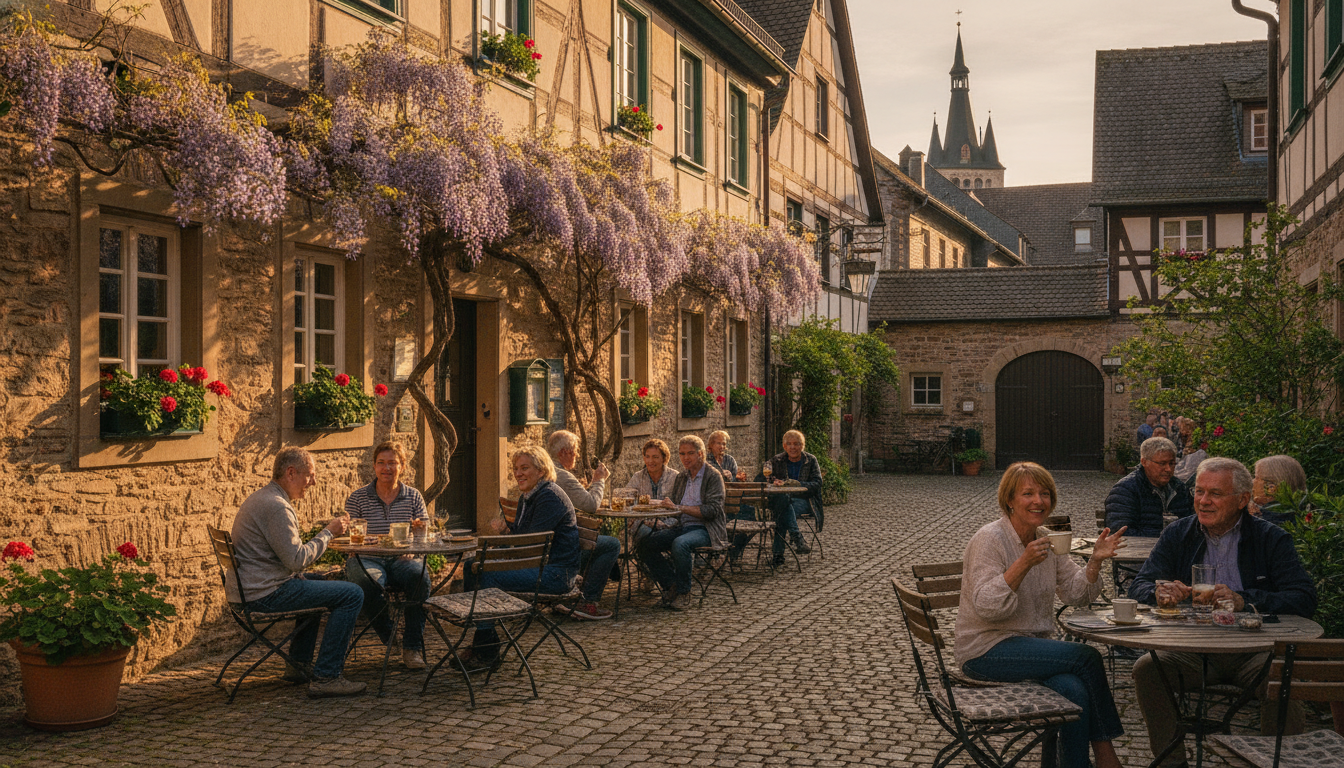
In Goslar, dining is at its best with a backdrop: the terraces on the market square serve up views of the Kaiserworth and the glockenspiel, while the houses in the lanes behind offer half-timbered beams overhead – anyone strolling through the old town in the evening can choose between centuries as their setting. Booking ahead secures the window seats.
The classics carry the menus: game dishes from the Harz forests, trout and hearty roasts feature on the menus of traditional inns, alongside regional beers – the cuisine of the imperial city remains true to its mining and hiking heritage: hearty, honest and filling.
Cafés fill the gaps between meals: around the market square, Schuhhof and Hoher Weg, patisseries and coffee houses line up with home-baked cakes – after the Kaiserpfalz or before the Rammelsberg, a break with a view of half-timbering is a must. In summer you sit out in the lanes; in winter, behind bullseye windowpanes.
Modern touches have arrived too: bistros with daily menus, international cuisines from Italian to Asian, and vegetarian options all complement the classics – the city has long since started catering to guests who fancy a bowl over a roast after a hike. The mix keeps every generation happy at the table.
Hotels get in on it too: the restaurants of the old town hotels are open to outside guests as well, and rank among the most reliable places for dinner – especially outside the main season, when some establishments close earlier. Half-board in Goslar is pleasingly often of a high standard.
It's worth planning around the seasons: game weeks in autumn, Braunkohl dinners in winter and asparagus season in spring shape the menus – time your visit right and you'll eat doubly well for the season. The Christmas market turns Advent into a culinary high season.
Drinking here comes with history: Gose, the old Goslar beer speciality, is making a comeback in the taprooms – try this tangy classic and you're drinking a piece of the city's history. Harz liqueurs and spirits round things off as a digestif with local character.
Practical note: the highest concentration of restaurants is within walking distance in the old town; kitchens in many places close early, as is typical for the Harz, so plan ahead for a late dinner. Book in advance at weekends and during holiday periods – this World Heritage city is well booked up.
This is how you eat in Goslar in 2026, much like the city itself: steeped in tradition yet alert to what's new, always within historic walls, and rarely disappointing. Anyone who takes one more stroll across the illuminated market square after dinner has the perfect Harz evening complete – a Gose in hand optional, but recommended.
Die Besten der Stadt