Höxter
Hidden Gems: Insider Tips in Höxter

Höxter is known to many simply as a starting point for cycling tours along the Weser. Yet this district town in eastern North Rhine-Westphalia has far more to offer than you might think at first glance. Here are the genuine insider tips for explorers.
The absolute highlight is the UNESCO World Heritage Site Corvey. The former Benedictine abbey sits directly on the western bank of the Weser and ranks among Europe's most significant monastic complexes. The Carolingian Westwerk with its original 9th-century frescoes is unique in the world. What many don't know is that the adjoining palace park is a real gem in its own right. Inspired by English gardens, the grounds with their mature trees and winding paths invite long walks — and are never overcrowded, even at peak season.
Back in town: the historic old quarter, with its more than 200 half-timbered houses, is an open history book. Particularly worth seeing is the Adam-und-Eva-Haus on Marktstraße, one of the finest half-timbered buildings in northern Germany. The intricate carvings on the façade depict biblical stories with remarkable artistry.
A real insider tip is the Weser ferry, which connects Höxter with the opposite bank. The cable ferry runs entirely on the river's current — an almost forgotten piece of engineering history. The crossing takes only a few minutes and costs a token amount. Once you reach the top of the Ostenhang, a magnificent view over the Weser valley opens up before you.
Nature lovers shouldn't miss the Solling. This wooded ridge east of the town offers well-marked hiking trails, which were expanded with a new network of routes in summer 2026. From the Hochsollingturm, on a clear day, the view stretches all the way to the Brocken.
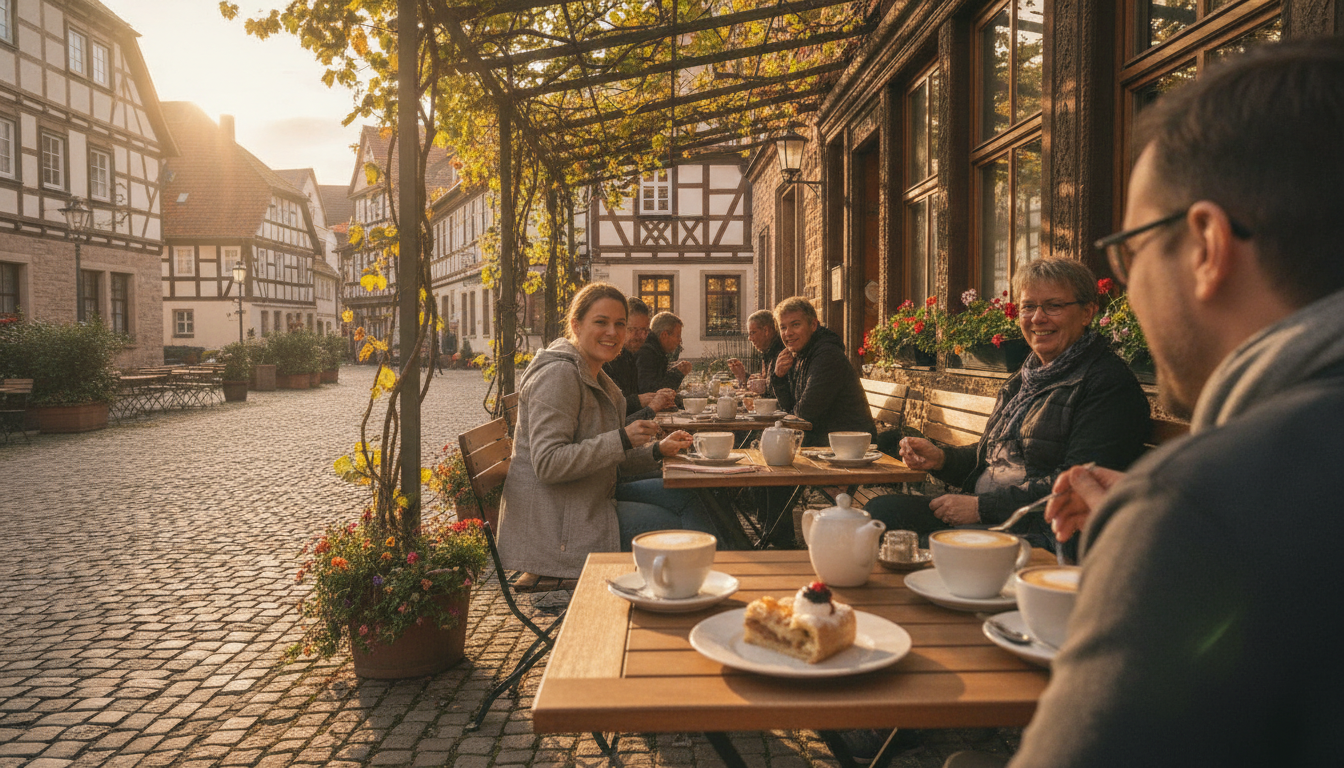
To round things off, a visit to the Kloster-Café Corvey is well worth it. Coffee and homemade cakes are served within the historic walls — the ideal way to end a day of discovery in and around Höxter.
The town's big name lies just beyond its gates: Schloss Corvey, a UNESCO World Heritage Site with its Carolingian Westwerk, belongs in every guidebook — yet the quiet moments are found away from the tour times: early morning in the park, in the monastery church before the first bus arrives, or along the path by the Weser when mist hangs over the river.
In the old town, a second look pays off: Höxter's half-timbering belongs to the elite of the Weser Renaissance — the town hall with its bay window, the carved façades of Westerbachstraße and buildings such as the Adam-und-Eva façade tell architectural stories that most people simply walk past. A stroll with your head held high is worth it.
The green legacy of the state garden show still shapes the town today: the Wallring, the Remtergarten and the riverside areas link the old town and the Weser into a ribbon for strolling — with flowering areas, seating steps and sightlines to Corvey. In the evenings, the promenade belongs to the locals.
Art lovers head for the Jacob-Pins-Forum: the museum in the Adelshof displays the work of the artist born in Höxter, while also telling the story of the town's Jewish history — a quiet, powerful place that many visitors miss.
The Weser itself is the greatest insider tip for the active: cycling the Weserradweg, canoeing downstream, or walking the highland trails of the Weserbergland — the landscape around Höxter is among the most understated beauties of northern Germany. Viewpoints such as the Räuschenberg provide the panoramas to match.
The surrounding villages are also worth discovering: Fürstenau with its palace, Stahle on the Weser, or Ovenhausen amid the greenery — cycling from one district to the next, you'll gather chapels, farmsteads and inns like pearls on a string.
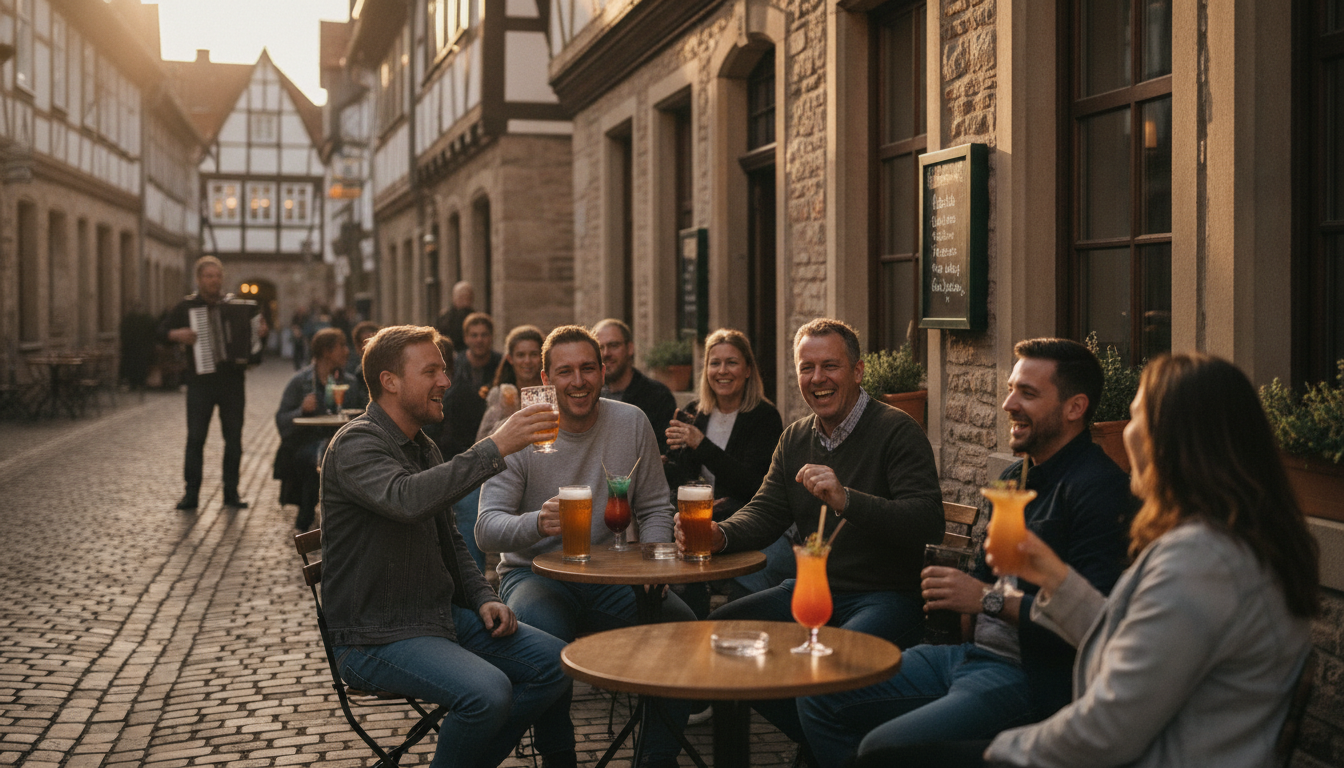
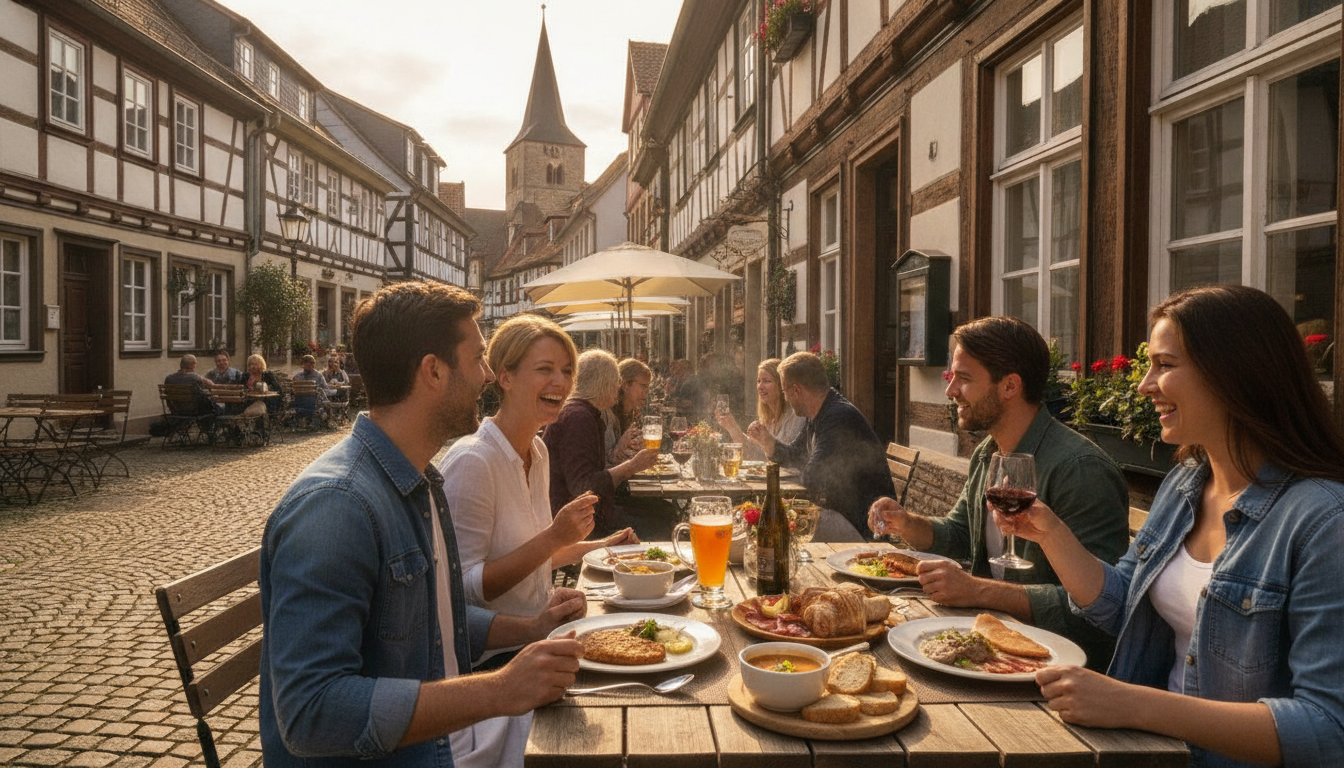
Culinary-wise, it stays honestly Westphalian: inns with regional menus, cafés with home-baked cakes, and beer gardens with Weser views in summer. Specialities from the surrounding area — sausage, honey, fine spirits — can be found at the weekly market and in farm shops.
If you want to catch events, look out for the summer concerts at Corvey, the old town festivals and the Christmas market against a half-timbered backdrop — occasions when the town shows its most sociable side.
Practical info: Höxter is reached by rail through the Weser valley, Corvey is within walking distance of the old town, and bikes are available for hire. The quietest times to visit are spring and late autumn — that's when the World Heritage Site belongs almost entirely to the people of Höxter.
So it turns out that Höxter is more than just Corvey's suburb. Between half-timbering, the Wallring and the Weser, a small town of world-class detail awaits — for those who don't go looking for insider tips, but stumble upon them on foot.
The best rhythm for a day: Corvey in the early morning, half-timbering mid-morning, a break for lunch, the Weser in the afternoon and the Wallring in the evening — this is how Höxter comes together into an arc linking world heritage and everyday beauty. Those who stay overnight get the quiet old town by lantern light as a bonus.
And that's exactly when you understand the charm of this town on the river: Höxter doesn't need to shout about itself — it's enough that the Weser flows by and the façades tell their stories. It's worth listening.
Anyone with time to spare afterwards can take in the ferry moments of the Weser valley: a cycling stretch towards Beverungen, an ice cream at the landing stage, a look back at Corvey in the evening light — and Höxter has won itself another regular. That's how insider tips work in the Weserbergland: quiet, but lasting.
Because the beauty of this corner of Westphalia is that it stays just as it is — relaxed, green and generous to all who arrive with open eyes. Until the next visit to the Weser.
Die Besten der Stadt