Hamburg
The Best Neighbourhoods in Hamburg to Explore
Introduction: The Hanseatic City as a Mosaic of Unmistakable Worlds
Hamburg is a metropolis of fascinating contrasts and fluid transitions. When you stand at the Landungsbrücken for the first time as a visitor, feel the salty wind of the North Sea in your nose, hear the piercing hoot of the enormous container ships and let your gaze roam over the steel panorama of the harbour cranes, you think you have grasped the essence of the city at once. But this maritime, rugged picture is only a single, if very prominent, brushstroke on a gigantic, multi-layered canvas. Hamburg's true soul, its complex identity and its unmistakable rhythm reveal themselves not in the big tourist attractions of the city centre, but in the organically grown neighbourhoods of strong character – the so-called “Kieze”. To understand Hamburg in all its depth, you have to leave the well-trodden paths between Rathausmarkt and Mönckebergstraße and dive deep into the urban labyrinth of its districts.
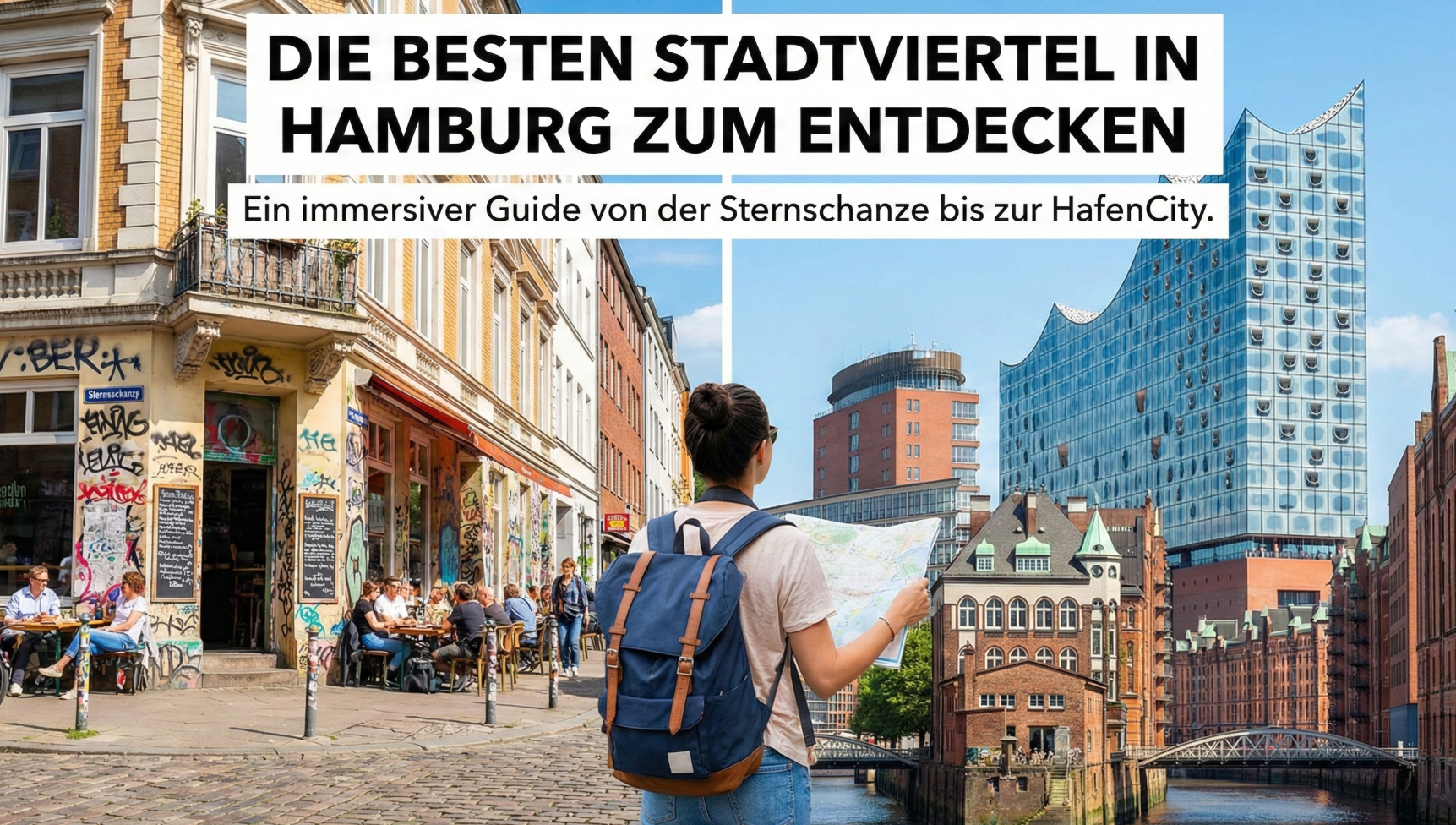
Each of these districts works like a little microcosm of its own, almost like an independent city within the city limits. This fragmentation is deeply rooted in history. Many of today's trendy districts, such as Altona, Wandsbek or Harburg, were politically and administratively independent for centuries, some even belonged to the Danish crown, before they were finally incorporated by the Greater Hamburg Act of 1937. This historic spirit of independence has survived to this day in a strong local identification among residents. A resident of Altona feels first and foremost like an Altonaer and only second like a Hamburger. This strong attachment to your own quarter produces an incredible cultural, culinary and architectural variety. A walk of just a few kilometres in Hamburg can lead you through completely different worlds: from the alternative, politically charged graffiti jungle of the Sternschanze, through the middle-class elegance shaped by magnificent Art Nouveau in Eimsbüttel, to the mirrored, futuristic glass façades of the modern HafenCity.
This comprehensive guide is an invitation to view the Hanseatic city through the lens of its most fascinating neighbourhoods. We take you on an in-depth, immersive journey through Hamburg's best districts. We explore the architectural peculiarities, the historic ruptures, the socio-cultural tensions and the small, hidden details that make each neighbourhood so absolutely unique. We show you where the creative avant-garde works, where traditional merchant history still shapes the cityscape today and where life pulses most authentically away from the guidebooks. Get ready not just to see Hamburg, but to read it, feel it and discover it in all its grand complexity.
The Speicherstadt and HafenCity: A Dramatic Dialogue Between History and Urban Utopia
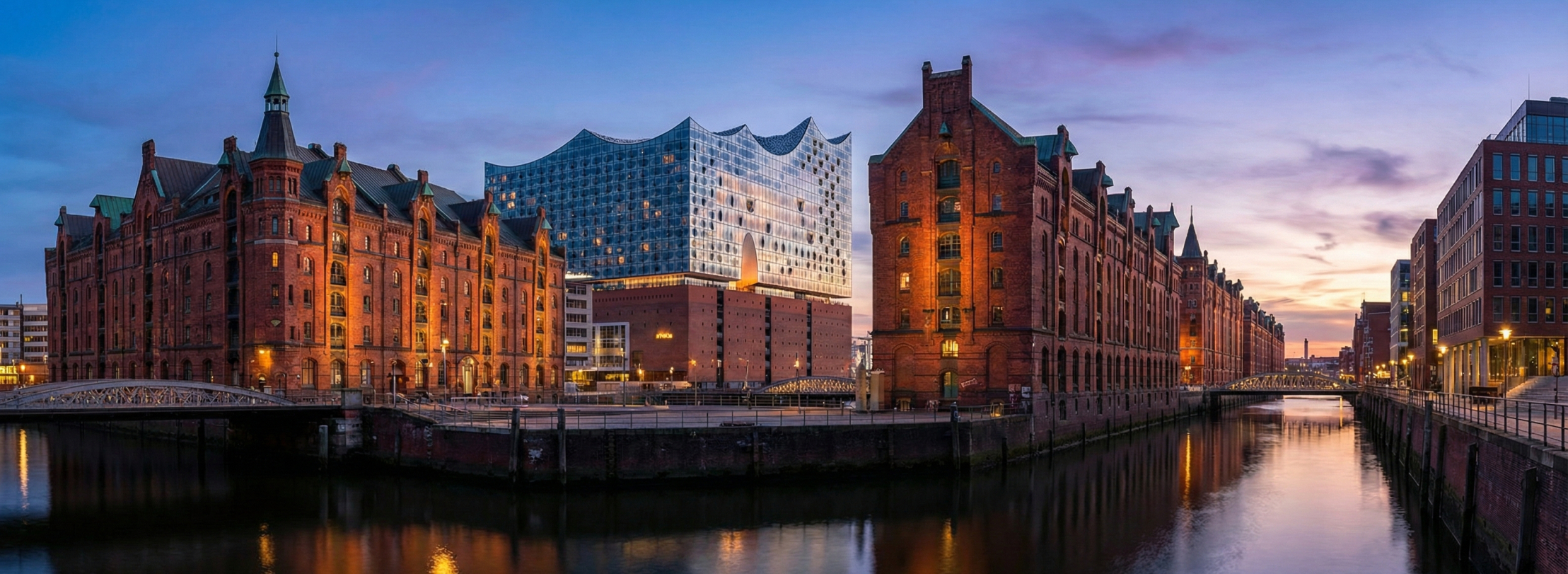
Probably the most powerful urban planning contrast Europe currently has to offer manifests itself in the direct meeting of the historic Speicherstadt and the ultra-modern HafenCity. This area south of Hamburg's old town, which once served exclusively for the storage and handling of goods from the distant colonies, has transformed over the past two decades into the continent's most ambitious and fascinating urban development project. The journey begins in the Speicherstadt, the world's largest continuous historic warehouse complex and a proud UNESCO World Heritage Site. When you stroll over the cast-iron bridges and look into the dark, tide-marked Fleete (canals), you inevitably feel transported back to the late 19th century. The endless rows of massive, neo-Gothic brick buildings with their characteristic stepped gables, copper roofs and bay windows radiate incredible calm and permanence. It once smelled intensely here of raw coffee, exotic spices, tea and fine oriental carpets, hoisted by winches from the Schuten (small barges) into the warehouse hatches. A few carpet dealers are still based here today, but most of the old storage floors have long since been converted into ultra-modern agencies, museums or exclusive lofts. Especially in the evening hours, when the whole ensemble is illuminated by a sophisticated lighting concept and the red bricks reflect in the dark water of the canals, the Speicherstadt unfolds an almost mystical, deeply romantic aura.
But if you cross just one of the many bridges heading south, you abruptly leave the past and enter the laboratory of the urban future: the HafenCity. Where derelict port facilities, quay sheds and coal-fired power stations once dominated the picture, a completely new district has been growing out of the ground since the turn of the millennium, enlarging Hamburg's city centre by a considerable forty per cent. The architecture here is a radical break from historic brick. The HafenCity is dominated by bold, futuristic glass and steel constructions, asymmetric façades, extensive promenades and innovative sustainability concepts. Every well-known international architect has left their calling card here in recent years. At the centre of this architectural spectacle the Elbphilharmonie sits enthroned unchallenged, affectionately called “Elphi” by Hamburgers. This building, which rests on an old, trapezoid quay warehouse and, with its huge, wave-shaped glass structure, evokes the sails of ships and the waves of the Elbe, has long since risen to become the city's new, shining landmark.
What is exciting about the HafenCity is its constant transformation and its innovative handling of the element of water. To protect the whole district from the devastating storm surges of the Elbe, the buildings were not hidden behind a dyke, but built on artificially raised, eight-to-nine-metre-high mounds. The waterfront promenades, squares and the Magellan and Marco Polo terraces are deliberately lower and are spectacularly flooded at extreme high water, impressively demonstrating the unbridled power of the tides to residents and visitors. The HafenCity is a district that polarises. Critics often complain of a certain sterility, high living costs and the initial lack of an organically grown neighbourhood structure. But with every new quarter that is completed, with the opening of the gigantic Überseequartier, with new parks, schools, universities and an increasingly dense hospitality infrastructure, this urban utopia is filling more and more with real, pulsating life. It is a fascinating open-air museum of contemporary architecture and an absolute must for anyone who wants to see how the metropolis of tomorrow is conceived and built.
St. Pauli: The Wild, Defiant Heart and the Soul of Subculture
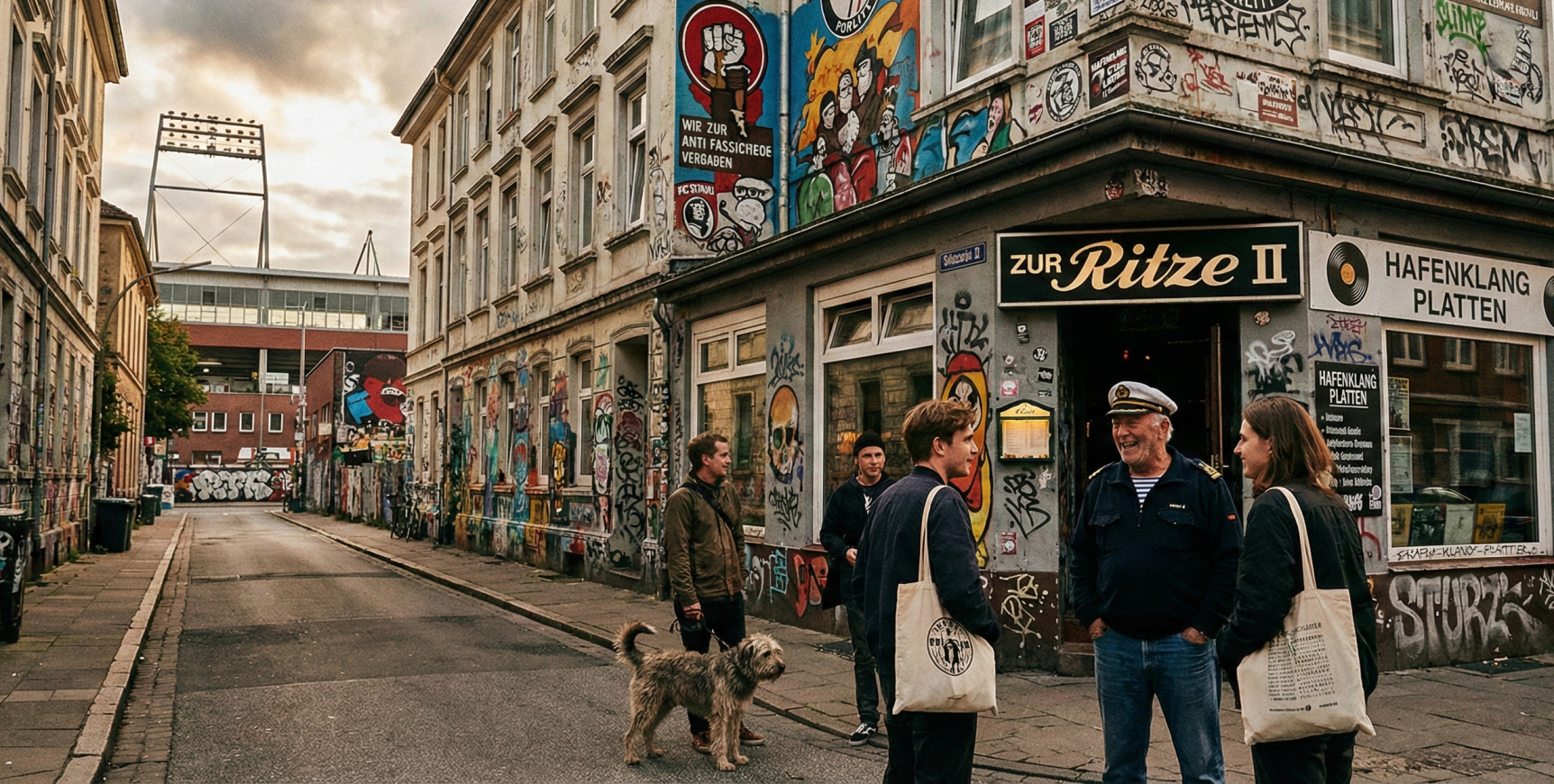
There is hardly another district in Germany that is charged with so many myths, clichés and pop-culture references as St. Pauli. World-famous and notorious for the Reeperbahn, the “most sinful mile in the world”, the district is often reduced by many outsiders exclusively to neon light, the red-light scene, stag parties and uninhibited party tourism. But anyone who experiences St. Pauli only at night and only along its main artery misjudges the true, profound soul of this extraordinary place. At its innermost core, St. Pauli is not an amusement park for tourists but a highly solidarity-minded, politically alert and culturally extremely multi-layered residential district. The history of the district was from the start that of a place for outsiders, free thinkers and workers. Historically located outside the strict gates of the wealthy Hamburg merchant city, it was where the trades settled that were unwelcome in the city centre for reasons of space or smell – including the rope makers, the “Reepschläger”, who gave the Reeperbahn its name. From this peripheral location developed the entertainment district for sailors from all over the world, and with them came a rough but boundlessly tolerant cosmopolitanism that still shapes the district today.
Away from the garish neon signs of Große Freiheit and the Ballermann-style revelry on the Reeperbahn at weekends, a deeply rooted neighbourhood life exists. The streets around the harbour edge, Bernhard-Nocht-Straße or Paul-Roosen-Straße are characterised by owner-run boutiques, tiny underground clubs, independent record shops and a density of excellent, unpretentious food and drink venues that has no equal. Here you meet a fascinating sociological mix of long-established dockworkers, young creatives, students, punks and families. The connecting element, the heart of local identity, is the football club FC St. Pauli. The Millerntor Stadium, which sits majestically above the Heiligengeistfeld, is far more than just a sports venue. It is the moral and political centre of the district. The skull-and-crossbones flag here does not stand for martial posturing but is the internationally recognised symbol of an anti-fascist, anti-racist and pro-inclusion attitude that fans and residents live uncompromisingly in everyday life.
At the same time, St. Pauli is a district in a permanent fight for survival. Because of its location close to the centre and its popularity, the Kiez has come massively into the sights of property investors in recent decades. Gentrification threatens the existence of the long-standing residents and of subcultural free spaces. This immense pressure from outside has, however, led to an incredible politicisation and self-organisation of the neighbourhood. The famous Hafenstraße houses, which were squatted in the 1980s in sometimes violent confrontations and successfully saved from demolition, are today a brightly coloured, cooperatively managed symbol of successful resistance. So too is Park Fiction directly above the Elbe – a piece of land that was actually meant to be built on expensively and which residents, through years of creative protest, turned into a public park with artificial tin palm trees and an incomparable view of the harbour. St. Pauli is loud, it is often dirty and exhausting, but it is Hamburg's most honest, liveliest and boldest district, whose raw energy inevitably captivates every visitor.
The Sternschanze: From Working-Class Quarter to Epicentre of Urban Creativity
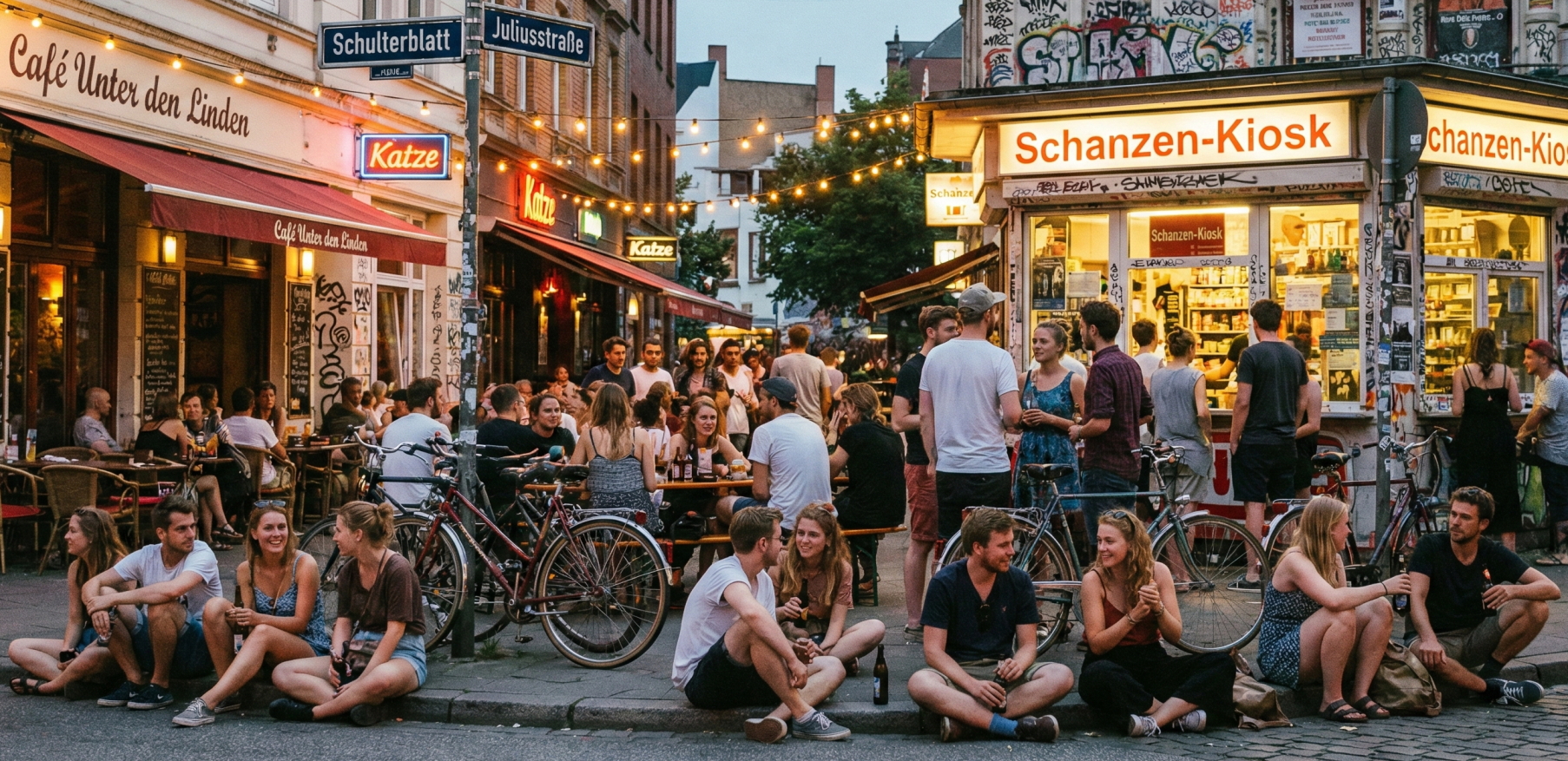
Directly bordering St. Pauli to the north, separated only by the former slaughterhouse, lies the Sternschanze, simply called “die Schanze” in Hamburg parlance. If St. Pauli is Hamburg's rough, defiant heart, then the Schanze is its creative, style-setting and often highly hip mind. The transformation of this district over the past three decades is a textbook example of the rapid development of urban conurbations. Once a densely populated, grey working-class district shaped by migrants, students and the alternative squatter scene, the Sternschanze has become the undisputed hotspot for fashion, design, culinary trends and young nightlife. The density of concept stores, third-wave coffee roasters, vegan restaurants, craft beer bars and small, independent boutiques is higher here than anywhere else in the Hanseatic city. Anyone looking for the latest urban trends away from the global mainstream inevitably begins their search on Schulterblatt, the district's pulsating main artery.
Despite this massive influx of commerce and lifestyle, the Schanze has not become a sterile yuppie district. That is mainly down to the massive, unmissable thorn in gentrification's side: the Rote Flora. The former, magnificent Flora Theatre on Schulterblatt was squatted in 1989 and has functioned ever since as an autonomous, far-left cultural centre. The crumbling façade of the Rote Flora, completely covered in political posters, slogans and graffiti, stands in an absurd, almost surreal contrast to the high-priced boutiques and chic street cafés that immediately surround it. This architectural and ideological clash makes the Schanze so unique. It is a place where political activism and hedonistic consumption coexist in constant, tension-filled friction. Especially on warm summer evenings, the whole district turns into one single, huge open-air party. “Cornern” – standing and drinking comfortably on the pavements and at street corners, mostly supplied by the numerous, well-stocked kiosks – is good form here and the best way to immerse yourself in the Schanze's way of life.
A few steps from the bustle of Schulterblatt, however, the district also shows its quieter, more intimate sides. The Karoviertel (Karolinenviertel), which is administratively often counted as part of St. Pauli but feels like a direct extension of the Schanze, captivates with its tiny, cobbled lanes such as Marktstraße. Local Hamburg fashion designers, vintage shops and sustainable fair-fashion stores have settled here. The buildings are smaller, the rents (still) marginally more affordable, and the atmosphere is more familial than in the loud epicentre. The Schanzenpark, too, dominated by the massive former water tower that now houses a luxury hotel, offers a much-needed green lung. This is where the district meets for barbecues, slacklining or open-air cinema. The Sternschanze is a district of constant motion, a creative biotope that never stands still and whose vibrating, sometimes exhausting but always inspiring atmosphere sweeps up every visitor at once.
Altona and Ottensen: Village Idyll, Historic Independence and Multicultural Zest for Life
If you leave the bustle of the Schanze and move into the west of Hamburg, the atmosphere of the city changes noticeably. You enter Altona, and in particular its most charming sub-quarter, Ottensen. The history of this borough is fascinating and shapes its residents' self-image to this day: until 1864 Altona belonged to the Kingdom of Denmark and was for a time the second-largest Danish city after Copenhagen. Altona was deliberately developed as a tolerant, cosmopolitan competitor to the then strictly conservative, Lutheran Hamburg. Refugees of faith, Jews and free thinkers found refuge and freedom of trade here. This centuries-old tradition of tolerance, multiculturalism and slight distance from the big Hanseatic city next door is deeply rooted in the DNA of Altona and Ottensen. When Hamburgers talk about Ottensen today, they often lovingly call it their “little village in the city”, a district where the clocks seem to tick a little more slowly.
For a long time Ottensen was a rough, densely built industrial district shaped by factories producing glass, machinery and ship propellers. The gigantic halls of the former Zeise factory or of the cultural centre “Fabrik” still bear witness to this sweaty past. But in recent decades Ottensen has transformed into one of the most sought-after and liveable residential districts in Europe. The transformation of the old industrial architecture has been masterfully achieved: the old brick halls now house excellent arthouse cinemas, theatres, galleries, loft-style offices and fantastic restaurants. The street structure in Ottensen is winding, narrow and extremely pedestrian-friendly. The district steadfastly refuses to give priority to the car. When you stroll along Bahrenfelder Straße or around Spritzenplatz, you feel enormous neighbourly warmth. The density of small, owner-run shops, from traditional bakeries through organic supermarkets to tiny boutiques, is outstanding. Ottensen is a district where people know each other, where children play on the pavements and where neighbourly togetherness still has real standing.
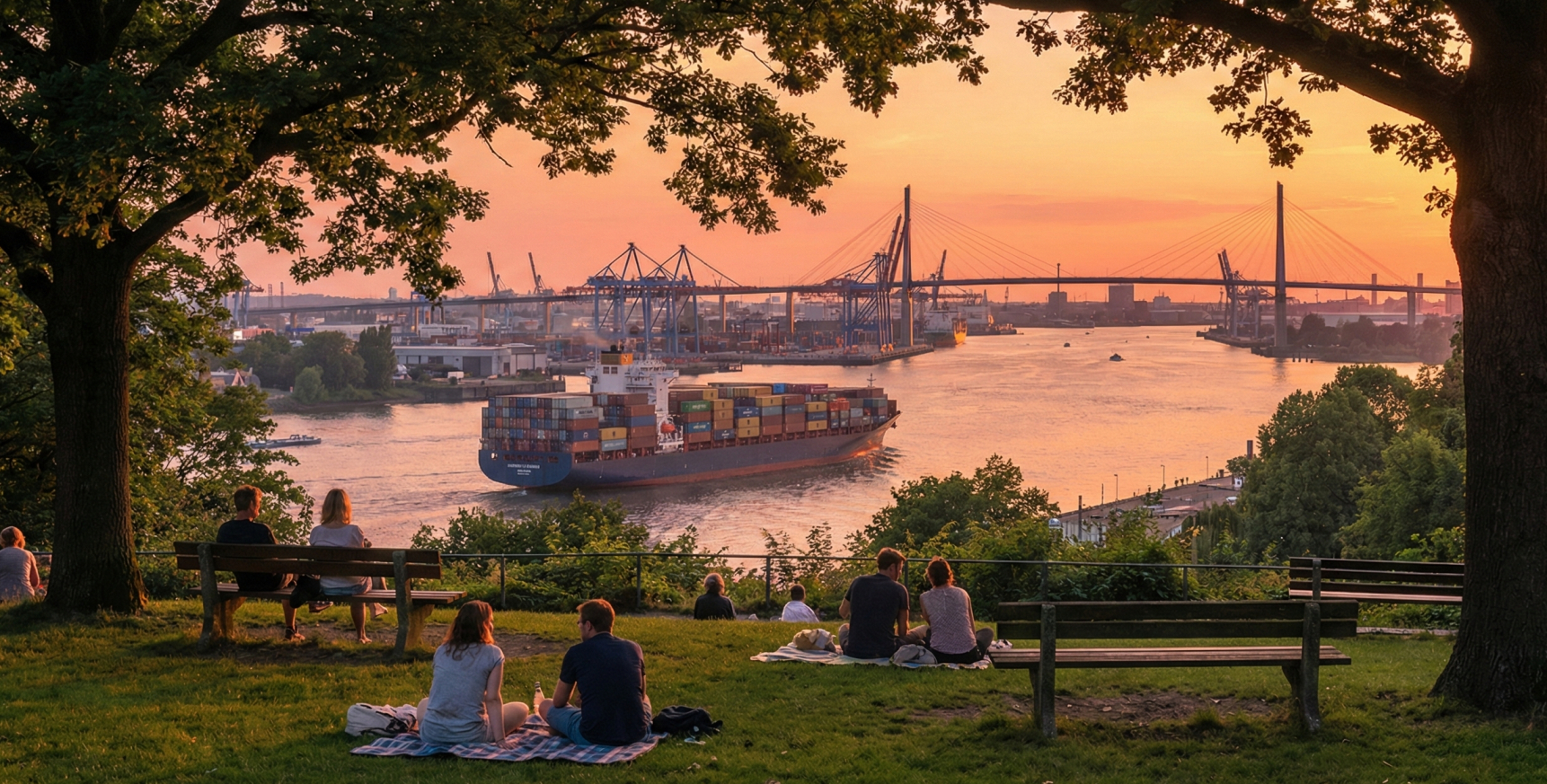
The absolute highlight and place of longing for many residents of Altona, however, is the immediate proximity to the Elbe. A walk to the “Altonaer Balkon”, an elevated park on the steep Geest slope, reveals one of the most breathtaking panoramas in northern Germany. From up here you look straight down on the broad stream of the Elbe, watch the gigantic container ships on their way out into the wide world, see the busy activity at the container terminals on the opposite side of the harbour and admire the elegant construction of the Köhlbrandbrücke in the distance. If you follow the steep steps or paths down to the water, you reach Neumühlen and Övelgönne. Here historic, tiny captains' cottages line up along a picturesque footpath, while old museum ships bob in the harbour. A few metres further on begins the Elbe beach – a real, fine-sand stretch of beach in the middle of the metropolis, where on hot days you can dig your feet into the sand and feel Hamburg's maritime heart beating in all its majestic splendour.
Eimsbüttel: Art Nouveau Dreams, Middle-Class Bohemia and Unfussy Quality of Life
North-west of the city centre, adjoining the Sternschanze and Altona seamlessly, stretches Eimsbüttel – the district that for many Hamburgers represents the epitome of perfect, balanced big-city life. Eimsbüttel is neither as loud and radical as St. Pauli nor as exclusive and elitist as the districts around the Alster. It is the undisputed stronghold of the middle-class bohemia, a magnet for young families, successful creatives and academics who have outgrown the rough shared-flat days of the Schanze but by no means want to do without urban flair, excellent coffee and a lively neighbourhood. Eimsbüttel is densely populated, one of the most densely built-up quarters of the city, and yet it never feels oppressive. The secret of this lightness lies in the sensational architecture and the wealth of old trees.
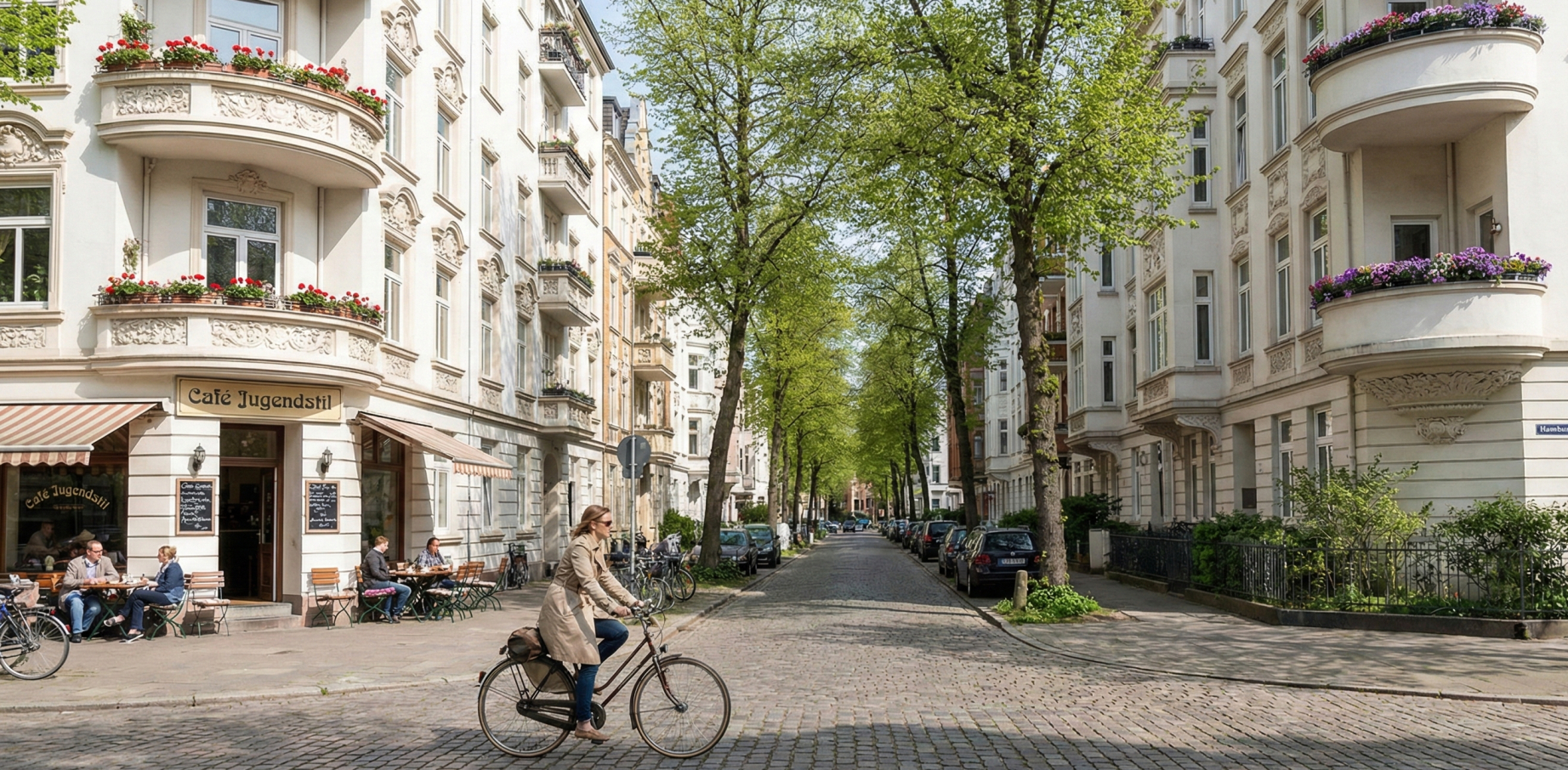
Anyone strolling through Eimsbüttel's cobbled side streets will inevitably look upwards. The district is famous for its kilometres of streets of immaculately preserved, magnificent Art Nouveau and Gründerzeit period buildings. White, richly stucco-decorated façades, stately wooden balconies on which oleander and lavender bloom lushly in summer, and majestic staircases shape the architectural picture. Behind these façades hide huge flats with four-metre-high ceilings, plank floors and double doors – the absolute dream properties of many city dwellers. The centre of public life is Osterstraße, an almost two-kilometre-long thoroughfare that runs right through the district. It is the perfect example of a functioning urban infrastructure. Alongside large supermarkets and drugstores you find specialist cheese shops, traditional butchers, small bookshops and countless cafés. The annual Osterstraßenfest turns the whole street into a gigantic neighbourhood party and underlines the strong sense of community in the district.
Despite the urban density, Eimsbüttel offers numerous places of retreat. Small parks such as the “Eimsbütteler Park Am Weiher” serve as green oases where people jog, read or picnic on the spacious lawns at weekends. Another absolute highlight, located exactly on the border between Eimsbüttel, Eppendorf and Harvestehude and loved and used equally by all three districts, is the Isemarkt. This weekly market is an institution. Twice a week, on Tuesdays and Fridays, around 200 traders set up their stalls directly beneath the historic steel viaduct of the U3 underground line. Along almost a kilometre, protected from rain by the tracks above, the Isemarkt offers an incomparable culinary experience. From regional organic vegetables through exotic spices and North Sea fish fresh off the boat to handmade chocolates, you find everything your heart desires here. Discovering Eimsbüttel means getting to know Hamburgers' real, unfussy but extremely high-quality everyday life – a district where you would like to stay and move in straight away.
Eppendorf and Winterhude: Hanseatic Elegance, Waterways and Life on the Alster
If you are looking for the true, tradition-rich and wealthy face of the old merchant city of Hamburg, you have to head north, to the districts grouped around the Alster and its numerous offshoots. Eppendorf and Winterhude are prime examples of Hanseatic elegance, immense wealth and a quality of life that has no equal in Europe. Here reside the modern “Pfeffersäcke” (the historical nickname for Hamburg's rich merchants), celebrities, successful entrepreneurs and long-established families. The cityscape differs massively from the raw brick of Altona or the graffiti of the Schanze. Eppendorf and Winterhude present themselves immaculately kept, architecturally brilliant and permeated by a calm, self-assured exclusivity. Magnificent town villas from the turn of the century, surrounded by huge old trees and hidden behind tall hedges, line the streets, while elegant boutiques, delicatessens and gourmet restaurants define the commercial offering.
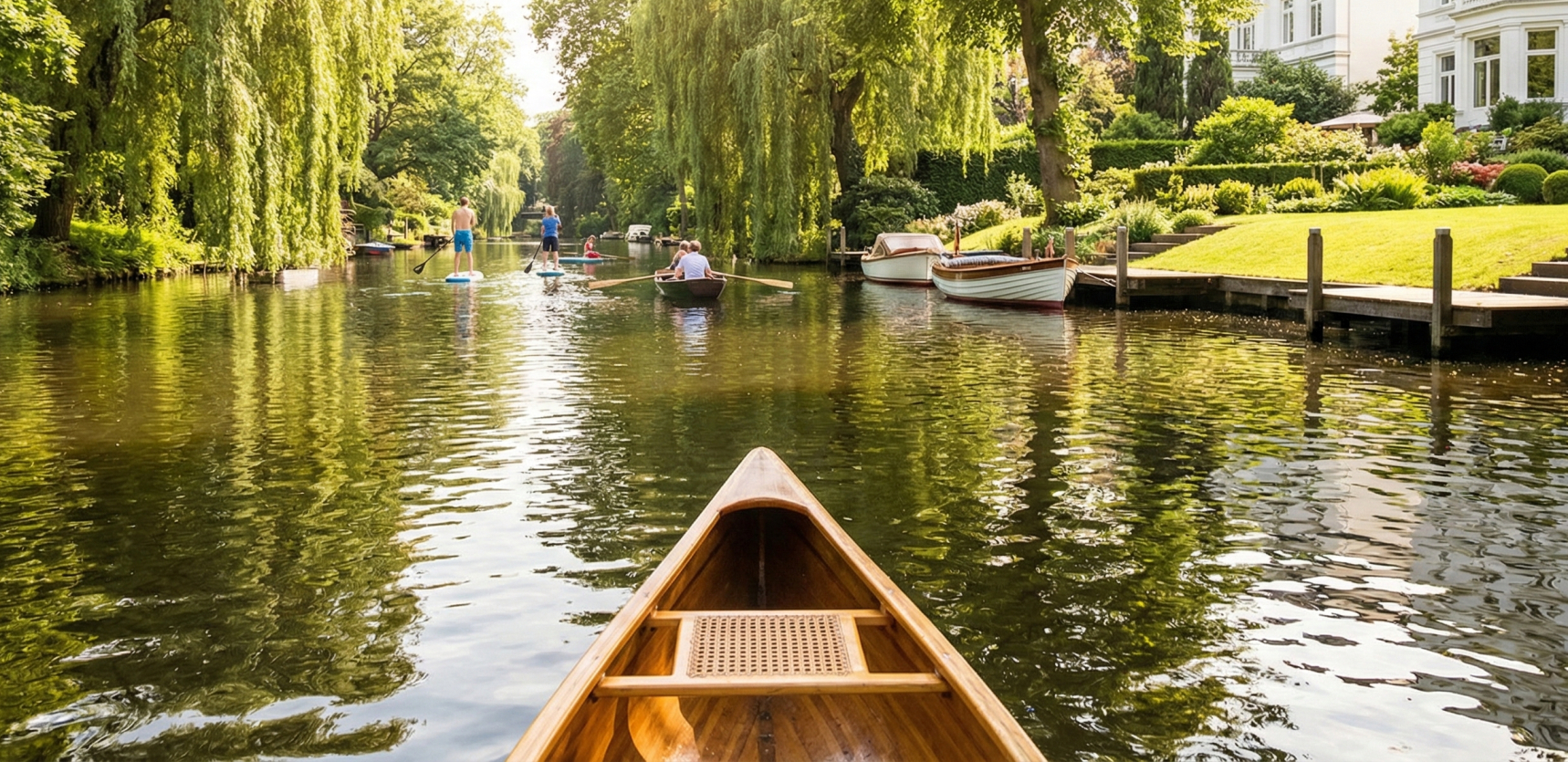
The absolutely defining element of these districts, however, is water. Hamburg often boasts of having more bridges than Venice and Amsterdam combined, and nowhere in the city is this water-rich character as tangible as in Winterhude and Eppendorf. A close-meshed network of idyllic canals – such as the Osterbekkanal, the Goldbekkanal or the Leinpfadkanal – runs through the districts and connects them directly with the Außenalster, the gigantic inland lake in the heart of the city. Life here shifts almost entirely onto the water, especially in the summer months. The gardens of many villas reach straight to the canals and have their own jetties. If you really want to discover these districts, you must not do so only on foot. Renting a canoe or a stand-up paddle board (SUP) is a must here. When you glide silently over the water, the weeping willows dip their branches into the canals and you admire the magnificent rear sides of the properties, a stillness and beauty is revealed that seems absolutely surreal in a city of millions.
Winterhude is also home to by far the most important green lung in the north of the city: the Hamburger Stadtpark. This gigantic area is far more than just a meadow; it is a masterfully planned landscape architecture ensemble from the 1910s. The park offers extensive sunbathing lawns where half of Hamburg seems to gather on sunny weekends, a little lake of its own with an outdoor pool, hidden themed gardens and a legendary open-air stage on which international music stars give open-air concerts. Architecturally the park is overlooked by the Planetarium, housed in a huge former water tower of dark brick, from whose viewing platform you enjoy a spectacular 360-degree view over the whole city. Eppendorf and Winterhude are the districts for the fine arts, for luxurious strolling, for long boat trips and for a deep understanding of why Hamburg is regarded as one of the greenest and most liveable big cities in the world.
Conclusion: The Endless Voyage of Discovery Through the Hamburg Mosaic
The journey through Hamburg's varied districts, from the historic brick façades of the Speicherstadt through the rough subculture of St. Pauli and the creative energy of the Sternschanze to the middle-class elegance in Eimsbüttel and on the Alster, shows one thing very clearly: there is no single, true Hamburg. The Hanseatic city is a vast, complex mosaic whose true beauty arises only from the interplay of all its different, contrasting tiles. Every district, every neighbourhood, has its own right to exist, its own deep history and its own unmistakable rhythms.
Discovering Hamburg in its entirety is not a task for a single weekend. It is an ongoing process, an endless urban voyage of discovery. The best way to experience this city is to put the map aside now and then, boldly leave the well-trodden tourist paths and simply let yourself drift through the different neighbourhoods. Change perspective: take the HVV ferry to Altona, hire a city bike to cruise through the HafenCity, stroll beneath the old trees of Eimsbüttel and paddle across the quiet canals of Winterhude. Strike up conversations with people, in the corner pub on the Kiez just as in the delicatessen in Eppendorf. Because in the end it is not just the spectacular architecture or the proximity to the water that make Hamburg so incomparable, but the people who fill their districts with life with passion, tolerance and an unshakeable local patriotism. Step outside and find your very own favourite Hamburg neighbourhood!

Sarah Müller
Reise- und Lifestyle-Journalistin