Hamburg
Art Beyond the Big Museums
Hamburg, the proud Hanseatic city, is world-famous for its cultural beacons. The Hamburger Kunsthalle sits majestically between the Alster and the main station, the Deichtorhallen offer international blockbuster exhibitions of photography and contemporary art, and the Bucerius Kunst Forum draws visitors with high-calibre themed shows. These institutions are indispensable to the city's cultural backbone and rightly attract thousands of visitors.
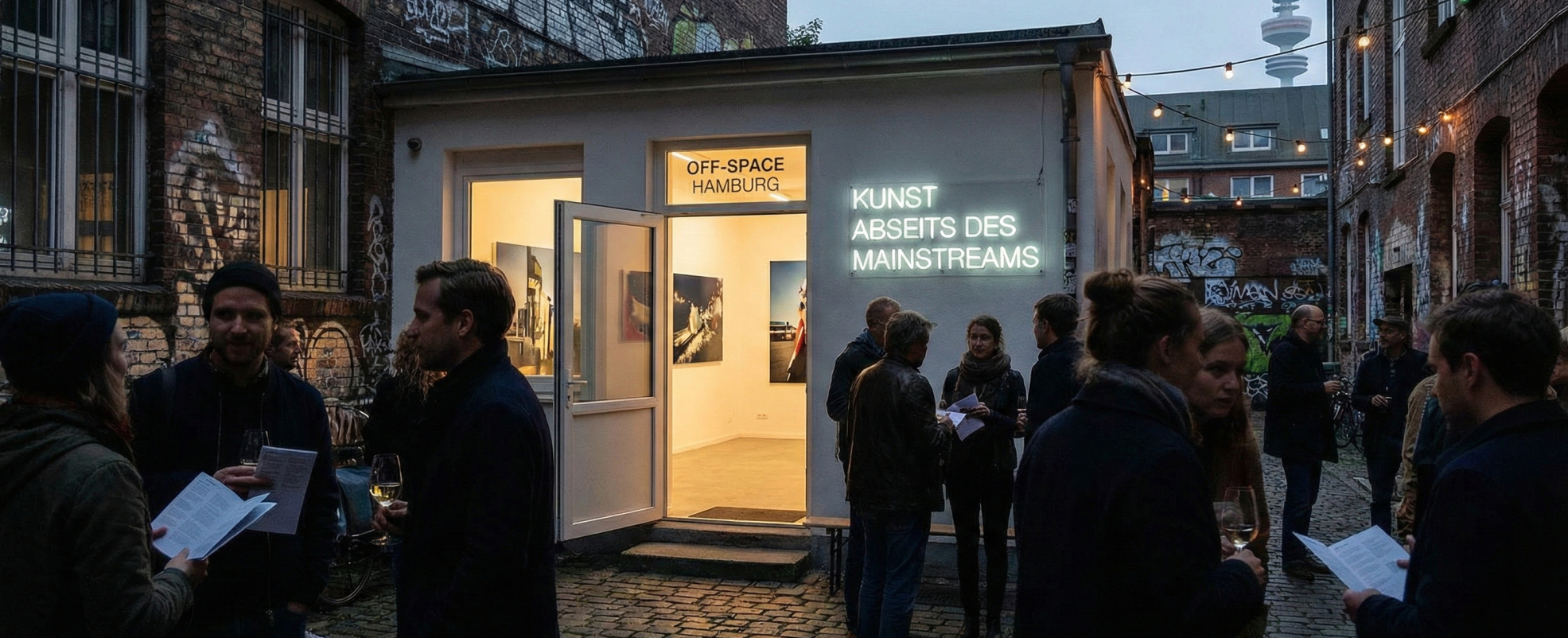
But anyone who believes that Hamburg's artistic life takes place only in these hallowed halls is greatly mistaken. They miss the real heartbeat, the raw, the unfiltered and the avant-garde that make this city so artistically alive. Away from the beaten tourist tracks, hidden in backyards in the Karolinenviertel, in former factory floors in Altona, in the winding lanes of the Gängeviertel or in unassuming shop units on St. Pauli, an art scene is bubbling that has few equals in its variety and energy.
This article is a manifesto for curiosity. It is a guide for those who want not just to consume art but to experience where it is made and where it is shown first, before the market smooths it out. We devote ourselves to the small galleries in Hamburg, the off-spaces and the art-scene insider tips that you won't find in any standard guidebook. Here you still meet the artists in person at the opening, here an original work sometimes costs less than a dinner in a star-rated restaurant, and here you feel the true creative pulse of the city.
This journey sometimes requires a little courage. You have to overcome inhibitions, enter dark doorways and embrace experiments whose outcome is uncertain. But the reward is an authentic, deep look into the soul of Hamburg. We take you on an extended gallery tour of Hamburg that will change your view of the city and its art for good.
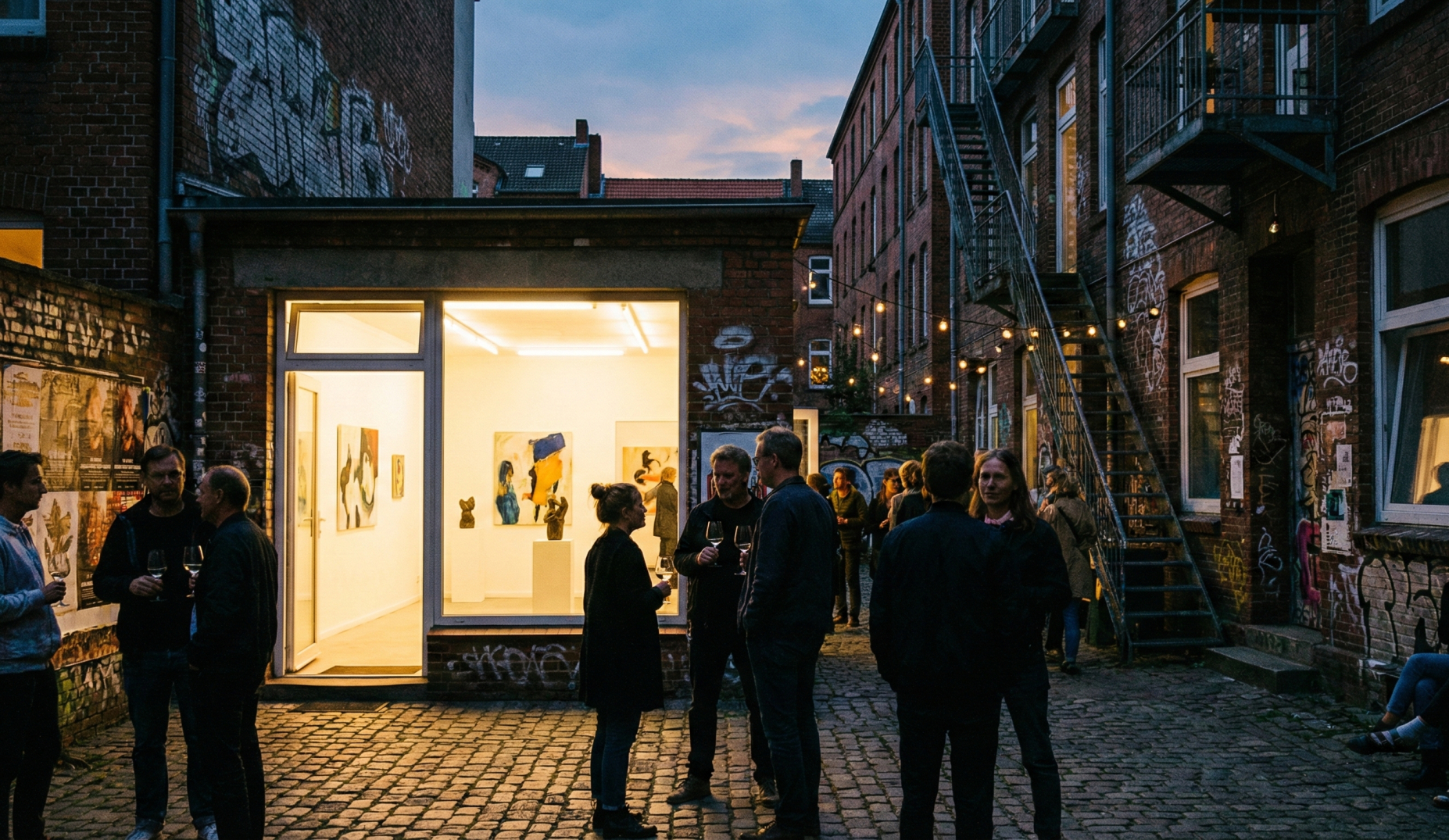
The Ecosystem of the Independents: Why Small Galleries and Off-Spaces Matter So Much
Before we turn to specific places, it is important to understand why this scene is existential for a city like Hamburg. Small galleries and so-called “off-spaces” (often non-commercial project spaces run by artists themselves) are the laboratories of the art world.
In the big museums we generally see the “established” – art that has already passed through the filter of curators, critics and the market. That is important, but it is a rear-view-mirror perspective. In the small galleries and project spaces, by contrast, we look through the windscreen into the future. Here young graduates of the renowned Hochschule für bildende Künste Hamburg (HFBK) can venture their first experiments without the pressure to sell immediately. Here established artists can realise projects that would be too unwieldy or too risky for their main galleries.
The Fight for Space: The Example of the Gängeviertel
Hamburg is an expensive city. Pressure on property is enormous, and that makes it ever harder for non-commercial art venues to survive. The history of Hamburg's off scene is always also a history of the fight for free spaces.
Probably the most famous example is the Gängeviertel. In 2009, artists and activists occupied an historic 19th-century ensemble near the Gänsemarkt to save it from demolition and conversion into luxury property. What began as a protest is today an established, self-managed cultural venue. In the winding buildings of the Gängeviertel there are studios, flats and also exhibition spaces such as the “Galerie Speckstraße” or the “Raum linksrechts”.
A visit here is a must for anyone who wants to understand Hamburg's alternative art scene. The exhibitions are often political, raw and provocative. They take place in rooms that breathe history, far from the sterile “white cube” aesthetic of commercial galleries. Here it becomes clear: in Hamburg, art is always also urban development from below. Supporting these places with a visit is a direct contribution to preserving the city's cultural diversity.
The Role of the Artist-Run Galleries
A Hamburg speciality is the strong artist-run galleries. These are galleries run by the artists themselves. They are cooperatives of the mind, in which communicating their own work takes priority, not a gallerist's profit. Places like the Westwerk on the Fleetinsel are institutions. For decades, the Westwerk has offered space in a former warehouse building for exhibitions, concerts and performances that consistently refuse the mainstream. Such places are the backbone of contemporary art in Hamburg; they are reliably radical and offer a continuity that many purely commercial small galleries lack, which often have to close again after a few years.
The Established Independents: Institutions of the “Other”
There are galleries in Hamburg that are small and independent but have developed over the years such a radiance that the city is hard to imagine without them. They are professionally run and have a clear programme, but are far removed from the slick blue-chip gallery scene.
Feinkunst Krüger: The Heart of St. Pauli
When you talk about Hamburg's gallery scene, the name Feinkunst Krüger inevitably comes up. Ralf Krüger has run his gallery since 1998, which was long based on St. Pauli and now resides near the Großneumarkt. Krüger is an institution. His programme is deeply rooted in subculture: illustration, lowbrow art, comic aesthetics, but also demanding painting and sculpture that doesn't care about academic fashions.
Feinkunst Krüger is the place where many artists who are internationally successful today had their first solo shows. The openings are legendary, often crowded, loud and cheerful. There is no elitist distance here. Krüger himself is usually present, a walking encyclopaedia of the scene, and communicates art with a passion that is infectious. Anyone who wants to know what is “typically Hamburg” in young art – a little dirty, very direct, often humorous and brilliantly crafted – has to drop by here.
Galerie Borchardt: Architecture and Space
The Galerie Borchardt in the stylish district of Harvestehude takes a very different approach. Things are quieter and more conceptual here. The gallery has a strong focus on positions that engage with architecture, space and structure. It is the place for minimalist sculptures, conceptual photography and site-specific installations.
Despite the posh address, the Galerie Borchardt is not a place for pleasing decorative art. The exhibitions challenge the viewer, they demand time and engagement. The gallery exemplifies that “small” doesn't mean “insignificant”. The artists shown here are often internationally established but appreciate the focused setting the gallery offers. For lovers of intellectually stimulating, aesthetically reduced art, this is one of the best addresses in the city.
Mikiko Sato Gallery: The Bridge to Japan
Near the Deichtorhallen, on Klosterwall, there is a gem that connects Hamburg with the Far East. The Mikiko Sato Gallery has specialised in contemporary Japanese art. If you think of Japanese art only as traditional woodblock prints or manga, you will be set right here.
Mikiko Sato shows artists who engage critically with Japanese society, who reinterpret traditional techniques radically anew or who have developed their very own, often disturbingly beautiful aesthetic languages in the globalised art world. The gallery is a perfect example of specialisation. Instead of showing “a bit of everything”, it offers depth in a niche area and thereby enriches the Hamburg scene with an indispensable international perspective that is rarely found so consistently in the big museums.
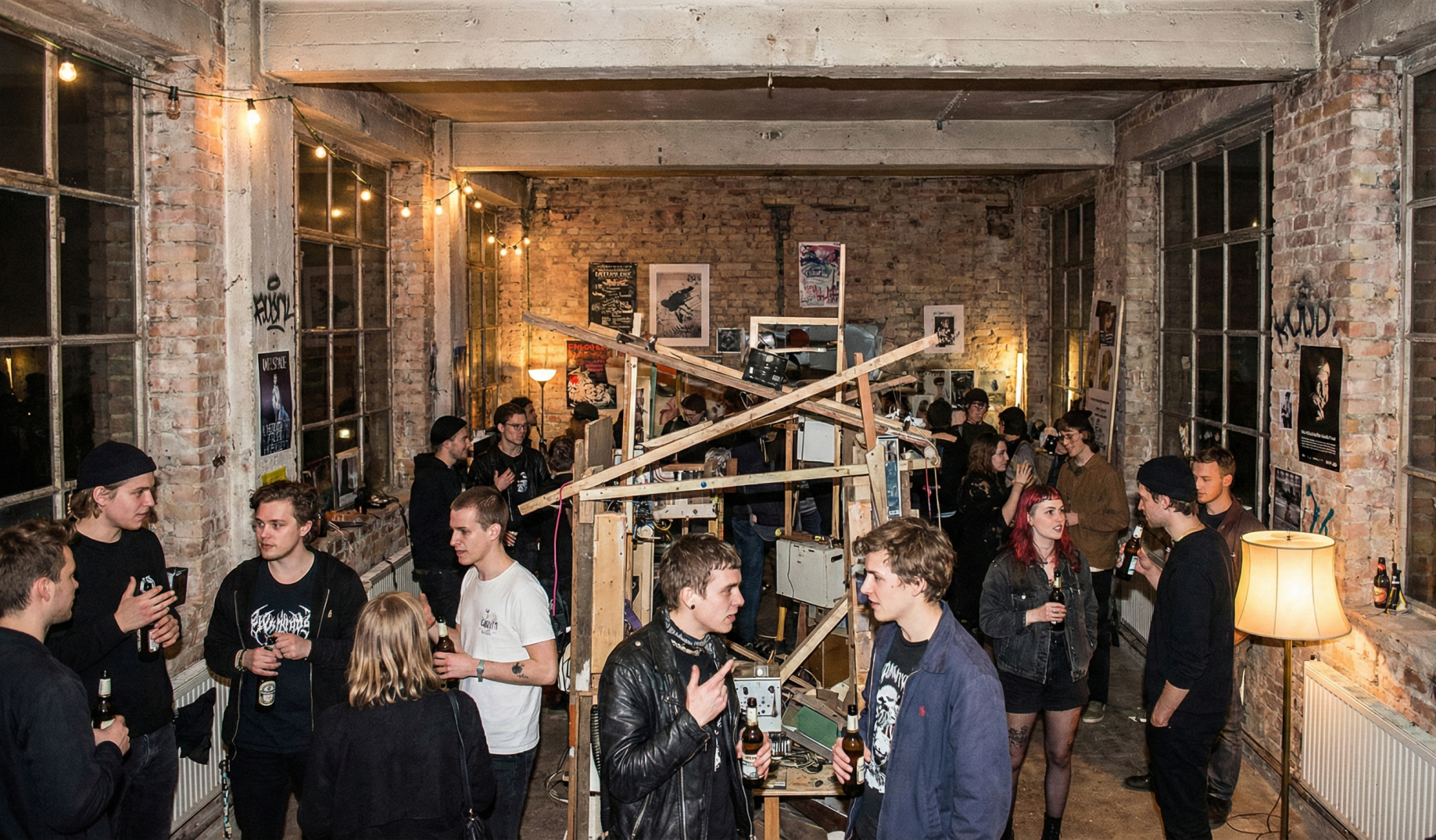
The Wild and Experimental: Off-Spaces and Project Spaces
If the established independents are the backbone of the scene, the off-spaces are its fresh blood. These places are often volatile; they appear, use an empty shop for a year or two and disappear again when the lease ends or the operators' energy runs out. But precisely this transience is their appeal. Here art happens in the now.
FRISE – Künstlerhaus Hamburg e.V.
The FRISE in Altona is more than just an exhibition space; it is an artists' house where people live and work. The attached exhibition space is curated by the artists based there. Here you encounter art that comes straight from the studio. The exhibitions are often curated thematically and bring different disciplines together. The FRISE is an important hub in the network of Hamburg artists and a place where discourse about art is just as important as the art itself.
MOM art space
The MOM art space in the Gängeviertel is a prime example of a non-commercial project space. It is not about selling here. It is about making things possible. The programme is extremely dense; exhibitions often change weekly. Performance art, video installations, participatory projects – the MOM is an open laboratory. The quality can vary, that is in the nature of the thing, but the energy is always high. It is the perfect place to embrace an artistic impulse late in the evening that you won't forget in a hurry.
The Necessity of Failure
What unites these places is the permission to fail. In a big institution an exhibition has to “work”, it has to generate visitor numbers and convince critics. In the off-space an experiment may also go spectacularly wrong. And that is exactly what matters. Only where failure is possible can something truly new arise. Anyone visiting these spaces should hand in their expectations of “perfect” art at the cloakroom and instead engage with processes and ideas. These are the places in Hamburg where experimental art is at home.
Niches and Specialists: Street Art, Illustration and More
Hamburg has a long tradition in specific art forms that often fly somewhat under the radar in general perception but have a huge and loyal fan base.
Affenfaust Galerie: Urban Art Grows Up
The Affenfaust Galerie began in a small cellar on St. Pauli and is today housed in a huge former supermarket hall in Bahrenfeld. It is Hamburg's most important address for urban art and street art that has made the leap from the street to the gallery space.
The people behind Affenfaust recognised early that street art is more than just graffiti. They show artists who work with stencils, create huge murals (wall paintings) or intervene sculpturally in urban space. The exhibitions are often spectacular and expansive. The gallery is also the initiator of the “Knotenpunkt” festival, which every few years brings international greats of urban art to Hamburg. Anyone who wants to understand how the aesthetics of the street are turning into contemporary art has to visit the Affenfaust. It is a magnet for a young audience that has little use for classical oil painting.
Gudberg Nerger: Design Meets Art
In the Neustadt, near the Großneumarkt, you will find Gudberg Nerger. This gallery moves elegantly along the often blurred line between fine art, illustration and graphic design. Hamburg is a media city, a city of advertising people and graphic designers. Gudberg Nerger is their visual home.
Here illustrators are shown who work for international magazines but also pursue independent artistic projects. The hang is often dense, a modern interpretation of the “Petersburg hang”. It is a place where you can discover fantastic, perfectly crafted drawings and prints. And it is one of the best places in Hamburg to buy young art that is still affordable. A limited screen print by an up-and-coming illustrator can often be had here for a two-figure sum – the perfect entry point for young collectors.
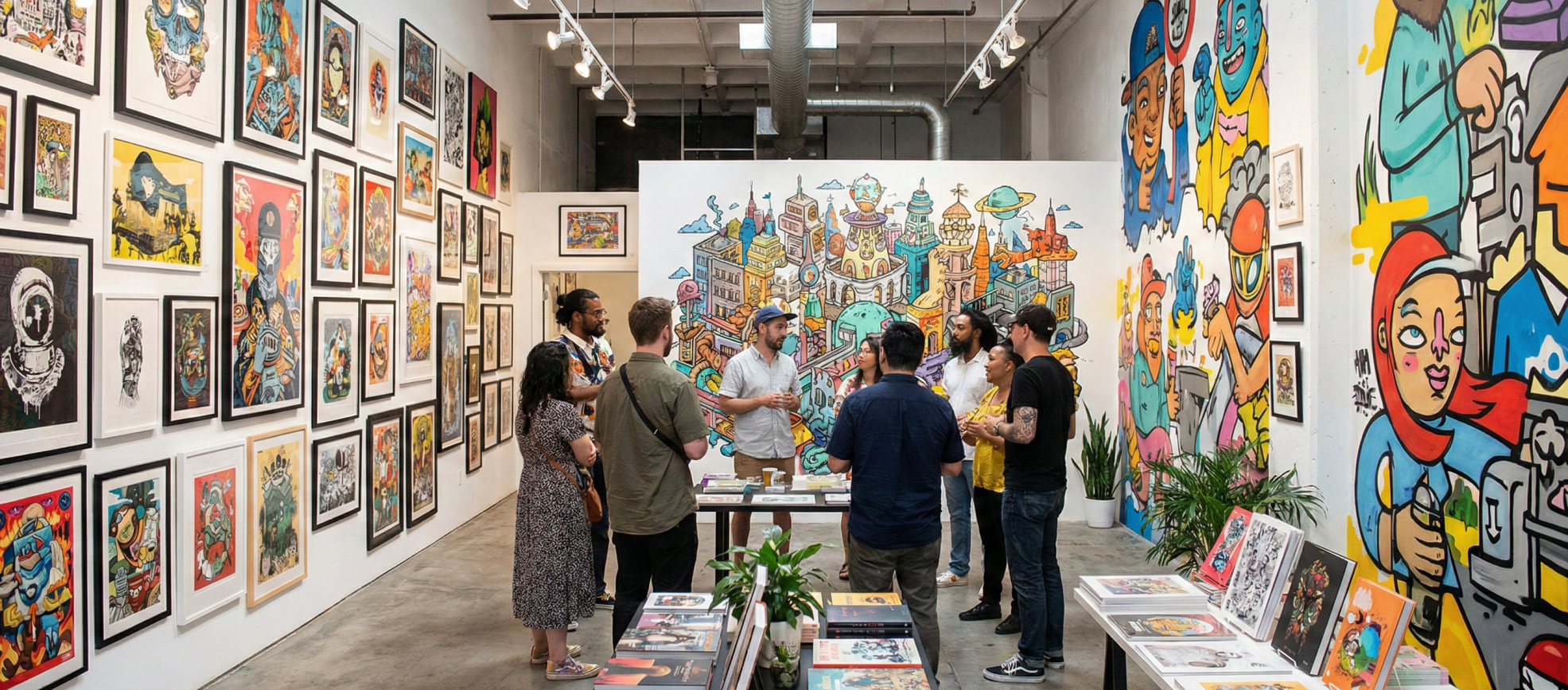
The Practical Guide for Art Strollers: How to Conquer the Scene
Now you know where you could go. But how is it best done? The world of small galleries can seem intimidating. Here are a few practical tips for your gallery tour of Hamburg:
1. Overcome Your Inhibitions
Many small galleries look closed from the outside. Sometimes you have to ring the bell, sometimes go through a dark hallway. Don't be put off. These places want visitors! When you enter, you won't be eyed up by an arrogant gallerist. In 99% of cases a friendly person sits there (often the gallerist themselves or an intern) who is glad you are there. A simple “Hello, I wanted to look at the exhibition” is completely enough.
2. Use the “Fleetinsel” as a Starting Point
If you have little time, head for the Fleetinsel (between Stadthausbrücke and Rödingsmarkt). Here, in old warehouse buildings, several excellent galleries and institutions are concentrated in a very small space: the already mentioned Westwerk, the renowned Galerie Karin Guenther, the Kunstverein in Hamburg (larger, but very important for contemporary art) and a few more. Here you can practise “gallery hopping” in its purest form.
3. Pay Attention to Opening Hours and “Openings”
Small galleries often have limited opening hours, sometimes only Thursday to Saturday for a few hours. Be sure to check the websites or Instagram channels beforehand.
The best time for a visit, however, is always the vernissage (opening). These mostly take place on Thursday or Friday evenings. Vernissages are social events. You drink a (often free) beer, stand on the street outside the gallery, talk to people. It is the best opportunity to soak up the atmosphere of the scene and get into conversation with the artists. Nobody expects you to start a deep art-historical conversation. An honest “I like this picture, how did you make it?” is the best icebreaker.
4. Buying Art – Dare to Ask
A big misunderstanding is that art in galleries is unaffordable. Of course there are works for tens of thousands of euros. But especially in the small galleries and off-spaces that show young positions, there are often fantastic works for under €500. Don't be afraid to ask for the price list. That is completely normal. If you like something but it is too expensive: ask about editions (prints) or smaller works by the artist. Buying art is the most direct way of keeping this scene alive.
5. Use Digital Helpers
Websites such as ArtRabbit Hamburg or the cultural calendars of city magazines such as “Mit Vergnügen Hamburg” or “Szene Hamburg” are indispensable for keeping track of current exhibitions in Hamburg's off-spaces. The scene is fast-moving, and the internet is its most important means of communication.
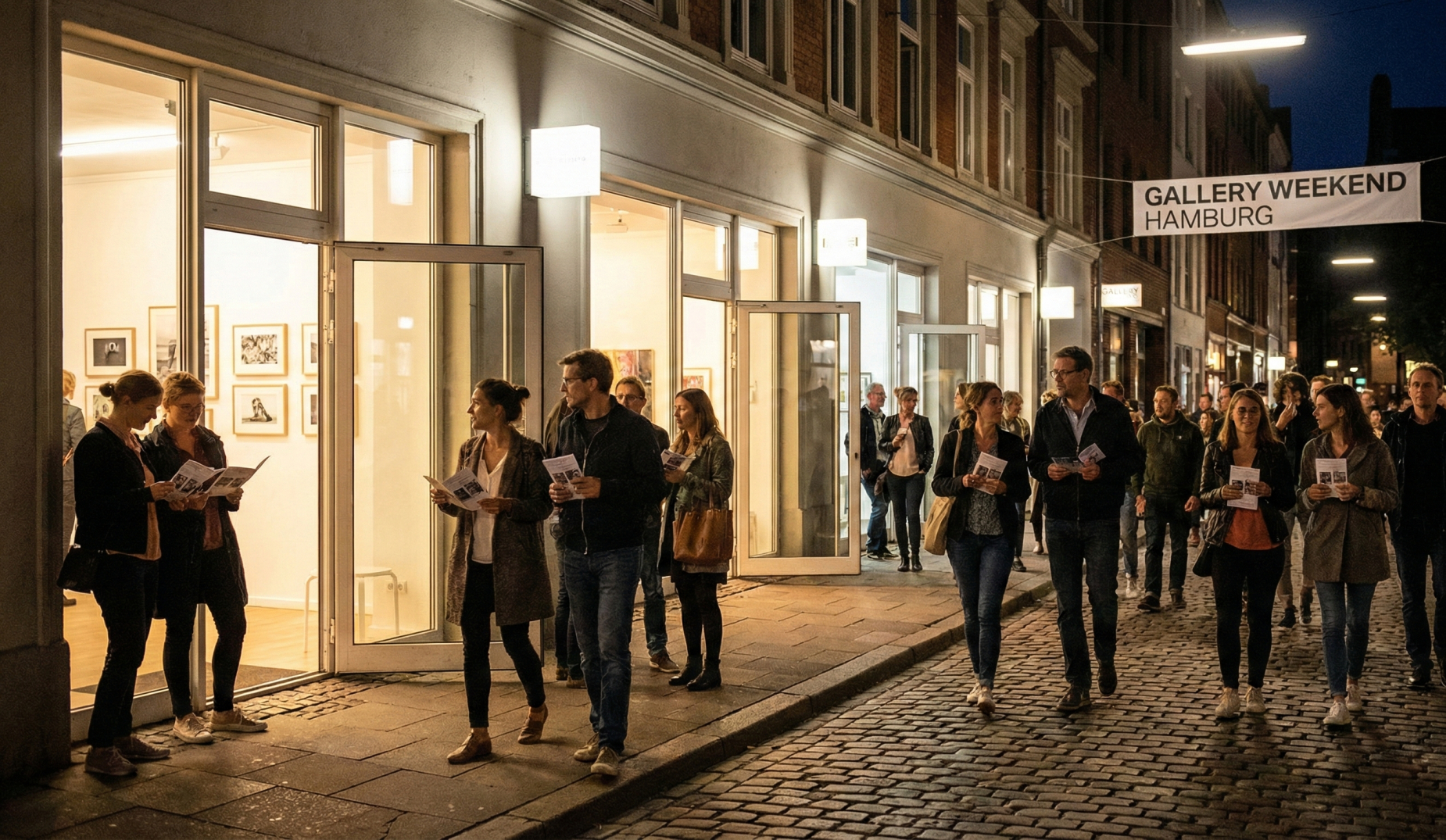
Conclusion: The True Gold of the Hanseatic City
Hamburg's cultural identity is by no means exhausted by the magnificent halls of the established big museums or the iconic architecture of the Elbphilharmonie. The true, pulsating heartbeat of the Hanseatic art scene often hides in the charming backyards of St. Pauli, the converted factory floors in Altona and the winding lanes of the Gängeviertel. These small galleries, artist-run galleries and off-spaces are the indispensable laboratories of contemporary art. Here arises the unconventional, the raw and the experimental – far from the commercial pressure of the mainstream and ready to shape the aesthetics of tomorrow.
Visiting these independent art venues is far more than just an inspiring pastime; it is an active commitment to preserving urban cultural diversity. In a metropolis increasingly shaped by gentrification, expensive housing and rising commercial rents, non-commercial project spaces often fight an existential battle for survival. Anyone who enters these spaces, gets into conversation with the dedicated gallerists and young artists or even invests in affordable, up-and-coming art makes a direct contribution to ensuring that Hamburg does not lose its creative, alternative and diverse face.
Inhibitions are completely out of place on this voyage of discovery. Even if the entrance to an off-space may sometimes seem unassuming or even hidden, Hamburg's alternative gallery scene is distinguished by enormous openness and approachability. Whether at a lively, debate-filled opening on a Thursday evening with a beer in hand or on a focused gallery tour on a Saturday afternoon – it is not about elitist, academic art knowledge here but about genuine, unpretentious dialogue. The encounters are authentic, and the passion of the people behind their exhibitions is downright infectious.
Ultimately, art beyond the big museums invites you to get to know a completely new, more intimate Hamburg. Dare to leave the beaten tourist tracks of the city centre and expand your comfort zone. On your next free weekend, simply leave the long queues outside the blockbuster exhibitions behind. Instead, stroll leisurely across the Fleetinsel, browse through the Karolinenviertel and let yourself be carried along by the boundless creative energy of the Hanseatic city. Hamburg's true artistic gold is waiting for you exactly where you least expect it.

Sarah Müller
Reise- und Lifestyle-Journalistin