Hamburg
Second-Hand and Vintage Shopping
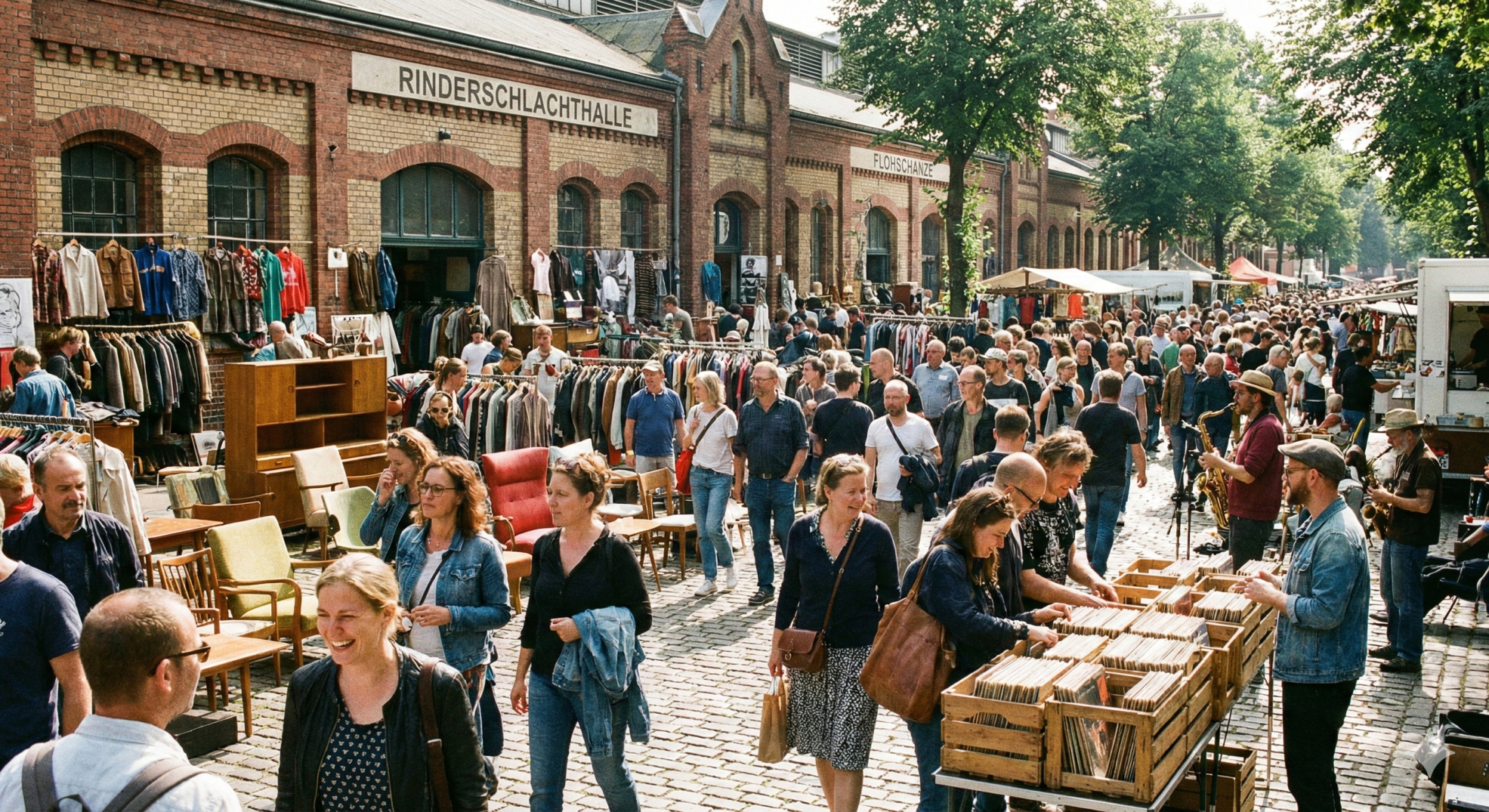
Moin Hamburg! Anyone who thinks of the proud Hanseatic city on the Elbe immediately has pictures in mind of massive container ships, the majestic Elbphilharmonie, the bustle of the fish market and the rough but warm-hearted northern German climate. But away from the well-known and often overcrowded tourist trails between the luxurious Mönckebergstraße and the traditional Alsterhaus, a completely different, far more sustainable and creative fashion scene is pulsating. Over the last decades, Hamburg has quietly but unstoppably developed into an absolute stronghold for second-hand fashion and vintage shopping in Europe.
The fascinating hunt for unique, history-laden garments is long past being a niche trend for students or eccentric artists. It has become a profound social movement, a conscious lifestyle that makes a strong statement against the exploitative throwaway society of fast fashion. In a cosmopolitan city like Hamburg, which on the one hand places great value on Hanseatic style and elegance but on the other hand also nurtures its rough, authentic and rebellious subcultures, the market for pre-loved treasures is flourishing as never before. Hamburgers have understood that true style does not depend on wearing the latest off-the-peg pieces produced in their millions, but consists in creating individual outfits that tell a story of their own.
This ultimate, deeply researched guide is your personal compass through the fascinating, sometimes bewildering jungle of Hamburg's vintage shops. We have rummaged through countless clothes rails for you, wiped the layers of dust of past decades from old leather jackets, meticulously compared kilo prices and explored the most hidden, secret corners of the city to present you with the absolute best, most exciting and highest-quality addresses. It does not matter whether you are passionately searching for an affordable, colourful retro jumper from the wild 90s, want to snap up a flawless designer trench coat for a fraction of the original price or want to put together the perfect, authentically rocking outfit for a long night on the Kiez: in the Hanseatic city you are guaranteed to find what you are looking for.
We take you on a detailed journey through the city's various quarters, dive deep into the philosophy of sustainable consumption and show you where the true textile treasures are waiting for you. Get ready to see Hamburg's fashion scene with completely fresh eyes and to make room in your wardrobe for pieces that will accompany you for a lifetime.
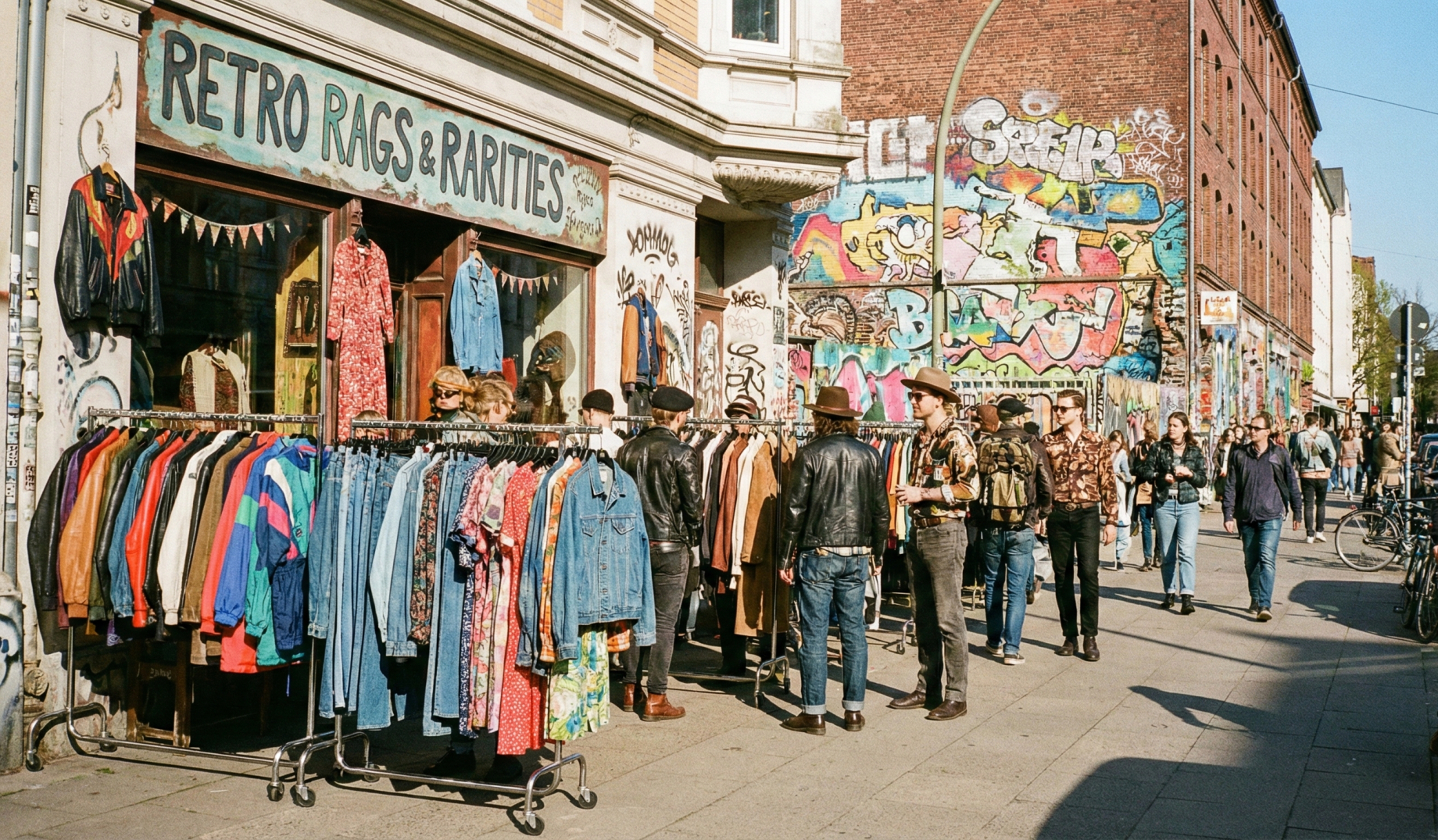
The Philosophy of Vintage Shopping on the Elbe: a Textile Rebellion
Before we physically venture into the narrow lanes of the Karoviertel or onto the elegant boulevards of Eppendorf, we must address the fundamental question: why are more and more people, from teenagers to pensioners, drawn with such passion to the second-hand shops of this city? The answer is many-layered and reaches deep into modern consumer psychology and the growing ecological conscience of our society.
First and foremost is undoubtedly the pressing aspect of sustainability. Awareness of the catastrophic ecological and social effects of the global textile industry is growing rapidly. Fast fashion, characterised by extremely short production cycles, catastrophic working conditions in the global south and the immense consumption of water and chemicals, has had its day. Hamburg likes to present itself as a green, forward-looking metropolis on the water, and large parts of the population want to reflect this aspiration in their everyday consumer behaviour as well. Buying used clothing is quite simply the most direct, most effective and most uncompromising form of sustainable fashion. For a vintage garment, no new, valuable resources such as cotton need to be grown or crude oil extracted for polyester. No new emissions arise from production, and the lifespan of garments that have already been made is sensibly extended, saving them from the waste incineration plant. It is a lived circular economy in its purest form.
Beyond that, vintage shopping satisfies a deep human longing for uniqueness and individuality. In a globalised world in which the big international fashion chains bring the pedestrian zones from Tokyo through Hamburg to New York into line and clothe millions of people in identical cuts and colours, the desire for fashion differentiation has grown enormously. A carefully chosen vintage piece, whether a hand-embroidered blouse from the 70s or an original American college jacket from the 80s, is an absolute one-off. The probability that someone will meet you at a party in Hamburg or on a walk by the Alster in exactly the same outfit tends towards zero. Vintage clothing makes it possible to wear your own character on the outside, develop a personal style signature and stand out from the grey mass.
Another decisive, often underestimated factor is the incomparable quality of past decades. Anyone who picks up a garment from the 1950s to the early 1990s today feels the difference immediately. Fabrics were woven heavier and denser, seams were sewn more carefully, zips were made of solid metal instead of cheap plastic. The clothing of these eras was not produced for a single season and quick disposal but was ideally meant to last a lifetime. In Hamburg's good vintage shops you will find silk, heavy virgin wool, real leather and robust denim in standards of workmanship that would be unaffordable or simply no longer available in today's regular retail. Each of these pieces also carries a visible history within it. A slight patina on a leather jacket, the natural fading of a pair of jeans worn for decades – these are not flaws but badges of honour that give the garment character and soul.
And of course, if we are honest, the financial aspect and the sheer thrill of the treasure hunt also play an enormous role. The spectrum in Hamburg is gigantic: it ranges from kilo shops where you can put together the perfect, slightly crazy festival look for a few euros, through classic second-hand boutiques, to exclusive designer archives where luxury brands suddenly come within reach. It is the uplifting feeling of having discovered an absolute masterpiece for a fraction of its original or actual value that drives people back to the vintage shops again and again.
Sternschanze and Karoviertel: the Undisputed Epicentre of Retro Culture
When you say the word “vintage” anywhere in Germany, the image of Hamburg's Sternschanze and the directly adjoining Karolinenviertel (affectionately called “Karoviertel”) almost inevitably appears before the mind's eye. These neighbourhoods form the undisputed, pulsating epicentre of alternative culture, individual street style and by far the highest density of high-quality, specialised second-hand shops in the whole city. Anyone strolling through the narrow lanes, often decorated with political street art and colourful graffiti, such as the Marktstraße or the Schulterblatt, dives into a world in which one innovative shop concept follows seamlessly on the next. The air smells of freshly roasted coffee, of incense from small boutiques and of the unmistakable, slightly sweetish scent of old leather and textiles decades old.
An absolute giant and for many the logical entry point into the Hamburg vintage world is “Vintage & Rags”. Although geographically almost towards the city centre near the Gänsemarkt, this massive store belongs inseparably, spiritually and culturally, to the Schanze scene. Anyone stepping through the glass doors of this huge temple is at first overwhelmed by the sheer mass of clothing. Over two spacious floors extends a range that is more reminiscent of a vast American thrift store than a small European boutique. The focus here is strongly on classic, timeless vintage wear, in particular with a distinctly American slant. The walls are lined with hundreds, if not thousands, of perfectly worn-in Levi’s 501 jeans in every conceivable wash – from deep indigo blue to faded light blue with natural fraying. There are whole departments devoted exclusively to heavy college jackets with leather sleeves, colourful original Hawaiian shirts from the 70s, fluffy lumberjack shirts and vintage band T-shirts. If you take the time to dig deep through the tightly packed clothes rails here, though, you will also find elegant evening dresses from the 80s, heavy winter coats of real virgin wool and a huge battery of accessories, from genuine Stetson hats and colourful silk scarves to original Ray-Ban sunglasses from past decades. Vintage & Rags is not a place for a quick, five-minute visit; it is a place of endurance where you have to lose yourself for a few hours in order to resurface with real textile trophies.
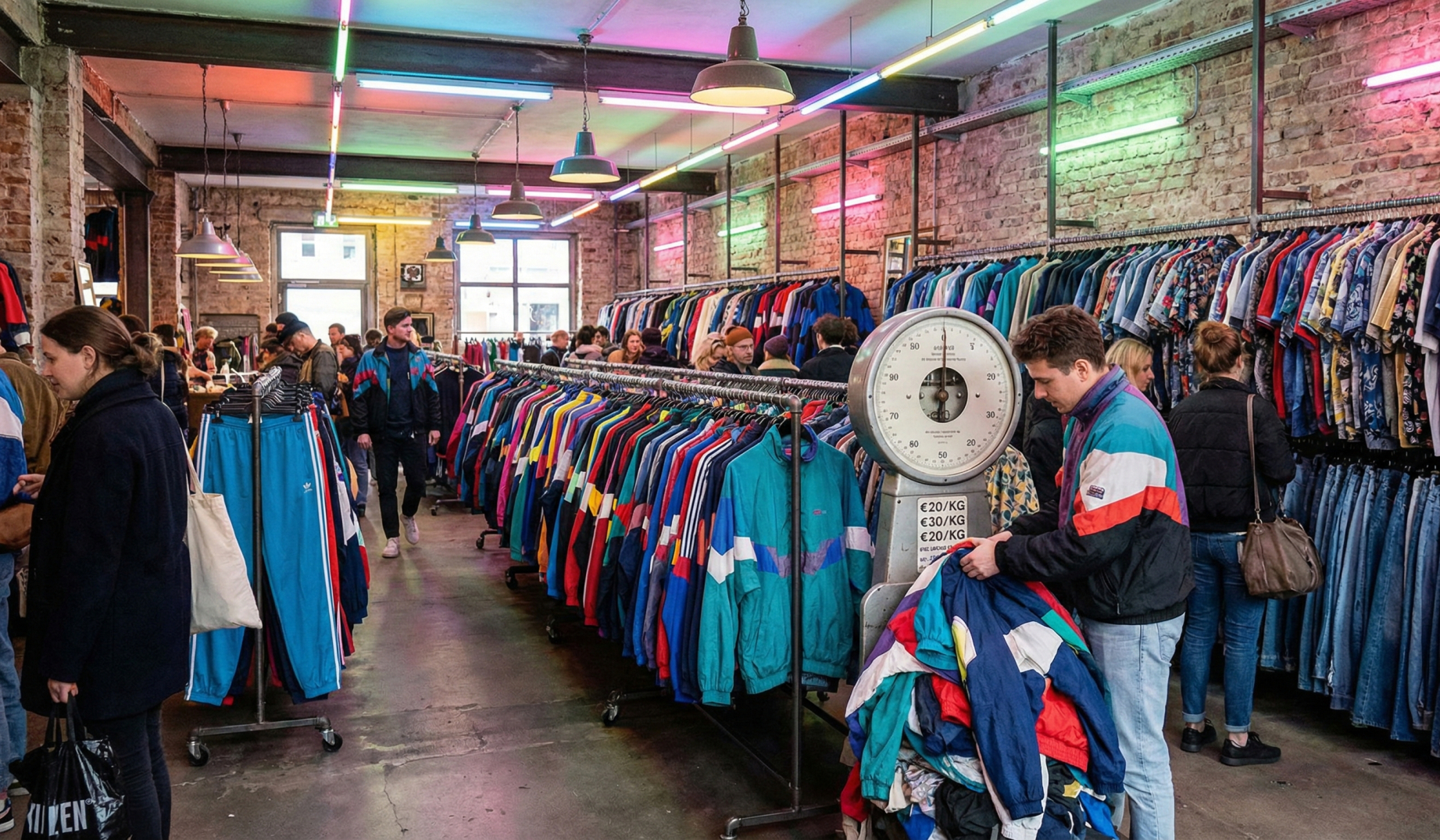
A completely different but no less fascinating shopping experience is offered by “Picknweight – Vintage Kilo Store” right in the heart of the Schanze. This concept has revolutionised second-hand shopping in recent years and turned the focus strongly back to the playful element of the treasure hunt. As soon as you enter the shop, you are greeted by a loud, colourful and visually overwhelming atmosphere. The principle here is as simple as it is brilliant: you do not pay for the clothes by a fixed unit price on a tag, but exclusively by the pure weight of the textiles. All the clothing in the shop is divided into different price categories, marked by coloured security tags. Each colour corresponds to a particular price per kilo. As you roam through the seemingly endless rows sorted by colour and category, you can weigh your haul again and again on nostalgic-looking test scales dotted around the shop to keep an eye on your budget. The range at Picknweight is a wild, extreme ride through fashion history, with a strong, unmistakable focus on the late 80s and the 90s. Here you will find garish, rustling tracksuits, crazily patterned shirts that would survive any rave, clunky platform shoes, but also an astonishingly good selection of fine silk blouses and classic kimonos. It is a loud, energetic place, perfect for kitting yourself out with friends for the next theme party, creating extraordinary festival looks or simply carrying home a gigantic amount of textile inspiration on a small budget.
When we move from the bustling Schanze into the somewhat more intimate, cobbled Karoviertel, the tone of the vintage shops changes noticeably. Here it is less about pure volume and quick trends and more about extreme specialisation, historical accuracy and deep expertise. A shining example is the legendary shop “Hot Dogs” on the Marktstraße. Anyone entering this small, almost inconspicuous shop enters a sanctuary for absolute fashion nerds and serious collectors. Hot Dogs has earned an international reputation far beyond Hamburg's borders for its incredible, almost museum-like collection of vintage sneakers and sports shoes. Here original, unworn basketball shoes from the late 70s stand next to rare running shoes of the 80s, whose designs are now regarded as holy grails of sneaker culture. But the shop's expertise does not end with shoes. Hot Dogs is one of the very best addresses in Europe for so-called “deadstock” clothing – that is, original, historical factory goods that were produced decades ago but never sold or worn and are thus still in their absolute original condition. On top of that comes an extremely curated, breathtaking selection of historical workwear and original military pieces. Heavy, stiff raw denim jeans that still have to be worn in, waxed British Barbour jackets that have already developed patina, and thick, hand-knitted sailor jumpers bear witness here to a time when clothing was still made for the hardest physical work. A visit to Hot Dogs is a lesson in textile history; here it is about rarity, uncompromising build quality and deep respect for the textile craft of the past.
Just a few houses further along the same street, “Hip Cats” offers a completely different but equally immersive journey through time. As soon as the door bell tinkles and you step over the threshold, you leave the 21st century behind and dive deep into the elegant, life-affirming aesthetic of the 1950s, 60s and 70s. Hip Cats is less a conventional shop than a lovingly designed set where you are allowed to shop. The owner curates the range with incredible stylistic confidence and a sharp eye for authenticity. If you are looking for an original, voluminous petticoat for a rockabilly dance night, the perfect, simple A-line dress in the style of Audrey Hepburn or psychedelically patterned shirts and flares from the Woodstock era, you will find them here. The pieces at Hip Cats are not just any old second-hand clothes; they are hand-picked, often elaborately cleaned and restored treasures in an almost flawless condition. The clothes rails are airily hung, everything is sorted by colour and by decade, and the advice is extremely warm, knowledgeable and personal. Anyone entering this shop immediately feels the deep love of the fashion of an era when women still put on hats to go into town and gentlemen never left the house without a correctly tied tie.
St. Pauli and Altona: a Rough Shell, a Fashionable Core and Real Kiez Treasures
If you leave the hip Karoviertel behind and head towards the harbour, you reach St. Pauli. This district, world-famous for the sinful mile of the Reeperbahn, the Landungsbrücken and the football club FC St. Pauli, is the rough, beating heart of Hamburg. St. Pauli has a deep, often contradictory soul – it is loud, dirty, overrun by tourists, but at the same time extremely warm-hearted, supportive and marked by a deep creative nonconformity. This unique mixture is also reflected in the local second-hand scene, which here is far less polished and “Instagrammable” than in other districts, but instead bursts with edges, rough patches and real authenticity. The adjoining Altona, especially the lively district of Ottensen, complements this picture with a wonderful mixture of urban family flair and deeply rooted ecological awareness, which leads to a high density of sustainable textile concepts.
Hidden in a small side street, far from the garish neon light of the big Kiez clubs, the “Vintage Gallery” lies in St. Pauli. This small, crammed shop is an absolute insider tip for all those who see fashion as a form of extreme, personal expression. The range here is a wonderfully eclectic, wild mixture that defies all conventional fashion rules. The focus is often on high-quality but extremely eye-catching vintage of the 60s and 70s. If a local band is looking for a glittering, extravagant stage outfit for its gig at the nearby Mojo Club, it will find it at the Vintage Gallery. Here sequinned blazers that explode in the spotlight hang next to floor-length black leather coats that would do credit to any goth gathering, and absurdly high-cut platform boots. The shop breathes the slightly disreputable, excessive glamour of past Kiez nights. The owners often know the story of every single garment and offer advice that is as direct and honest as you would expect on St. Pauli. You do not go to the Vintage Gallery to buy a plain white T-shirt; you go there to find the one crazy “statement piece” that you were not actually looking for but that immediately becomes a great textile love.
If you leave the Reeperbahn behind and stroll into the village-like, cosy Ottensen in Altona, you immediately feel the change of rhythm. Here, between old factory buildings and cobbled lanes, alternative, strongly community-oriented consumption models are blossoming. A fascinating example of this development is the concept of “swapping”, the clothes swap, which has been professionalised in shops such as “Let's Swap”. The idea behind it is the ultimate form of textile circulation: you bring clothes that you no longer wear yourself but that are in excellent condition to the shop, receive a virtual currency or swap points for them and in return can choose pieces handed in by others. It is a system that completely bypasses classic, monetary consumption and creates a strong local community. Browsing in such shops has a completely different quality, as the range is extremely dynamic and the clothes come from women and men in the direct neighbourhood. It is a sustainable treasure hunt in which your own wrong purchase becomes another person's new favourite item.
Another enormously important and often underestimated pillar of the Hamburg second-hand landscape, which is strongly represented especially in Altona but also in districts such as Hoheluft, is the charity shops, above all the Oxfam Shops. These shops completely escape the “cool” hype of the Schanze boutiques, and that is exactly where their inestimable value lies. The Oxfam concept rests exclusively on donations: people hand in well-preserved clothing, books, records or household goods, which are then sorted and sold by committed volunteers. All the financial proceeds flow directly into the organisation's worldwide development and disaster relief projects. Shopping in an Oxfam Shop in Hamburg is the definition of unpredictable browsing. Since the range depends purely on what the people of Hamburg happen to be clearing out, the spectrum can run from utterly banal fast fashion to incredible strokes of luck. It is not unusual to suddenly find, between old C&A jumpers, an almost new cashmere scarf, an immaculately preserved suit from a traditional brand or a barely worn silk dress – and at prices that are usually only a tiny fraction of the original value. The Oxfam Shops demand time, patience and a willingness to move a lot of coat hangers, but anyone who takes this trouble is rewarded not only with real, extremely cheap treasures but also makes a concrete contribution to a fairer world with every euro.
Eppendorf, Harvestehude and the City Centre: Second-Hand Luxury and Timeless Elegance
Hamburg is traditionally a city of the affluent middle class and wealthy merchants. When you leave the rough, creative districts and head towards the Outer Alster, to Eppendorf, Harvestehude or straight into the fashionable city centre around the Neuer Wall, not only does the architecture of the stately white townhouses change, but so does the content of the wardrobes, drastically. In these exclusive postcode areas, textile treasures of inestimable value are stored. When things are sorted out in these districts, or society ladies have to make room for the latest seasonal collection, these pieces fortunately do not end up in the clothing bank but in highly specialised designer second-hand boutiques. For fashion-conscious people who dream of brands such as Chanel, Prada, Hermès or Louis Vuitton but are unwilling or unable to pay the exorbitant retail prices, these archives are the absolute pilgrimage sites of the city.
The undisputed, majestic queen of this exclusive segment is “Secondella” on the Hohe Bleichen, in the middle of Hamburg's fine city centre. Secondella is not just a shop, it is a real Hamburg institution that has done pioneering work in establishing luxury second-hand since the early 1970s. Anyone entering the shop feels immediately that different rules apply here than in the kilo shops of the Schanze. The atmosphere resembles an international high-end boutique: the floor is gleaming parquet, the light is soft and flattering, the staff are impeccably dressed and act with the discretion of a Swiss private banker. It does not smell of old textiles here, but of high-quality leather and subtle perfume. The range at Secondella is a curated, breathtaking journey through the highest sphere of the fashion world. Here you find current collection pieces from the last year or two, often worn only a few times on social occasions, as well as absolute, iconic vintage classics. If you are looking for the perfect, timeless Chanel bouclé suit, dream of the legendary, hand-stitched Hermès Birkin bag or seek the finest Italian cashmere by Loro Piana, you will find it here. Every single item accepted at Secondella goes through an extremely strict, multi-stage authentication and quality-control process. If you buy a Prada bag here, you can be absolutely sure you are holding an original. Prices at Secondella are of course still high – luxury remains luxury – but they often represent a considerable, worthwhile saving compared with the new price. Moreover, buying a high-quality, durable second-hand designer bag is a far more sustainable investment than the constant consumption of cheap imitations.
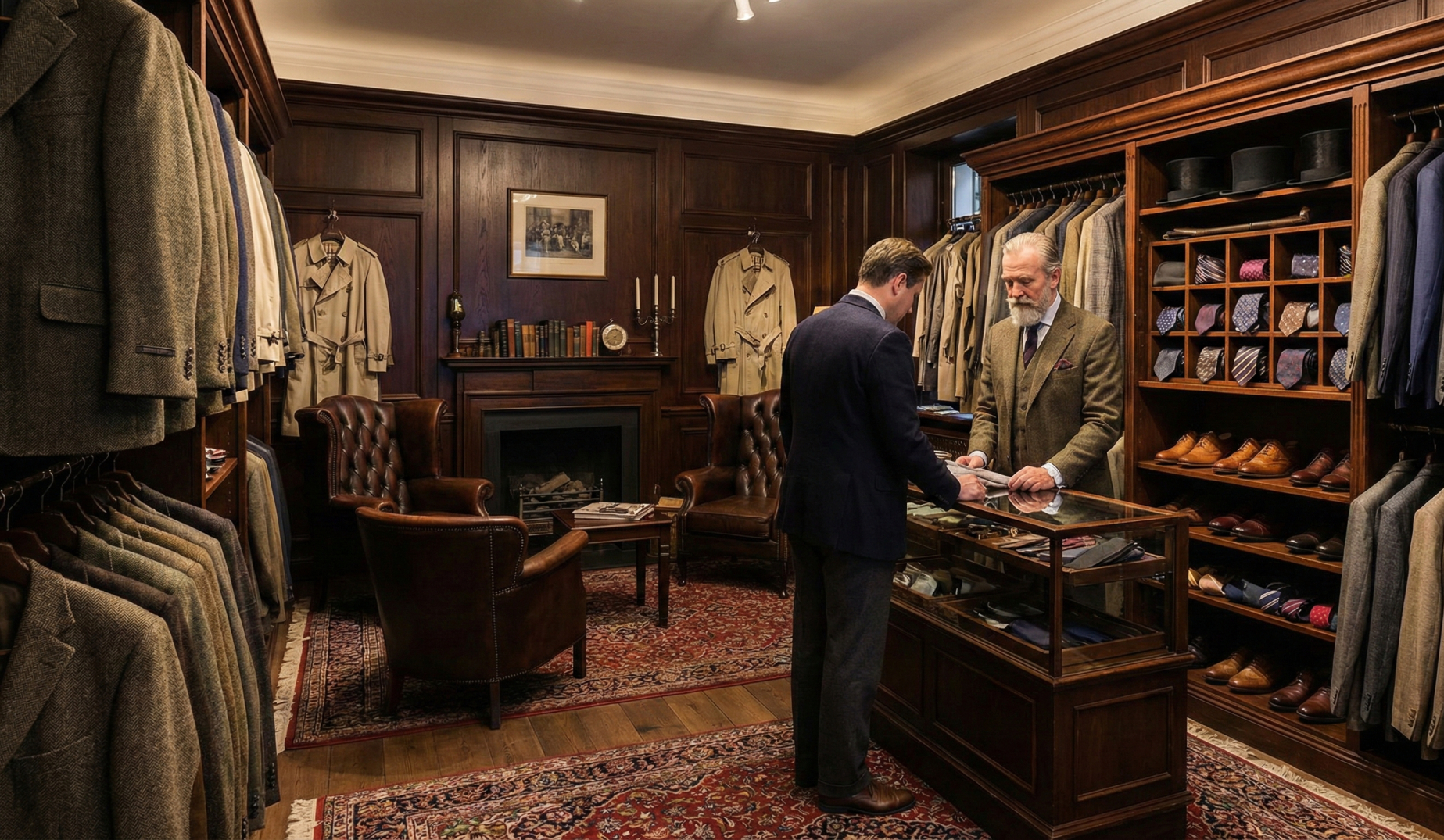
“Rudolf Beaufays” in the Gänsemarkt Passage pursues a completely different but no less fascinating approach to luxurious timelessness. If Hot Dogs is the paradise for sneaker nerds, then Rudolf Beaufays is the ultimate mecca for the modern dandy, the lover of British tailoring and Hanseatic elegance. On entering the shop you immediately think you are in another era, far from tracksuit bottoms and trainers. The shop resembles an old, wood-panelled English gentlemen's club in Mayfair or the perfect set for a period film. It smells of cedar wood, tweed and fine leather. The range concentrates exclusively on classic menswear of the highest quality from past decades. Here heavy, indestructible tweed blazers of Scottish wool are lined up next to perfectly cut, double-breasted trench coats by Burberry or Aquascutum. There are metres of handmade silk ties, hand-rolled pocket squares, welted Budapester shoes from renowned English manufacturers, old military uniforms with brass buttons and even a stately selection of antique top hats and walking sticks. Shopping at Rudolf Beaufays is a deeply emotional experience for men (and increasingly women too) who refuse the fleeting, often quality-less trends of modern fashion and value clothing made with a craftsmanship that is hardly to be found today. Here you do not buy fashion, you buy timeless style and textile armour for life.
A concept that turns the traditional idea of ownership in fashion completely on its head and fits deeply into the student-influenced Grindelviertel and Eimsbüttel is the “KLEIDEREI”. This innovative, forward-looking model sees itself as a gigantic walk-in library for clothing. Instead of buying high-quality, eye-catching or unusual designer and vintage pieces that disappear into a dark wardrobe for years after one or two occasions, here you can become a member and simply borrow the clothes. The selection is an exciting mix of young Hamburg designers, sustainable fair-fashion labels and excellently preserved vintage treasures. For a fixed monthly fee, members can take a certain number of garments home, wear them in everyday life and later swap them for new, exciting pieces. The KLEIDEREI thus actively tackles one of the biggest problems of the fashion industry: irrational overconsumption and the extremely short period of use of clothing. It enables fashion-loving Hamburgers to change their style constantly, take fashion risks and satisfy the desire for something new without increasing their own ecological footprint. Anyone who falls immortally in love with a borrowed vintage dress fortunately usually also has the option of buying it on the spot and giving it a permanent home.
Conclusion: Hamburg's Vintage Heart Beats Sustainably, Individually and Full of Textile Magic
In this comprehensive look at fashion, Hamburg has impressively proved that it is far more than just a cool, efficiency-driven merchant city on the Elbe. The incredible density, outstanding historical quality and enormous stylistic range of the local second-hand and vintage scene make the Hanseatic city an undisputed metropolis for sustainable textile consumption in Europe. From the rough streets of the Sternschanze and the Karoviertel, vibrating with creative energy, where kilo shops and highly specialised workwear archives line up side by side, through the subcultural, authentic Kiez treasures of St. Pauli, to the quiet, luxurious designer boutiques in the stately period buildings of Eppendorf and the city centre – Hamburg offers a fashion ecosystem that serves every conceivable taste, every decade and every individual budget perfectly. It is precisely this fascinating, city-sized symbiosis of traditional, timeless elegance and nonconformist, rebellious subculture that makes vintage shopping here an incomparable cultural experience.
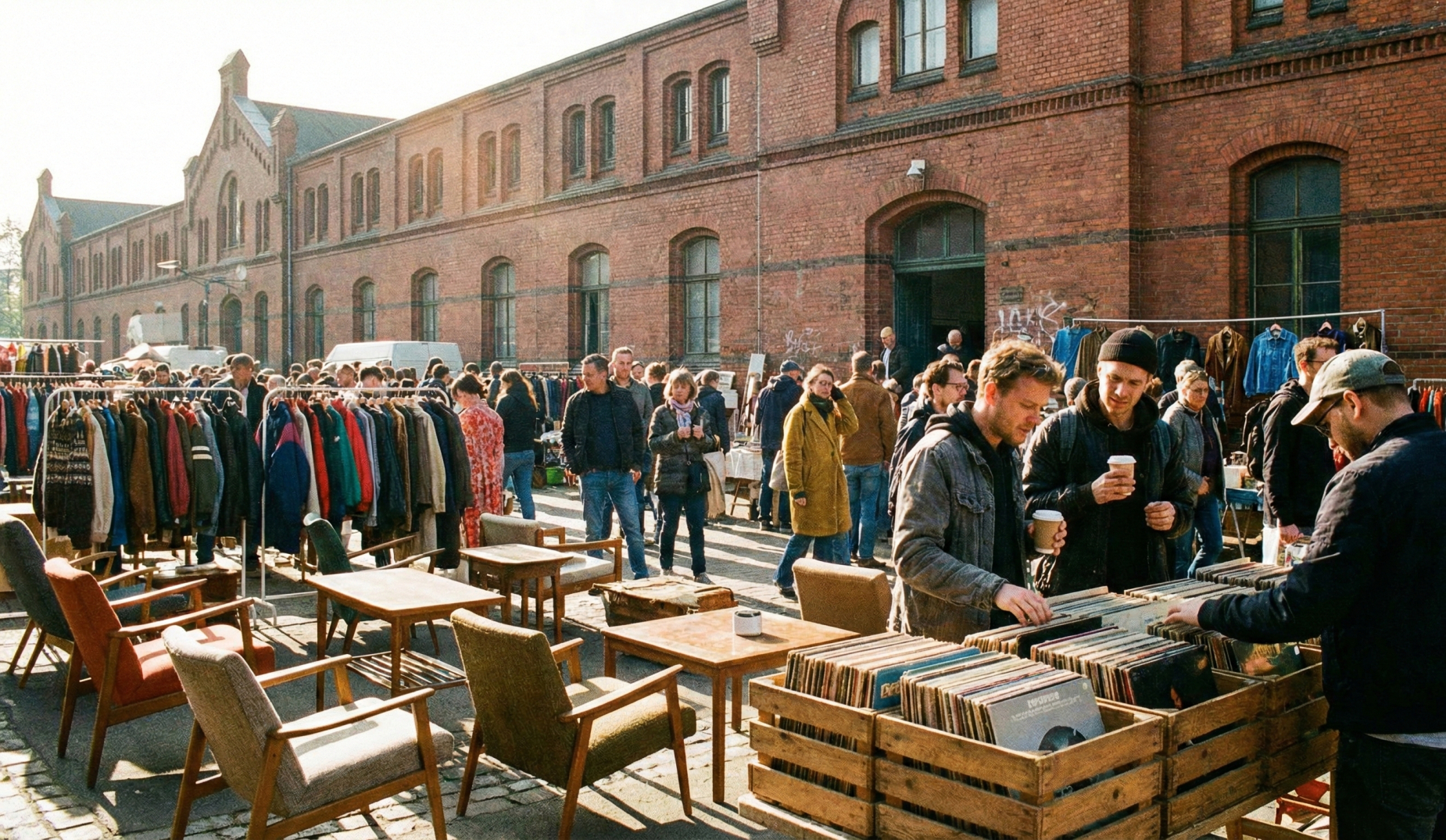
But this journey through the city's dense clothes rails reveals a far deeper, socially immensely relevant dimension. Anyone who consciously decides today to buy used clothing in Hamburg makes a powerful, unmistakable statement against the destructive, exploitative mechanisms of the globalised fast-fashion industry. Every euro invested in an owner-run vintage shop, in charitable institutions such as Oxfam or directly on the pasting tables of the historic Flohschanze is a direct investment in a greener, fairer future. Extending the life cycle of textiles that have already been produced conserves massive amounts of valuable drinking water, drastically reduces global CO2 emissions and saves historical, handcrafted quality from senseless destruction in the waste incineration plant. Through its enthusiastically flourishing second-hand culture, Hamburg shows that genuine fashion expression and deep ecological responsibility are not irreconcilable opposites but inspire and complement each other wonderfully.
Ultimately, though, diving into the Hamburg vintage world is above all a deeply personal, emotional journey. It is the pure, unadulterated magic of the treasure hunt that draws us back to these shops and these markets again and again. It is the moment when your fingertips glide over the fabric of a heavy, perfectly aged leather jacket; the instant when you try on a tailor-made silk dress from the 60s and it fits as if it had been sewn decades ago just for this one special moment. These garments have loved, danced, suffered and lived long before they found their way to you. You are not buying lifeless, mass-copied factory goods here, but becoming part of an ongoing textile story. Vintage shopping teaches us patience, an open mind and appreciation for delicate details that have long been lost in modern mass production. It allows us to curate a wardrobe that is as unique, unconventional and multifaceted as our own personality.
So grab your biggest tote bag, put on your most comfortable trainers and let yourself be carried along by the unpredictable, wonderful rhythm of the Hamburg second-hand scene. Leave your fashion comfort zone, venture into districts you may not know that well yet, and be ready for those textile surprises that make life truly colourful and exciting. The clothes rails of the Hanseatic city are packed with undiscovered wonders just waiting for you to breathe a glamorous second life into them. On your own hunt for the perfect retro piece, have you perhaps discovered a completely private, hidden insider tip in Hamburg that is still missing from this extensive guide? Which vintage gem is the absolute pride of your wardrobe, and what story connects you with it? Share your experiences, your favourite shops and your most glorious flea-market finds with us in the comments and let us drive the sustainable, stylish fashion revolution in Hamburg forward together!

Sarah Müller
Reise- und Lifestyle-Journalistin