Köln
Moving to Cologne: The Ultimate Guide to a Strategic Move
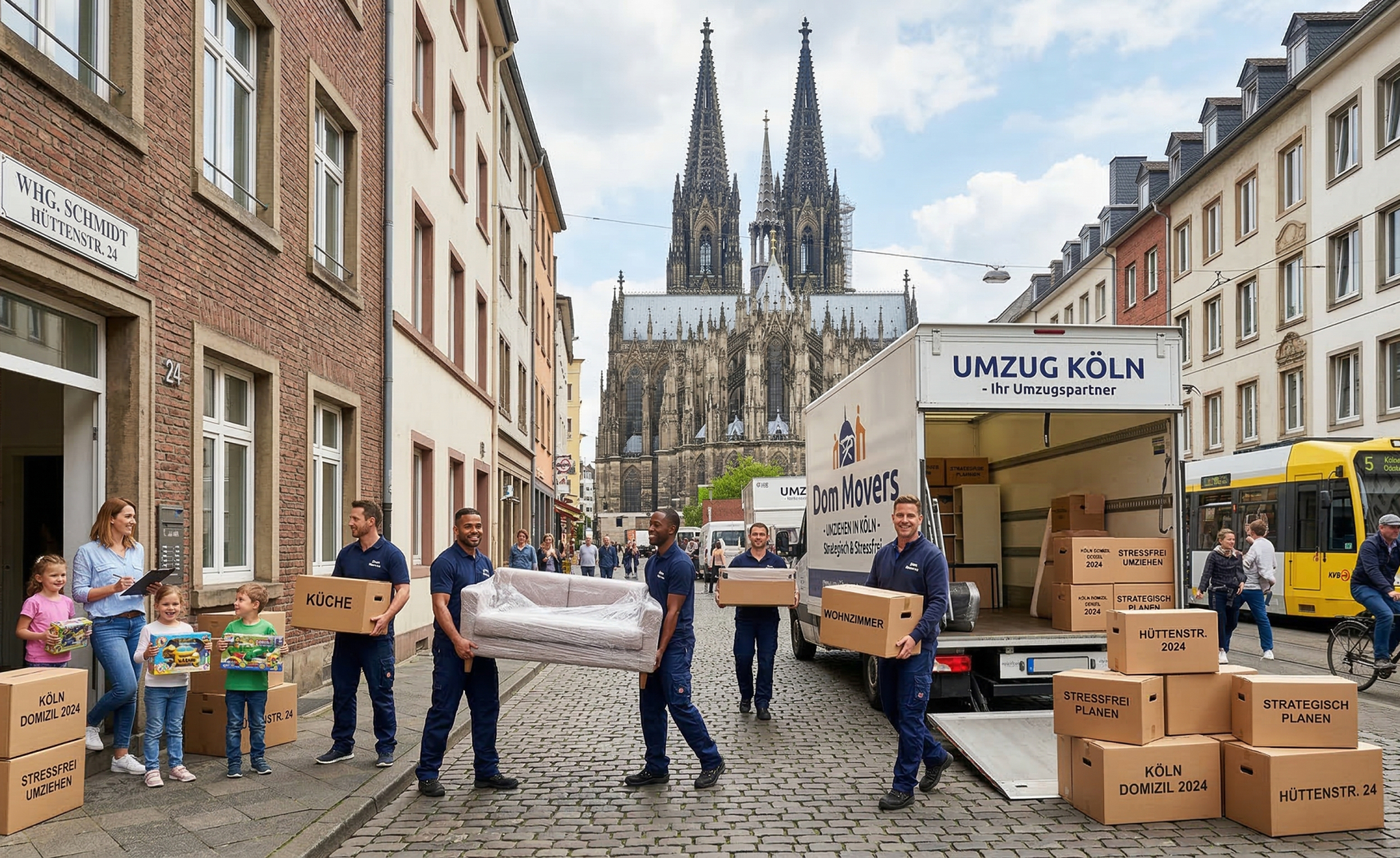
Moving home in a metropolis of Cologne's importance is far more than a purely logistical challenge; it is a complex operation in one of the tightest property markets in Germany, requiring precise knowledge of the local infrastructure and socio-cultural dynamics. The Cathedral City, shaped by its two thousand years of history and a steadily growing population of over a million, offers a housing market defined by extreme scarcity and a deeply rooted Veedel culture, which often turns the search for suitable housing into an undertaking lasting many months. Expert analyses suggest that the average search time for attractive locations in the city centre or in popular districts such as Lindenthal and the Belgian Quarter is between six and twelve months, with hundreds of applicants often competing for a single unit. In this context, a strategic approach that begins well before the actual moving day and anticipates both administrative and logistical hurdles is the only guarantee of a successful and, above all, stress-free transition into your new home.
The logistical side of a move in Cologne is heavily influenced by the historic urban planning, which, especially in central locations, is characterised by narrow one-way streets, limited parking and magnificent but impractical period buildings with narrow stairwells. These structural conditions often make specialised technical solutions, such as the use of furniture lifts or officially approved no-parking zones, unavoidable if heavy items are to be transported efficiently and without damage. Since Cologne is also an important trade fair and media hub, people moving here must coordinate their plans closely with the city's events calendar so as not to be caught out by large-scale road closures during Carnival, major trade fairs such as Gamescom or big sporting events. Integrating technological aids and communicating early with the responsible authorities thus form the backbone of a modern moving strategy that meets the specific demands of the Rhenish metropolis.
Alongside the physical logistics runs an administrative process which, in Cologne, is marked by strict compliance with statutory registration deadlines and heavy demand on the city's customer centres. Under the Federal Registration Act (Bundesmeldegesetz), registering your residence within 14 days of actually moving in is mandatory, and the City of Cologne requires a landlord's confirmation of residence, which carries far more weight than a simple tenancy agreement. Since appointments at the citizens' offices are often booked up weeks in advance, digital advance planning and the use of online appointment booking tools become a decisive factor in the legal certainty of the move. The moving process is your first in-depth interaction with the city administration, and documents such as identity cards, birth certificates and, where applicable, vehicle papers must be updated in a coordinated process to avoid later fines or bureaucratic delays.
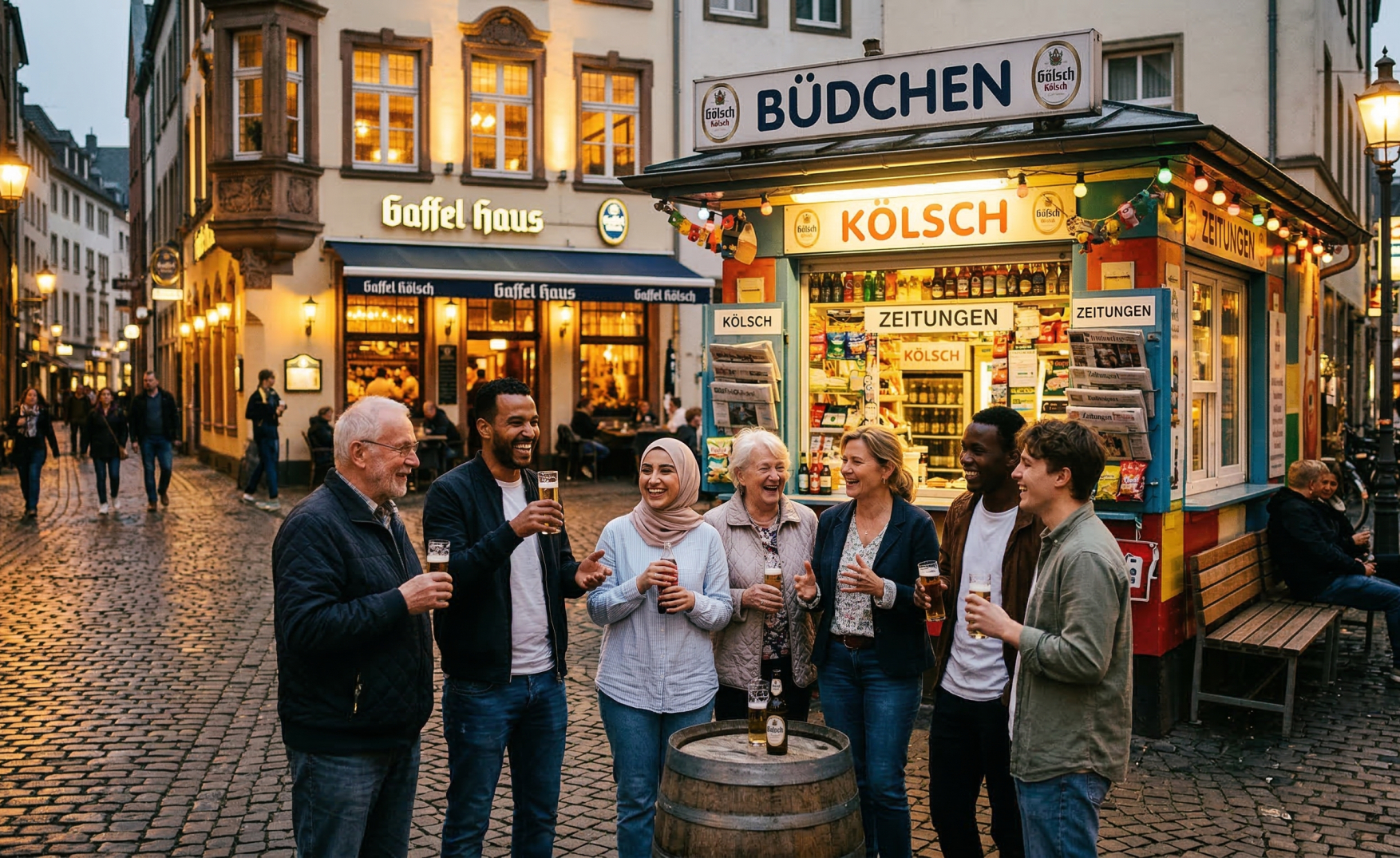
Finally, "arriving" in Cologne is inseparably linked to understanding the socio-cultural identity of the city and its Veedel, each of which has its own social DNA and significantly shapes residents' everyday lives. Moving within Cologne or relocating from elsewhere always also means choosing a particular lifestyle, whether the urban creativity of Ehrenfeld, the bourgeois calm of the Stadtwaldviertel or the traditional Rhenish sociability of the Südstadt. In the Cathedral City, social integration often happens through informal channels such as kiosk culture – the so-called Büdchen – which act as social anchor points and allow quick exchanges with the neighbourhood. A successful move therefore does not end with unpacking the last box, but with emotional roots in the Veedel and participation in the local traditions that form the foundation of Cologne's sense of togetherness and give residents a feeling of home.
The Strategic Veedel Analysis and Market Dynamics
Choosing the right district, affectionately known as a Veedel in Cologne, is the fundamental basis of your entire moving plan and determines both the logistical requirements and the long-term quality of life in the Cathedral City. Each of Cologne's 86 city districts has a distinct social and architectural identity, ranging from industrial history in Mülheim to aristocratic elegance in Marienburg. In sought-after areas such as Lindenthal, Sülz or the Belgian Quarter, demand is extreme, driving rents up and severely limiting the choice of available housing. Anyone choosing a Veedel must therefore check not only their personal preferences regarding restaurants, green spaces and connections to public transport (KVB), but also factor in the practical challenges of moving in. While Nippes, for example, scores with a family-friendly ambience and wider streets, the narrow lanes of the Südstadt or the Agnesviertel are often a logistical challenge for large removal lorries, making specialised vehicles or furniture lifts absolutely necessary.
The economic reality of Cologne's housing market calls for an analytical approach that weighs rent, service charges and the potential appreciation of the location against each other. In districts such as Ehrenfeld, which has developed from a working-class district into a centre of the creative industries, rents have risen significantly in recent years, while the infrastructure has become more modern and diverse at the same time. By contrast, districts on the right bank of the Rhine such as Kalk or Mülheim – often called the "Schäl Sick" – still offer potential for cheaper housing alongside dynamic urban development. Statistics show that proximity to the Rhine and the Green Belt are the most attractive factors in price formation, which means that flats with a direct view of the cathedral or right next to the Stadtwald are often beyond average affordability. A detailed comparison table of the most popular Veedel helps to assess the socio-economic parameters and the logistical suitability for a move objectively.
For a stress-free move, it is essential to evaluate the specific parking situation and traffic access of your target district as early as the search phase. In districts with a high density of period buildings and an extreme shortage of parking, such as the Belgian Quarter, setting up a no-parking zone is not merely a convenience but an absolute necessity, since unloading a vehicle in the second row often leads to massive traffic obstruction and immediate towing. You should also check the distance to the nearest City of Cologne customer centre to keep your administrative journeys after the move short. Ultimately, a Veedel in Cologne is more than a postcode; it is a microcosm whose choice defines your daily routines, your social environment and the logistical complexity of the entire move.
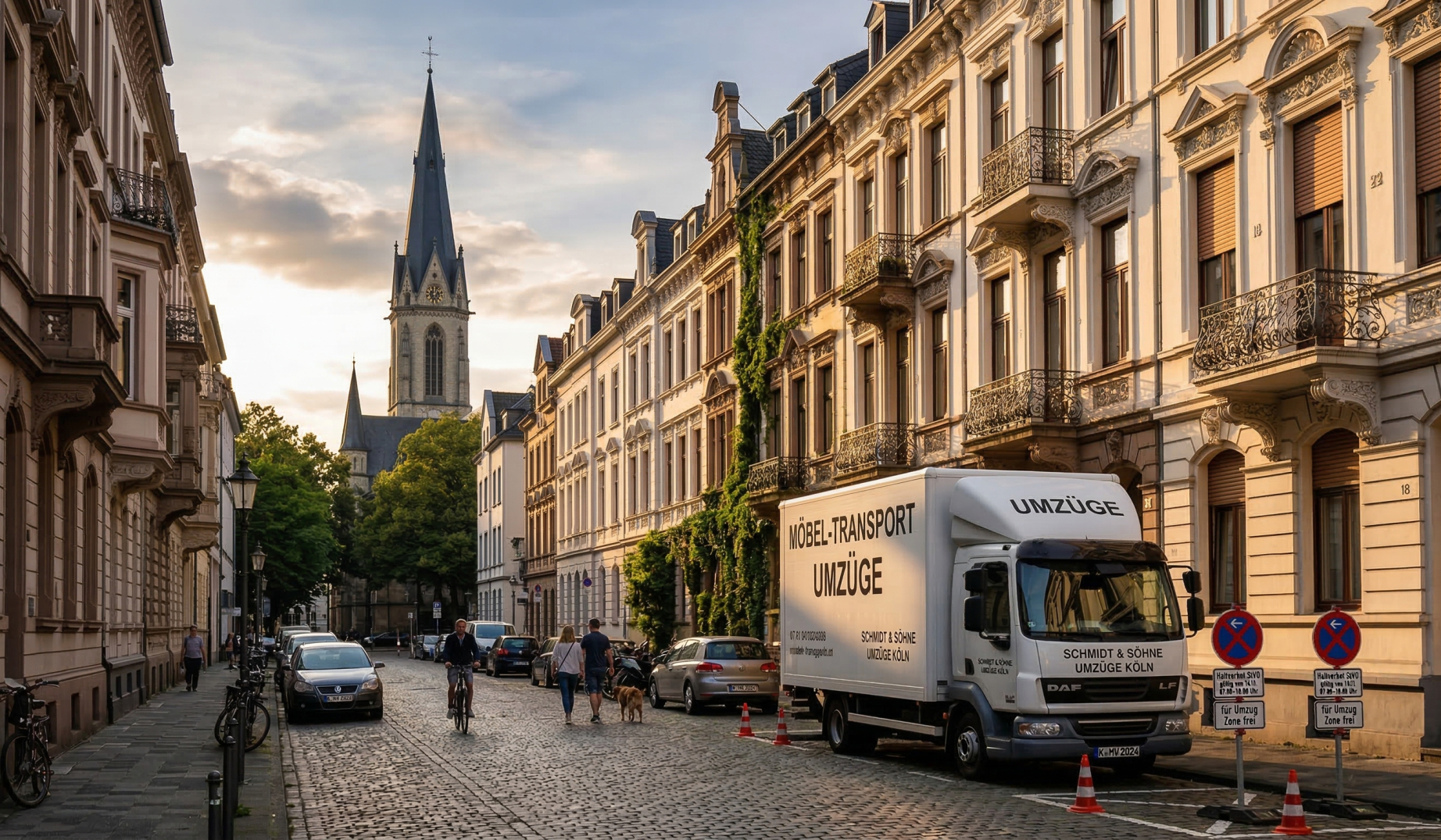
Administrative Excellence: Registration and Legal Certainty
The administrative side of a move in Cologne is strictly governed by the Federal Registration Act and requires precise timing to avoid legal pitfalls. After you actually move into the new flat, a 14-day period begins within which you must register your residence with the residents' registration office – in Cologne, at the customer centres in the districts. Since Cologne is a city of over a million people with a correspondingly high administrative workload, appointments for re-registration are often booked up weeks in advance, which is why experts recommend reserving your appointment online immediately after signing the tenancy agreement. A key element of this registration is the landlord's confirmation of residence, which the landlord must issue within two weeks of your moving in; a mere tenancy agreement or an informal confirmation is generally rejected by the Cologne authorities. Failing to meet these registration deadlines or lacking the correct documents can lead to hefty fines, underlining the importance of seamless administrative preparation.
Besides simply registering your residence, further official steps must be coordinated to guarantee full legal certainty and functionality in your new home. These include updating the address in your vehicle papers at the road traffic office and applying for a resident parking permit if you live in one of Cologne's many parking management zones. For families, re-registering with schools and nurseries in good time is also crucial, since places in Cologne are scarce, especially in popular districts, and long waiting lists are common. Institutions such as the parental allowance office, the job centre or the housing benefit office must also be informed of the change of address without delay, since entitlements in Cologne are assessed property by property and an oversight here can lead to interruptions in payments.
The digitalisation of Cologne's administration now offers some relief, such as the option of online re-registration under certain technical conditions, with the address sticker for the identity card conveniently delivered by post. Nevertheless, for complex cases, such as relocating from abroad or registering several family members, an in-person visit to one of the customer centres remains unavoidable. Documents such as birth certificates, marriage certificates and national passports must be presented as originals and, in the case of foreign documents, with a certified German translation. A structured process plan covering all official obligations, from registering for the broadcasting licence fee to dog tax, forms the basis for a legally secure fresh start in the Cathedral City and minimises bureaucratic stress in the often hectic move-in phase.
Precise Logistics: No-Parking Zones and Traffic Management
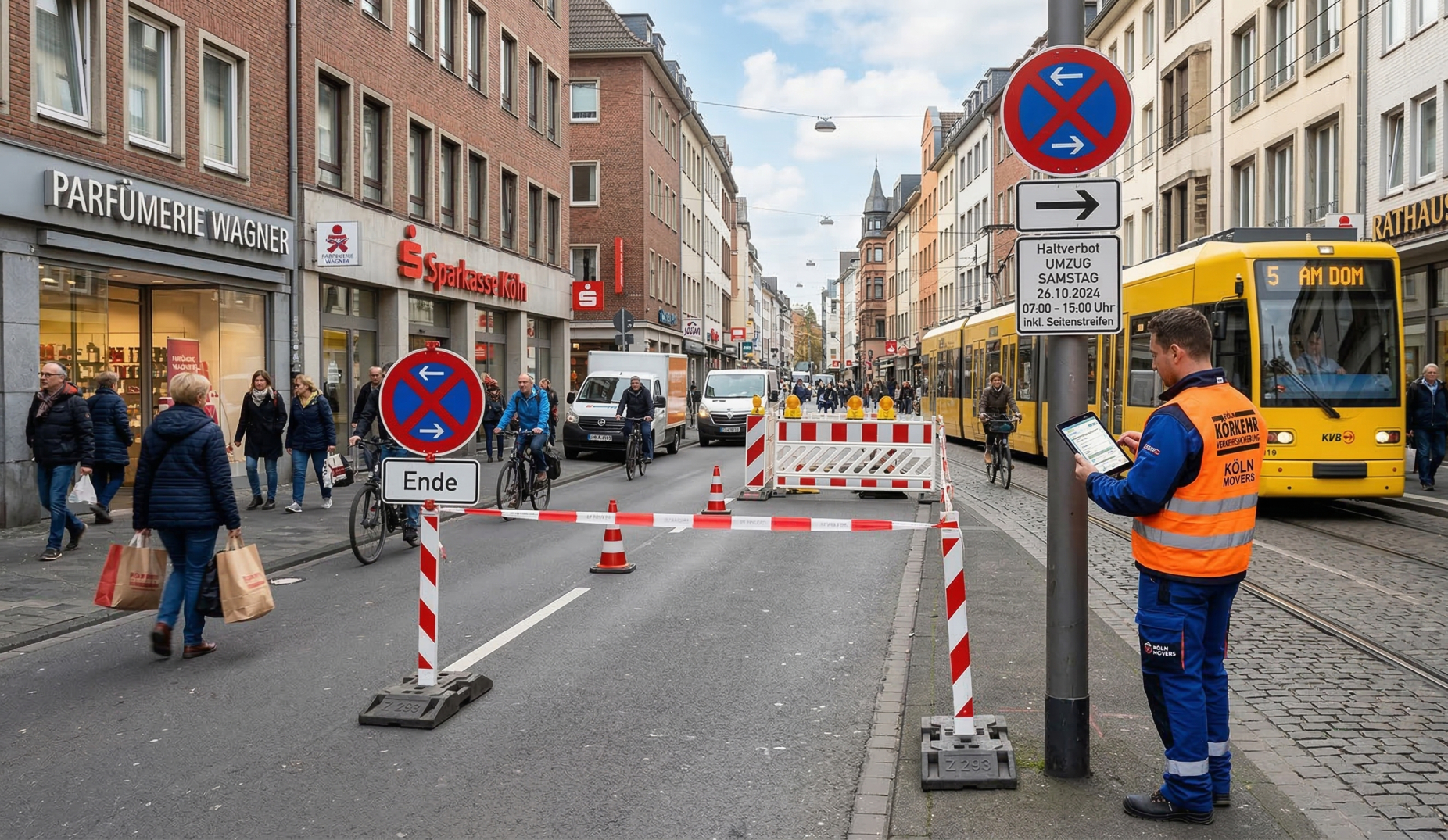
The logistical execution of a move in Cologne is largely determined by the precarious parking situation and the dense road network, which makes setting up an official no-parking zone (HVZ) one of the most important preparations. Without such a zone, you risk the removal van having to park hundreds of metres from the front door, which makes carrying distances extremely long, drives up the cost of removal helpers and increases the risk of transport damage. In Cologne, applying for an HVZ from the public order office is mandatory and should be done at least three weeks before the planned date to allow for official processing times and the statutory notice periods. The permit provides that the relevant signs must be put up exactly 96 hours (four full days) before moving day, giving residents enough time to move their vehicles and clear the space in a legally secure way.
The cost structure for a no-parking zone in Cologne has two parts, consisting of the city's administrative fees and the costs of the service provider who supplies and puts up the signs. The City of Cologne charges a fee of €36 for the first day of a mobile no-parking zone, with each additional day charged at €18. Specialised companies offer full services that handle all communication with the authorities as well as the correct signage and a legally sound set-up record, which usually costs between €95 and €120 per address. This record is crucial because it documents which vehicles were in the zone at the time the signs were put up; only with this proof can the Public Order and Traffic Service (OVD) be called on moving day to clear the space by towing.
Beyond simply securing a parking space, traffic management in Cologne requires forward-looking route planning that takes into account factors such as clearance heights in historic districts, weight restrictions on bridges and typical rush-hour peaks. Cologne has a dense network of arterial roads such as Neusser Straße, Venloer Straße and Luxemburger Straße, which are regularly overloaded at peak times, so moves should ideally take place in the daytime hours between 9am and 3pm. Since the City of Cologne is also striving to reduce car traffic in the city centre in the long term, parking spaces are increasingly being converted into green areas or cycle paths, which further restricts the availability of parking and underlines the need for professional HVZ solutions. Precise coordination between the removal company, the city administration and the residents affected is therefore the only way to successfully manage the logistical complexity of a move in the Cathedral City.
Technological Innovation: The Furniture Lift as an Efficiency Factor
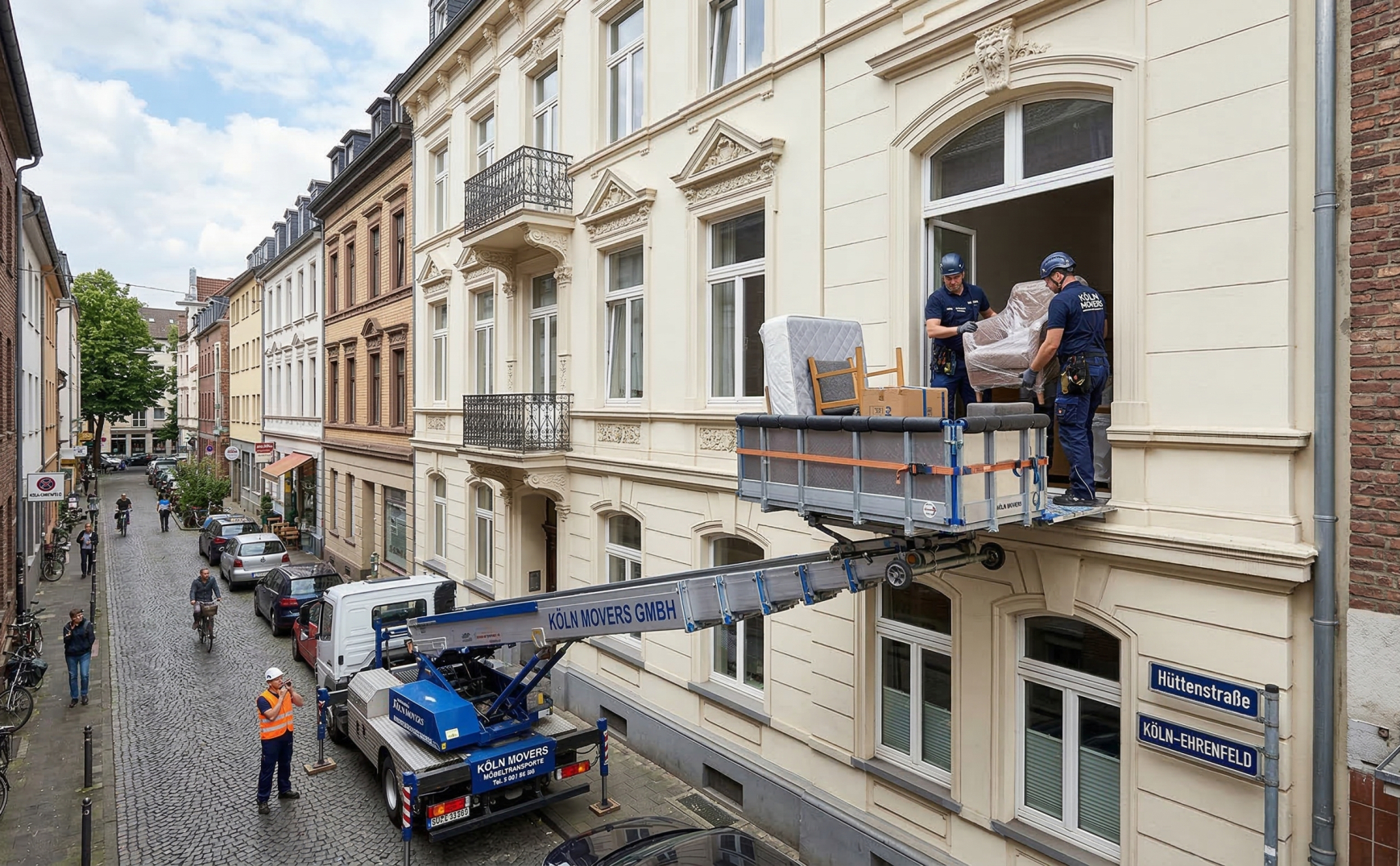
In Cologne's architecturally demanding districts, which are characterised by magnificent Gründerzeit buildings and narrow stairwells without lifts, using a furniture lift is often the only economical and safe method of transporting furniture. A furniture lift, also known as an inclined lift or external lift, carries furniture and moving boxes directly up the façade to the relevant floor, drastically reducing the risk of damage to walls, banisters and the belongings themselves. In Cologne, these machines can be used up to a height of 29 metres, which means that even attic flats on the 8th or 9th floor can be served without difficulty. The time saved is immense: experts calculate that a move that would take a whole working day through a narrow stairwell in the Südstadt can be completed in less than three hours with a furniture lift.
The cost of hiring a furniture lift in Cologne varies depending on the provider and the scope of service, but averages between €80 and €180 per hour including a trained operator. Many Cologne removal companies offer attractive flat-rate packages for half or full days, which lead to a significant cost reduction compared with purely manual labour, especially for larger households. Besides the transport advantage, the lift considerably spares the physical health of the removal helpers, which is invaluable for heavy items such as pianos, safes or solid oak wardrobes. For safe operation, however, a stable and sufficiently large set-up area in front of the building is required, which in turn makes setting up a no-parking zone beforehand essential.
Planning the use of a furniture lift requires precise measurement of the window or balcony dimensions and a check of the surroundings for obstacles such as KVB overhead lines, street trees or heritage protection requirements. In Cologne's old town or in historically sensitive areas such as Nippes, façades are often under special protection, which is why the lift operator must hold special liability insurance to cover potential damage. In extreme weather conditions such as storms or heavy rain, use may be prohibited for safety reasons, which is why flexible scheduling and close monitoring of the weather service are recommended. Ultimately, the furniture lift represents the technological answer to the infrastructural challenges of the Cathedral City and enables a modern moving standard that combines efficiency, safety and care for your belongings.
Resource Management: Removal Helpers and Professional Networks
The decision between hiring a professional full-service removal company and organising a do-it-yourself move with student helpers is one of the most consequential decisions in the entire planning phase. As an important university city, Cologne offers a huge pool of motivated and physically fit student helpers, who can be booked through specialised placement platforms from as little as €14 to €17 an hour. These helpers are often extremely flexible and can be used for a wide range of tasks, from packing boxes and simple assembly work to the final clean of the old flat. The advantage here clearly lies in cost efficiency, although you must bear in mind that coordination, providing packing materials and insuring your belongings are your own responsibility.
By contrast, professional Cologne removal companies offer a "worry-free package" that, besides the transport itself, also includes the provision of lorries, professional packing materials and comprehensive business liability insurance. Many companies work with fixed-price quotes based on a prior survey (on site or digitally by video), which gives the customer a high degree of cost certainty and minimises the risk of unforeseen costs on moving day. Especially for complex moves involving the dismantling of fitted kitchens, the transport of valuable works of art or international relocations, the expertise of specialist staff is often indispensable to avoid damage and stress. Experienced firms in Cologne also have excellent networks with other service providers, such as tradespeople for renovation work or specialised cleaning companies, which speeds up the whole process further.
An often underestimated factor in resource management is feeding and motivating the helpers, whether they are professionals, students or friends. In Cologne, it is good manners to provide enough drinks (water, coffee) and snacks, and "Rhenish hospitality" is often also expressed through a shared pizza or filled bread rolls at the end of the day. If you use student helpers, you should also give clear instructions and keep an inventory list so you keep track of what is loaded on the vehicle. Ultimately, choosing your moving partner is a balance between the available budget and your personal need for security and comfort, and Cologne offers tailor-made solutions and experienced partners for every model.
Sustainable Waste Management: The Role of AWB Köln
Moving home usually involves a massive clear-out of old possessions, which makes the Abfallwirtschaftsbetriebe Köln (AWB) a central partner in the moving process. The AWB offers a highly efficient bulky waste service in which private households in Cologne can have up to 3 cubic metres of bulky waste collected free of charge per appointment, provided the items are typical household goods and bulky. Registering in good time is essential here, since lead times for regular appointments are often three weeks and wasted trips must be avoided by cancelling in good time. If you are short of time, you can use the paid "Flex Service", which guarantees collection within 48 hours, or deliver the waste directly to the recycling centres in Gremberghoven or Niehl.
Putting out bulky waste correctly is subject to strict municipal rules, and ignoring them can lead to fines or the refusal of collection. On collection day, the waste must be ready by 7am at the latest, clearly visible at the edge of the pavement near the carriageway, taking care not to obstruct any road users. It is mandatory to separate bulky waste by material group, since wooden furniture, mattresses and metal parts are often collected by different vehicles. It is particularly important to know that building rubble, electrical appliances (unless declared as small appliances), car parts and waste containing hazardous substances are strictly excluded from bulky waste collection and must be disposed of separately. The AWB also promotes sustainability with its own online swap exchange, where furniture that is still usable can be given away or swapped instead of being destroyed.
Besides classic bulky waste, the AWB offers specialised services that are particularly valuable for senior citizens or people with limited mobility, such as the paid "carry-out service", in which staff collect the waste directly from the cellar or the flat. The correct disposal of packaging materials such as moving boxes and plastic film should also be planned in advance; while paper is disposed of via the blue bin or recycling centres, boxes in good condition can often be resold or given away via local platforms such as "Veedelsretter" or eBay Kleinanzeigen. Smart waste management not only reduces the volume of your belongings but also conserves resources and helps make your move in Cologne ecologically responsible.
Cultural Arrival: From Moving to Integration
In Cologne, the moving process does not end with the physical placement of the furniture, but with active integration into the social community of the Veedel, which is shaped by specific Rhenish customs. A central aspect of the Cologne way of life is openness towards newcomers, which, however, presupposes a certain willingness to communicate. The "Büdchen culture" plays an outstanding role here: these small kiosks are spread across the whole city and act as informal information centres and neighbourhood meeting points. A short stop at your regular Büdchen for a coffee in the morning or a beer to go after work is often the quickest way to make first contacts, hear the latest Veedel gossip and get tips on local service providers. If you want to see yourself as part of the community, you should value these places and use their relaxed atmosphere for conversation.
Social integration in Cologne is strongly encouraged by taking part in local traditions and events, with Carnival naturally taking the top spot. For new Cologne residents, it is essential to respect the unwritten laws of the "fifth season", such as the correct battle cry "Kölle Alaaf" and the understanding that public life largely comes to a standstill during the Carnival days. But even outside the Carnival season, brewhouses offer an excellent platform for integration: the rule here is that you sit down at occupied tables and quickly get talking over a Kölsch. The brewhouse waiter, known as the "Köbes", often has a gruff but warm charm that is part of the Cologne identity and should not be taken personally. Experts advise embracing these cultural quirks consciously in order to quickly overcome the feeling of being a stranger.
Finally, Cologne offers numerous innovative formats to make social connection easier for newcomers, such as "Socialmatch" evenings in bars or guided Veedel tours that reveal the history and secrets of your new home. Social media and local forums such as Reddit (r/cologne) are also valuable resources for finding like-minded people, looking for sports partners or answering questions about everyday life in the Cathedral City. In Cologne, integration is a two-way process: the city offers enormous warmth and tolerance (the "Kölsche Grundgesetz"), but in return expects a minimum of enthusiasm for the local culture and the willingness to become part of the colourful mosaic that makes Cologne what it is. Anyone who takes these steps actively will find that in Cologne you do not stay a stranger for long, but very quickly become an "Immi", as newcomers are called, with a right to call the place home.
Synthesis and Strategic Conclusion
In summary, a move in the metropolis of Cologne is a highly complex undertaking that requires a synergetic combination of logistical precision, administrative discipline and socio-cultural adaptation. The analysis of the data and market trends presented makes it unmistakably clear that the success of a move in the Cathedral City correlates directly with the quality of preparation, and that taking local peculiarities such as Veedel culture and infrastructural bottlenecks into account makes the decisive difference between chaos and comfort. Anyone who masters the administrative hurdle of the 14-day registration deadline, makes use of the logistical security of a no-parking zone and deploys technological aids such as the furniture lift strategically creates the optimal conditions for a smooth transition into one of the most dynamic living environments in Europe.
The economic side must not be underestimated here: a professionally run move may involve higher initial costs at first glance, but it regularly pays for itself by avoiding transport damage and fines and, above all, through the significant time saved, which is invaluable in a busy city like Cologne. Choosing the right moving partner – whether a full-service company or coordinated student helpers – must therefore always be based on a realistic assessment of your own household goods and the structural conditions of the target Veedel. For this, Cologne offers an infrastructure ranging from highly specialised technical service providers to flexible student networks, and thus has tailor-made solutions for every budget and every requirement.
Furthermore, the examination of social dynamics shows that integration into the Cologne community is an integral part of moving home and goes far beyond unpacking boxes. Identifying with your own Veedel, appreciating kiosk culture and taking part in local traditions such as Carnival are essential in order to see the Cathedral City not just as a place to live but as a real home. Cologne is distinguished by an exceptional social resilience and openness that makes it easier for newcomers to settle in, provided they are willing to respect and actively help shape the unwritten laws of Rhenish zest for life and tolerance.
In conclusion, a move to Cologne is an invitation to a new chapter of life in a city that, like hardly any other, unites tradition and modernity, down-to-earth character and cosmopolitan openness. With the strategic planning set out here, an awareness of administrative obligations and openness to the city's cultural treasures, the move becomes a springboard for personal and professional development. Anyone who approaches the challenges of the Cathedral City with expertise and a pinch of Cologne composure will soon find that Cologne is not just an address but a feeling that, soon after moving in, you no longer want to be without. The stress-free move is thus no coincidence, but the result of well-founded expertise that puts the resident at the centre of a vibrant and warm-hearted metropolis.
Sarah Müller
Reise- und Lifestyle-Journalistin