Kempten
Kempten's History: From Cambodunum to Modern City
Eine faszinierende Reise durch die Jahrhunderte

The Roman beginnings as Cambodunum
Kempten's history dates back to Roman times. Around 15 BC, the Romans founded a settlement called Cambodunum on the site of present-day Kempten. Its strategically favourable location on the Via Claudia Augusta, an important trade route, encouraged the town's growth. Cambodunum developed into a significant regional centre and boasted a number of public buildings, including thermal baths and a forum.
The Middle Ages: From the Frankish Empire to Free Imperial City
After the fall of the Roman Empire, Kempten became part of the Frankish Empire. In the 8th century, Saint Magnus founded a Benedictine monastery that had a decisive influence on the town's development. The monastery became an important cultural and economic centre for the region. In 1289, Kempten was granted the status of a Free Imperial City, bringing with it numerous privileges and greater autonomy.
The importance of St Mang's Monastery
St Mang's Monastery played a central role in Kempten's mediaeval history. It was not only a spiritual centre but also a place of learning and art. The monastery's monks were renowned for their illuminated manuscripts and their library, which was among the largest of its time. The monastery also contributed to the town's economic development by promoting agriculture and trade.
The Early Modern Period: Reformation and the Thirty Years' War
The Reformation had a major impact on Kempten. In 1527, the town became Protestant and the monastery was dissolved. Religious tensions led to conflicts between the Catholic Prince-Abbey and the Protestant Free Imperial City. During the Thirty Years' War (1618–1648), Kempten was besieged and plundered several times, resulting in severe damage and a decline in population.
The 19th century: Industrialisation and modernisation
Kempten experienced significant growth in the 19th century. Industrialisation took hold and permanently transformed the townscape. Textile and machinery factories were established, creating new jobs. The population grew rapidly, and the town expanded beyond its mediaeval boundaries. The connection to the railway network in 1852 improved transport links and boosted trade.
Notable industrial enterprises
Mechanische Baumwollspinnerei und Weberei Kempten (1836)
Maschinenfabrik Kempten (1844)
Papierfabrik Hegge (1862)
The 20th century: World wars and reconstruction
The two world wars left their mark on Kempten too. During the Second World War, the town was badly damaged by air raids. After the war ended, reconstruction became the priority. In the 1950s and 1960s, Kempten experienced renewed economic growth and an expansion of the town area. New residential estates and industrial zones emerged, permanently changing the townscape.
Kempten today: A vibrant and diverse town
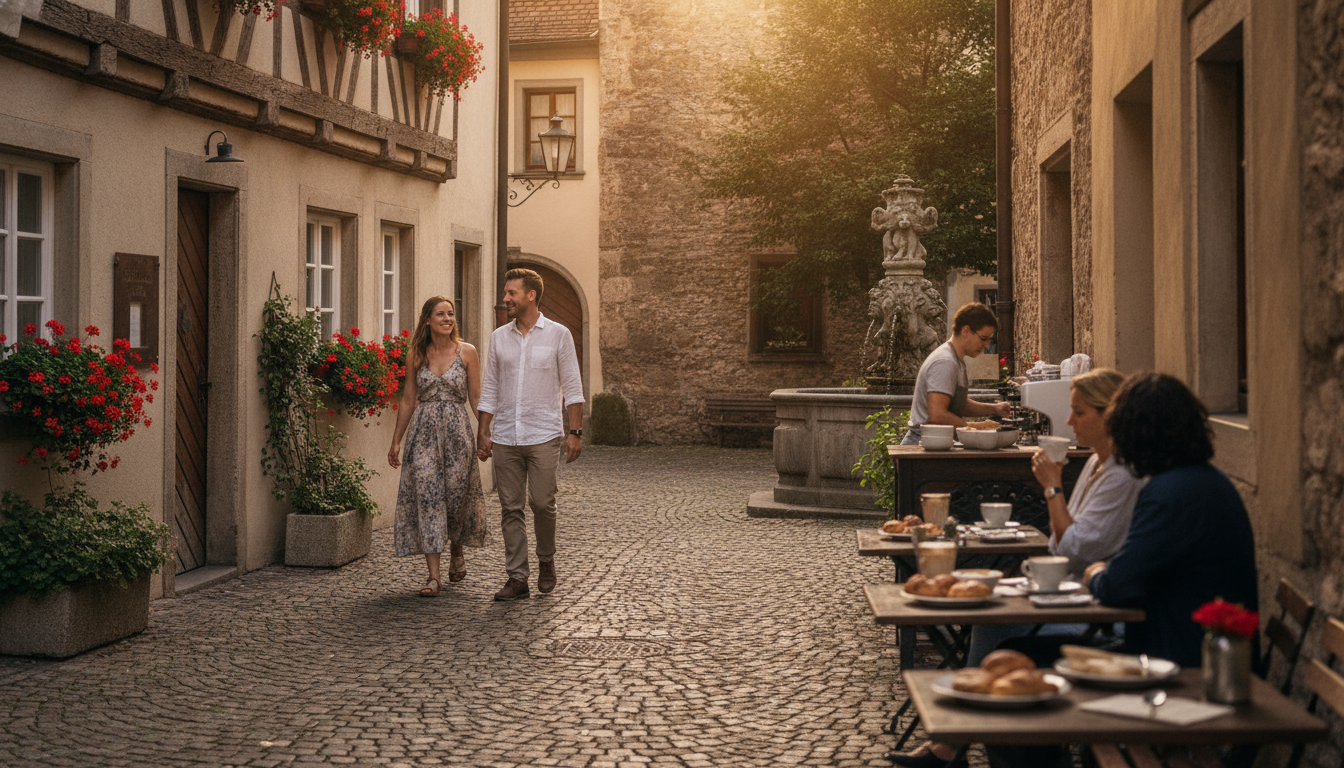
Today, Kempten is a modern and highly liveable town with a rich history. The old town, with its historic buildings, bears witness to Kempten's long past, while modern architecture and infrastructure look towards the future. The town offers a wide range of cultural and sporting activities, such as the municipal theatre, the art museum and the Allgäu Triathlon. As a university town and economic centre for the region, Kempten is also an attractive place to live and work.
Kempten has undergone a fascinating transformation from the Roman settlement of Cambodunum to the modern town it is today. Its history has been shaped by ups and downs, by wars and destruction, but also by reconstruction and growth. Today, Kempten is a lively hub of the Allgäu region, preserving its past while remaining open to the future.
Frequently Asked Questions
Q1: When was Cambodunum founded?
Cambodunum was founded by the Romans around 50 AD as a military camp. It soon developed into a significant settlement and a trading centre on the Via Claudia Augusta.
Q2: What role did Kempten play in the Middle Ages?
In the Middle Ages, Kempten was a Free Imperial City and an important centre for trade and commerce. The town was also the seat of a Prince-Abbey, which had considerable influence over the region.
Q3: How has Kempten developed over the centuries?
Kempten developed from a Roman settlement into a mediaeval Free Imperial City and eventually into a modern town. Despite destruction during the Thirty Years' War and the Second World War, the town has always managed to flourish again.
Q4: What historical sights are there in Kempten?
Kempten's historical sights include the remains of the Roman Cambodunum, the Basilica of St Lorenz dating from the 13th century, the town hall from the 15th century and the baroque residence of the Prince-Abbey.
Q5: How did Kempten develop after the Second World War?
After the Second World War, Kempten experienced an economic upturn and developed into an important industrial location. The town has also become a popular tourist destination, attracting many visitors every year.

Felix Baumgartner
Felix ist ausgebildeter Sportwissenschaftler und schreibt über Fitnessstudios, Vereine, Kletterhallen und Laufstrecken. Er interessiert sich weniger für Trends als für Qualität der Betreuung — und dafür, ob ein Angebot auch für Einsteiger funktioniert.