Königswinter
Hidden Gems: Insider Tips in Königswinter

Königswinter at the foot of the Siebengebirge is far more than the Drachenfels and its ferry landing. This charming town on the Rhine holds numerous hidden gems that even many locals don't yet know about. In 2026, we're revealing some of the best-kept secrets.
Few visitors know about the little art chapel in the Ittenbach district, tucked away in an unassuming side street. The former community room has been lovingly transformed into an exhibition space where changing contemporary artists from the region present their work. Admission is free, and on the first Sunday of every month there's a personal guided tour with the curator.
A natural secret lies hidden in the Nachtigallental: a narrow path branches off the main hiking trail and leads to a hidden clearing with old, moss-covered stone benches. This is a place of quiet power, surrounded by beech trees over a hundred years old. In early summer 2026, wild orchids bloom here, and with a bit of luck you might spot a kingfisher by the small forest stream.
Culinary-wise, Königswinter has a little sensation to offer. On the upper Hauptstraße, between souvenir shops and ice cream parlours, a tiny wine bar with just eight seats opens Thursday to Saturday. The owner, a former winemaker from the Ahr valley, serves exclusively wines from small regional vineyards – many of which aren't available in ordinary shops. The wine list changes monthly, and each bottle is introduced personally.
History buffs should visit the Jewish cemetery in the Oberdollendorf district, which sits high above the Rhine and offers a breathtaking view. The gravestones from the 17th and 18th centuries tell quiet stories and are an important testament to Jewish cultural history on the Middle Rhine. The site is maintained by a dedicated support association that regularly offers guided tours.
The region's most beautiful panorama, however, isn't enjoyed from the Drachenfels, but from the little-known Hirschley, a viewpoint halfway between Königswinter and the Petersberg. A rustic wooden bench invites you to linger, and on clear summer days the view stretches all the way to the towers of Cologne Cathedral. Take your time – this view deserves more than just a quick photo stop.
If you want to avoid the well-trodden paths, start at the top: the Petersberg, with its historic guesthouse of the Federal Republic, offers a panoramic circular route that surprisingly few day-trippers know about – the view stretches from the Rhine valley to the Eifel, and the approach via the quiet northern side is one of the most beautiful roads in the Siebengebirge.
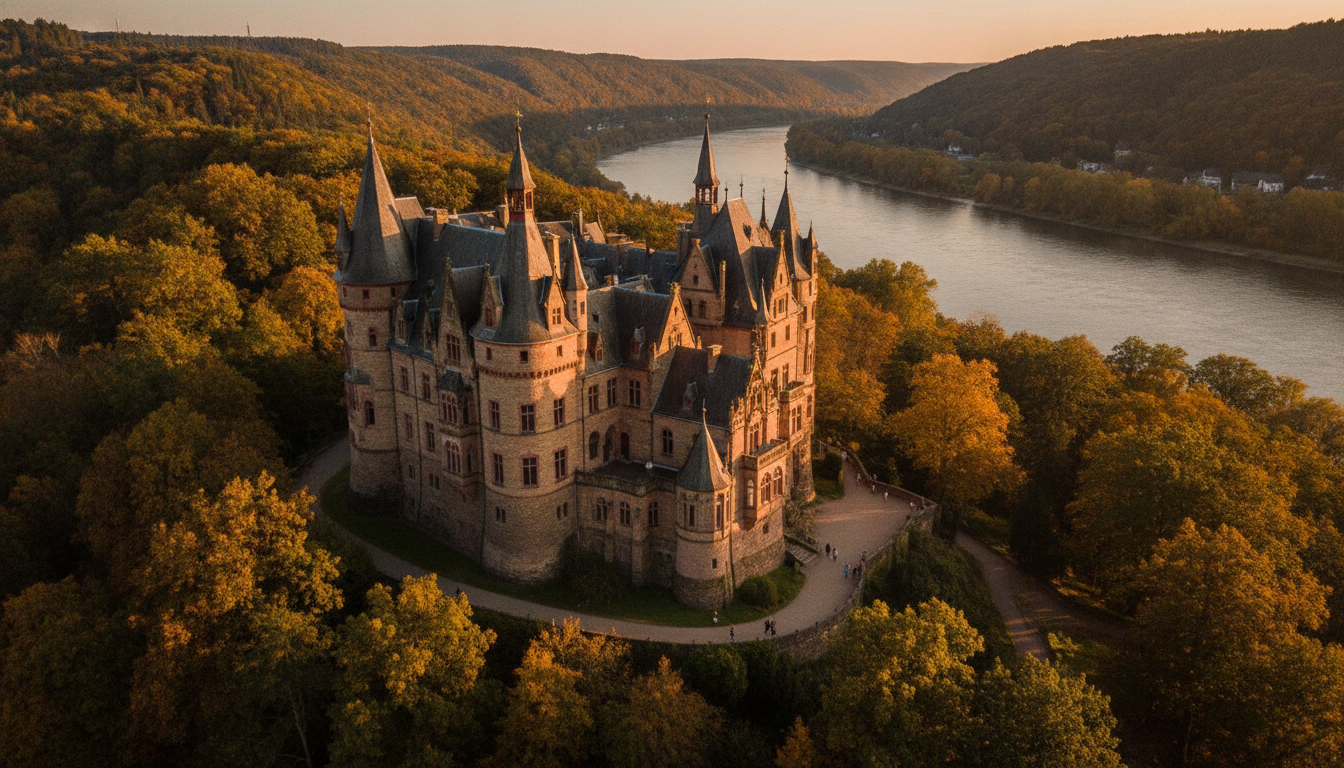
The famous Schloss Drachenburg can also be visited cleverly: if you arrive at opening time or choose the late afternoon, you'll experience the Venus terrace and the north garden almost privately – and the view of the Rhine and Nonnenwerth is at its softest then. Walking down through the forest beats any funicular ride.
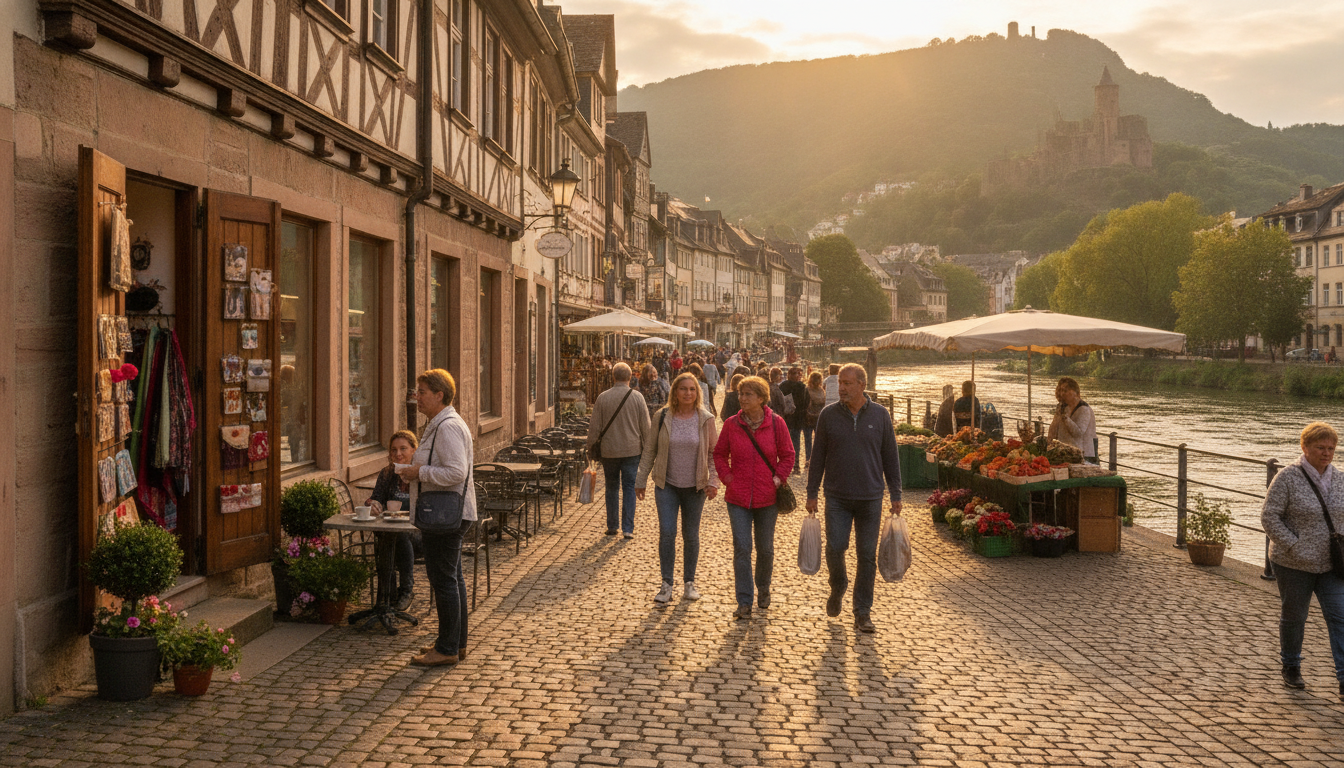
In the old town, the Siebengebirgsmuseum is well worth a visit: it tells the story of Rhine romanticism, quarrying history and the region's viticulture in a compact and loving way – ideal context for everything you see outdoors. Afterwards, the alleyways off the main street lead to half-timbered nooks that hardly any day visitor ever sets foot in.
By the water, things get quiet south of the ferry: the Rhine promenades towards Bad Honnef belong to walkers and anglers, complete with benches with island views. If you fancy it, take the passenger ferry across and walk back along the left bank – a little Rhine loop with big views.
Hikers with stamina should take on the Rheinsteig: the stage through the Siebengebirge takes in vineyards, forests and views – if you only want one section, choose the route from the town centre over the Weilberg with its volcanic rock layers, and stop off at a Straußwirtschaft (seasonal wine tavern).
Culinary-wise, it stays proudly Rhenish: wine houses in the old town, coffee terraces by the river and the excursion inns up in the hills cover every base – from Federweißer (young wine) in autumn to Sunday roasts. If you want to take some regional wine home, buy it straight from the winemakers in Oberdollendorf.
Families will find plenty to do away from the crowds: playgrounds by the Rhine, ferry rides as a mini cruise, and woodland paths with lizards and viewing platforms bring children more joy than any queue at the Drachenfels.
Practical tip: the light railway and ferry make a car unnecessary, and if you do drive, park on the outskirts rather than in the centre. The quiet hours belong to early morning and late afternoon – in between, the mountain belongs to the coaches, but the town itself soon returns to its explorers.
So beyond the classics, Königswinter reveals itself as a layered work of Rhine romanticism, volcanic rock and wine culture – you just have to take the side paths. Once you've done that, you'll see even the Drachenfels with different eyes: as the summit of a landscape that tells its best stories quietly.
One last tip on timing: in autumn, when the grape harvest is under way and the forests turn colour, the Siebengebirge shows its best side – the side paths are doubly rewarding then, and new wine flows in the Straußwirtschaften. If you can spare a weekday off, you'll practically have the region to yourself.
Either way, one thing holds true: Königswinter's finest moments aren't found in any brochure – they wait by the wayside, between the Rhine and the hills, for everyone who steps off the main path.
With that in mind: lace up your walking boots, take the ferry, and gather the quiet sides of the town – the mountain isn't going anywhere.
For anyone who still has energy left after all these paths, the region holds its greatest reward in store: the moment in the evening when the lights of the Rhine boats drift past beneath you and the silhouette of the Siebengebirge sinks into the dusk. No admission fee is needed for that, just a bench by the riverbank – and in Königswinter, you'll always find one.
Die Besten der Stadt