Ludwigsburg
Gastro trends in Ludwigsburg: what's hot right now

The dining scene in Ludwigsburg is undergoing a remarkable transformation in 2026, repositioning the Baroque town on the culinary map. For a long time, Ludwigsburg stood in the shadow of nearby state capital Stuttgart, but over the past two years a dynamic, independent restaurant scene has developed, winning people over with innovative concepts and a commitment to craftsmanship.
The most striking trend this summer is a renewed focus on regional produce in reinvented dishes. Several young chefs who trained in big-city restaurants have returned to Ludwigsburg and are now opening venues that combine Swabian ingredients with international techniques. Lentils with handmade Spätzle meet smoked miso butter, and Maultaschen are served filled with fresh goat's cheese and wild herbs from the Strohgäu. This creative regional cuisine is increasingly drawing guests from across the greater Stuttgart area.
Alongside this, a lively street food and pop-up scene is establishing itself. Since May 2026, a street food market has been held every Friday evening on the newly redesigned Arsenalplatz, where rotating food trucks and mobile kitchens offer everything from pulled-pork sandwiches to Korean bao buns to vegan soft-serve ice cream. Within a few weeks, the market has become a social hub known well beyond the city's boundaries.
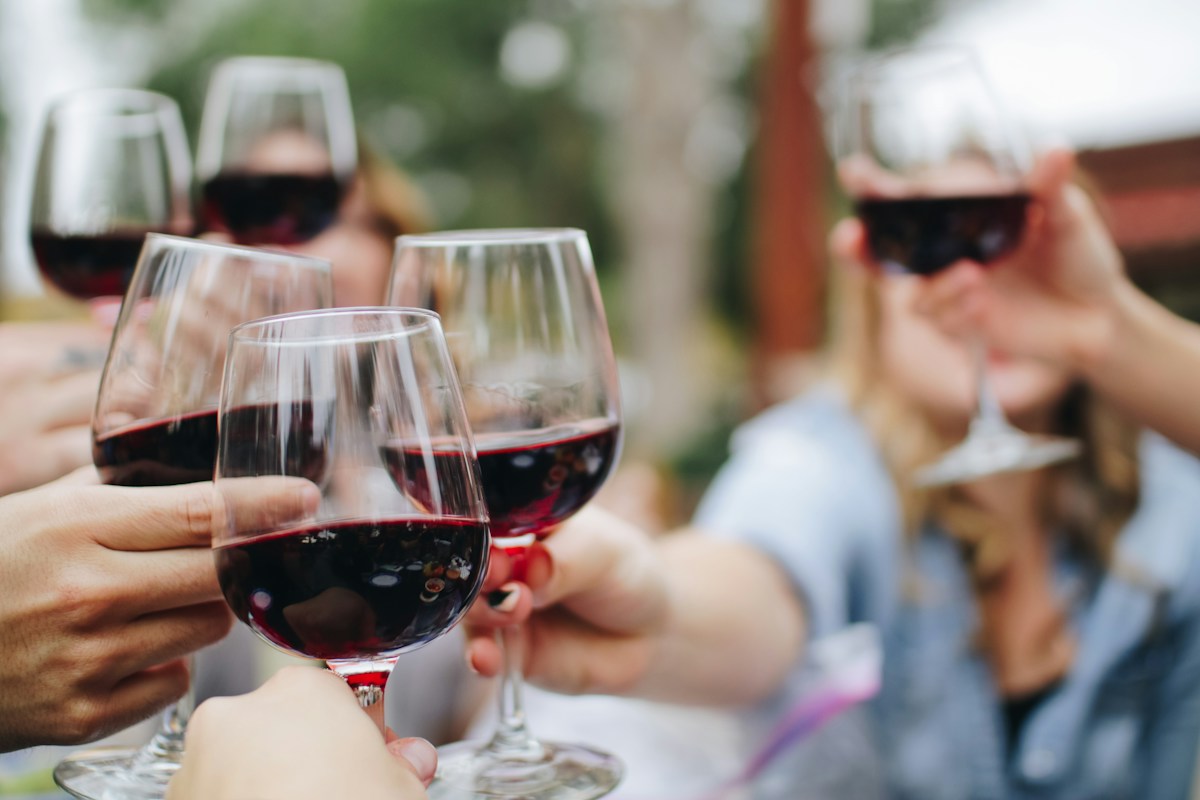
Another trend: sharing concepts and small plates. The newly opened tapas wine bar on Marstallstraße serves only dishes designed for sharing and features an impressive selection of natural wines from Baden-Württemberg. Awareness of sustainable dining is also growing: two new cafés operate completely waste-free, relying on deposit systems and compostable packaging. Ludwigsburg is developing into a genuine dining destination that impresses with authenticity and quality without ever feeling pretentious.
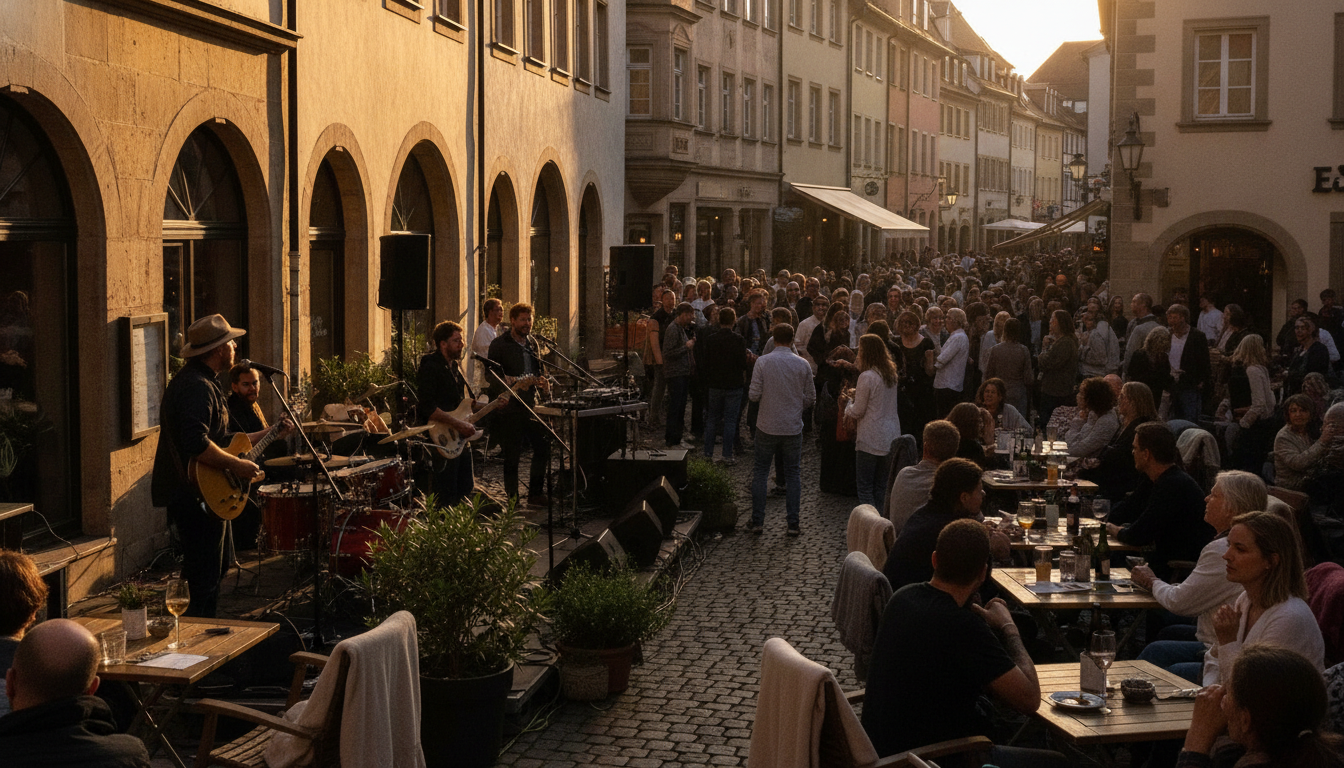
Ludwigsburg's dining scene thrives on its Baroque backdrop: around the arcaded market square, cafés and restaurants sit in a stunning setting – breakfast with a view of the twin church towers is one of the loveliest ways to start the day. The pedestrian zone then caters for everything from lunch to ice cream on the go.
The young scene is visibly growing: cafés with their own roasteries, brunch concepts and international cuisines ranging from ramen to Levantine fare have become firmly established – driven by students from the Film Academy and a crowd that no longer needs proximity to Stuttgart as an excuse. Weekends call for a reservation.
Swabian reliability remains the foundation: Rostbraten, Maultaschen and lentils with Spätzle feature on the menus of traditional establishments in the town centre and surrounding districts, alongside Württemberg wines – often ranging from local Trollinger to Lemberger. The seasonal Besenwirtschaften are insider tips for connoisseurs.
Fittingly, autumn brings a unique culinary highlight: pumpkin cuisine – from soup to cake – is a firm fixture of the world's largest pumpkin exhibition at Blühendes Barock; the Blüba itself provides beer gardens and café terraces amid greenery all year round. Picnics in the palace park included.
For special evenings, there's a more refined option: restaurants with seasonal menus in the town centre and country inns in the higher areas around the Neckar and Strudelbach cater for every occasion – proximity to the Residenz demands it, and the kitchens deliver accordingly.
The weekly market sets the rhythm: on Tuesdays, Thursdays and Saturdays, producers fill the market square – fruit from the Neckar valley, cheese, bread and flowers – and on Saturdays, market coffee is a Ludwigsburg ritual. Farm shops in the surrounding area cater further for self-sufficient shoppers.
Festivals add flavour to the year: from the Schlossfestspiele with its picnic culture, to the Venetian Fair, when masks flood the Baroque town, to the Christmas market with its angelic backdrop – all are occasions for hearty eating and drinking. Dates for which you'd do well to book a table in advance.
Practically speaking, the culinary hotspots lie within walking distance between the station, market square and palace; the S-Bahn brings guests in from Stuttgart within minutes. Anyone combining a Blüba visit with dinner can buy the combined ticket and leave the car at home altogether.
This is what Ludwigsburg tastes like in 2026: a successful blend of Baroque backdrop, Swabian foundations and a youthful edge – topped off by an events calendar that reliably combines indulgence with occasion. Anyone who's ever sat under the arcades in the evening while the palace stood lit up knows: this town knows how to enjoy itself in style.
Anyone wanting to explore the scene systematically should follow the town's three-part rhythm: market and arcade café in the morning, Blüba with a coffee break amid greenery in the afternoon, and restaurant in the town centre or Besenwirtschaft in the districts in the evening – tasting Baroque town, garden realm and wine-growing community all in a single day.
The surrounding area joins in too: the hilltop inns towards Marbach, the Neckar terraces in Hoheneck and the country inns of the Strohgäu extend the menu for cyclists and day-trippers – Ludwigsburg is the culinary hub of a region that has nurtured wine and inn culture for generations.
A tip for date-hunters: during the Schlossfestspiele, pumpkin season and the Venetian Fair, the dining scene shifts into festival mode – special menus, longer evenings, fuller tables. Catching these weeks means experiencing the town's culinary scene at its most exceptional; those wanting peace and quiet should opt for the periods in between.
Either way, the verdict stands: Ludwigsburg has evolved from a day-trip destination with a palace into a dining destination in its own right – young enough for trends, Swabian enough for substance. An evening under the arcades reliably proves the point.
All that remains is the first step: choose a market day, take a seat under the arcades and open the menu – from there, Ludwigsburg takes over, reliably Baroque and generously Swabian.
For good food and Baroque backdrops have gone hand in hand in this town for three hundred years – and in 2026, perhaps better than ever.
Die Besten der Stadt