München
Munich's Most Exciting Small Galleries Off the Mainstream
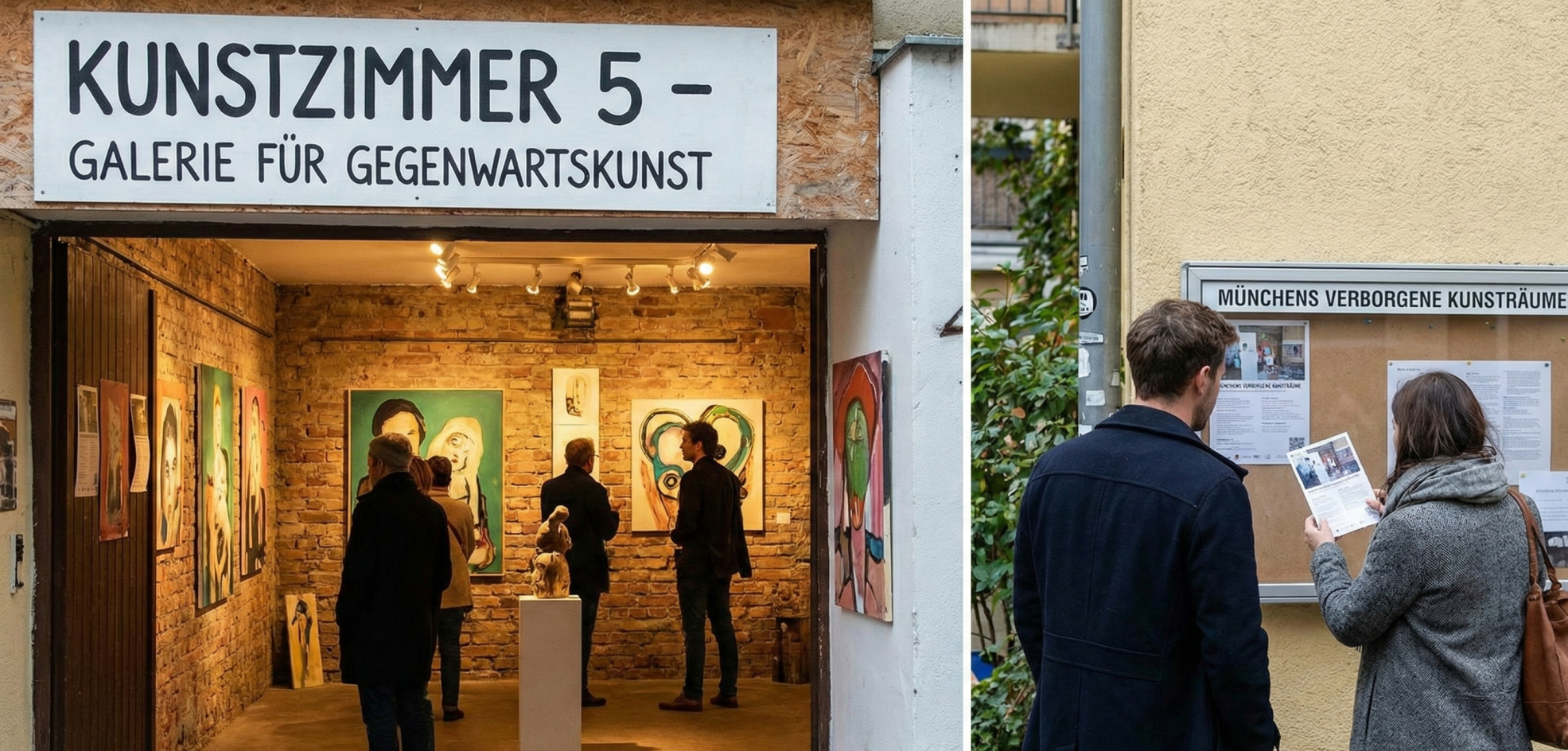
Munich's reputation as one of Europe's most important art cities precedes it worldwide. When you think of the Bavarian state capital, images of the monumental Pinakotheken, the impressive Museum Brandhorst or the majestic Lenbachhaus immediately appear before your mind's eye. This so-called Kunstareal in the Maxvorstadt is undoubtedly a global heavyweight that attracts millions of visitors and presents art history at the highest level. But this institutional radiance has a downside: it often outshines what grows and thrives in the shadow of the big museums. For true art lovers in search of the unspoiled, the daring and the not yet established, the real voyage of discovery only begins where the beaten paths of the tourist flows end. Away from the big houses, an incredibly lively, diverse and often surprising scene of small galleries, off-spaces and independent art venues pulses, forming the true creative heart of the city.
These small, often hidden places are the laboratories of contemporary art. Unlike in the big institutions, where art is often only "museumified" and canonised years or decades after its creation, in Munich's most exciting small galleries you experience art at the moment of its creation. Here the distance between work, artist and viewer is minimal. These are places of direct exchange, where at an opening you can quite often discuss the gallerist's vision with them or strike up a conversation in person with "emerging artists" – tomorrow's up-and-coming talents. This immediacy is what makes them appealing. It is not about reverent awe before multimillion-pound masterpieces of the past, but about engaging with the pressing questions of our time, translated into painting, sculpture, performance or digital media. These galleries are not mere sales rooms; they are social meeting points, discussion platforms and often also a gamble for the operators, who boldly occupy niches in a city with extremely high rents.
Anyone who sets out in search of these insider tips for art lovers gets to know Munich from a completely different side. You dive into courtyards in the Glockenbachviertel, discover former shopfronts in Giesing that now serve as project spaces, or find high-calibre contemporary art in inconspicuous period flats in Schwabing. These places redefine Munich's young art scene and prove that the city is far more than conservative high culture and the smart set. For collectors there is also the chance to acquire works before the artists break through internationally and prices explode. But those who do not want to buy, only to look, learn and be inspired, are welcome here too. The reluctance many people feel about entering commercial galleries is mostly unfounded in these spaces; the atmosphere is often familiar, and passion for the cause comes first.
This guide is an invitation to leave the comfort zone of the established temples of art. We researched deeply and asked around in the scene to identify those places that stand out for their programme, their attitude or their special atmosphere. It is a subjective selection, because the scene is dynamic and constantly in flux. Galleries pop up, move or reinvent themselves. The following recommendations are fixed points in this volatile network, standing as examples of the high quality and diversity of Munich's independent art scene. Prepare to experience contemporary art in Munich where it is most exciting: on a small scale, but with great impact.
The Intellectual Avant-Garde Around the University
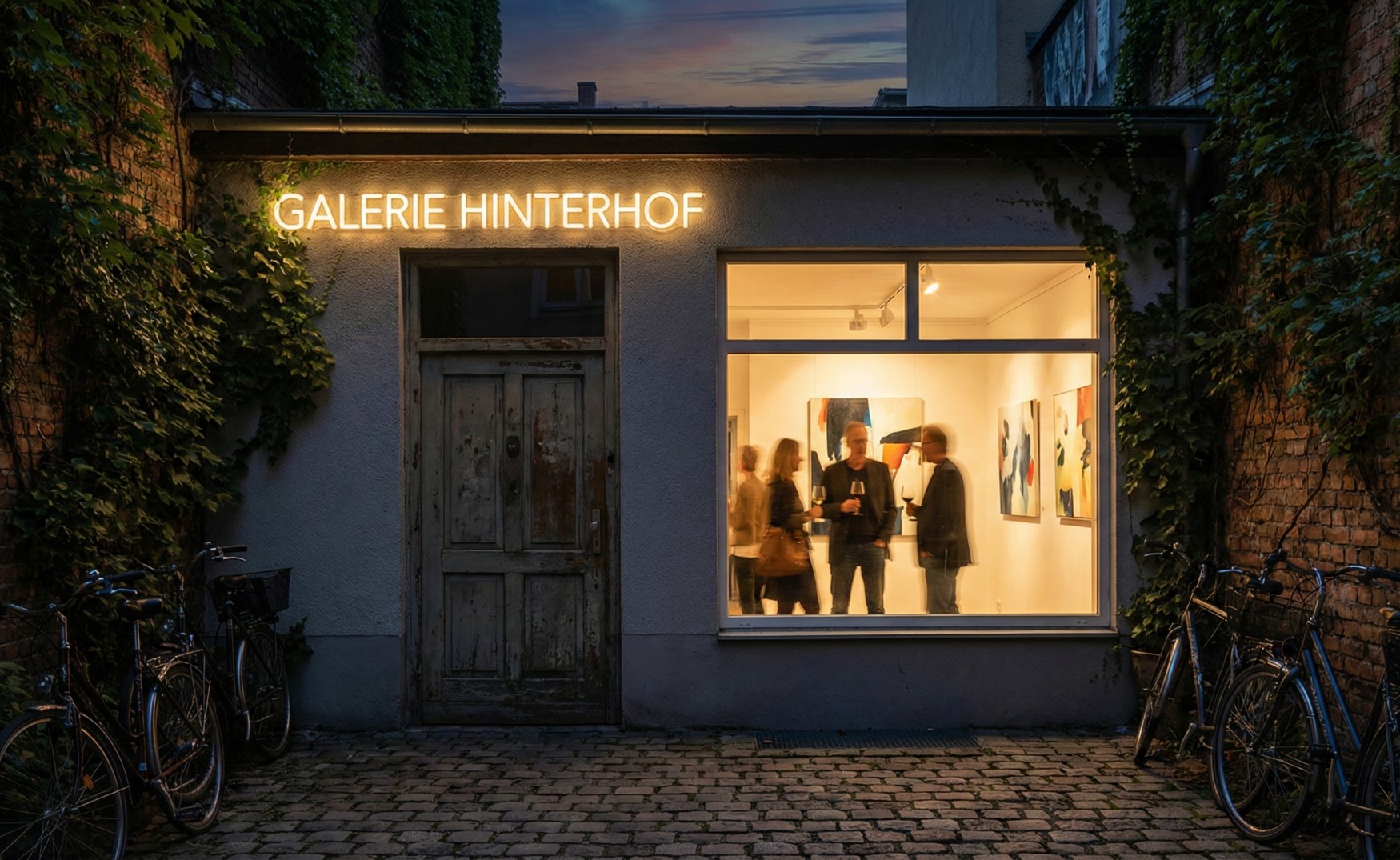
The Maxvorstadt is not only home to the big museums but also the academic heart of Munich. Around the Ludwig-Maximilians-Universität and the Academy of Fine Arts, a biotope of galleries has developed that benefits from the intellectual curiosity and critical spirit of the student environment. These small galleries are often programmatically demanding and do not shy away from complex, conceptual positions. They act as a hinge between academic discourse and the art market. Here you often find artists who have just left the academy presenting their first important solo exhibitions. The premises are often classic – high ceilings and parquet floors in period buildings – yet the art shown deliberately breaks with bourgeois expectations. It is this contrast between traditional Munich architecture and radical contemporary art that makes these places appealing.
A visit to these galleries often requires a certain willingness to engage with something new. The exhibitions are rarely "pleasing" in the decorative sense. Instead, socio-political topics are negotiated here, materialities are questioned and the limits of what art can be are explored. The gallerists in this neighbourhood often see themselves less as pure sellers and more as curators and mentors of their artists. The exhibition texts are well-founded, and the conversations you can have here go deep. These are places where you sense that art is always also research – a visual research into new insights about our world. Anyone who wants to understand which themes preoccupy the next generation of artists has to visit these spaces near the university.
These galleries are by no means elitist circles. On the contrary, they thrive on exchange and are mostly very open to an interested public, even without any intention to buy. The openings are well attended, often by a young, discussion-loving crowd. It is the ideal environment for understanding buying art in Munich not as a pure investment but as an intellectual adventure. Here you acquire not just an object but a piece of an idea, of a concept, that you take home with you. These galleries prove that demanding content and visual sensuality need not be mutually exclusive, and they keep the intellectual level of the Munich art scene consistently high.
Experimental Off-Spaces and Project Spaces
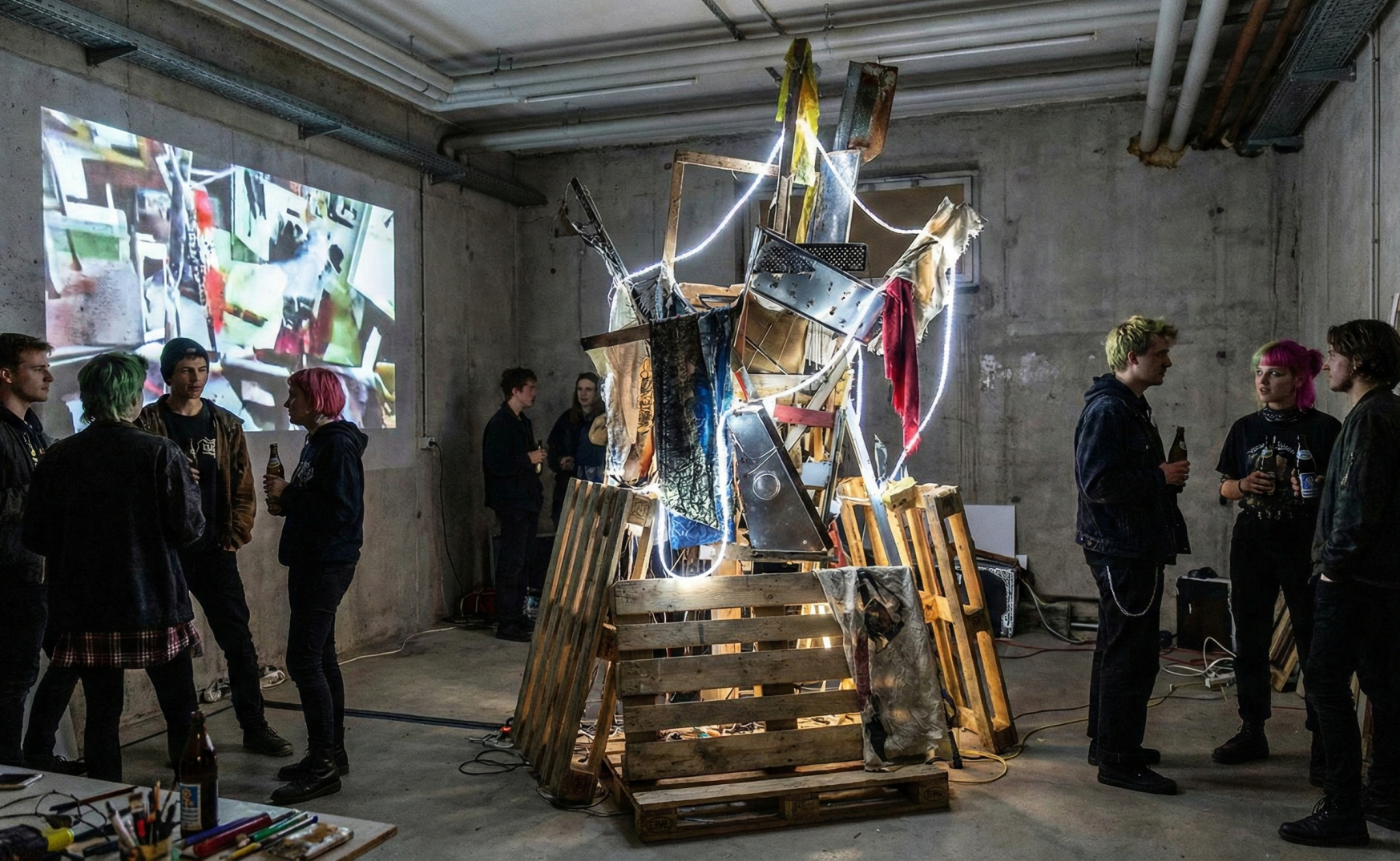
If commercial galleries are the primary market of art, then off-spaces and project spaces are the wild, unregulated primordial soup from which everything arises. Despite enormous property price pressure, Munich has preserved a surprisingly resilient scene of such non-commercial or semi-commercial spaces. These places are often run by artists themselves, by collectives or by associations. They do not depend on selling works to pay their rent (often financed through grants or self-exploitation), which allows them radical freedom in their programme. Here art can fail, here it can be ephemeral, here it can be loud and uncomfortable. These spaces are often found in temporary uses, in old commercial courtyards, in cellars or containers. Their aesthetic is often raw, unfinished and improvised, which suits the art shown there perfectly.
In these experimental zones the boundaries between disciplines blur. An exhibition can turn into a concert venue overnight, a performance can turn into a days-long discussion. These places are essential to the vitality of Munich's young art scene, because they offer the necessary freedom for experiments that would not be possible in a highly polished gallery. Here artists test new materials, collaborate in unusual constellations and develop positions far from market pressures. For the visitor this means: you never know exactly what to expect. It may be a minimalist sound installation, a room-filling battle of materials or a subtle video work.
These insider tips for art lovers are often not easy to find. They have no big shop windows on main streets, their opening hours are sometimes irregular, and their communication runs primarily via social media and word of mouth. But the search is worth it. Visiting an off-space is always an experience, an immersion in a subculture. You meet the makers directly here, and the atmosphere is unpretentious and supportive. Anyone who wants to feel the raw energy of contemporary art in Munich before it is tamed by institutions has to visit these places. They are proof that creativity finds its way even under difficult economic conditions.
The Established "Young Ones" in the Gallery District
Between the very big names and the wild off-spaces there is an extremely exciting middle tier in Munich: galleries that have existed for some years, have established themselves professionally, but have not lost their freshness and spirit of discovery. They are often located in classic residential neighbourhoods such as Schwabing or the Glockenbachviertel, sometimes hidden in beautiful period-building floors on the second storey, whose doorbell plates mean something only to insiders. These galleries have made the leap from experiment to sustainable business model without sacrificing their artistic integrity. They represent artists who can often already point to first institutional successes but are still far from being blue-chip goods. It is the perfect niche for collectors who look for quality and potential.
The gallerists of these spaces (it is strikingly often women who shape this scene in Munich) do enormous work in mediating art. They build up their artists over the long term, connect them internationally and ensure a presence at the important fairs. For the visitor this means: you see exhibitions curated with the highest professionalism here. The hang is precise, the lighting perfectly set, the publications high-quality. Yet the cool distance you sometimes feel in the mega-galleries of New York or London is missing. The contact is personal, they take time for consultations, they know their regular customers. These galleries are the backbone of the upper end of the Munich art market away from the auction houses.
Their programme is often international in outlook, but repeatedly brings strong local positions on board too. They show that contemporary art in Munich can absolutely hold its own in the global discourse. The exhibitions change in a rhythm of about six weeks. A regular visit is therefore worthwhile to keep up. These places prove that a gallery can be both a commercial enterprise and a cultural player. They are reliable points of contact for everyone who understands art not just as decoration but as an intellectual and aesthetic enrichment of their life.
Bridging Art and Design
Munich has a strong tradition in design and applied art. It is therefore not surprising that there are a number of small galleries operating precisely at the interface between fine art and object design. These spaces question the classic hierarchy that places the "purposeless" artwork above the everyday object. Here you find ceramic sculptures that could also be vases, textile wall works that oscillate between rug and painting, or pieces of furniture so sculptural that their function recedes into the background. These hybrid forms are extremely relevant in contemporary art at the moment, and Munich's small galleries reflect this trend excellently.
These places often appeal to a clientele interested in aesthetics in the broadest sense – in interior design, fashion, crafts. The presentation is often more sensual and tactile than in the classic "white cube" of a pure art gallery. Materials play a big role: wood, ceramics, textiles, glass. You may get close to things, sometimes even touch them. These galleries show that art can also be part of daily life and the home environment without becoming banal. They curate objects that tell a story, that are masterfully crafted and conceptually well thought out.
For the visitor these galleries are often particularly accessible, as the objects have a familiar formal language that is then artistically broken. They are perfect places to discover unique pieces that enhance a home while also working as autonomous artworks. The artists shown here are often border-crossers who studied design and now work freely, or fine artists turning to craft. These fluid transitions make the exhibitions in these specialised small galleries surprising and refreshing time and again. They expand the notion of what an "art lover" can collect.
New Spaces in Old Walls: Art in Temporary Uses
A specific phenomenon of the Munich scene is the creative use of places that were not actually made for art. Owing to the shortage of space in the city, artists and curators have become masters at using temporary free spaces. That can be a house due for demolition that becomes a huge gallery for three months, a former kiosk, an abandoned workshop or even a church. These pop-up galleries and temporary-use projects are by nature fleeting, but often for a short time they develop enormous radiance. They bring art to places where you would never expect it, and thereby change the perception of the city.
The appeal of these places lies in the friction between the existing architecture – often with patina, signs of use and history – and the new art that moves in. The art has to assert itself here; it cannot hide in the neutral white space. This often leads to site-specific installations that respond directly to their surroundings. For the visitor, the gallery visit becomes an urban voyage of discovery. You enter buildings that are otherwise closed, you experience neighbourhoods in transition. These projects are often very energetic, because everyone involved knows that time is limited.
These nomadic art venues are essential to the insider tips for art lovers, because by definition they are not established. You have to keep your eyes open, subscribe to newsletters or follow the right Instagram channels to hear about them. They show the enormous flexibility and will to survive of the Munich art scene. When one place disappears, a new one appears elsewhere. This dynamism keeps the city alive and prevents the art scene from stagnating in the established neighbourhoods. They are the most exciting moments of art in Munich precisely because they are the most fleeting.
Conclusion
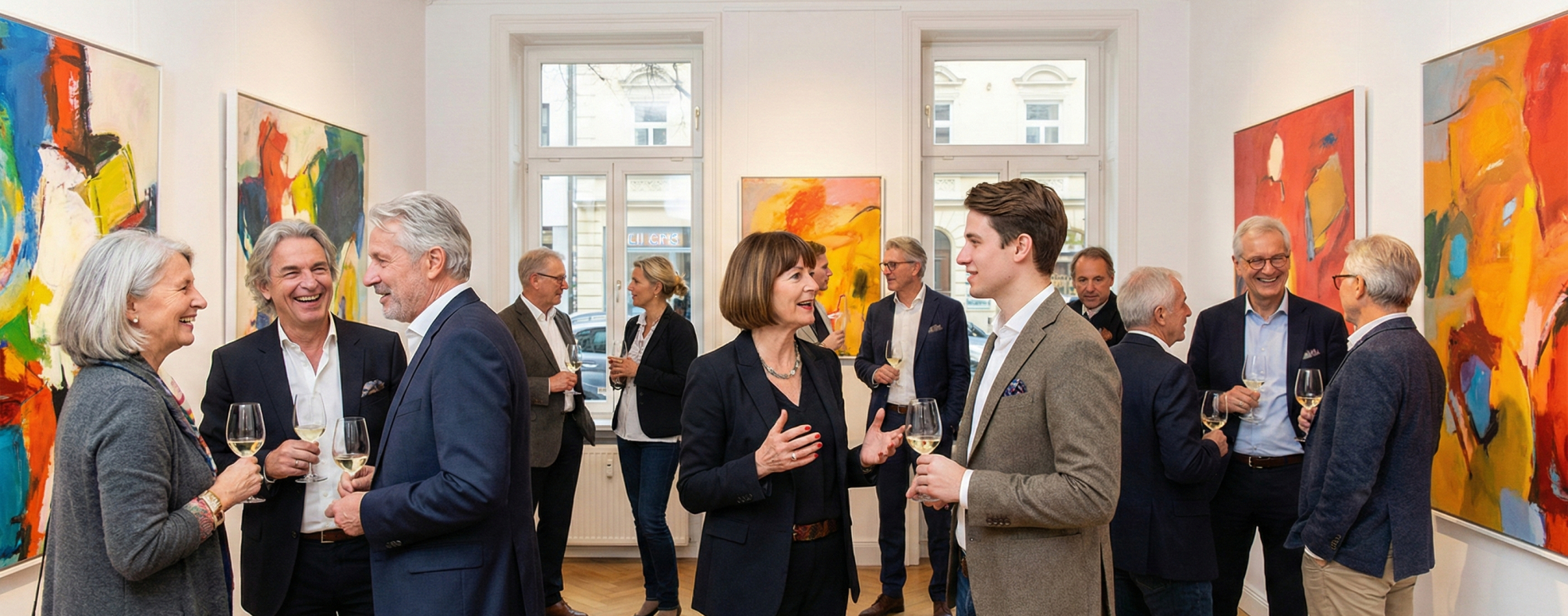
The journey through Munich's small galleries, hidden off-spaces and dynamic project spaces impressively shows that the art city of Munich has far more faces than the first glance at the big museum buildings suggests. Behind the baroque façades and the stately boulevards, a scene is simmering that is marked by diversity, a love of experimentation and international standards. From the intellectually sharpened programmes in the Maxvorstadt, through the wild experiments in temporary spaces, to the professionally run galleries in the residential quarters – contemporary art in Munich is negotiated in a decentralised and polyphonic way. These small places are not mere supplements to the big institutions; they are the indispensable foundation on which the relevance of an art metropolis rests. Without this base, without the places where art is created and first shown, even the museums would at some point lose touch with the present.
For art lovers, the existence of this lively scene means above all one thing: you must never stop discovering. Insider tips once found can become established, and new, still unknown places are constantly emerging. Engaging with art in these small spaces is a school of seeing. You learn to recognise quality away from big names and auction records. You develop a feeling for artistic stances and visionary approaches. Visiting these galleries is also a commitment to a city's culture. It is an active step against the homogenisation of city centres, a sign of appreciation for individual visions and cultural risk capital.
Anyone who buys art in Munich at these small galleries also does something decisive: they directly support living artists and committed gallerists. This money does not flow into anonymous investment funds but makes possible the production of new works, the rent of a studio, the continued existence of an important cultural venue. Collecting here becomes a direct participation in the cultural ecosystem. But even without a purchase, every visitor matters. The discussions at openings, the physical presence in front of the work, the passing on of impressions – all of this constitutes the public that art needs in order to be relevant.
We hope this guide has inspired you to leave the beaten paths and ring doorbells behind which you have never been. The most exciting art experiences in Munich often wait where no big sign hangs above the entrance. Be curious, be bold, and dive into the fascinating world of Munich's small galleries. The next great discovery may already be waiting for you in the courtyard of the next street.

Sarah Müller
Reise- und Lifestyle-Journalistin