München
The Best Architects and Tradespeople for Your Dream Home
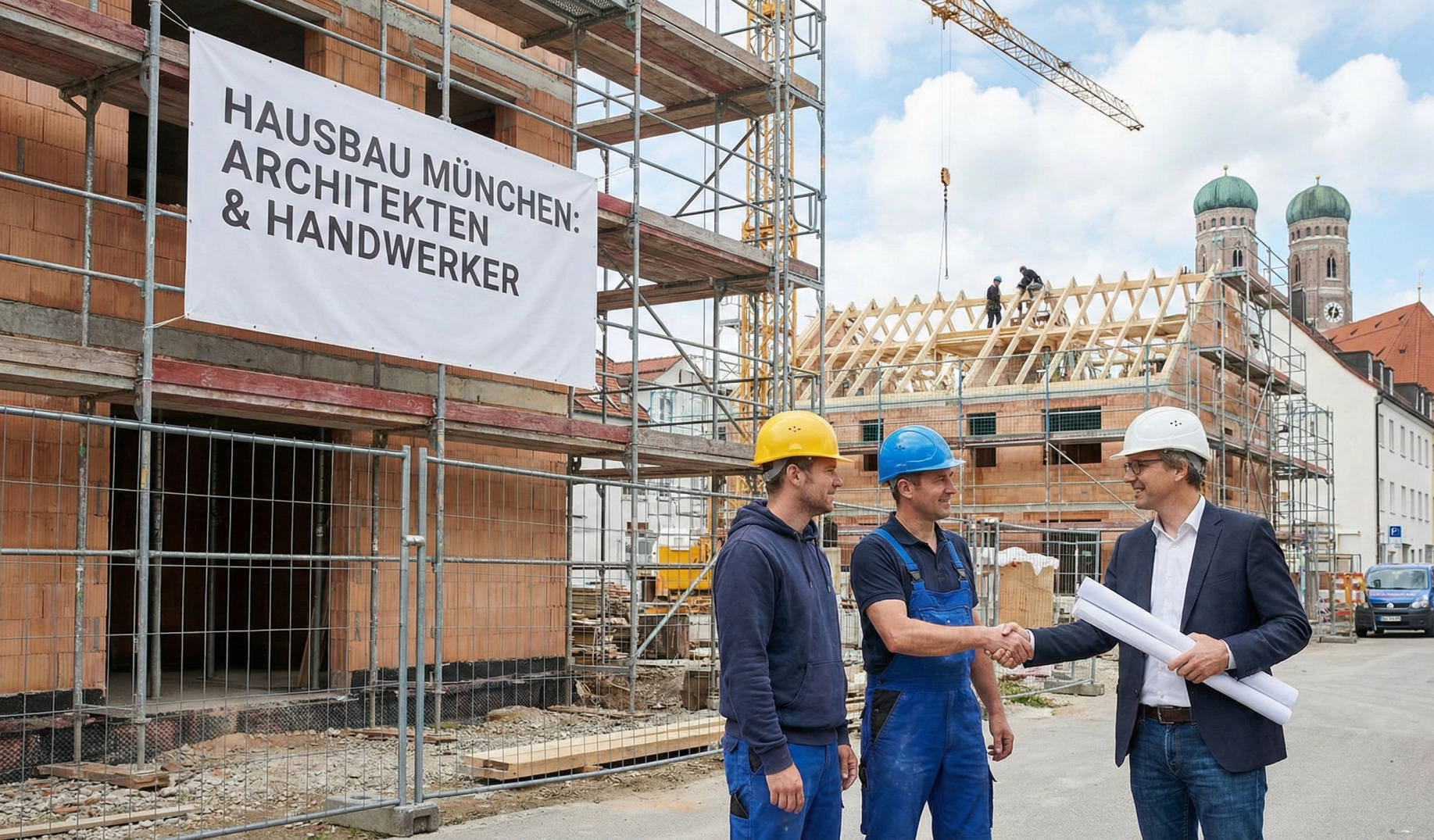
The dream of owning a home in Munich is a fascinating but extremely complex undertaking that goes far beyond simply putting up four walls. In hardly any other German metropolis do the burning desire for high-quality private living space and the harsh reality of an extremely tight property market collide as strongly as in the Bavarian state capital. The city offers an irresistible quality of life, an outstanding economic infrastructure and close proximity to the Alps, which makes it a magnet for families, skilled professionals and investors. Anyone who decides to build a house here enters a market characterised by astronomical plot prices, very strict official requirements and a noticeable shortage of available building firms. Having the necessary capital is no longer enough; a successful house build in Munich requires above all strategic skill, immense staying power and an unshakeable understanding of the local market mechanisms.
To carry out such a monumental project successfully, putting together a flawless and highly professional team is of fundamental importance. You may have the best ideas for your future family home, but without the design brilliance of the best architects and the craftsmanship of experienced local tradespeople, even the most beautiful design will remain on paper or disappoint in execution. Choosing the right partners is the most important foundation of all, before the first spade goes into the ground. An excellent architect acts not only as the creative mind but also as your diplomatic representative towards Munich's often unyielding building authorities, while reputable developers and reliable general contractors make sure your budget and schedule do not get out of hand. In a city where every square metre of building land costs a fortune, the quality of workmanship must match the value of the land.
This in-depth and comprehensive guide is designed especially for prospective self-builders who want to approach building a house in Munich with the necessary seriousness and professionalism. We take an unsparing look at the real challenges that await you, from the gruelling search for a plot in sought-after districts such as Bogenhausen, Schwabing, Allach or Trudering to the final acceptance of the building. You will come to understand why working with locally connected experts is indispensable and how you can avoid typical, often ruinous beginner mistakes. We reveal how to recognise first-class craftsmen, how to assess contracts with general contractors for turnkey building correctly and why independent construction supervision is worth every single cent. Every step on the way to your dream home is dissected in detail here to give you the tools you need for negotiations and decisions.
Ultimately, building a house in Munich is not only an enormous financial investment but also a deeply emotional journey that will shape your life for decades. It is about creating a personal retreat, an oasis of calm in the midst of the vibrant city on the Isar, that perfectly reflects your individual needs in terms of design, sustainability and comfort. Prepare to dive deep into building planning, cost estimation and building physics. Armed with the right knowledge, with the best architect at your side and masterful craftsmen on site, building a house in Munich loses its terror and becomes what it should be: the exciting and fulfilling creation of your very own dream home in one of the most liveable cities in the world.
The Challenge of Finding a Plot in Greater Munich
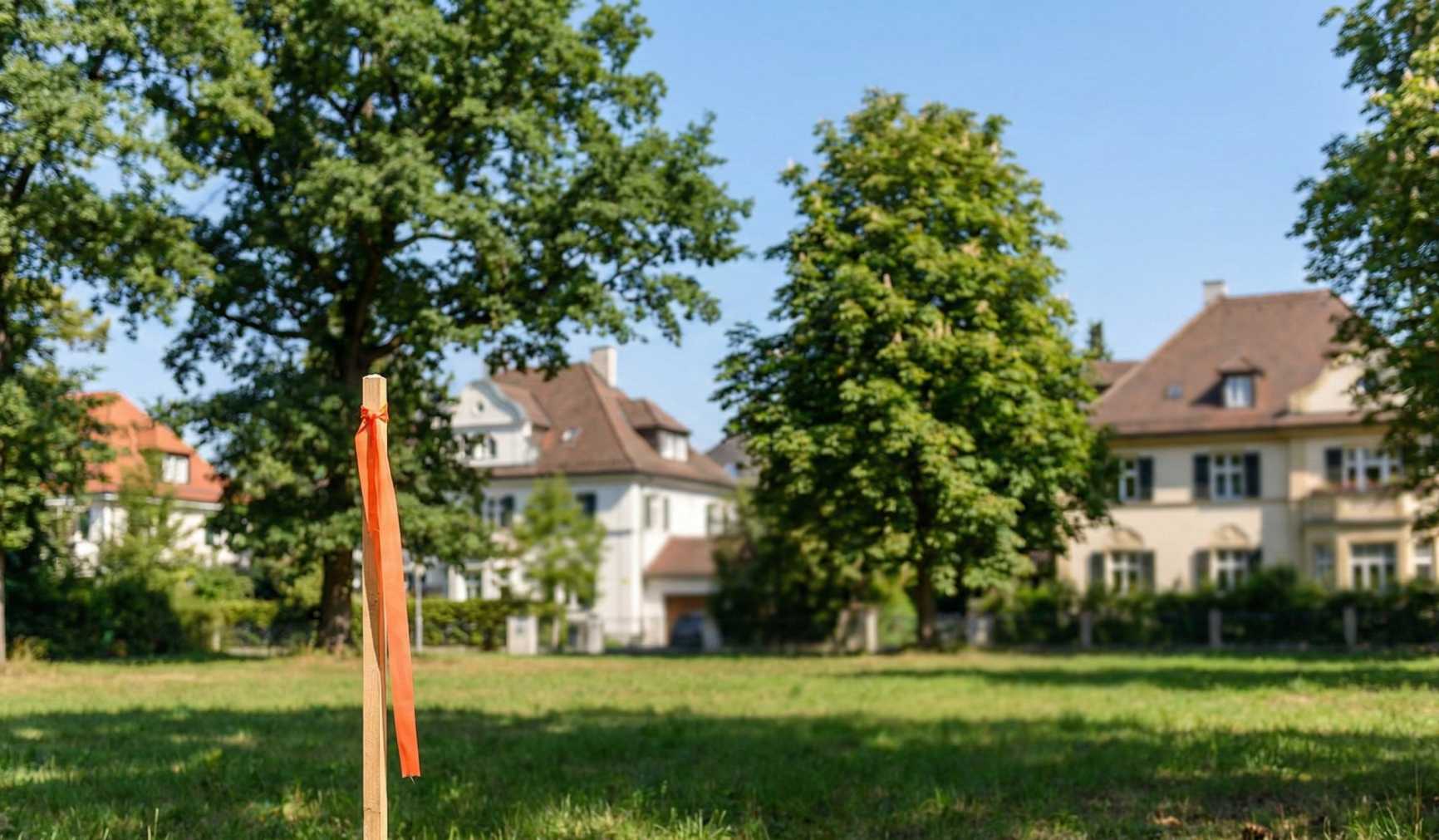
For the vast majority of self-builders, finding a suitable plot is by far the biggest and most nerve-racking hurdle when they take on the project of "building a house in Munich". Undeveloped plots on the so-called "green field" virtually no longer exist within the city, and when a municipal plot does come onto the open market in areas such as Obermenzing, Waldtrudering or Nymphenburg, a relentless bidding war breaks out that drives the already exorbitant prices per square metre to dizzying heights. For many families this means they have to widen their search radius considerably and also consider the area directly around Munich, such as Karlsfeld, Dachau, Putzbrunn or Hohenbrunn. There, the connection to the Munich S-Bahn network is usually excellent, the plots are often more family-friendly in size, and land prices allow a larger share of the total budget to be invested in the actual architectural quality and high-end fittings of the house instead of tying up all the capital in the land purchase alone. Even so, the market remains fiercely competitive, and it takes an excellent network of local estate agents, notaries and architects to hear about promising offers before they are officially advertised.
Because of the glaring shortage of open land, buying post-war existing properties in urgent need of renovation, with the aim of immediate demolition and a new build, has become the most common strategy in Munich. This approach has the huge advantage that you can secure a plot in an established residential district with excellent infrastructure and mature trees. However, buying a plot with an existing building also carries considerable financial and planning risks that laypeople often completely underestimate. The immense costs of professional pollutant remediation of the old building, the expensive demolition and the complex disposal of the rubble must be factored in ruthlessly right from the very first financing plan. In addition, before the notary appointment a qualified architect or structural engineer must check whether the building rights on this particular plot even allow the construction of the desired, usually much larger and more modern dream home, or whether restrictive requirements from an old development plan will nip the project in the bud.
Another critical but often neglected aspect of searching for a plot in and around Munich is checking the exact topographical and geological condition of the ground by means of a professional soil survey. Many areas in Munich, especially near the Isar or in places with an extremely high water table, require an extremely elaborate, expensive "white tank" made of waterproof concrete when building a basement, in order to protect the building permanently from pressing water. If contaminated land from earlier industrial use or unexploded bombs from the Second World War are found in the ground, the costs of the groundwork can explode completely out of control. Anyone who wants to succeed at building a house in Munich never buys a plot purely on gut feeling or because of a nice view, but relies on the merciless, data-based analysis of local specialists so as not to suffer any existential surprises later with the foundations and site servicing of the house.
The Perfect Architect for Individual Visions and Site Management
In a city where the plot alone often swallows up a million-euro fortune, the architect takes on a role that goes far beyond simply drawing floor plans; he is the self-builder's most important visionary, trustee and crisis manager. A truly excellent Munich architect distinguishes himself by translating highly specific and detailed visions for a modern family home exactly into built reality, without violating the often rigid local building regulations. If, for example, the client's design vision calls for a gleaming white facade as a strong, modern contrast to striking black glazing-bar windows, the detailed planning of the connections, the window reveals and the insulation must be accurate to the millimetre in order to avoid cold bridges and preserve the purist aesthetic in the long term. Seamlessly integrating functional outdoor structures into exactly the same strict colour scheme, such as the precise planning of an elegant black pergola for the shaded terrace area, an architecturally matching black carport for the vehicles and a formally coordinated black garden house, requires holistic, uncompromising spatial thinking. An outstanding designer will never regard these elements as subsequent, disruptive add-ons, but will see them from the very first pencil sketch as essential, integral parts of the overall architectural work, giving the entire plot a clear structure and the house its distinctive, timelessly elegant character.
Alongside undeniable aesthetic competence, the architect's deep local knowledge, built up over the years, is the decisive lever for the smooth running of the entire building project. Munich's Lokalbaukommission (LBK, the local building commission) is notorious throughout Germany for its attention to detail and its extremely strict interpretation of the preservation statutes designed to protect the historic cityscape from unsuitable buildings. A long-established architect not only knows the abstract paragraphs of the building code inside out, but also knows exactly which officials in the authorities are responsible for which city districts and how a building application has to be worded strategically and presented visually in order to successfully obtain exemptions or special permits. He acts as a diplomatic interpreter between the client's bold housing wishes and the dry, often frustrating legal realities of the city administration, sparing the client years of gruelling legal disputes and endless planning changes.
Just as decisive, if not more important than the design itself, is the architect's performance in the late phases of the HOAI (Honorarordnung für Architekten und Ingenieure, the German fee scale for architects and engineers), particularly when tendering the trades and rigorously supervising construction directly on site. Even the best design loses all value if it is executed poorly by overwhelmed or unqualified tradespeople. In Munich, an experienced architect has a hand-picked network, proven over the years, of reliable structural engineers, surveyors, energy consultants and highly qualified building firms who know and respect his strict quality standards. He stands on the building site in all weathers, meticulously checks every piece of reinforcement in the concrete, inspects every weld of the roof waterproofing and rejects defects immediately and unrelentingly, long before they are hidden from view by plaster or screed. This uncompromising, technically sound site management is the very best insurance a self-builder can take out against shoddy workmanship, delays and exploding building costs.

Turnkey or Separate Contracts: Choosing the Building Firm
As soon as the ink on the planning permission is dry, self-builders face the most far-reaching strategic decision of the actual construction phase: should the "house build in Munich" project be handed over entirely to a general contractor (GC) or developer for turnkey building, or should you take the far more labour-intensive route of awarding all trades separately, coordinated in detail by an architect? The promise of turnkey building is extremely tempting: a single, central contractual partner takes on complete responsibility from the foundation slab to the roof covering, in theory guarantees a fixed price and contractually assures an exact move-in date. This option drastically reduces the client's personal stress level and organisational effort, as he does not have to deal with dozens of different tradespeople, clashing construction schedules and unclear responsibilities for defects. It is the supposedly carefree route to your own home, and it is particularly favoured by busy working families in Munich.
However, the coin of turnkey building has a flip side that must be examined critically before you sign a contract worth millions. The absolute downside of this model is the massive loss of influence, individual flexibility and in-depth cost transparency throughout the entire construction phase. General contractors understandably build a considerable risk premium and generous profit margins into their fixed prices, and every change, however small, whether an additional socket, a different tile format or a higher-quality parquet, is billed as an expensive extra, often far above the normal market price. Moreover, it is often completely opaque to the client which specific subcontractors, some of them from other regions or abroad, the general contractor actually sends to the Munich site. If extremely cheap subcontractors are used, the quality of the detailed execution often suffers badly, which a vigilant architect could prevent far more effectively with separate contracts.
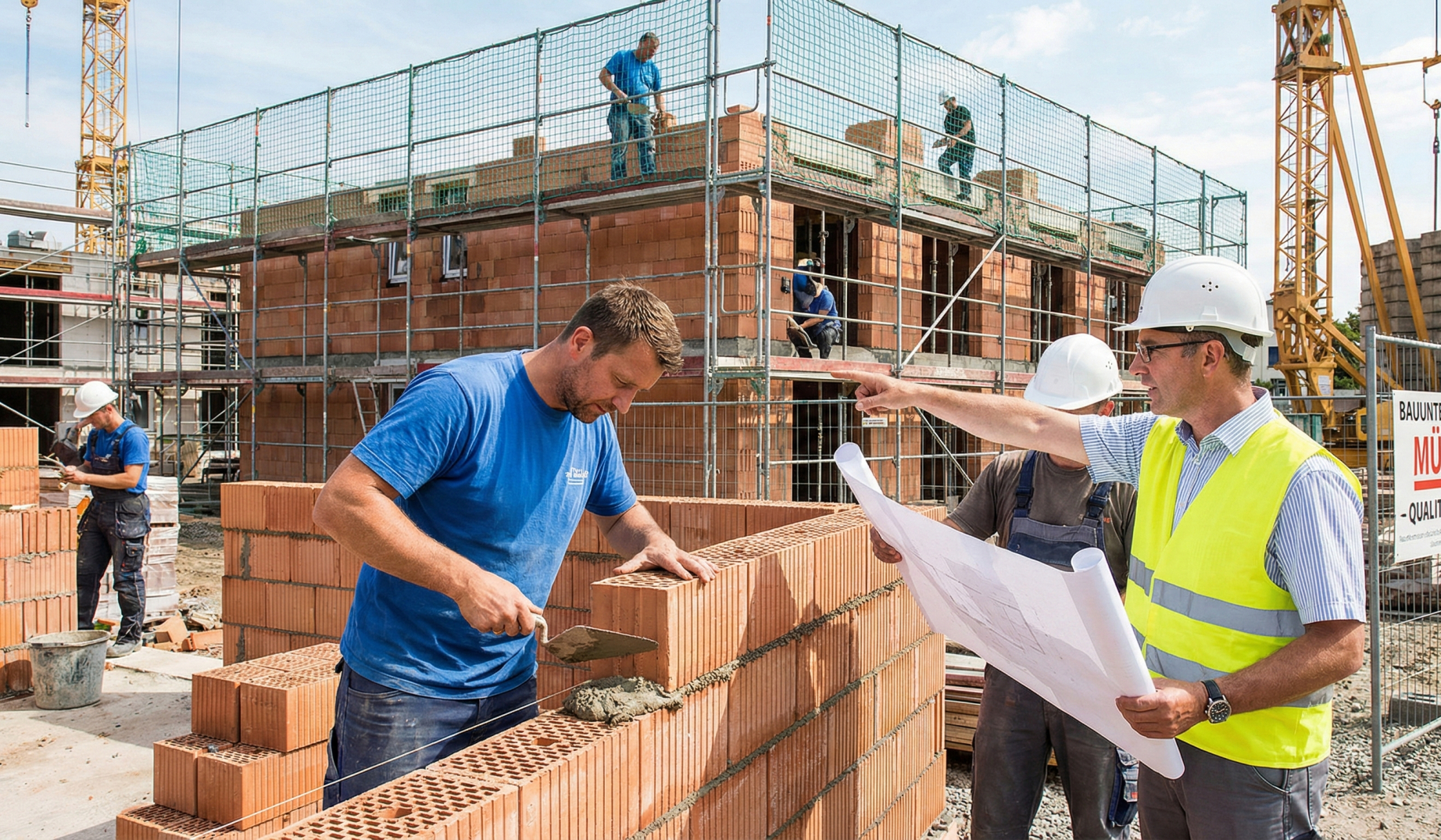
The route of separate contracts, on the other hand, demands the highest degree of discipline, constant availability and full trust in the excellent site-management abilities of the architect you have appointed. Here, all trades, from the shell construction and the carpenter to the electrician and the heating engineer, are tendered, compared and commissioned individually. The huge advantage in Munich is that you can deliberately select long-established, highly respected local firms from the region, known for their outstanding quality and reliability and with an excellent reputation in the city to defend. This absolute cost transparency means the budget is used very precisely for the high-quality materials you want, without hidden margins flowing away to a middleman. The risk of scheduling overlaps on the site is admittedly far higher, but a brilliant site manager will be able to orchestrate them, so that in the end an architectural masterpiece is created that matches the client's dreams exactly in perfect craftsmanship.
Cost Transparency and Building Finance in the Most Expensive City
Anyone who wants to realise the dream of owning a home in Munich must face a brutal financial reality that leaves absolutely no room for naive calculations or financial castles in the air. The pure construction costs, that is, the costs of materials and the labour of the tradespeople, have shot up relentlessly across the whole Munich area in recent years. A shortage of skilled workers, badly disrupted global supply chains and the continuing high demand for housing mean that for a solid, high-quality new build you now have to budget with prices per square metre in the mid to high four-figure range, and that is before the plot, site servicing and landscaping of the outdoor areas are even included. It is an absolutely fatal mistake to be dazzled in your initial budget planning by the unrealistically low come-on offers of cheap national prefabricated-house providers, as in reality these base prices never cover the expensive Bavarian requirements for snow loads, special foundation costs or the high Munich standard of finish.
A rock-solid, far-sighted building finance plan is the indispensable backbone of every Munich house-building project. Banks now examine building finance in Munich far more restrictively and closely than a decade ago. A substantial share of genuine equity, ideally twenty to thirty per cent of the gigantic total costs so as to at least cover the massive additional building costs such as property transfer tax, notary fees and estate agent's commission entirely from your own funds, is the basic prerequisite for obtaining negotiable and reasonable interest rates from the lenders at all. It is also essential to build a very generous financial buffer of at least ten to fifteen per cent of the pure construction costs firmly into the financing. This buffer is not an option but an absolute necessity, because when building in the city, whether through unforeseeable problems in the ground, necessary extras for materials that are hard to obtain or temporary work stoppages due to the weather, cost overruns almost always occur, and without a reserve they can lead straight to refinancing and thus to financial ruin.
A smart self-builder and their architect include all available government funding programmes at federal, state and local level in the calculation from the very beginning. Institutions such as the KfW (Kreditanstalt für Wiederaufbau, the German state development bank) or the BAFA offer highly attractive, low-interest loans and substantial, non-repayable repayment grants for extremely energy-efficient construction, the installation of innovative heat pump technology, the installation of large-scale photovoltaic systems and the integration of intelligent smart-home systems. In Munich in particular, where the city itself often launches lucrative funding programmes of its own to reach its municipal climate targets, the clever combination of these funds can amount to a mid five-figure sum, which noticeably reduces the heavy interest burden and makes it possible to integrate higher-quality materials or forward-looking technology into the house without blowing the tightly calculated total budget of the project.
The Bureaucratic Hurdles: Building Application and the Lokalbaukommission
The moment the finished, detailed plan of the dream home in Munich is submitted to the responsible building office, the notorious Lokalbaukommission (LBK), often marks the start of an extremely nerve-racking test of patience for the client. Munich's city authorities are chronically overloaded, and the bureaucratic mills grind here with a slowness that can drive even the calmest self-builder to despair. The building authority checks with meticulous precision whether the submitted design complies, down to the smallest nuance, with the applicable and often decades-old development plan. Distances to the neighbour, the permitted plot ratio (GRZ), the floor area ratio (GFZ), the precisely defined roof pitch, the ridge height and, in some Munich districts, even the colour of the roof covering or the type of planting in the front garden are checked pedantically and rejected rigorously at the slightest deviation, which can set the entire planning process back by many months.
An extremely powerful and often indispensable tool for easing these very tough bureaucratic hurdles in advance and obtaining planning certainty is applying early for an official preliminary decision, also known as a preliminary building enquiry. Before the architect invests hundreds of hours in the expensive and detailed working and approval planning, the preliminary enquiry involves submitting only a rough concept with the desired volume and the positioning on the plot, in order to clarify bindingly whether the project is fundamentally approvable at this specific location at all. This step not only saves a great deal of money but also prevents deep disappointment if the authority categorically rules out a planned, ultra-modern flat-roofed villa in a strongly traditional district with a compulsory pitched roof. Smart, early communication between the architect and the responsible LBK official can be decisive at this stage for exploring compromises and skilfully avoiding a formal rejection.
Another aspect that can turn the building process in Munich into a legal nightmare is involving, and obtaining the consent of, the direct neighbours. German building law gives neighbours far-reaching options to lodge an objection against a building project that could affect their own rights, which can block the start of construction work for years through lengthy court proceedings. An experienced, empathetic self-builder will therefore never simply submit the finished building application to the authority, but will always proactively seek a personal conversation with the neighbours. If you let the neighbours in on the plans early, explain the shadows cast and window positions transparently and take small neighbourly concerns into account, you ideally secure their signature directly on the building plans. These signed plans speed up processing at the Munich authority enormously and create a peaceful and harmonious coexistence in the new dream neighbourhood from day one.
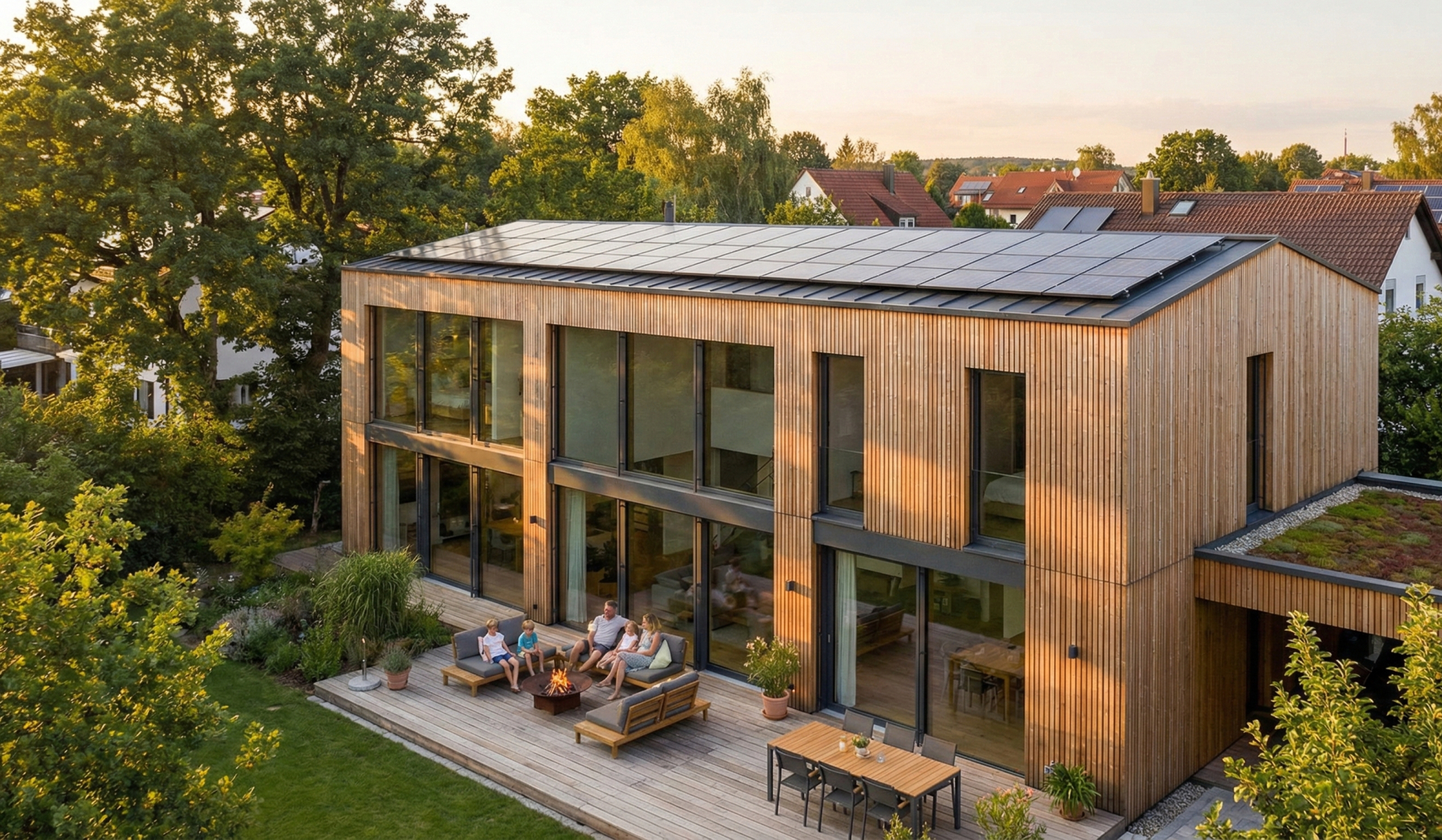
Energy Efficiency, Sustainability and Forward-Looking Building Technology
Anyone planning and building a house in Munich in the current decade must on no account settle for the absolute minimum standards of the Gebäudeenergiegesetz (GEG, the German Building Energy Act), but must plan for the future with great foresight and uncompromising sustainability. Drastically rising energy costs, extremely strict CO2 reduction requirements and a massively increased ecological awareness in society make building genuine low-energy houses, passive houses or even plus-energy houses, which generate more energy than they consume, an absolute economic and moral duty. The heart of such a forward-looking building in Munich is an extremely airtight, perfectly insulated building envelope in which every single cold bridge is eliminated. Combined with highly efficient, whisper-quiet air-to-water or brine-to-water heat pumps that draw thermal energy from the Bavarian air or the deep ground, the house is heated entirely independently of the fossil fuels oil and gas, which permanently protects the client from incalculable, geopolitically driven price fluctuations on the world market.
Absolute independence from the city energy suppliers only becomes reality when the roof of the new home serves not merely as protection from the rain but as a high-performance power station of its own. An optimally aligned, maximally sized photovoltaic system, coupled with a powerful, intelligent battery storage unit in the utility room, covers a large share of the enormous electricity demand for the heat pump, everyday household electronics and the charging of the electric vehicles at the home wallbox. A profound, revolutionary shift is also taking place in the choice of basic building materials in Munich. While the surrounding area is deeply rooted in traditional solid brick construction, modern, high-tech timber-frame construction or building with solid cross-laminated timber is becoming extremely popular. Timber, as a renewable, regional raw material, binds a great deal of CO2, provides an incomparably healthy, moisture-regulating indoor climate and, thanks to extensive prefabrication in the factory, allows extremely short, weather-independent construction times on the Munich site, which radically minimises the immense noise and dirt burden for sensitive neighbourhoods.
A truly modern Munich home, however, is characterised not only by its outstanding eco-balance but also by the invisible, ever-present intelligence of full smart-home integration. A highly complex, wired system (such as the globally standardised KNX bus system) networks the heating, the sensor-controlled fresh-air ventilation, the daylight-dependent shading and the high-security alarm technology into a perfect, thinking organism. When the Munich summer sun heats up the huge, triple-glazed window fronts on the south side intensely, the external venetian blinds lower fully automatically while the heat pump's cooling system quietly starts up. When the residents leave the house, absolutely all the lights switch off, the sockets are cut off from the power supply and the security system is armed automatically. This form of uncompromising digital home control is far more than an expensive technical gimmick; it maximises pure quality of life, drastically minimises everyday energy waste and secures the property's huge resale value for many decades to come.
Construction Supervision by External Experts on the Building Site
Even if you have hired the most renowned star architect in Munich and commissioned the most expensive, most renowned local master craftsmen, reality on a large building site is an extremely rough, confusing and potentially error-prone chaos that must be monitored by a completely independent, external body. Building is the work of countless human hands, and where people work together under extreme time pressure, in the worst Bavarian weather conditions and in complex teams, mistakes inevitably happen. A slipped insulation board in the roof slope, a poorly executed vapour barrier connection at the window reveal or fine cracks in the basement waterproofing are impossible for a layperson to spot with the naked eye. Yet it is precisely these microscopically small oversights that lead in the following years to catastrophic, existence-threatening structural damage such as hidden mould in the walls, massive heat loss or penetrating groundwater, whose later, elaborate remediation often swallows hundreds of thousands of euros and turns life in the new house into an absolute hell.
For this fundamental reason, engaging a completely independent, sworn building expert, for example from established institutions such as TÜV, Dekra, the Verband Privater Bauherren (VPB) or the Bauherren-Schutzbund, is by far the most profitable and smartest single investment in the whole course of the project. This expert is not on the payroll of a developer and is not part of the tradespeople's network, but works exclusively and with absolute loyalty in the client's interest. He enters the Munich building site completely unannounced at the most critical milestones of construction progress: before the immense steel mesh in the foundation slab is poured over with liquid concrete and made invisible for ever, before the interior plaster permanently covers the complex shell construction work and before the thick screed is poured over the extremely sensitive heating pipes. He meticulously measures moisture levels, checks every detail against the strict DIN standards and, with legally watertight records, forces the contracting firms to rectify defects immediately and without compromise before it is too late.
The crowning but also most critical conclusion of the entire, exhausting house-building project in Munich is the formal building acceptance. With the signature on the official acceptance record, the building legally passes to the client together with all the associated legal risks, and the so-called burden of proof for any defects is completely reversed. If at acceptance you overlook a scratch in the extremely expensive sliding door or a missing joint in the luxurious bathroom, you later have to laboriously prove that the building firm caused this defect, which in practice is often impossible. This very last, decisive step must therefore never take place in a hurry, under the pressure of the approaching moving date or without the watchful support of the independent expert. Only when absolutely every smallest defect has been documented in the record in a legally flawless way and a relevant part of the final payment instalment has been withheld as a strong means of leverage can the client receive the eagerly awaited keys to his perfect Munich dream home with the unshakeable certainty of having received real, durable and flawless quality.
Conclusion
The decision to take building a house in Munich into your own hands is undoubtedly one of the most monumental, financially far-reaching and emotionally intense decisions a family can make in its lifetime. It is an undertaking that demands everything of the client over many months: from unshakeable patience in the frustrating hunt for the perfect plot to iron, stress-resistant nerves in tough negotiations with building authorities and strict banks. The extremely tight property market of the Bavarian metropolis, coupled with an unprecedented price trend for building land and craftsmen's services, tolerates no naivety whatsoever and punishes poor planning immediately with ruinous cost explosions. Even so, the continuing high demand proves that this rocky road remains the most desirable goal for everyone who wants to make no compromises on their quality of living and their long-term wealth creation.
The overriding key to mastering this mammoth project lies solely in the absolutely uncompromising quality of the team you gather around you. The belief that you can save money at the wrong end with extremely cheap service providers is the surest path to a legal and financial disaster on the building site. Choosing a visionary Munich architect with deep local roots, who translates your most secret wishes for your home into perfect floor plans and steers the building authority diplomatically, is worth its weight in gold. Just as indispensable is commissioning master craftsmen who still see their trade as a vocation and, with the highest Bavarian craftsmanship, shape stone, timber and concrete into an unshakeable bulwark, as well as the constant supervision of all these players by an independent, merciless building expert.
If you regard this guide as your unshakeable manifesto for building a house, equip your financial calculations with extreme safety buffers and rely uncompromisingly on the most innovative and sustainable standards of the future in building physics, the often-quoted horror stories about shoddy building work and spiralling budgets lose their terror. The moment when the last tradesperson leaves the broom-clean building site, the smell of fresh timber and clean plaster fills the bright, light-flooded rooms and you turn the heavy key in the lock of your own solid front door for the very first time is a feeling of ultimate triumph that nothing in the world can replace.
Your new, tailor-made house in Munich will then be not only an incredibly valuable property investment in one of the most expensive cities in Europe, but rather the tangible, stone-built proof of your immense personal drive. It will be the safe haven for your family, a private, architecturally perfect retreat from the bustle of the big city and a lasting, masterly life's work, planned with attention to detail, built with brilliant craftsmanship and constructed for many generations to come. Approach this unique project with the greatest respect for the task, but above all with huge anticipation and boundless courage: your perfect Munich dream home is just waiting for you to create it.

Sarah Müller
Reise- und Lifestyle-Journalistin