München
Munich's Most Fascinating Neighbourhoods
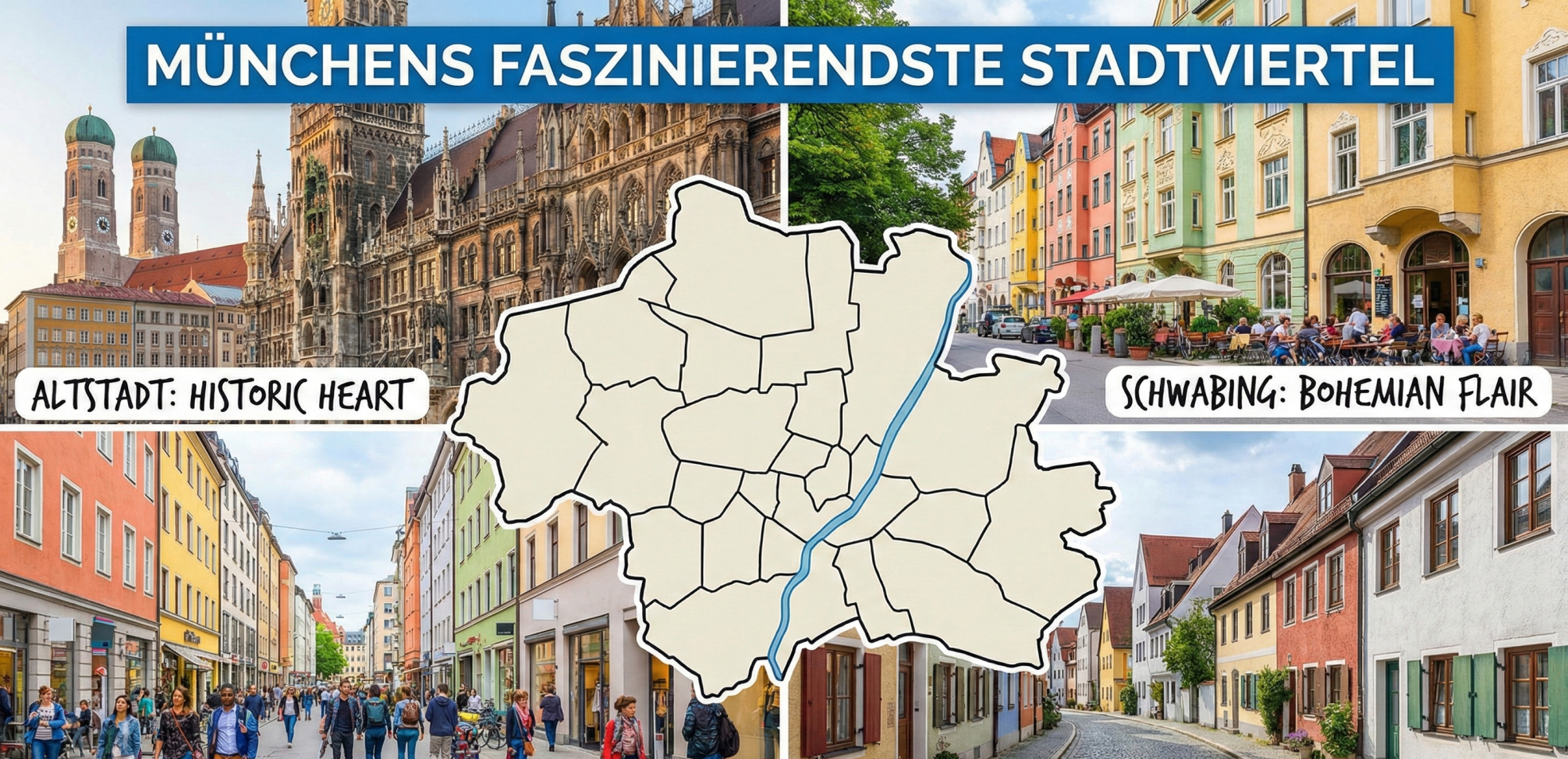
Munich, the radiant metropolis on the Isar, is all too often reduced in the global imagination to an agreeable but highly simplified backdrop of Oktoberfest, lederhosen, Hofbräuhaus and Alpine panorama. But anyone who limits the Bavarian state capital to these superficial clichés misses the true, profound soul of one of the most architecturally and culturally diverse cities in Europe. The real fascination of Munich reveals itself not in the crowded tourist strongholds of the central old town, but in the complex mosaic of its utterly different neighbourhoods. Each of these neighbourhoods, affectionately called their very own personal “Kiez” by locals, works like an independent little town within the city of over a million. They pulse to their own rhythm, cultivate their specific traditions and present an architectural signature that bears witness to their particular history, social upheavals and the urban visions of past centuries. Anyone looking for the loveliest districts of Munich inevitably embarks on a fascinating journey through European art and architectural history.
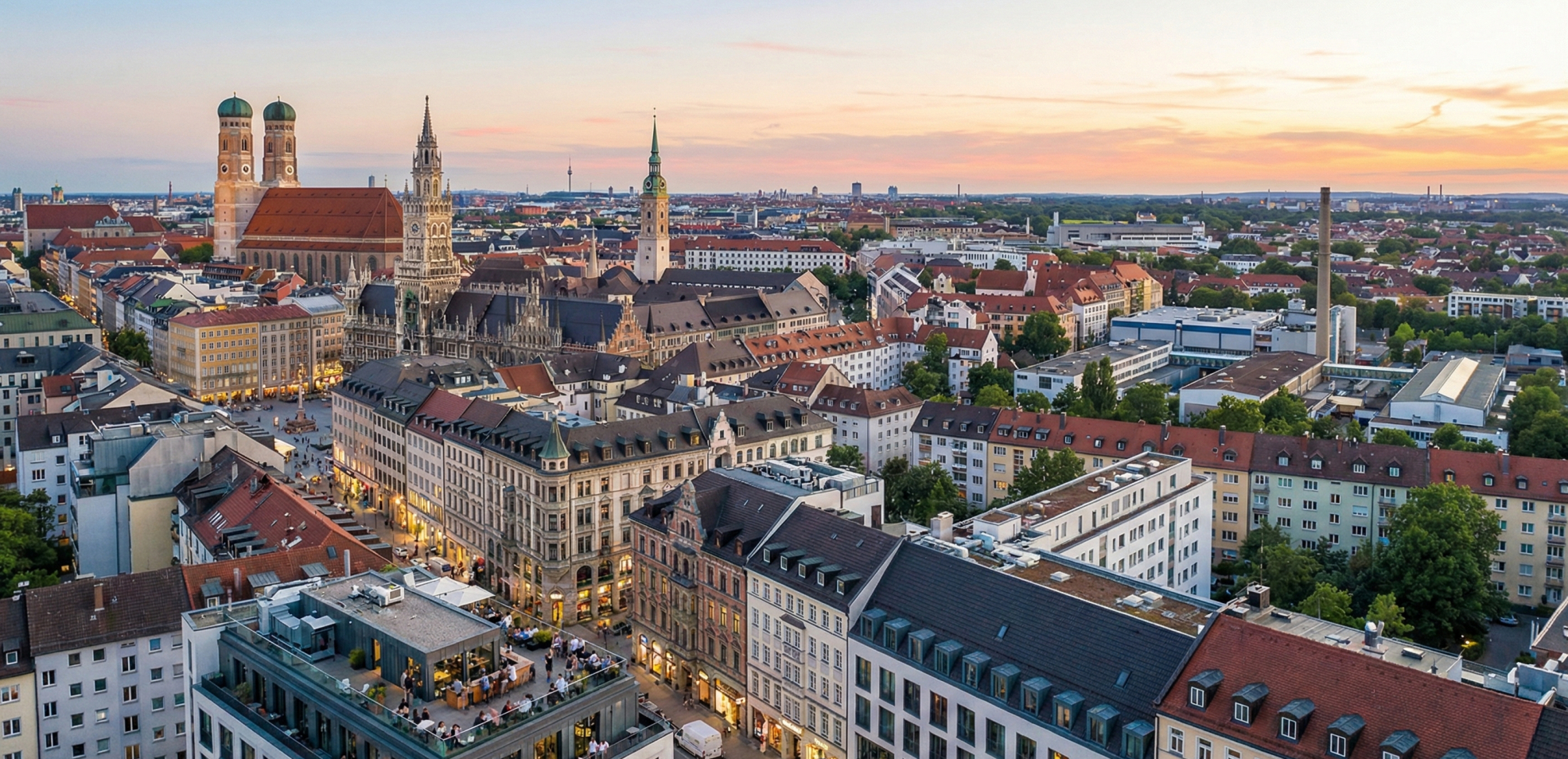
The architectural landscape of Munich is an impressive testament to royal ambition and civic self-confidence. While the old town around the Marienplatz is still dominated by medieval street plans, the Gothic severity of the Frauenkirche and the neo-Gothic splendour of the Neues Rathaus, beyond the old city walls the cityscape opens up into a breathtaking stylistic diversity. The Bavarian kings, above all Ludwig I, wanted to create an “Athens on the Isar” from Munich and left grand boulevards and monumental neoclassical buildings that still shape whole districts today. Set against this is the playful, floral Art Nouveau that conquered the façades of the wealthy middle-class districts at the turn of the 20th century, as well as the rugged red-brick industrial architecture of the old working-class districts, which today provides the perfect setting for alternative cultural scenes. This constant architectural contrast makes every walk through Munich's neighbourhoods a first-class visual experience.
But architecture is only ever the stone shell for the life that takes place within it. Local culture in Munich's neighbourhoods is extremely lively and in constant flux. Historically grown working-class districts have turned into hip trendy neighbourhoods through complex gentrification processes, former artists' quarters have risen to become the most expensive residential areas in Germany, and old industrial complexes have been converted into ultra-modern cultural centres. Despite these rapid developments and the enormous economic pressure on the property market, many neighbourhoods have kept their very specific, unmistakable village character. It is this unique mixture of cosmopolitan urbanity and deeply rooted local identity that makes up the much-cited “Mythos München”. You know your neighbour, you meet at the local regular café or at the butcher around the corner, and you identify strongly with the particular quirks of your quarter.
This comprehensive guide takes you on an in-depth expedition through Munich's most fascinating neighbourhoods. We leave the beaten tourist tracks and dive deep into the architectural, social and cultural history of the quarters that form the authentic heart of the city. From the intellectual density of the Maxvorstadt through the legendary bohemian past of Schwabing, the French flair of Haidhausen and the pulsating zest for life of the Glockenbachviertel to the rugged industrial charm of the Westend and the aristocratic elegance of Nymphenburg. This article is not only a valuable guide for visitors who want to experience Munich beyond the stereotypes, but also a homage to the city for all locals who want to see their home town once more with completely fresh eyes. Get ready to discover Munich's districts in all their cultural and architectural brilliance.
Maxvorstadt
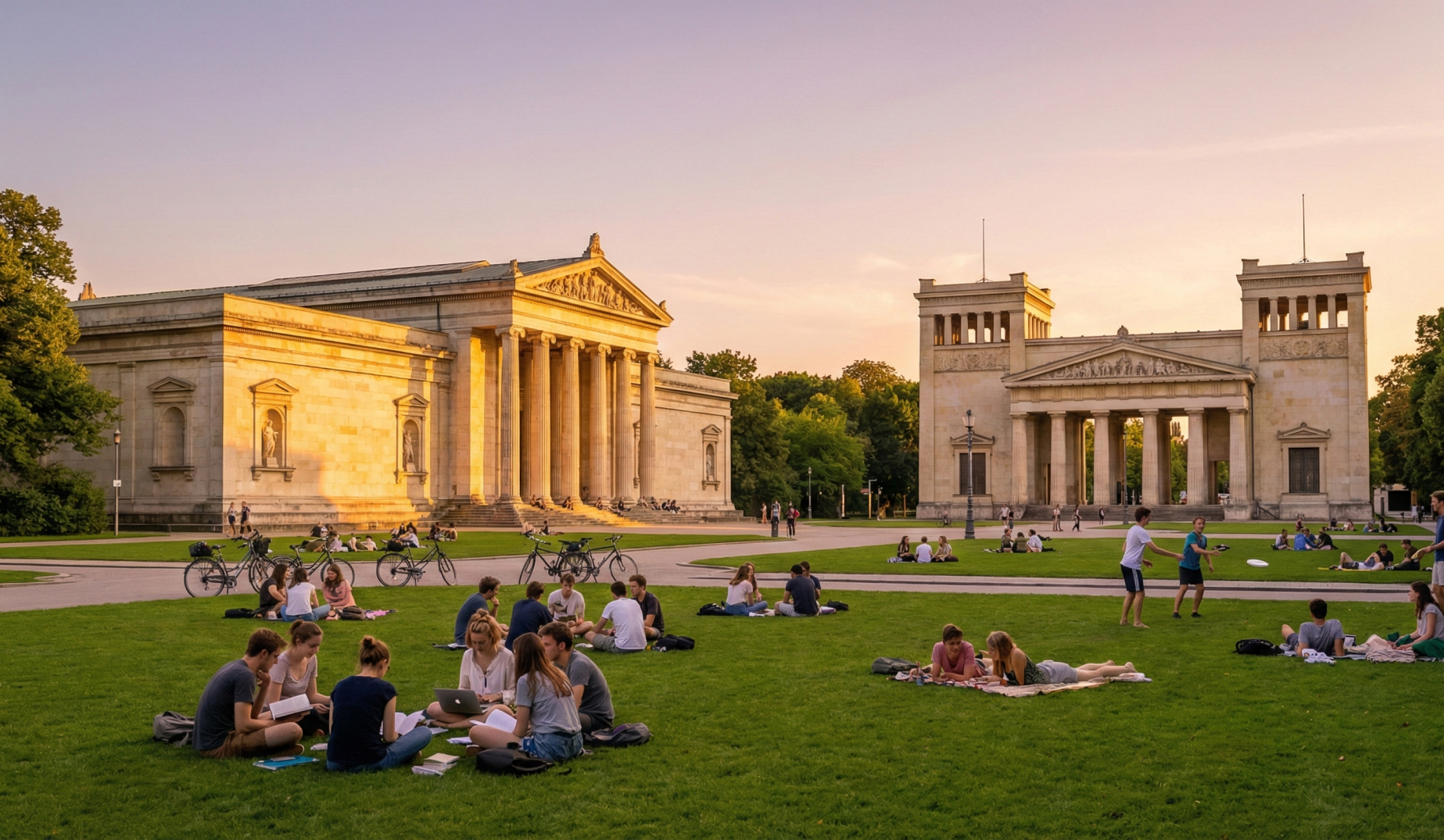
The Maxvorstadt is undisputedly regarded as the architectural and intellectual brain of Munich. Named after the first Bavarian king, Max I Joseph, this neighbourhood was conceived in the early 19th century as the first planned urban extension outside the medieval city walls and laid out in a strict grid. King Ludwig I finally shaped the Maxvorstadt, with his irrepressible passion for antiquity, into what it is today: a monumental testament to German neoclassicism. The absolute high point of this urban vision is the Königsplatz, a spacious, strictly symmetrical ensemble framed by the Glyptothek, the Staatliche Antikensammlungen and the Propyläen, which inevitably transports the viewer into the sublimity of ancient Greece. The architecture of the Maxvorstadt is characterised by strict lines, gigantic proportions and an almost intimidating intellectual weight, reinforced by the broad grand avenues such as the Ludwigstraße with its majestic round-arch-style façades.
Culturally, the Maxvorstadt is the absolute epicentre of the Bavarian state capital, because the world-famous Kunstareal is located here. Some of the most important art collections in the world are concentrated in a very small space. The Alte Pinakothek, a masterpiece by Leo von Klenze, houses European painting from the Middle Ages to the 18th century, while the Neue Pinakothek directly opposite and the architecturally ultra-modern Pinakothek der Moderne bridge the gap to contemporary art. This incredible cultural offering is complemented by the colourful Museum Brandhorst, whose façade of 36,000 coloured ceramic rods forms a spectacular architectural contrast to the classical buildings around it. This density of museums, galleries and cultural institutions draws art lovers and architecture enthusiasts from all over the world to the Maxvorstadt and makes it a lively, permanently pulsating open-air museum.
But the Maxvorstadt is by no means merely a frozen museum district; it pulsates with youthful energy, which it owes to the two elite universities – the Ludwig-Maximilians-Universität (LMU) and the Technische Universität München (TUM). With well over 100,000 students, researchers and lecturers, the neighbourhood is a lively microcosm of academic life. This demographic shapes the local culture massively: between the venerable neoclassical façades, countless small cafés, hip vegan restaurants, rustic student pubs and independent bookshops have established themselves. Around the Amalienstraße and the Türkenstraße in particular, there is constant, busy activity. Here people discuss philosophy over an oat cappuccino, work on laptops in hip co-working spaces or relax after lectures on the lawns around the Pinakotheken. The Maxvorstadt is thus the fascinating place where Munich's heavy historical legacy combines wonderfully with the lightness and innovative spirit of student youth.
Schwabing
Hardly any other Munich neighbourhood is so wrapped in legends, myths and literary idealisation as Schwabing. Around the turn of the 19th into the 20th century, in the era of “Wahnmoching”, as the writer Franziska zu Reventlow called it, Schwabing was the absolute centre of the European bohemian scene. Here, in the studios, back courtyards and smoky cabarets, artists, writers and revolutionaries such as Thomas Mann, Wassily Kandinsky, Paul Klee and Lenin met to break conventions and reinvent the art of modernism. Even though the starving artists of that time have long since been replaced by well-paid academics and celebrities, the neighbourhood still lives off this incomparable, free-spirited myth. In the city's collective memory, Schwabing stands for zest for life, lightness and an easygoing, sophisticated way of life, which can be felt especially on mild summer evenings along the promenade of the Leopoldstraße with its countless street cafés and the iconic, bright yellow poplars.
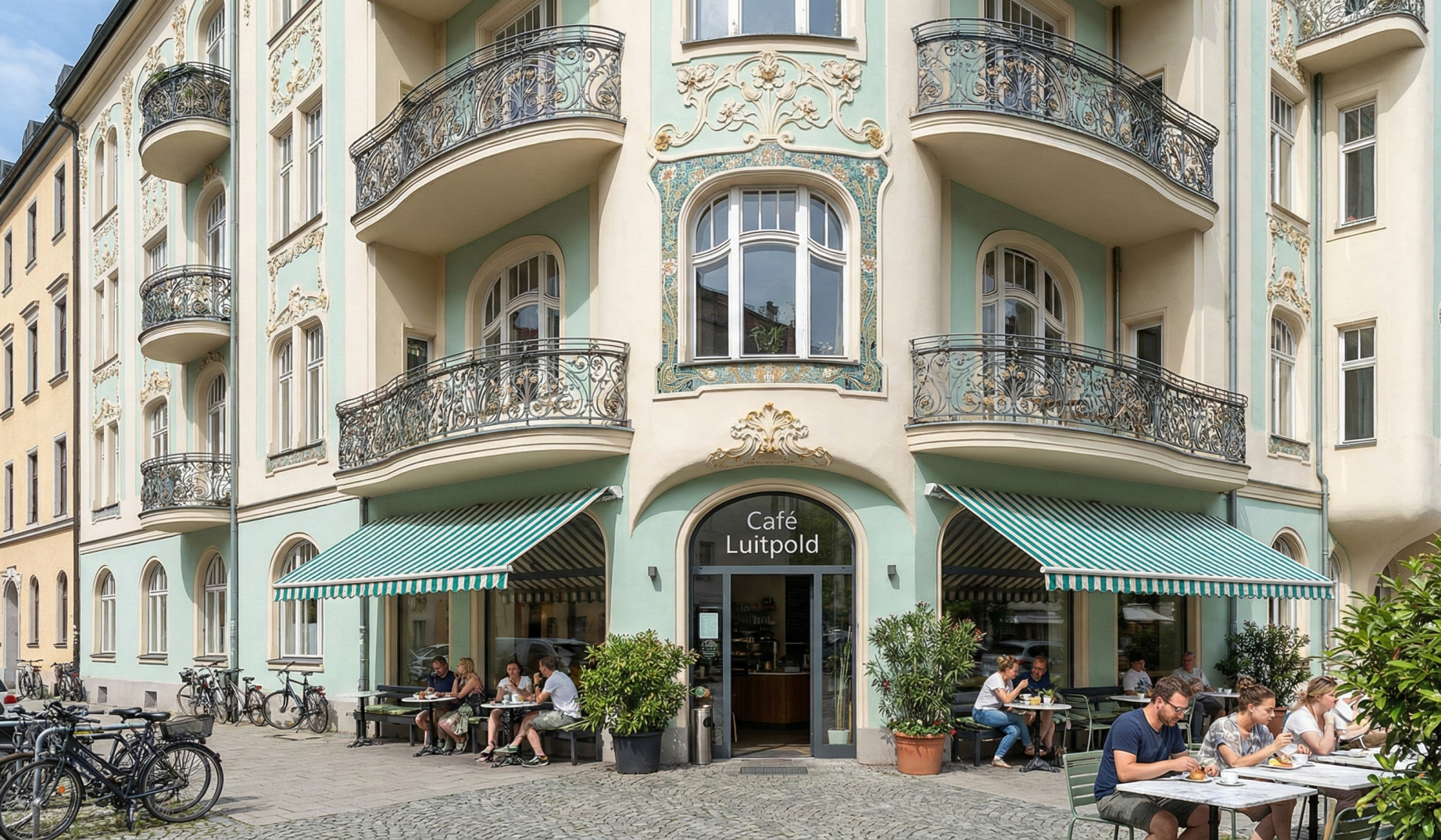
Architecturally, Schwabing is a feast for the senses and is regarded as one of the most important coherent Art Nouveau ensembles in all of Germany. If you stroll away from the busy main arteries through the quieter side streets around the Kurfürstenplatz, the Hohenzollernstraße or the magnificent Ainmiller-Quartier, you discover an astonishing love of detail. The façades of the stately period villas and apartment buildings are richly decorated with floral ornaments, curved balcony railings, playful oriel windows and artful stucco, which perfectly capture the organic, nature-loving spirit of Art Nouveau. This architectural splendour, which survived the Second World War largely unscathed, makes Schwabing one of the most expensive and sought-after residential areas in the country. Behind the richly decorated front doors, there are now often spacious luxury apartments that master the balancing act between historic fabric and the most modern living comfort.
Despite strong gentrification and omnipresent luxury, Schwabing has not entirely lost its cultural free spaces, which is thanks above all to the Englischer Garten, which borders the neighbourhood on the east. This gigantic landscape park, one of the largest urban green spaces in the world, serves as the green lung and the collective living room of the people of Schwabing. Here you meet to sunbathe on the Monopteros meadow, drink a Maß of beer in the traditional beer garden at the Chinese Tower or watch the daring surfers on the Eisbach wave. Culturally, Schwabing still has plenty to offer with the municipal theatre “Münchner Kammerspiele” (in its Schwabing venues) or legendary cabaret stages such as the “Lustspielhaus”. Schwabing may no longer be subversive today, but it is undeniably elegant, culturally first-rate and possessed of an architectural beauty that immediately captivates every visitor.
Haidhausen
If you cross the Isar eastwards coming from the old town, you enter Haidhausen, a neighbourhood that has undergone one of the most remarkable transformations in the whole of Munich's history. Originally, well into the 20th century, Haidhausen was the district of day labourers, craftsmen and simple workers – an often impoverished quarter that stood in stark contrast to the wealth of the city centre. The so-called “Herbergshäusl” still bear witness to this today: tiny, often single-storey and low-set little houses on the Preysingstraße, where extended families once lived together in very cramped conditions. Today Haidhausen, often affectionately called the “French Quarter”, is one of the most idyllic, family-friendly and architecturally charming quarters of the city. The French nickname stems from the urban layout after the Franco-Prussian War of 1870/71, when squares and streets were laid out in a star shape and named after places of French battles, which gives the neighbourhood a fascinatingly Parisian flair.
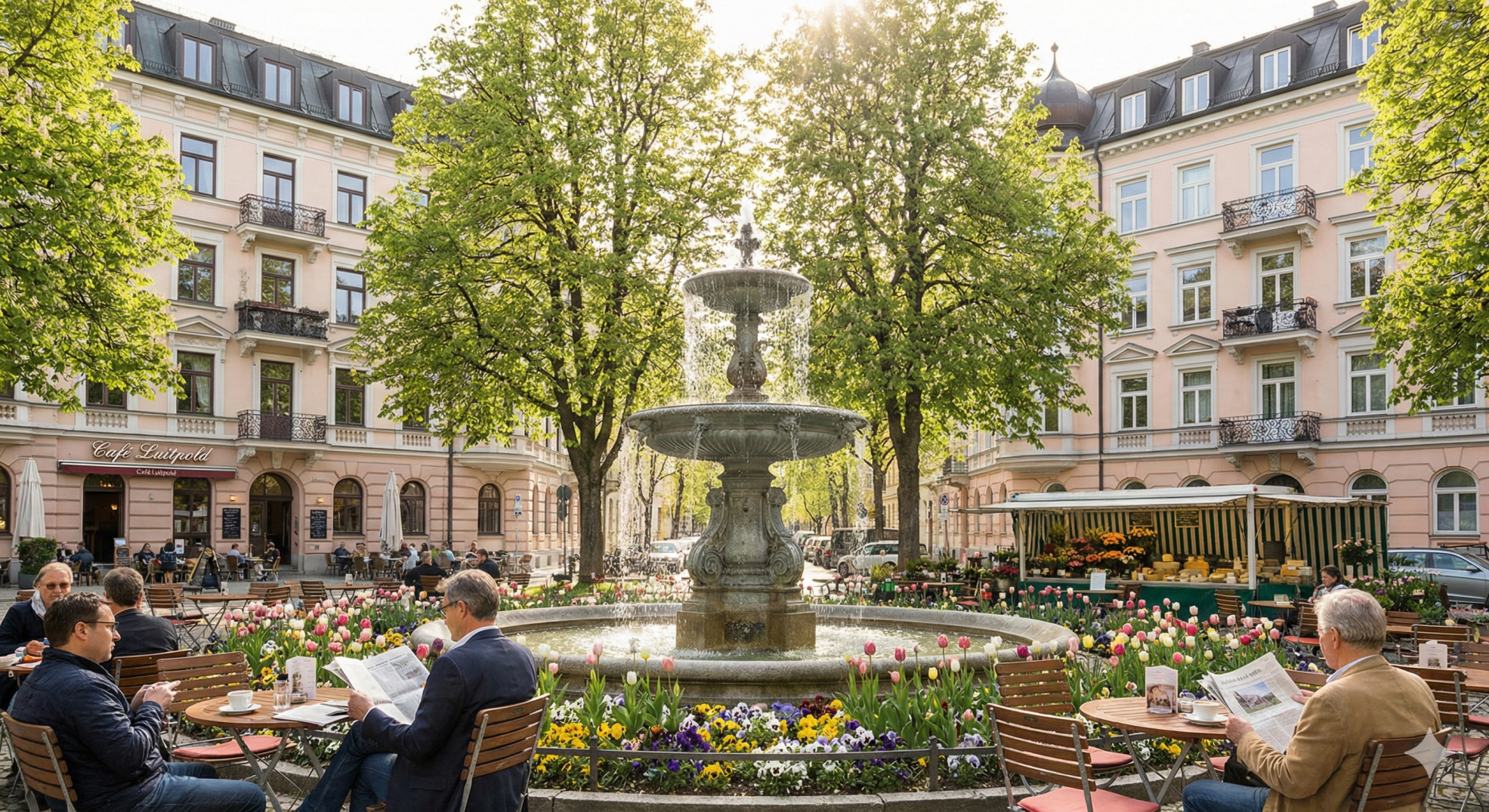
The architectural centrepiece and undisputed high point of the Haidhausen way of life is the Weißenburger Platz. Surrounded by splendidly renovated period buildings from the Gründerzeit with their elegant façades and shady chestnut trees, the square with its babbling fountain in the middle forms an almost village-like idyll in the middle of the big city. The architecture in Haidhausen is characterised by a harmonious mixture of these stately town houses, the historic workers' cottages mentioned above and carefully integrated modern infill development. This structural variety creates small, winding lanes and charming back courtyards in which small craft businesses, hidden studios and green oases have survived. It is precisely the conscious preservation of this historic small scale that has saved Haidhausen from the faceless modernisation of many other metropolitan neighbourhoods.
Culturally, Haidhausen is a neighbourhood of quiet but very fine notes. While the neighbouring Glockenbachviertel celebrates, in Haidhausen people enjoy life in relaxed calm. The food and drink scene is exquisite and ranges from authentic French bistros and cosy wine bars to traditional Bavarian inns. The Gasteig cultural centre, which is often controversial architecturally (as a massive red-brick brutalist building), was for decades the cultural centrepiece not only of the neighbourhood but of the whole city, as it housed the Philharmonie, the city library and the adult education centre. The immediate proximity to the renaturalised Isar meadows and the extensive Maximiliansanlagen also gives residents direct access to nature. Haidhausen is the epitome of Munich Gemütlichkeit paired with a Francophile way of life – a neighbourhood where you do not just live, but where you feel at home straight away.
Glockenbachviertel and Isarvorstadt
If there is one place in Munich that radically and colourfully refutes the cliché of the conservative Bavarian metropolis, it is the Glockenbachviertel, embedded in the larger Isarvorstadt. This quarter is the undisputed centre of Munich's subculture and alternative scene and historically the heart of the LGBTQ+ community. What began in the 1970s and 1980s as a somewhat disreputable neighbourhood with cheap rents that attracted artists, eccentrics and gay men (even Freddie Mercury lived here and threw legendary parties) has turned into Munich's hippest and most expensive trendy neighbourhood. The density of trendy boutiques, concept stores, hip cafés with their own coffee roasteries and innovative pop-up restaurants is higher here than anywhere else in the city. The Glockenbachviertel pulsates on every weekday, and when the sun goes down, the streets around the Müllerstraße turn into the epicentre of Munich nightlife, where people party in cramped bars and underground clubs until the early hours.
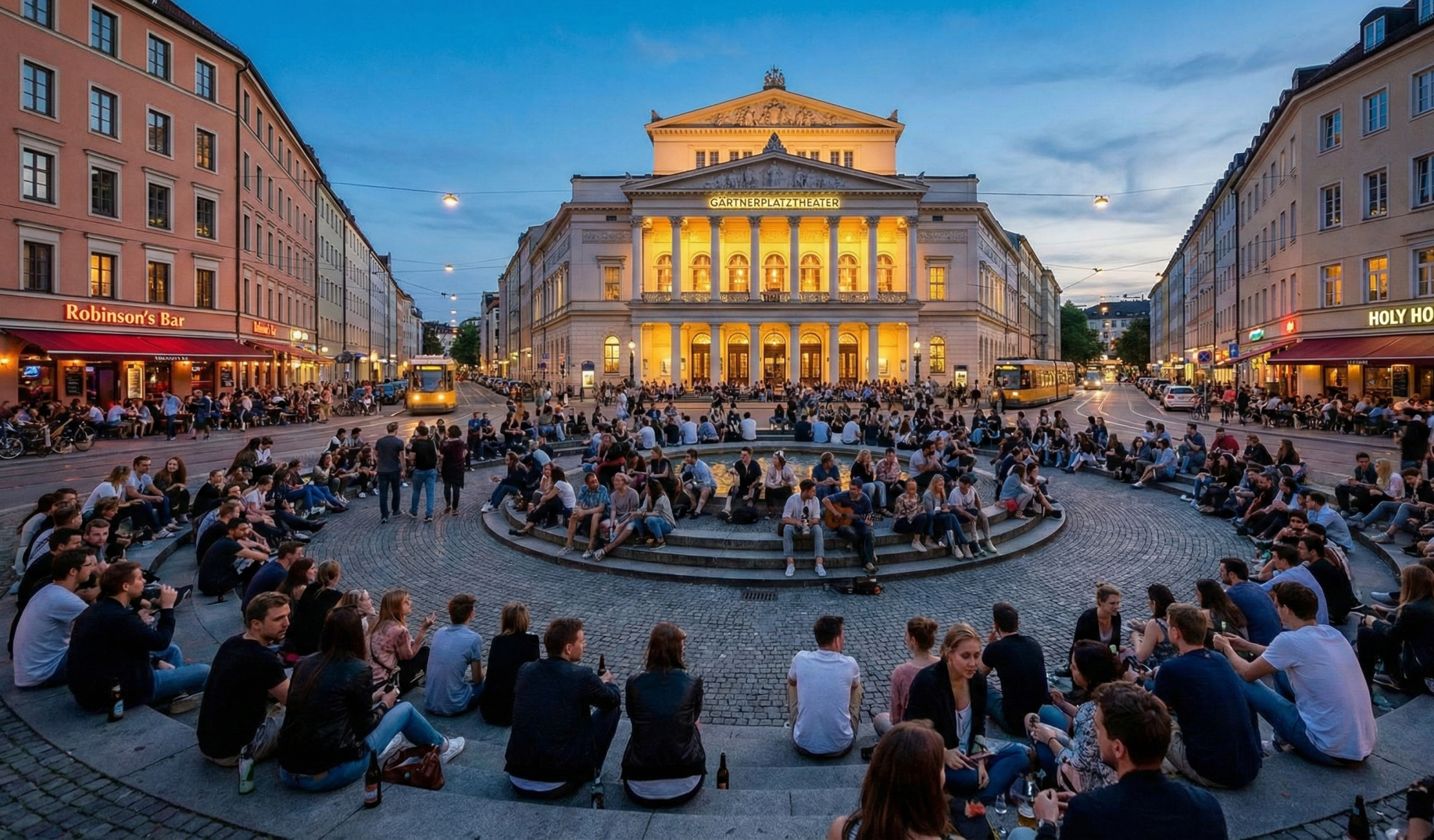
Architecturally, the Glockenbachviertel captivates with an almost continuous, closed ensemble of beautifully renovated period buildings from the Gründerzeit. The façades in the characteristic pastel shades, decorated with discreet stucco, wrought-iron balconies and solid wooden doors, radiate a stately elegance that stands in exciting contrast to the youthful, unconventional crowd on the streets. The absolute centre and architectural jewel of the neighbourhood is the Gärtnerplatz. This circular square, designed in the 19th century in the late neoclassical style by Friedrich von Gärtner, is dominated by the majestic Staatstheater am Gärtnerplatz. With its splendid flower beds in the middle, the square is the most important meeting place in the city on warm summer evenings: hundreds of young people sit here packed close together on the lawns and steps, drink takeaway beer, play guitar and enjoy the mild, urban open-air lifestyle that often fills the square well into the night.
But the Glockenbachviertel is also exemplary of the massive challenges of modern urban development. Extreme gentrification has pushed rents to a level that is hard to afford even for high earners, which inevitably means that the original, rougher subcultures are increasingly being pushed to the edge of the city or into neighbouring districts such as the Westend. Nevertheless, the neighbourhood fights passionately for its soul and its diversity. Small, independent craft businesses and studios in the charming back courtyards try to hold their own against international chains, and the strong presence of the queer community ensures that tolerance, openness and colourful diversity remain the cornerstones of the local culture. The Glockenbachviertel is and remains the most dazzling, most tolerant and most exciting microcosm that the Bavarian state capital has to offer.
Schwanthalerhöhe / Westend
The Schwanthalerhöhe, in general Munich usage known almost exclusively as the Westend, is the neighbourhood of rough edges, hard work and probably the most exciting cultural upheaval of the present day. Unlike Schwabing or Nymphenburg, the Westend was never the preserve of the aristocracy or the upper middle class, but Munich's steaming, noisy industrial centre. Historically shaped by the huge factory complexes, the railway workers of the nearby Hauptbahnhof and above all the workers of the huge Augustiner brewery, which dominates the neighbourhood to this day with its striking brick complex, the Westend breathes a completely different, unvarnished history. The architecture here is noticeably more functional, denser and less ornamented. You find impressive examples of robust industrial architecture, cooperative housing from the 1920s and massive brick buildings that reflect the former pride of Munich's working class. It is precisely this unadulterated, authentic industrial charm that draws designers, architects and start-ups almost magnetically today.
Culturally, the Westend is Munich's ultimate melting pot. For decades it was the classic immigrant neighbourhood, which gave it a wonderfully diverse and multicultural structure that still manifests itself in the streetscape today. On the corners you find Turkish supermarkets, authentic Italian trattorias, Greek kafenia and Asian greengrocers in peaceful coexistence with rustic Bavarian Boazn (corner pubs) and modern hipster cafés. This cultural richness makes the Westend a real insider tip for foodies and explorers away from the polished mainstream. At the same time, the neighbourhood borders directly on the Theresienwiese, the site of the Oktoberfest. During the “Wiesn season” the Westend is in a complete state of emergency for two weeks and is overrun by the global stream of tourists, only to return afterwards to its relaxed, village-like rhythm.
The transformation of the Westend from a neglected working-class district into a trendy creative quarter is in full swing, but fortunately proceeds more gently than elsewhere in the city. The old factory halls are increasingly being converted into spectacular lofts, modern co-working spaces and hip galleries, without the neighbourhood immediately losing its rough soul. There is a strong, committed neighbourhood initiative that campaigns for the preservation of free spaces and affordable housing. The Westend impressively proves that Munich does not have to be smooth and perfectly renovated, but that breaks, industrial heritage and lived multiculturalism can produce a fascinating urban quality. Anyone looking for the unvarnished, honest Munich that is in the midst of a creative awakening inevitably has to visit the Westend.
Nymphenburg and Neuhausen
In the west of the city, the districts of Neuhausen and Nymphenburg merge into a fascinating symbiosis of royal splendour and civic liveliness that is unique in Munich in this form. Nymphenburg is world-famous for the palace of the same name, the former summer residence of the Bavarian prince-electors and kings. This gigantic Baroque palace ensemble, which is among the largest royal palaces in Europe, dominates the entire western district with its symmetrical architecture and the seemingly endless palace park, laid out in the style of English landscape gardens. The direct neighbourhood of the noble residence historically attracted the upper middle class. The architectural result is the magnificent villa colonies, such as the Villenkolonie Gern, which arose at the end of the 19th century. Here you stroll along avenues of old trees, lined with stately Art Nouveau and neo-Renaissance villas hidden deep in large gardens, which give you an inkling of how Munich's absolute upper class resides.
In strong but extremely charming contrast to this quiet, aristocratic elegance of Nymphenburg stands the directly adjoining Neuhausen. Neuhausen is the lively, urban heart of the district. Around the busy Rotkreuzplatz, big-city life pulsates with a multitude of traditional shops, modern boutiques, cosy cafés and excellent restaurants. The architecture in Neuhausen is a dense perimeter-block development of beautiful, richly detailed period buildings from the Gründerzeit, reflecting the strong influx of the middle class around 1900. It is a classic Munich neighbourhood of the upper middle class, in which families, academics and seniors enjoy an extremely high quality of life. The streets are lined with chestnut trees, the front gardens are in bloom, and the infrastructure is so perfectly developed that many residents of Neuhausen rarely leave their beloved neighbourhood.
Local culture in Neuhausen-Nymphenburg is strongly shaped by the need for recreation and tradition. Alongside the extensive walks in the palace park or the Botanischer Garten, the neighbourhood is famous for its gigantic beer garden culture. The Königlicher Hirschgarten in Neuhausen, with over 8,000 seats, is not only the largest beer garden in Munich but the largest in the world. Here, under the dense canopy of centuries-old chestnut trees, the whole of Munich society mixes on hot summer days, from the suit-wearer to the craftsman, drinking beer from huge glass tankards and sharing the Brotzeit they have brought along. This combination of the highest architectural cultural history (as also with the romantic Schloss Blutenburg in nearby Obermenzing) and deeply rooted, cosy Bavarian everyday culture makes Neuhausen-Nymphenburg one of the most liveable and fascinating neighbourhoods Munich has to offer.
Conclusion
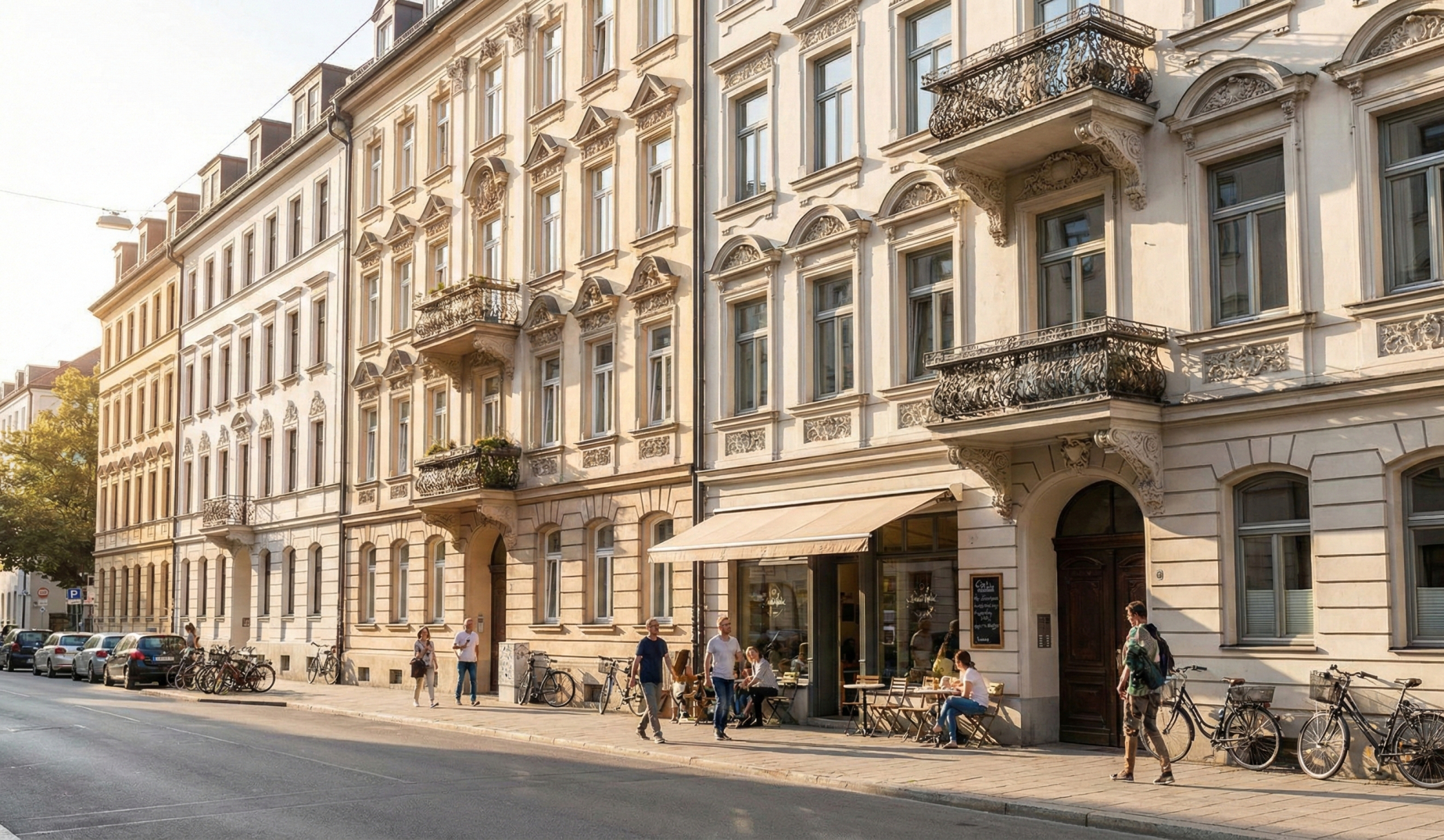
Munich is not a monolithic, one-dimensional big city but a colourful, complex puzzle of highly individual neighbourhoods, each of which represents a world of its own. The fascinating journey through the Maxvorstadt, Schwabing, Haidhausen, the Glockenbachviertel, the Westend and Nymphenburg impressively proves that the Bavarian metropolis has far more to offer than the world-famous Hofbräuhaus or the glittering luxury boutiques of the city centre. It is the breathtaking architectural range – from ancient neoclassicism through playful Art Nouveau and functional industrial architecture to Baroque splendour – that gives each individual quarter its unmistakable face. And it is the deeply rooted local culture, the residents' pride in their “Kiez”, that fills these stone backdrops with life, creativity and a unique mixture of tradition and modernity.
To truly grasp this diversity, visitors and interested locals must be prepared to leave the comfort zone of the central pedestrian zones. The true magic of Munich does not reveal itself on a quick sightseeing bus tour, but by exploring consciously and slowly on foot or by bike. Only those who take the time to lose themselves in the winding lanes of the French Quarter in Haidhausen, who track down the creative energy in the back courtyards of the Westend or who watch the lively goings-on at the Gärtnerplatz on a summer evening will understand why Munich regularly takes absolute top places in all quality-of-life rankings worldwide. It is the neighbourhoods that preserve the human dimension, the approachability and the soul of the city of over a million.
At the same time, a close look at the neighbourhoods also makes clear the enormous dynamic processes to which Munich is subject. The city is growing rapidly, and the struggle for affordable housing, the pressure of gentrification and the challenges of modern urban development are omnipresent in neighbourhoods such as the Glockenbach or the Westend. For all its love of perfection and historic heritage, Munich has to take care not to lose its rough edges, its subcultural free spaces and its social mix to economic success. But the committed neighbourhood initiatives, the rescue of old cultural venues and the steady emergence of new, alternative concepts prove that the spirit of resistance and the desire for authentic diversity is more alive than ever in the neighbourhoods.
Ultimately, this guide to Munich's most fascinating districts is meant to be an invitation – an invitation to all readers to keep discovering the Bavarian metropolis anew. Whether you are interested in architectural history, looking for the latest culinary trends in trendy neighbourhoods or simply want to soak up the relaxed way of life in a traditional beer garden: Munich's neighbourhoods have the perfect experience ready for every passion and every taste. Lace up comfortable shoes, throw the guidebook in your rucksack and let yourself be carried along by the particular rhythm of Munich's quarters. You will get to know a city that is surprisingly different, wonderfully complex and utterly fascinating.
Sarah Müller
Reise- und Lifestyle-Journalistin