München
Ready for Spring
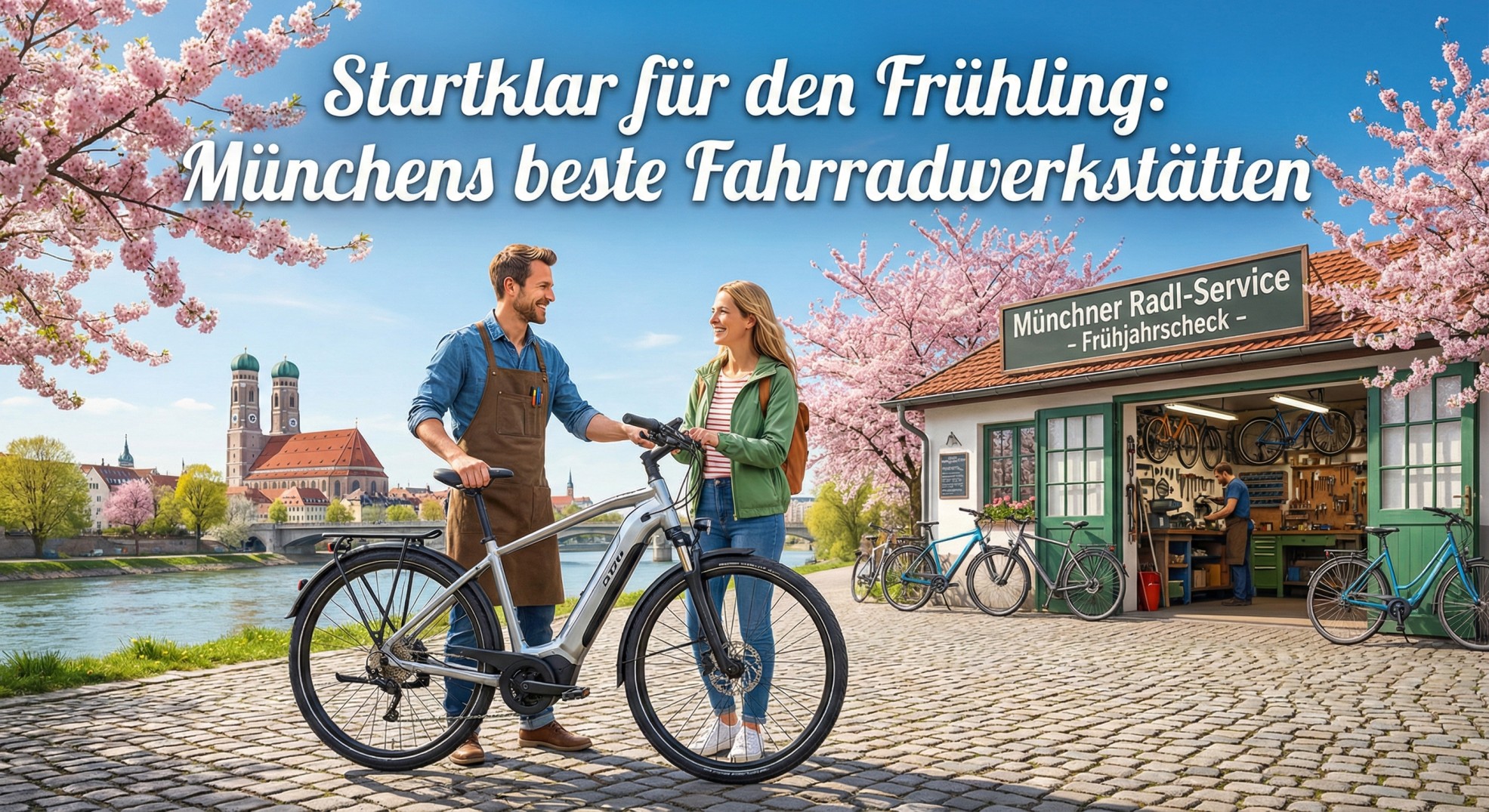
When the first warm rays of sunshine make the snow on the Alpine peaks glisten and the crocuses sprout in the Isar meadows, a very special energy awakens in Munich. It is the time when the city collectively breathes a sigh of relief and prepares for the loveliest way of getting around all year: cycling. Whether for the daily commute through the Englischer Garten, the long road-bike tour into the Alpine foothills or a leisurely trip to the nearest beer garden – the bicycle is an inseparable part of the Munich way of life. But after a long, cold and wet winter in a damp cellar or dusty garage, the beloved trusty steed is often anything but ready to go. Flat tyres, squeaking chains and gears that are more like a gamble are the typical harbingers of the new season and can quickly dampen the anticipation.
A thorough spring check is therefore not just a question of comfort but above all a question of safety. In dense Munich city traffic, where cyclists have to share the space with cars, trams and pedestrians, working brakes and reliable lights are vital. While you can handle pumping up the tyres and perhaps oiling the chain yourself, many hobby mechanics quickly reach their limits with more complex tasks. Modern bicycles, especially the technologically advanced e-bikes with their sensitive drive systems and hydraulic disc brakes, require expertise, special tools and experience. A badly maintained bike is an unnecessary risk that you should on no account take at the start of the dynamic cycling season.
Finding the right bike workshop in Munich, however, is often like the famous search for a needle in a haystack. The density of bike shops in the Bavarian state capital is enormous, but the quality of the services varies considerably. Where do you find the mechanic who works with heart and soul and doesn't just swap parts quickly but solves problems for good? Who really knows their way around the latest generation of Bosch motors, and who do you trust with your expensive carbon road bike? The “best” workshop is often a subjective matter, depending on your own needs, the type of bike and, not least, your budget. It is about trust, transparency in pricing and keeping appointments, especially when in spring everyone wants to wheel their “patient” into the workshop at the same time.
This article serves as your comprehensive compass through the jungle of the Munich bike scene. We have researched deeply, analysed customer opinions and checked local conditions in order to present you with a curated selection of the best addresses for your bike repair in Munich. We introduce you to institutions that have stood for quality for decades, innovative concepts that save you time, and specialised niche providers for particular requirements. Our goal is for you to find the perfect partner, so that your bike starts the new season not only safely but with maximum riding pleasure. Get ready to conquer the metropolis on the Isar on two wheels again very soon – with a bike that feels like new.
The Established Giants: Rabe Bike and Co.
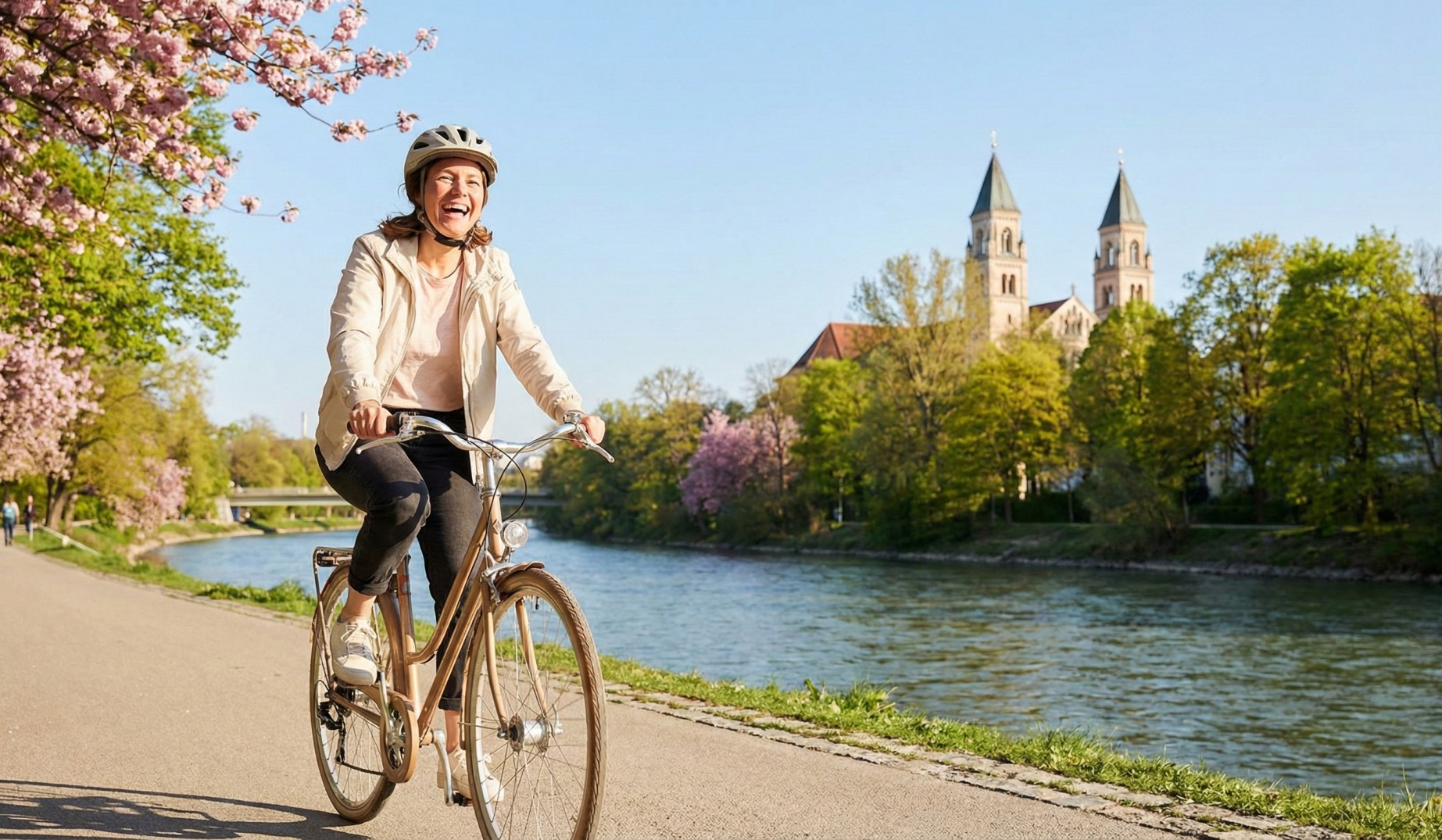
When you talk about buying and servicing bikes in Munich, you can hardly avoid the big names in the trade. Houses like Rabe Bike, with several branches strategically spread across the city (including in Schwabing and Sendling), are institutions in the Munich bike cosmos. This size brings decisive advantages for the customer when it comes to workshop performance. First of all, these big players have enormous availability of spare parts. While small shops often have to order special components first, the giants usually have the most common wear parts from Shimano, SRAM or Bosch in stock. This can significantly shorten the wait for the repaired bike, especially in the high season in spring. In addition, these companies invest heavily in training their staff. The workshops often employ specialised teams who are always up to date with the latest technology through regular manufacturer training, which is essential especially with complex e-bike systems.
The workshops of these large retailers are often ultra-modern in their equipment and work with standardised processes. From digital order intake through detailed cost estimates to text-message notification on completion, the process is professionally clocked. This provides transparency and reliability. You usually know in advance what you are in for financially, and nasty surprises at collection are rare. For the classic “spring bike check” they often offer package prices covering different maintenance levels – from a basic safety inspection to the complete dismantling and cleaning of all bearings. These packages offer good value for money for everyday cyclists looking for a solid, roadworthy basis for the season.
Of course there is also a flip side to the coin with the “big players”. The atmosphere is often less personal than in the little shop around the corner, and the direct line to the mechanic working on your own bike is not always there. In spring, when the rush is greatest, waiting times for an appointment can be long despite large capacities – early planning is essential here. Nevertheless, these workshops are a safe bet for everyone who values professionalism, guaranteed standards and quick handling of standard repairs. Especially if you also bought your bike there, you often benefit from preferential service or special inspection offers.
The Soul of the Craft: Small, Independent Specialists
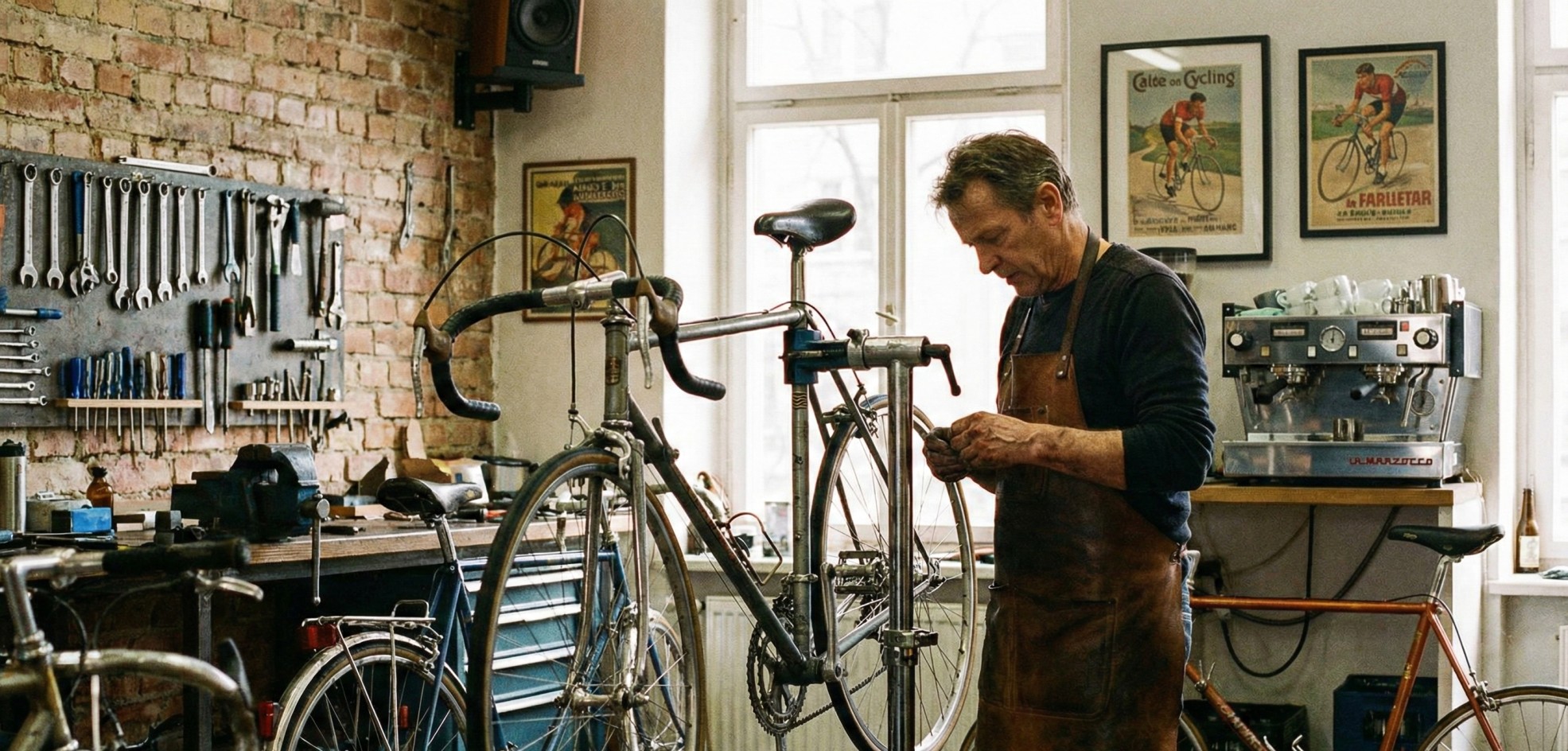
Away from the big chains, the heart of Munich bike culture beats in the small, often owner-run workshops found in districts like Glockenbach, Haidhausen or Maxvorstadt. Shops like “Guten Biken” or similar local institutions embody a completely different philosophy. Here it often still smells of chain oil and coffee, tools hang ready to hand on the walls, and you can feel the pure passion for the two-wheeler. These workshops are often the first port of call for individualists, lovers of vintage bikes or riders of high-quality steel frames. The mechanics here are not infrequently absolute bike nerds themselves in the most positive sense, who understand every detail of a bike and find creative solutions even for unconventional problems, where elsewhere perhaps only an expensive replacement of entire assemblies would be suggested.
The great advantage of these small forges lies in personal advice and individual care. You often speak directly to the person who will later repair the bike. That creates trust. Here time is taken to analyse the problem precisely and to decide together with the customer which repair makes sense and is economical. These workshops are often masters of improvisation and sustainability; they would rather repair than throw away, which is worth its weight in gold especially with older bikes for which hardly any spare parts are available any more. They are the guardians of bike culture and can breathe new life into an old Peugeot road bike just as they can give a modern gravel bike its final finishing touch.
However, service at these sought-after specialists often requires somewhat more patience. Capacities are limited, the order books quickly fill up in spring, and “quickly, just for a moment” rarely happens here. You have to be prepared for waiting times and book appointments long in advance. Sourcing spare parts can also sometimes take longer than at the giants of the trade. But for the loyal regular customers this is no obstacle. They appreciate the craftsmanship, the love of detail and the good feeling of knowing their bike is in hands that value it just as much as they do. It is the choice for everyone who sees their bike not just as an object of daily use but as an expression of their personality.
High Tech and Precision: The Experts for Road Bikes and Gravel
Munich and its surroundings are a paradise for sporty cyclists. The scene of road-bike and, more recently, gravel-bike enthusiasts is growing steadily. These high-performance sports machines place very particular, extremely high demands on a workshop. Someone who rides a bike worth as much as a small car, equipped with electronic shifting (Di2, eTap), hydraulic disc brakes and complex carbon wheels, does not let just anyone tinker with it. Absolute precision, specific expertise and expensive special tools are called for here. Workshops that have specialised in this segment – often attached to high-end boutiques like “Bikedress” or independent performance workshops – are the points of contact for this demanding clientele.
In these high-tech laboratories it is all about millimetre work and torques. A bolt tightened too firmly on a carbon handlebar can have fatal consequences. The mechanics here are experts in fine-tuning gears, perfectly bleeding brake systems and setting up tubeless tyre systems, which are standard in gravel. They understand the geometry of bikes and can, through professional “bike fitting”, adapt the bike perfectly to the rider's body in order to avoid pain and optimise performance. The service here often includes not only repairs but also advice on upgrades – be it the lighter wheelset, the more ergonomic saddle or the more efficient gearing for the planned Alpine passes.
Service in these specialised workshops naturally has its price. Hourly rates are often above average, which is justified by the high qualification and the expensive equipment. Appointments are in hot demand and often only available with a long lead time, especially before the big cycling marathons in summer. The target group gladly accepts this, however, because the certainty that the equipment works 100 percent at the decisive moment – on the rapid descent from the Sudelfeld or in the finishing sprint – is priceless. These workshops are partners for the ambitious who want to make no compromises on performance.
The Mobile Revolution: Bike Service on Your Doorstep
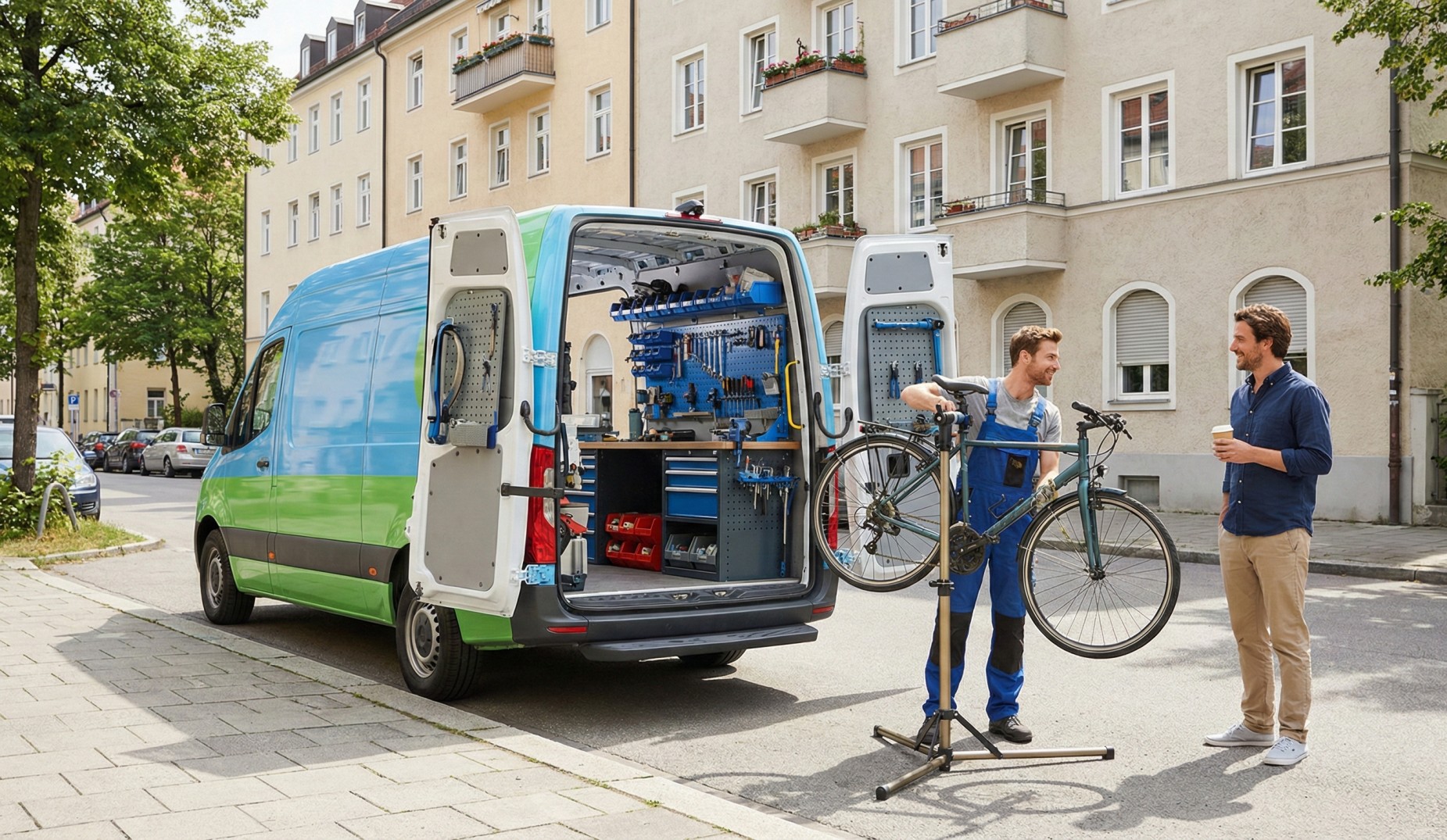
In a hectic city like Munich, time is a precious commodity. The logistical effort of transporting a defective bike – possibly with a flat tyre or jammed chain – across the city to the workshop, dropping it off there and collecting it days later is a nightmare for many working people. Innovative mobile bike workshops such as “Die Radlmacherei” or similar concepts, which have gained great popularity in recent years, step into this gap. The principle is captivatingly simple and maximally convenient: the mechanic comes with a fully equipped mobile workshop – often in a van or cargo bike – straight to the customer, whether at home, at the office or even at the site of a breakdown.
These flying workshops are surprisingly capable. They carry out most common repairs and maintenance work right on the spot: tyre changes, adjusting the gears, replacing brake pads, chain changes and the classic spring check are usually no problem. The customer can often watch, ask questions or simply keep working in the meantime. Appointments are usually arranged easily online or via an app. This model is ideal for busy people, for families with several bikes that need servicing, or for companies that want to offer their employees a special service by booking the mobile mechanic for a day in the company car park.
Of course the mobile workshop has its limits too. Very complex repairs that require special large stationary equipment, or frame work, usually cannot be done on site. In such cases some providers take the bike with them and bring it back repaired, which continues the idea of convenience. Price-wise, the mobile services are often slightly above stationary workshops, since the travel has to be factored in, but the time saved and the transport stress avoided more than make up for this for many customers. It is the most modern and convenient answer to the question of bike repair in Munich.
The E-Bike Competence Centres: Software Meets Mechanics
The triumph of the e-bike has fundamentally changed the demands on bike workshops. A pedelec is not simply a bike with an auxiliary motor; it is a complex hybrid system in which mechanics and electronics must mesh seamlessly. When the motor stutters, the display shows error messages or the battery weakens, the classic spanner alone no longer helps. Munich's leading workshops have responded to this trend and developed into certified e-bike competence centres that work closely with the big drive manufacturers such as Bosch, Shimano, Brose or Yamaha.
In these specialised workshops the diagnostic device is as much a part of the basic equipment as the Allen key. The mechanics are specially trained to install software updates, which often improve performance or fix errors. They can read out error codes, determine the exact cause of faults and decide whether there is a hardware defect or a software problem. Especially important is the professional battery check, which provides information on the actual remaining capacity and the state of health of the expensive energy cells – a decisive factor when buying or selling used e-bikes too. In addition, because of their higher weight and stronger drive forces, e-bikes often require sturdier components and specific maintenance of the brakes and drivetrain, which is carried out here professionally.
Finding a qualified “e-bike service in Munich” is therefore essential for all pedelec owners. Not every small workshop has the expensive diagnostic tools or the necessary certifications to be allowed to carry out warranty work on the drives. Anyone who takes their e-bike to a non-specialised workshop risks, in the worst case, losing the warranty or improper repairs to the sensitive electronics. The competence centres offer security here and ensure that the expensive e-bike works reliably and safely in the long term. Especially before the season, a check of the electronics and the latest software version is just as important as pumping up the tyres.
Self-Help and Community: Bikekitchen and Co.
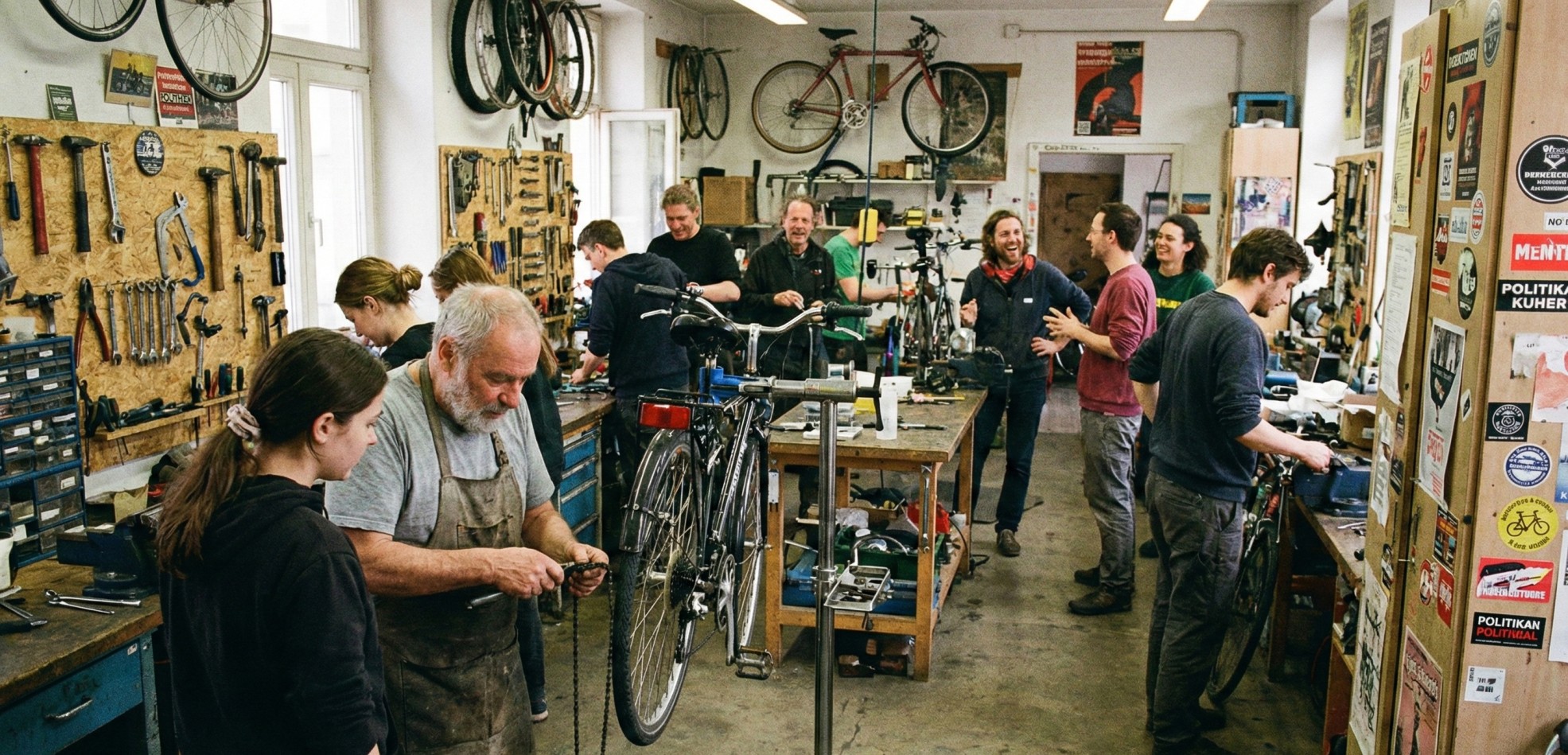
For everyone who wants not only to ride but also to understand how their bike works, or who is on a tight budget, Munich offers great alternatives to the classic commercial workshop. Places like the “Bikekitchen” or the self-help workshops of the ADFC (Allgemeiner Deutscher Fahrrad-Club) take a completely different approach. Here the motto is: help towards self-help. You don't hand in your bike at the counter but get your hands dirty yourself. These places are social meeting points, learning workshops and germ cells of a sustainable bike culture that goes far beyond mere repairing.
In these open workshops the necessary tools – often also expensive special tools that are hardly worthwhile for private use – are available for a small usage fee or a donation. But the most important thing is the know-how that is shared here. Experienced volunteer tinkerers are on hand to give tips, show techniques and assist with tricky problems. It is the ideal place to learn how to fix a flat tyre, adjust the gears or change brake pads. You get to know and appreciate your own bike, which strengthens the bond with your means of transport and makes you more independent in the event of breakdowns on the road. The atmosphere is usually very relaxed, communal and inclusive – here the student tinkers next to the pensioner and the fixie hipster next to the touring cyclist.
Of course these offerings are not right for everyone. Anyone who has two left hands, doesn't want to invest time or has a highly complex e-bike problem is better off in a professional specialist workshop. The opening hours of self-help workshops are often limited, and when it is busy you have to accept waiting times for tools or work stands. But for everyone who likes to learn, save money and be part of a lively community, these places are a wonderful enrichment of the Munich bike scene and a very sustainable way of getting fit for the cycling season.
Conclusion
The start of the Munich cycling season is more than just a date in the calendar; it is a way of life that promises freedom, mobility and the joy of movement in one of the loveliest cities in Germany. To make sure this feeling is not clouded by technical breakdowns or safety risks, a trip to the professional bike workshop is an indispensable step. As our tour through the workshop landscape of the metropolis on the Isar has shown, there is not one “best” workshop for everyone. The choice depends largely on your individual needs: do you ride an ultra-modern e-bike that demands software updates? Do you own a beloved vintage classic that needs a careful hand? Are you looking for maximum convenience through a mobile service, or do you want to pick up the spanner yourself in a self-help workshop?
Munich offers the right expertise for every requirement and every bike. From the efficient large workshops of the chains through the passionate small specialists in the neighbourhood to the high-tech laboratories for racing machines and the social community workshops, the offering is huge and varied. What matters is that you arrange an appointment early. As soon as the first warm spring days arrive, the order books of the good workshops are often full for weeks. A proactive “spring bike check” in late winter saves you long waiting times when you would actually long since like to be in the saddle.
Trust in the expertise of Munich's mechanics. A well-maintained bike not only rides more easily and is more fun, it is above all safer. Working brakes can be decisive in an emergency, and precise gears make the climb up the Nockherberg noticeably more bearable. Invest in the safety and longevity of your bike – it will thank you with many trouble-free kilometres.
So, get your bike out of the cellar, dust it off and give it the care it deserves. Find the workshop that suits you, and then: out onto the streets, cycle paths and trails! Enjoy the wind in your face, the hum of the tyres on the tarmac and the countless lovely corners that Munich and its surroundings have to offer cyclists. We wish you a safe, trouble-free and wonderful start to the new cycling season!

Sarah Müller
Reise- und Lifestyle-Journalistin