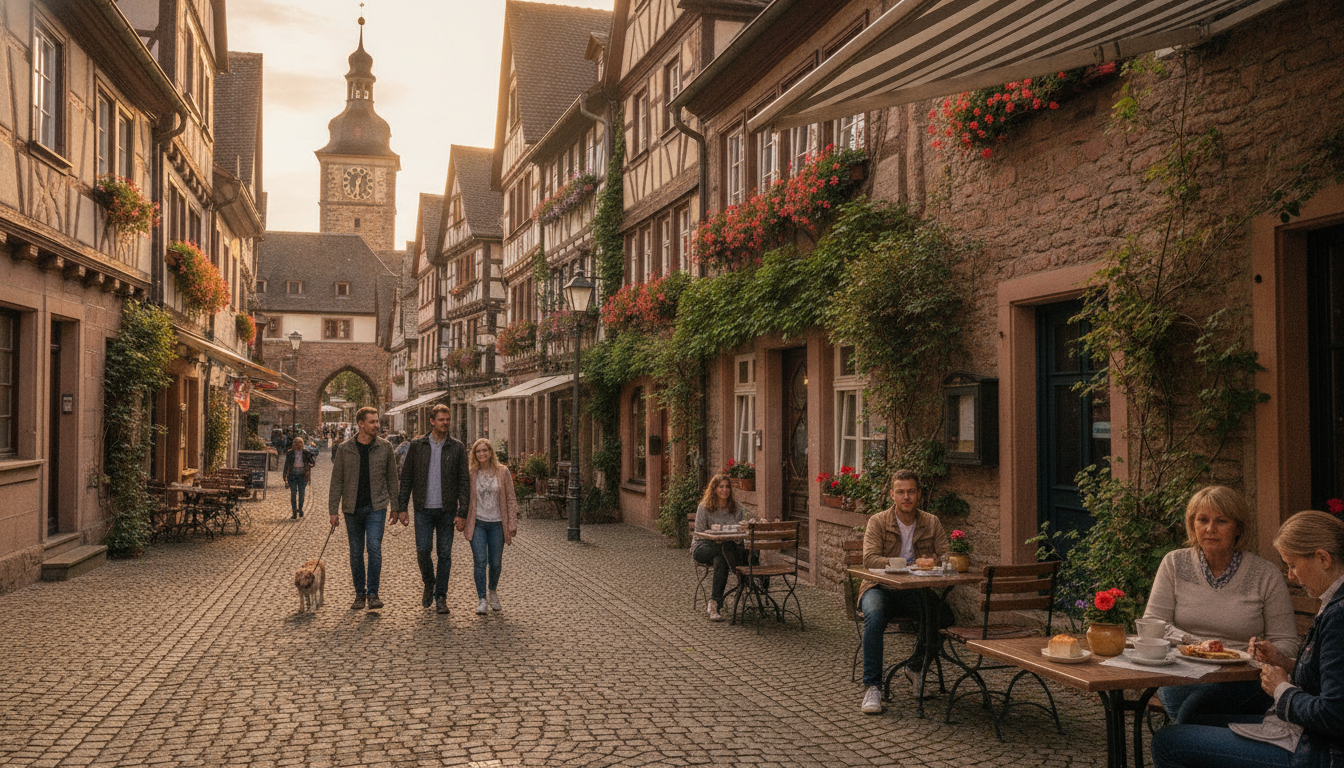
Offenburg
Greek Food, Döner and Vintage Finds: A Day in Offenburg
Good restaurants and good second-hand shops have one thing in common: you can spot them by details that seem unremarkable at first glance. Here's what to look out for — and how to turn it into a successful day out in town.
A day out shopping rarely lives or dies by a big itinerary. Usually it's three or four good addresses that make the day: a lunch worth remembering, a find in a second-hand shop, a quick bite on the way home.
This guide shows you how to spot the addresses worth your time in Offenburg and beyond — and how to sensibly combine eating and browsing.
Greek cuisine: how to spot a good restaurant
Greek restaurants are among the most enduring fixtures in German town centres. Many have been run by the same family for decades — and that's often the first good sign in itself.
Five features that matter
1. The menu is manageable. A menu with 120 items usually means frozen goods. A restaurant that does thirty dishes well is preferable to one offering a hundred dishes of mediocre quality.
2. There are daily specials. Changing dishes on a chalkboard or announced verbally show that fresh ingredients are being bought. Where the menu hasn't changed in five years, spontaneous cooking is rare.
3. Fish is charged by weight. A sign that whole fish are kept in stock rather than portioned fillets from the freezer. Ask what's available that day.
4. The starters are more than a side dish. At good Greek restaurants, it's worth ordering starters alone. If the tzatziki, taramasalata, stuffed vine leaves and fried cheese are each excellent in their own right, the kitchen is doing something right.
5. There are Greek guests. The most reliable indicator of all — and one no review can replace.
What to order on your first visit
Rather than reaching for the standard plate of gyros and chips, it's worth looking at the lesser-known dishes: braised lamb, bean stew, stuffed aubergines or grilled octopus. If you're unsure, ask for the house recommendation — at family-run restaurants, you'll almost always get an honest answer.
You'll find Greek restaurants in Offenburg listed with ratings and opening hours in the directory.
Doner kebabs: the quality markers that count
The doner kebab is the most frequently eaten and least seriously considered dish in Germany. Yet the differences between a good shop and a bad one are considerable — and easy to spot.
What to look out for
The spit. A good spit consists of layered meat, not pressed mince. You can tell by the irregular texture and visible layers of meat. A perfectly smooth, uniform cylinder is industrially pre-made.
Turnover. A shop with high turnover has fresh meat on the spit and slices frequently. Where the spit still looks barely touched at lunchtime, it may well have been kept warm since yesterday.
The bread. Is it freshly baked before filling, or does it come lukewarm out of the warming cabinet? Freshly baked flatbread with a crisp edge is a sign of quality.
The vegetables. Visibly freshly cut, not prepared hours ago and dried out. A glance at the display is enough.
The sauce. Homemade sauces can be recognised by their consistency and colour. Anyone offering just three standard sauces out of a bucket has little ambition.
Cleanliness behind the counter. This applies to any takeaway, but it's especially worth checking here.
A common misconception
Many people automatically assume the cheapest shop is the worst. That's not necessarily true — turnover is what matters. A takeaway with a long queue and a low price can be better than a pricier one with few customers, because meat and vegetables are used up more quickly.
An overview of doner kebab shops in Offenburg can help you narrow down your choice.
Vintage and second-hand: from browsing to finding
Second-hand shopping has changed. What was long seen as a fallback option is now, for many people, the preferred route — for cost reasons, for environmental reasons, or simply because you find pieces you can't get anywhere else.
The shop types differ significantly
Type | What to expect | Price level |
|---|---|---|
Curated vintage boutique | Selected pieces, often sorted by decade | upmarket |
Second-hand shop | Mixed range, changing stock | mid-range |
Charity shop | Very wide range, very cheap, high turnover | low |
Consignment shop | Customers hand items in, shop sells for a cut | mid to upmarket |
Flea market | Everything, unsorted, haggling possible | low |
If you're looking for something specific, head to the curated boutique. If you have time and enjoy the hunt, you'll make the better finds at the charity shop.
What to check before you buy
Seams and workmanship reveal more about age than the label. Clean, tight seams and finished edges point to older, higher-quality manufacturing.
Zips and buttons are the most common weak points. Check them before buying — a replacement at the alterations tailor's often costs more than the garment itself.
Material over brand. An unknown label in pure wool is usually a better choice than a well-known one in a polyester blend.
Fit before size. Standard sizes have shifted noticeably over the decades. A size 12 from the eighties doesn't match today's size 12. Trying it on is essential.
Check for smells. Smoke and damp often don't come out again. Especially critical with leather and suede.
The best time to go
Stock changes irregularly. Ask in the shop which days new items come in — most staff will happily tell you, and the difference between a well-timed and a poorly-timed visit is considerable.
The second-hand shops in Offenburg are listed in the directory with opening hours and ratings.
How to combine the day sensibly
An order that works well in practice:
Morning — second-hand first. Stock is most complete before the day's browsing has taken its toll. Fitting rooms are also more relaxed when they're empty.
Lunch — Greek food. Many restaurants offer a reduced lunch menu at lower prices. If you want to try the cuisine without spending much in the evening, go at lunchtime.
Afternoon — more browsing or a café. Time for the shops that were still closed in the morning. Smaller boutiques often don't open until around midday.
Evening — doner kebab on the way home. Turnover is high, the meat freshly restocked. The best time of day for a takeaway.
A practical tip: Check opening hours in advance. Smaller owner-run shops often have a closing day during the week, and second-hand shops frequently close earlier than the surrounding retail outlets.
Frequently Asked Questions
How can I spot an authentic Greek restaurant? By the manageable menu, changing daily specials, fish charged by weight, and Greek guests in the restaurant. The number of reviews says less than how recent they are.
Is a pricier doner kebab better? Not necessarily. Turnover matters more than price: where a lot is sold, the meat is fresh. Pay attention to the texture of the spit and to freshly baked bread.
Is second-hand worth it compared to buying new? With quality materials, almost always. A second-hand wool coat is often better made than new items in the same price range. With basics like T-shirts, the advantage is smaller.
Can I return second-hand items? There's no statutory right of return in shops — the same applies to new goods. Many shops are accommodating, but you shouldn't rely on it. If in doubt, try items on thoroughly.
Conclusion
You can spot good addresses by the same principles, whether it's about food or shopping: a limited range rather than completeness, visible freshness rather than stockpiles, and people behind the counter who give an honest answer when asked.
If you know these features, you'll quickly find the shops worth visiting even in an unfamiliar town — and save yourself the disappointment a poorly chosen address leaves behind.
You'll find restaurants, takeaways and second-hand shops in your town in the directory at Die Besten der Stadt.

Redaktion
Das Redaktionsteam von dieBestenderStadt