Ravensburg
Ravensburg's Towers: Medieval History Live
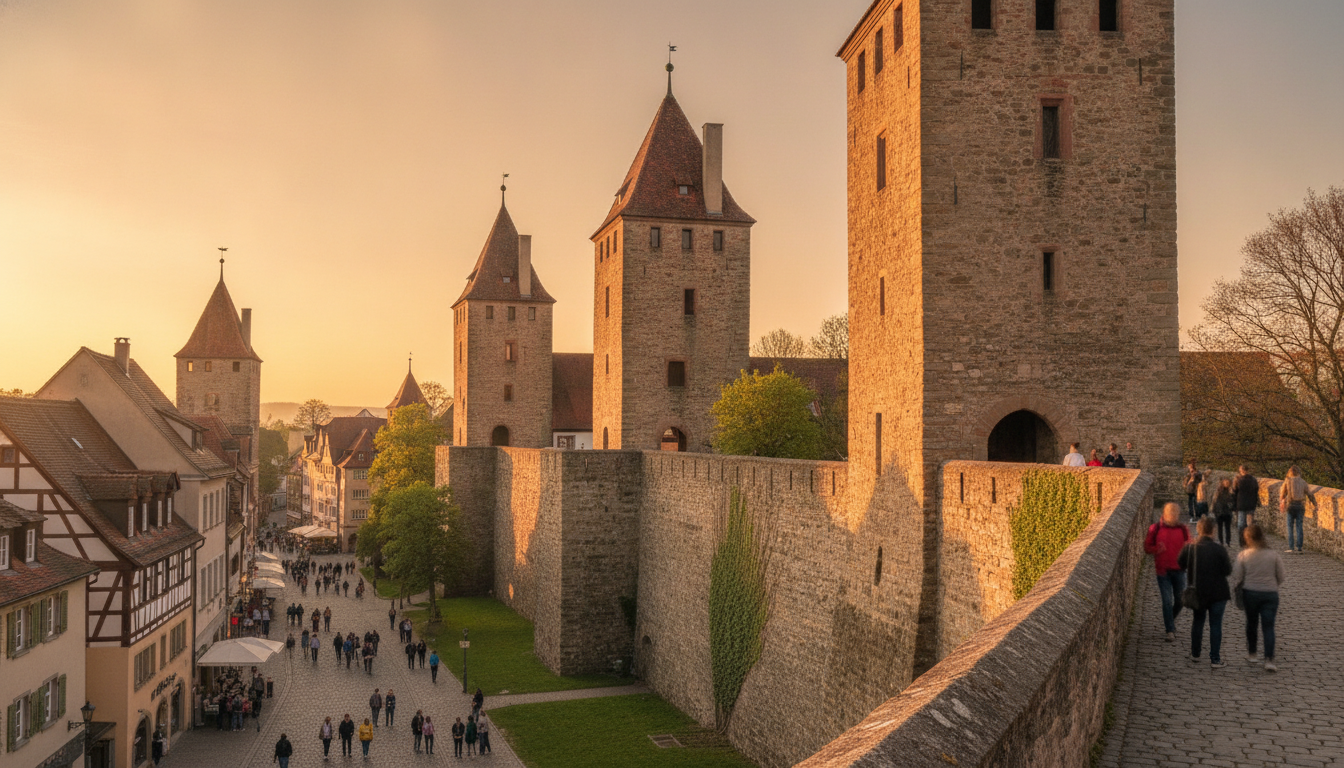
Ravensburg's towers have shaped the townscape for centuries and draw thousands of visitors every year. Anyone strolling through the old town will discover a piece of medieval history on almost every corner. Ravensburg's towers are far more than just old stones – they tell stories of trade, power and defence.
In this article, we'll take you on a journey through time via the town's impressive fortified architecture. You'll find out which towers you really shouldn't miss and what makes their history so special. Get ready to see Ravensburg's towers with fresh eyes.
Ravensburg's Towers: An Overview of the Fortifications
The town of Ravensburg boasts one of the best-preserved medieval town fortifications in southern Germany. In total, ten towers and gates that once formed part of the massive town wall still stand today. These towers served to protect the wealthy trading town during the Middle Ages.
Each tower had a specific function and history. Some served as prisons, others as grain stores or watch posts. Today, many of these structures are freely accessible and open to visitors.
The Most Important Towers at a Glance
- Mehlsack – the white round tower and town landmark
- Blaserturm – with a viewing platform and panoramic views
- Grüner Turm – distinctive for its tiled roof
- Frauentor – former town gate with defensive character
- Obertor – historic gateway into the old town
💡 Tip: Combine the tower tour with a visit to the old town – allow at least half a day for this.
The Mehlsack: Landmark of Ravensburg's Towers
No structure is as closely associated with Ravensburg as the Mehlsack. This 51-metre-high, whitewashed round tower is one of the most famous of Ravensburg's towers. Its unusual name comes from its shape, which resembles a bulging sack of flour.
The tower was built in the 14th century as part of the outer town fortifications. Inside, a spiral staircase with 210 steps leads up to the viewing platform. From there, visitors enjoy a fantastic view over the old town and as far as the Alps.
Opening Hours and Visiting Information
- Open from April to October at weekends
- Admission is tiered differently for adults and children
- Guided tours are offered regularly
- The climb is especially worthwhile in clear weather
Today, the Mehlsack is the unofficial symbol of the town and features on many postcards. Anyone wanting to photograph Ravensburg's towers shouldn't miss this particularly striking building.
Ravensburg's Town Wall: The Historic Line of Defence
Ravensburg's town wall once enclosed the entire old town and protected its citizens from attackers. Large sections of this wall have survived to this day and can be explored on a walk. Together with Ravensburg's towers, it formed a well-thought-out defensive system.
The wall was largely built in the 13th and 14th centuries, when Ravensburg rose to become a free imperial town. The economic wealth generated by the paper trade and craftsmanship made extensive protective measures necessary. Even today, the massive sandstone construction can still be seen in many places.
A Walk Along the Town Wall
A circuit along the former fortification line takes about two hours. Along the way, you'll pass several well-preserved sections and can view the various towers of Ravensburg up close. This walk is particularly enjoyable in autumn and spring thanks to the mild climate.
For your city trip, we also recommend a weekend trip to Ravensburg with the perfect 48-hour plan, which also includes the town wall route.
The Blaserturm: A Vantage Point Above the Old Town
Among Ravensburg's towers, the Blaserturm stands out for its special function. In the past, tower keepers would warn townspeople of fire or danger here using signals. The name derives from the blowing of signal horns, which used to sound regularly.
Today, visitors can climb the viewing platform and enjoy a 360-degree view over Ravensburg. The tower is slightly smaller than the Mehlsack but offers an equally impressive perspective over the rooftops of the old town.
The Best Photo Spots from the Tower
- A view of Marienplatz with its historic façades
- A panorama of the old town's red-tiled roofs
- A distant view of the Alps in clear conditions
- Close-up shots of the neighbouring towers
💡 Tip: In the late afternoon, the light is especially beautiful for photos from the tower.
Discovering Ravensburg's Medieval Architecture
Ravensburg's medieval architecture isn't only visible in the towers, but also in the half-timbered houses and cobbled lanes. The town is considered one of the best-preserved medieval towns in Germany. Every step through the old town feels like a journey back in time.
The combination of town wall, towers and historic townhouses makes Ravensburg a unique open-air museum. Architecture enthusiasts will find countless details from various eras here. The ornate gables and elaborate bay windows of many buildings are particularly worth seeing.
Recognising Architectural Styles and Eras
- Romanesque elements on some of the oldest buildings
- Gothic pointed arches on churches and gates
- Half-timbered buildings from the Renaissance period
- Baroque façades on individual townhouses
Anyone wanting to explore the architecture in more depth should take part in a guided town tour. These tours explain the construction and history of the individual towers in detail.
Historic Sights in Ravensburg Beyond the Towers
Alongside the impressive towers, there are further historic sights in Ravensburg well worth a visit. The town hall on Marienplatz impresses with its magnificent façade and historic council chamber. The Liebfrauenkirche is also among the town's most significant buildings.
The Humpis-Quartier offers insights into everyday medieval life and perfectly complements the impression left by the towers. Here, visitors learn how craftsmen and merchants lived and worked centuries ago. This museum quarter brings history to life for the whole family.
Combined Sightseeing Tours
Many visitors combine the tower tour with a stroll through the town centre. After visiting Ravensburg's towers, a detour to the shopping district of Ravensburg is a great option. This way, culture and relaxation can be perfectly combined.
Ravensburg's Towers at Night: A Special Experience
The illumination of Ravensburg's towers in the evening creates an entirely different atmosphere to daytime. Many towers are lit up from dusk onwards, making them look especially striking. An evening stroll through the illuminated old town is one of the highlights of any visit to Ravensburg.
This special view of the town is particularly rewarding during the winter months, when darkness falls early. The contrast between brightly lit towers and the night sky creates atmospheric photo opportunities.
The Perfect Evening in Ravensburg
After sightseeing at night, numerous cosy venues invite you to linger. For the perfect way to round off the day, we recommend the best bars in Ravensburg for cocktails and craft beer. There, you can comfortably wind down the day with a good drink.
Practical Tips for Your Visit to Ravensburg's Towers
To make sure your visit to Ravensburg's towers goes smoothly, there are a few practical points worth bearing in mind. The best time to visit for tower tours is between April and October. During this period, most towers are regularly open and weather conditions are ideal for enjoying the views.
Comfortable shoes are strongly recommended for climbing the narrow spiral staircases. Some towers have up to 200 steps with no lift. Children should only attempt the climb under parental supervision.
Getting There and Parking
- By train: Ravensburg main railway station is just a 10-minute walk away
- By car: use the car parks on the edge of the old town
- On foot: the old town is car-free and easy to walk around
- By bike: numerous bike racks are available in the town centre
For further general information on getting there and planning your trip, visit the official Ravensburg town page. There you'll find additional details on opening hours and current events.
📍 Discover more:
Conclusion: Ravensburg's Towers Are a Must for History Enthusiasts
Ravensburg's towers offer a unique window into Germany's medieval past. From the impressive height of the Mehlsack to the historic Blaserturm, there's plenty to discover. The well-preserved town wall rounds off the overall historic picture perfectly.
The key takeaways summarised:
- Ravensburg has ten surviving towers and gates from the Middle Ages
- At 51 metres, the Mehlsack is the town's most famous landmark
- Viewing platforms offer spectacular panoramic views over the old town
- The town wall can be explored on a two-hour walk
- Combine your tower visit with shopping, bars and other sights
Start planning your visit now and experience Ravensburg's towers up close. A trip into medieval town history is well worth it for families, history buffs and photographers alike.
Frequently Asked Questions
How many towers does Ravensburg have in total?
Ten towers and gates from the medieval town fortifications still survive in Ravensburg today. The best known are the Mehlsack, the Blaserturm and the Grüner Turm. Each of these towers has its own history and function.
Which is the tallest of Ravensburg's towers?
At 51 metres, the Mehlsack is the tallest and most famous of all Ravensburg's towers. It serves as the town's unofficial landmark. Visitors can climb 210 steps up to the viewing platform.
Are Ravensburg's towers open all year round?
Most towers are regularly open to visitors from April to October. Outside this season, many towers remain closed for safety reasons. You can find exact opening hours on the official town website.
Is climbing the towers suitable for children?
Climbing the towers is generally possible for children but requires adult supervision. The spiral staircases are narrow and, in places, steep. For young children, the climb is only recommended when accompanied.
Are there guided tours of Ravensburg's towers and the town wall?
Yes, the town regularly offers guided tours of the towers and along the town wall. These tours provide detailed background on the history and architecture. Bookings can be made through the tourist information office.
Johanna Hoffmann