Siegen
Hidden Gems in Siegen: Insider Tips Beyond the Oberstadt

Siegen, the green city in the southern Siegerland, is often underestimated. Yet real insider tips lie hidden here — from spectacular views and historic sites to cultural gems that even long-standing locals don't all know about. Anyone willing to look beyond the façade of the well-known Oberstadt is richly rewarded.
First on the list is the Druidenstein, a basalt rock above Kirchen on the Sieg, about a 20-minute drive from the centre. The bizarre, roughly 20-metre-high monolith is unique both geologically and historically: having cooled around 25 million years ago, it presumably served as a place of worship in Celtic times. Today a nature trail leads around the rock, and the panoramic view over the Siegtal as far as the Westerwald is simply breathtaking — especially in summer with clear air. Pack a picnic, put on your walking boots, and the world looks different.
Back in the city: the secluded park of the Oberes Schloss is a green oasis that many visitors don't even notice — they stop at the museum entrance and miss the castle garden behind it, with its centuries-old lime trees, rose beds and the quiet viewing platform facing the Siegquelle. A place to read, reflect and breathe amid the city.
Culturally, the Bruchwerk Theater in Siegen's Unterstadt quarter is a surprise. In a former industrial building, young theatre-makers have created a stage that impresses with bold productions and a low-budget aesthetic. The programme ranges from contemporary spoken theatre to improv evenings and experimental performances. Tickets are affordable, the atmosphere unpretentious. If you're after bold theatre away from the mainstream, this is the place.
One last insider tip for leisurely walkers: the 'Eiserfelder Märchenweg', a circular route of around eight kilometres through beech woods and along wildly romantic stream valleys. At twelve stations, walkers encounter sculptures and installations inspired by Grimms' fairy tales — a blend of nature and culture that families in particular love. Siegen isn't a loud destination. But that's exactly what makes its quiet treasures so valuable.
The city's newest insider tip lies right in the centre: with the Siegen zu neuen Ufern project, the city has uncovered its river — where a concrete slab once hid the Sieg, steps and terraces now invite you to sit by the water. The Siegtreppe has become the city's living room, especially during the blue hour.
Right next door, the Unteres Schloss is transforming: the former residence now houses parts of the university, and the Schlossplatz combines student life with history — cafés and seating steps included. The combination of views of the Krönchen and campus atmosphere is new for Siegen, and it suits the city remarkably well.
Things turn green at the Tiergarten: the woodland above the city — once a princely hunting ground — offers walking trails, ancient giant trees and views across the Siegerland; the climb is especially worthwhile in autumn. Alternatively, the Fischbacherberg and the heights around the Eremitage offer quiet panoramas over the valley town.
If you like industrial history, follow the traces of iron: old coppice woodlands, mine entrances and the legacy of the mining era hide in the forests around the city — themed trails explain why the Siegerland lived off ore for centuries. The Siegerlandmuseum in the Oberes Schloss puts it all into context.
The districts also reward exploration: the half-timbered village cores, chapels on the hills and the typical greywacke churches tell of the rural Siegerland — cycling through the valleys, you'll collect views that no city guide shows.
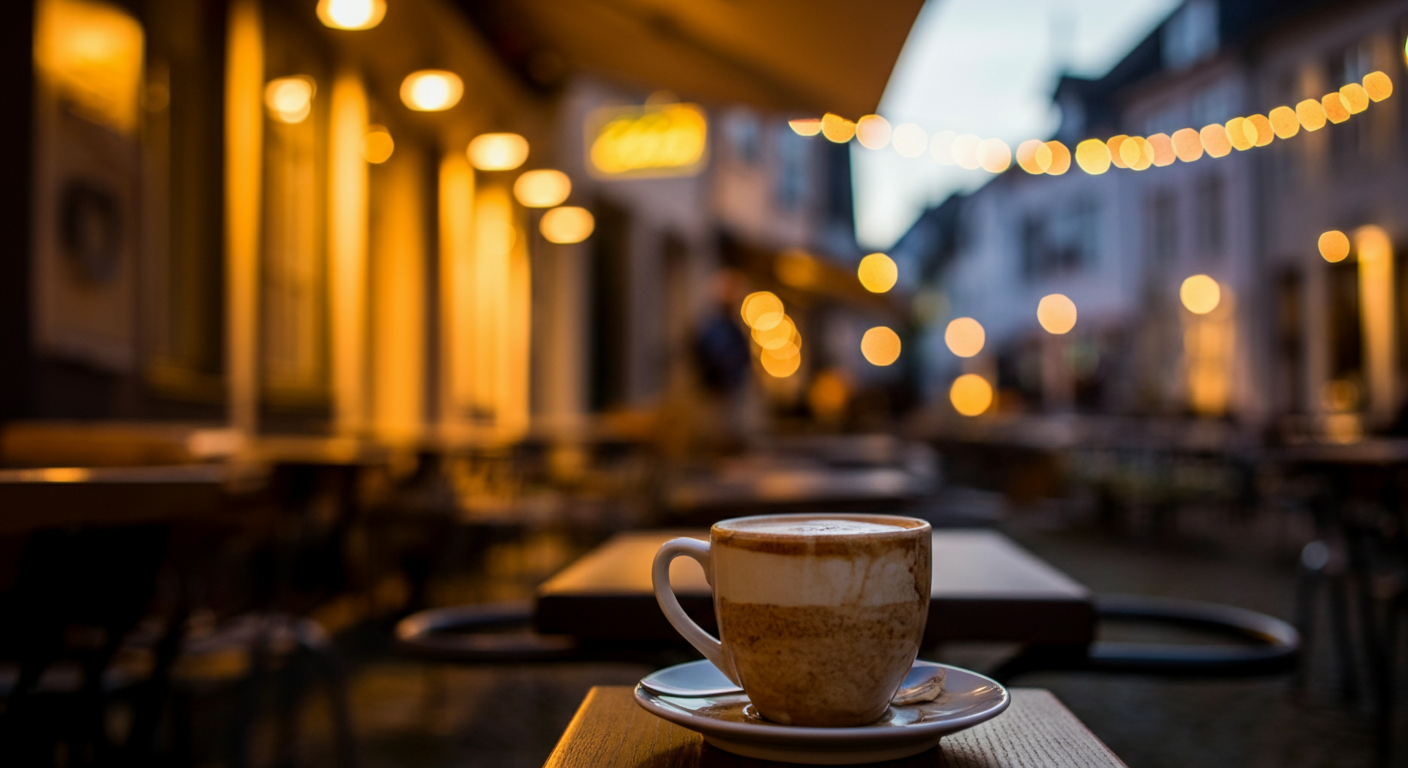
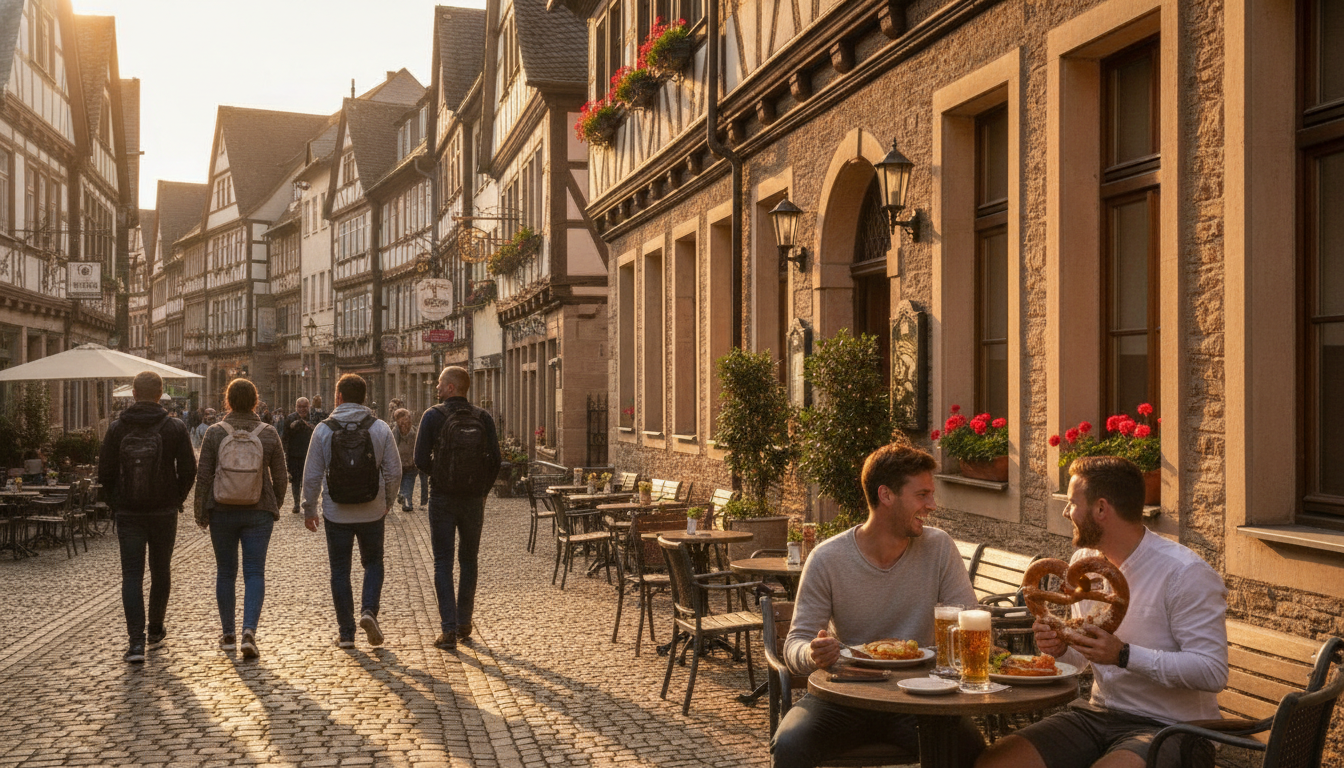
Culinary-wise, it stays down-to-earth and Siegerland-style: Krüstchen with fried potatoes, Reibekuchen and hearty home-style cooking feature on the menus of the inns, complemented by a young café culture around the Oberstadt and Unterstadt. The Riewekooche tradition tastes best fresh from the baker.
Walkers have the big stage right on their doorstep: the Rothaarsteig and its feeder trails make Siegen a starting point for tours as far as the sources of the Sieg, Lahn and Eder — long views and ridge routes included. For shorter loops, the walking paths on the city's hills are enough.
Practical tip: steps and short paths connect the Oberstadt and Unterstadt — good shoes help, as the topography is as much a part of Siegen as the Krönchen. Trains and buses open up the valleys, and the quietest hours by the new riverside belong to the morning.
So, away from the Oberstadt, Siegen reveals itself as a city on the move: river instead of concrete, campus instead of barracks, forest above it all. Anyone who follows these insider tips experiences a city that's just learning to show its beauty — and getting a little better every day.
If you want to link the new and old sides, walk the vertical route: from the Siegtreppe through the Unterstadt up to the Oberstadt, on through the Schlosspark and out into the Tiergarten — a climb that tells the city's history in layers and grows quieter with every metre of height. You'll have thoroughly earned a rest afterwards.
And if you want to see Siegen in the best light, choose the evening: when the rows of houses on the hillsides light up and the Krönchen gleams above it all, the city in its valley basin reveals its peculiar beauty — rough, honest, and a little more polished every year. Insider tips are turning into certainties here.
So next time you're driving through the Siegerland, be sure to plan a stopover — the new riverside is just five minutes from the station, and the rest follows naturally uphill.
Die Besten der Stadt