Sindelfingen
Sindelfingen Development: New Projects and Districts 2026

Sindelfingen is a city in transition. Over the past few years, the town between the Schönbuch and Stuttgart has launched several ambitious urban development projects that will permanently change the face of the municipality. 2026 is a key year for several of these ventures at once.
The biggest project is the redesign of the station surroundings. Sindelfingen station, long a functional relic of the post-war era, is being transformed into a modern mobility hub. Plans include a bright reception building with catering and co-working spaces. The forecourt is to be greened and given a real sense of place — a much-needed new gateway to the city, due to be completed before the end of this decade.
The Breuningerland site is also facing an upheaval. The shopping centre, which has drawn visitors from across the region for decades, is set to be complemented by mixed use. Flats, offices and leisure facilities are all under discussion. The aim is a lively urban quarter that invites people not just to shop, but also to live and work.
Particularly exciting is the development of the Floschen site. A new residential quarter with over 500 units — including a significant share of subsidised housing — is emerging on the former industrial estate. The mix of terraced houses, apartment blocks and small commercial units aims to create an urban yet family-friendly environment. The first construction phases are already occupied, with further ones following in 2026.
The city is also investing heavily in green infrastructure. Klostersee Park is being upgraded, new cycle paths are linking the districts, and a continuous green corridor from the city centre to the edge of the Schönbuch is taking shape. Sindelfingen takes a holistic approach to urban development — mobility, housing, work and recreation are considered together. An approach set to noticeably improve quality of life.
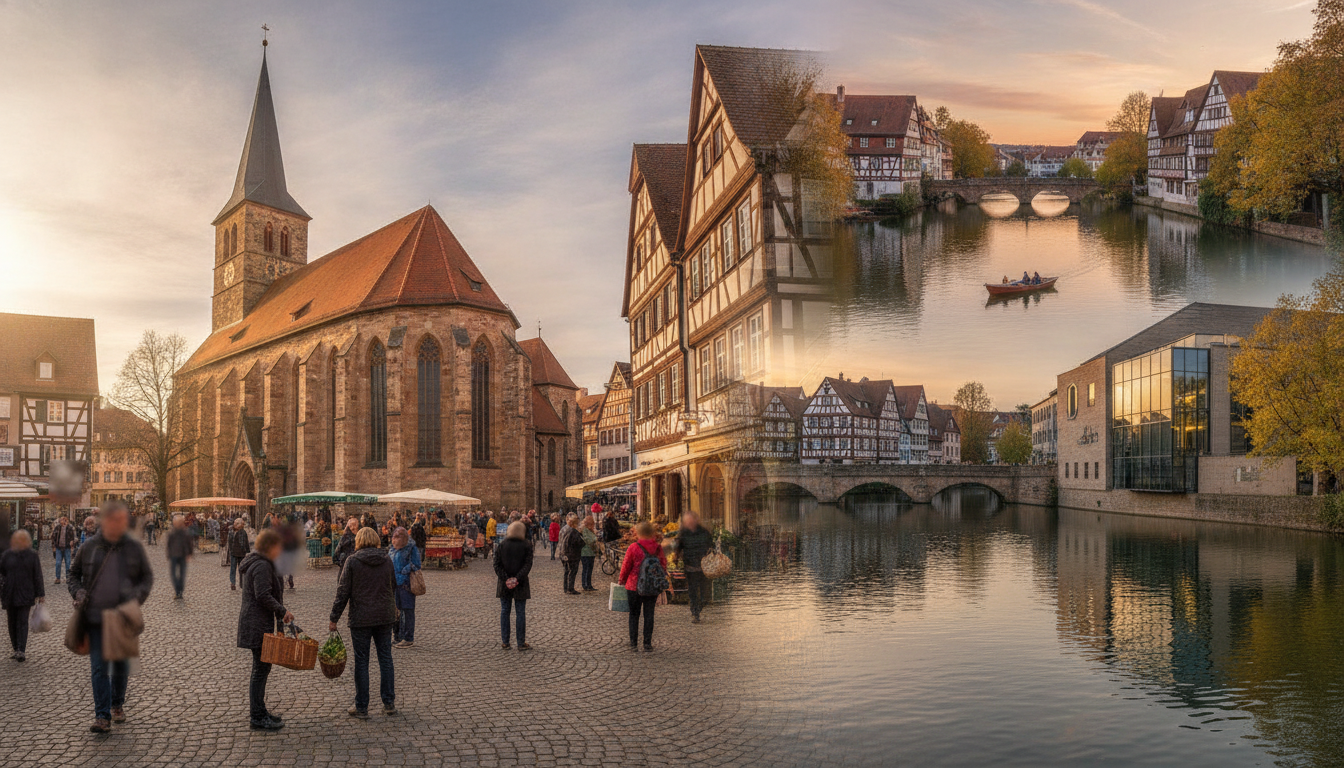
The most ambitious project is growing on the city boundary: on the Flugfeld, Sindelfingen and Böblingen are jointly developing a completely new district — living, working and a lake in one masterplan that is regarded nationwide as a model of inter-municipal planning. The Langer See with its shores is already a popular meeting point, and the surrounding development plots are filling up year by year.
At the same time, the city is working on its centre: the town centre between Marktplatz and Stern-Center is being upgraded with redevelopments, greening and vacancy management — the aim is a centre that offers more than shopping: places to linger, dining and events. The first square redesigns already point the way.
The biggest factor remains the factory: the transformation of the automotive site towards electric mobility and digitalisation is shaping land requirements, commuting patterns and housing demand — the city is planning closely in step with the company, whose future decisions are quite literally shaping urban development here.
Housing is being tackled on every front: new development areas on the outskirts, densification of existing areas and subsidised housing are all intended to meet the demand of this city of employees — affordable housing remains the ongoing issue between Stuttgart and the Schönbuch. Multi-generational projects complement the traditional offering.
Mobility is being redistributed: better S-Bahn connections via the Flugfeld station, plans for a cycle superhighway towards Stuttgart, and more frequent bus services are all intended to ease the burden of commuter traffic on cars — a remarkable course for a car-manufacturing city, and one it is deliberately pursuing.
Climate adaptation runs through all the projects: de-sealing surfaces, tree-planting concepts and rainwater management are now standard practice, and the city is responding to the region's summer heat with greenery and water — the lake on the Flugfeld is both a symbol and a tool for this.
Education and leisure are growing too: school renovations, new nurseries and the further development of pools and sports facilities go hand in hand with housebuilding — anyone wanting to retain skilled workers needs more than just jobs, and Sindelfingen is investing accordingly.
Anyone wanting to see the transformation for themselves should take the double walk: first through the old town with its Marktplatz and the heritage of the Webergassen, then across the Flugfeld with its lakeside promenade and new-build areas — within a few kilometres, you can see how the city's past and future come together.
So Sindelfingen is planning for 2026 with a dual ambition: to secure the prosperity of this factory town while also building a more liveable, greener city. The projects by the lake and in the centre are the visible proof of this — and good reasons to think of the city as more than just its factory gates.
That there is also some wrangling along the way is only natural: debates about land, traffic and the costs of transformation accompany these projects — yet the inter-municipal cooperation on the Flugfeld shows that Sindelfingen is able to turn conflict into collaboration. That ability is likely to become more important in the coming years than any single development plan.
For those interested, the transformation is well documented: information panels on the Flugfeld, exhibitions at the town hall and the city's participation formats make the plans easy to follow — anyone wanting to have a say will find an open door. Guided walks with urban planners are now also part of the programme.
Which leaves the outlook: when the lakeside quarter, the town-centre redevelopment and the factory's transformation all come together, a Sindelfingen will emerge by the 2030s that is more than just an appendage of its factory — a city with its own centre, its own shoreline and its own sense of identity. The projects of 2026 are visibly laying the trail for this.
Anyone who wants to say in ten years that they witnessed this transformation firsthand would do well to start watching now — the most exciting phase is happening right now.
Sindelfingen 2026 is thus a lesson in applied confidence: a city whose business model is changing is nevertheless — or precisely because of this — building along its shores, squares and quarters. Watching is worthwhile; getting involved even more so.
Incidentally, the best vantage point for this future lies by the water: the lakeside promenade on the Flugfeld, in the evening, when the new buildings are reflected in the Langer See — that's where you understand where this city is heading.
Die Besten der Stadt