Stuttgart
Wine Bars in Stuttgart
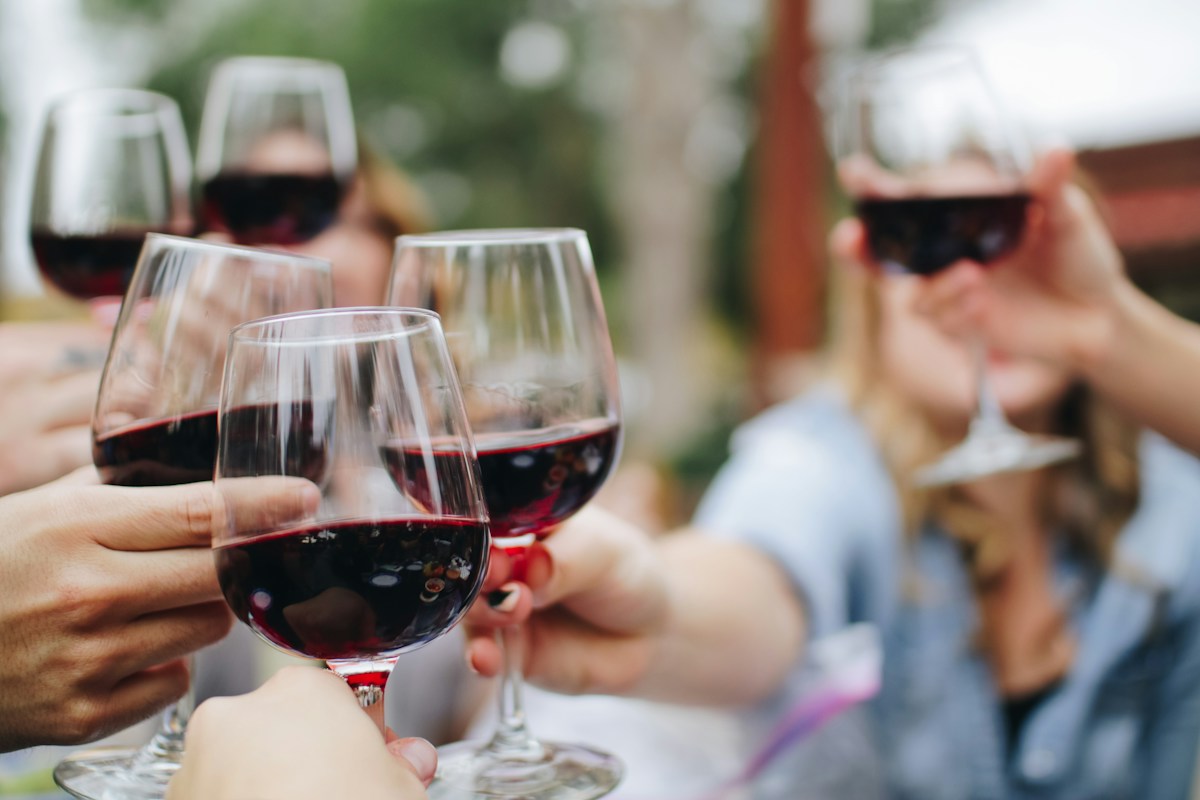
Weinstuben are found mainly where there are several wine-growing estates. In Germany, these are primarily areas in the south-western part of the country. Climatic conditions play a very significant role here.
11 of the 13 German wine-growing regions are located in Baden-Württemberg, Rhineland-Palatinate and Hesse. Wine plays a special role here, which is why these regions have particularly many Weinstuben. But German wines are also enjoyed with great pleasure in the rest of the world and beyond Germany.
Weinstuben, with their cosy nature, invite you to linger and enjoy. The atmosphere they exude is unmistakable. In a wine-growing region, you'll find a Weinstube all around, no matter how tiny the villages are.
The Weinstube
For people who don't know what a Weinstube is, the name itself suggests that wine probably plays a big role. And we can all imagine what one does in a ‘Stube’ (parlour) - “Come into the good parlour” is a familiar saying to us all. A Stube is a place for conviviality, eating and drinking together.
Weinstuben are often housed in old half-timbered buildings, which are frequently listed. In rustic vaulted cellars, regional fare meets cosy togetherness amid a traditional atmosphere.
You can experience this unmistakable atmosphere in Stuttgart at the Weinstube Im Alten Haus.
Nevertheless, it should also be made clear that, logically, not all the Weinstuben in the country can be located within a wine-growing region. When this is indeed the case, carefully selected wines from the wine-growing regions are bought in and served. Different approaches can be observed here:
Either wines are sourced exclusively from the nearest wine region, or - the second option - wines are selected from more than one of the 13 wine-growing areas.
Particularly with this geographically determined selection, wines from abroad are often found on the menu too - for instance from overseas such as Argentina, Australia, the USA or South Africa, or from European countries such as France, Spain or Italy.
What's on offer in Stuttgart
Given the connection between the Stuben and their respective estates, serving regional wines is naturally a point of honour! Of course, all the wines on the wine list are carefully chosen, as the Stube's space is often limited. Nevertheless, serving one's own wine in other Weinstuben is common practice. As a result, more than a few boxes are probably taken home by tourists.
Guest wines are often shown on their own page in the wine list.
For legal reasons, menus in Weinstuben are very limited. Only dishes that require little preparation may be served alongside wine. This is the case at Weinstube Kachelofen.
In areas of the French-influenced south-west of Rhineland-Palatinate and Hesse, onion cake and Flammkuchen are regional classics on the menu, though only during harvest time - paired with so-called Federweißer, the young wine.
In all Stuben in the Rheingau and Rheinhessen regions in the north-east of Rhineland-Palatinate, you'll find a fresh cheese preparation called Spundekäs, which is often served with hearty bread.
“Kochkäse”, “blaue Zipfel” or “angemachte Camembert” are staples of the menu along the Neckar.
The baguette with Griebenschmalz (crackling lard), known as Fettbemmchen, is served in the “Sachsen” wine-growing region.
Generally, you'll also often find bacon-wrapped dates, sheep's cheese, mixed - usually Mediterranean - platters, or sausage salad with bread. Winzerplatten are very popular in Weinstuben and are essentially just cold cuts and cheese platters.
Wine Villages and Surroundings
The villages in the wine regions have been shaped by the cultivation of the surrounding vineyards for many centuries. The historic village centres delight with lovingly maintained half-timbered buildings and romantic lanes that invite you to linger.
Individual buildings or entire village centres are sometimes listed as historic monuments. But the surroundings of the wine villages are also worth discovering.
The vineyard fields, hiking trails and expansive field paths are both romantic and challenging. Depending on the region, a number of castle ruins, palaces and fortresses lie along the routes.
Looking out over the surrounding landscape from there, you'll of course see a carpet of vines, and often forest too: in autumn you'll see a mosaic of striking colours, ranging from rich yellows and oranges to dark reds, while in summer you'll see lush green everywhere.
The Wine-Growing Regions
As described above, most of the wine-growing areas are located in south-western Germany. Apart from the Saale-Unstrut and Sachsen wine regions, all of them are located in either Rhineland-Palatinate, Hesse and/or Baden-Württemberg. Why are the individual regions so special? Which wine-growing area produces the best red or white wine? Why is the Goldriesling, for example, so special? We have an explanation:
Germany's largest wine-growing region, at around 26,000 hectares, is Rheinhessen. It accounts for a good quarter of Germany's total wine-growing area (100,000 hectares).
Thanks to the varied soils and mild climate, excellent conditions prevail for white grape varieties. The largest Silvaner cultivation area in the world is found in Rheinhessen.
The second-largest wine-growing region is the Pfalz, with a good 23,000 hectares. Along the German Wine Route, red and white wines flourish thanks to the varied soils and consistently mild climate. The preferred grape varieties grown here are Riesling, Müller-Thurgau and Dornfelder.
The longest of all German wine-growing regions is Baden. However, at just under 16,000 hectares, it is considerably smaller. According to an EU regulation, Baden has the warmest climatic characteristics of all German wine-growing regions. Burgundy varieties are predominantly grown here, with half of the yield limited to Weißburgunder, Blauer Spätburgunder and Grauburgunder/Ruländer.
The red grape varieties Lemberger, Schwarzriesling and Trollinger are mainly found in the 11,000-hectare Württemberg wine-growing region. In this region, Rotling, also known as Schillerwein, is the hallmark. For this wine, red and white grapes are pressed together. Due to its colour, the wine is often mistaken for a rosé.
The world's steepest vineyard, at around 65 degrees, belongs to the Mosel region, which covers a total area of 9,000 hectares.
Franken, Ahr, Rheingau and More
The Franken region covers a good 6,000 hectares. It is also home to the largest Riesling-growing area. In total, 80% of the harvest in Franken consists of white wine. Silvaner and Müller-Thurgau are the most widely grown varieties. Higher-quality Franken wines are bottled in flat, round-bellied bottles with a short neck - the Bocksbeutel is well known for this region.
An El Dorado for winemakers is the Nahe wine region, with its 4,000 hectares. You'll find around 180 different soil variations here, owing to past volcanic activity. This diversity is also reflected in the wine. Whether Müller-Thurgau, Dornfelder, Spätburgunder or Riesling - all wines feel at home here.
In the Rheingau wine-growing region, the Riesling grape variety is used mainly to produce white wine. Riesling accounts for 80% of the wine produced in the region, which covers 3,000 hectares. Germany's largest contiguous wine-growing area for Spätburgunder is found here.
The Saale-Unstrut wine region is the larger of the two wine-growing areas located in the new federal states. At the same time, it is the northernmost of the German wine-growing regions. Saale-Unstrut is about 2,200 hectares smaller than Rheingau, making it 800 hectares in size. Silvaner and Müller-Thurgau are early- to mid-ripening varieties that can be cultivated well in the north, mainly due to the accompanying weather conditions. White wines make up a good 75% of the total yield.
In the Ahr wine-growing region, almost exclusively red wine is cultivated - more so than in any other region - despite its small area of only 560 hectares. Thanks to the slate rock in the soil, it provides an excellent basis for top-quality wines, particularly Spätburgunder.
Smaller Wine-Growing Regions
Goldriesling is truly something rare, as it is only grown in the 500-hectare Sachsen wine region. Sachsen is the easternmost region in Germany. Besides the special Goldriesling, Traminer is mainly cultivated, as well as Grauburgunder and Weißburgunder.
Cultivation in the Mittelrhein wine-growing region is very time-consuming and costly. The sun shines ideally on the steep terraces, making the winemakers' efforts truly worthwhile. Riesling accounts for almost 70% of the entire harvest.
The smallest of all the regions is the Hessische Bergstraße, with just 460 hectares. Roughly half of the annual total yield is attributed to Riesling. The small amount of red wine from this wine-growing region is also highly valued everywhere.
That concludes our general information on the 13 German wine-growing regions and Stuttgart in general. We hope our blog article has helped you gain an overview of Weinstuben and wine regions. Enjoy exploring.

Felix Baumgartner
Felix ist ausgebildeter Sportwissenschaftler und schreibt über Fitnessstudios, Vereine, Kletterhallen und Laufstrecken. Er interessiert sich weniger für Trends als für Qualität der Betreuung — und dafür, ob ein Angebot auch für Einsteiger funktioniert.