Wien
Hidden Gems in Vienna: Insider Tips Off the Beaten Path

Vienna is a city everyone thinks they know – and yet it never stops surprising you. Away from St. Stephen's Cathedral, the Prater and Schönbrunn Palace lie places that even seasoned Vienna visitors rarely have on their radar. For anyone wanting to discover the Austrian capital away from the tourist crowds in summer 2026, we've put together our personal insider tips.
Let's start with green Vienna. While the Stadtpark and the Prater are overrun, hardly anyone knows the Augarten in the second district. This baroque garden complex from the 18th century, with its magnificent avenues, fragrant flower beds and striking flak towers from the Second World War, is a place of quiet beauty. Sit on a bench under old chestnut trees and watch Viennese families spend their Sunday afternoon – it doesn't get more authentic than this.
A cultural insider tip is the Narrenturm Museum at the Alte AKH. The Narrenturm, built in 1784 as Europe's first psychiatric institution, now houses the Federal Pathological-Anatomical Museum. The collection of historical specimens isn't for the faint-hearted, but it's fascinating and unique – and the round tower itself is an architectural gem.
For food lovers: the Rochusmarkt in the third district is what the Naschmarkt used to be twenty years ago – a genuine Viennese market where locals do their shopping. No tourist prices, no souvenir stalls, just down-to-earth traders with top-quality produce. The fishmonger, the greengrocer, the cheese specialist – here you'll still get proper advice and a good chat. Saturday morning is the best time to visit.
A gastronomic insider tip is the small Beisl on Zollergasse in the seventh district. No sign on the door, but inside, a kitchen that combines traditional Viennese home cooking with Viennese charm and modern flair. The Tafelspitz schnitzel is legendary, and the potato salad is a revelation. Booking is essential, as the place has only twelve tables.
Coffee house culture with a twist: the café at the Kunsthistorisches Museum. Few visitors know that there's a hidden coffee terrace tucked between the halls, with a view of the Prunksaal. Enjoy a Melange here, surrounded by Renaissance painting, while the crowds stream through the halls below – a sublime experience.
For the evening, we recommend the small vineyard in the 19th district. Right in the middle of the city, just a short tram ride from the centre, a Viennese winemaking family runs a Heuriger with views over the rooftops. The wine grows right before your eyes, and the view stretches all the way to the Kahlenberg – Vienna as even many Viennese don't know it.
Vienna 2026: the city rewards the curious. Leave the well-trodden paths behind – it's worth it.
A good starting point for quiet discoveries is the Servitenviertel in Alsergrund: this small neighbourhood around the Servitenkirche, with its cobbled lanes, bookshops and bistros, feels almost French, yet lies just a few minutes from the Ring. Things are similarly relaxed in the Karmeliterviertel in Leopoldstadt, where young eateries, delicatessens and old Viennese character mix around the Karmelitermarkt – on Saturdays, at the farmers' market, the neighbourhood shows its liveliest side.
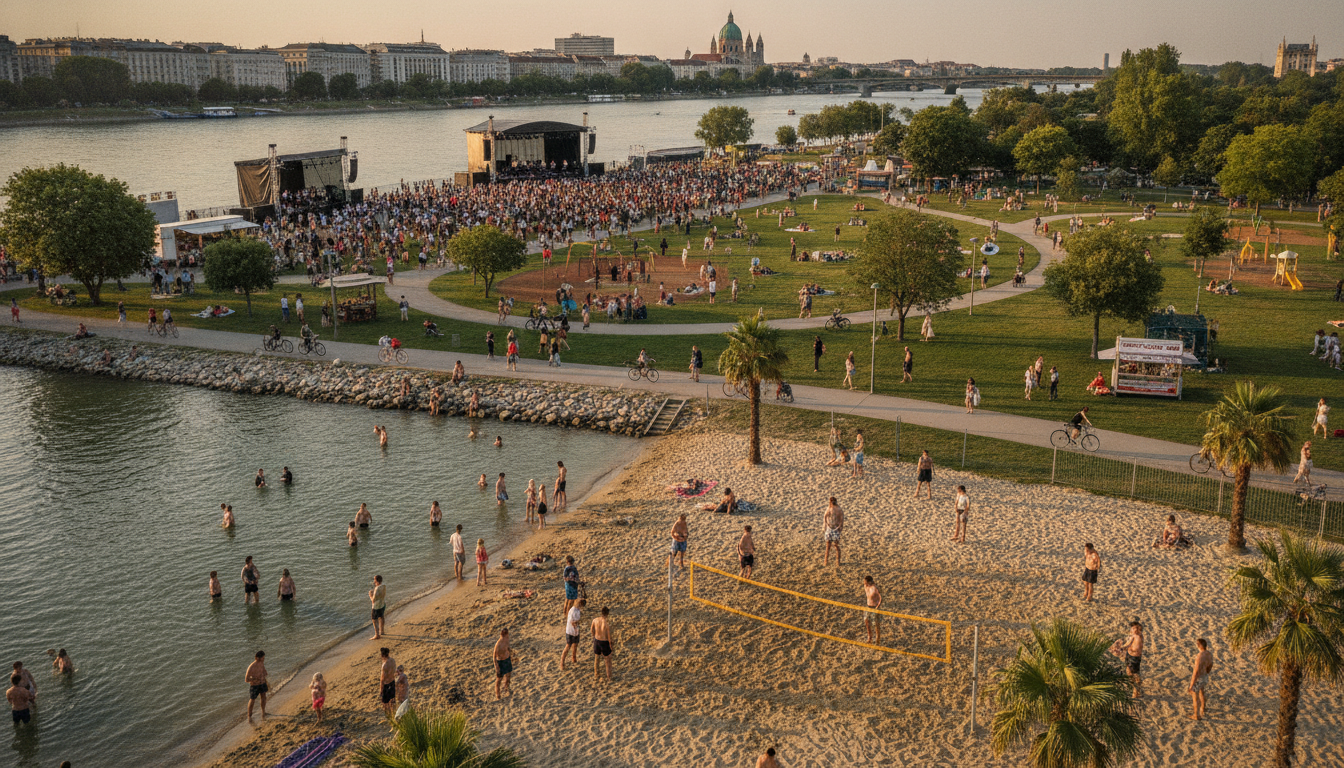
Green and largely tourist-free are the banks of the Alte Donau: while the crowds gather along the Donaukanal, here Viennese locals rent electric boats, swim between the jetties or sit in the coves at sunset – a summer evening at the Alte Donau explains Vienna's quality of life better than any ranking ever could. Anyone wanting even more peace and quiet can stroll through the Japanese-style Setagayapark in Döbling, a hidden gem with ponds and a teahouse.
Architecture fans should make their way up to the Baumgartner Höhe: the Kirche am Steinhof, Otto Wagner's Art Nouveau masterpiece overlooking the city, attracts surprisingly few visitors – the golden dome and the view across Vienna make the climb worthwhile. Another gem is the Amalienbad in Favoriten, whose magnificent Art Nouveau swimming hall is still in operation as a municipal pool: swim beneath the historic glass ceiling for the price of a normal pool entry.
Anyone seeking the morbid side of Vienna will find it at the Zentralfriedhof – but rather than just walking past the graves of honour, it's worth taking a detour into the quieter sections: the old Jewish cemetery, with its ivy-covered gravestones, is one of the most moving places in the city. Back among the living, refuel at the Brunnenmarkt in Ottakring, the longest street market in Europe, where Vienna eats as multilingually and cheaply as nowhere else.
Practical tip: all the places mentioned are accessible by underground, tram or bus – Vienna's public transport is among the densest in the world, and a day ticket is enough for the whole programme. The best time for the quiet side of the city is weekday mornings; at weekends, at least the markets and the Alte Donau belong to the locals, which only adds to the appeal rather than diminishing it.
So, in conclusion: Vienna rewards those who resist the pull of Stephansplatz and Schönbrunn. The true city reveals itself in the neighbourhoods, baths, parks and markets – where everyday life and beauty exist side by side as a matter of course. Once you start collecting these places, every visit will uncover a new layer of the city.
And if the classics must be seen after all, then with a twist: Schönbrunn at eight in the morning, before the coaches arrive, St. Stephen's viewed from the quiet side of Stephansplatz, the coffee house not on the Graben but in the neighbourhood – this way, even Vienna's famous sights can be experienced almost privately. The city belongs to those who know its rhythms.
Die Besten der Stadt