Zwickau
The 10 Breathtaking Highlights You Must See in Zwickau!
Zwickau in the heart of Saxony is often overlooked by travellers – unjustly so. The sights in Zwickau range from one of Saxony's most beautiful late Gothic hall churches to the birthplace of a world-famous composer and an automotive history that spans two very different eras. If you take your time, you will discover a city that displays its ruptures and its golden ages alike.
Whether you are interested in architecture, history, music or technology: the top attractions in Zwickau are mostly located in the compact city centre and can be combined on foot. In this city guide we introduce the ten most important places that should not be missed on any visit to Zwickau.
Sights in Zwickau: St. Mary's Cathedral as a Landmark
St. Mary's Cathedral towers over Zwickau's old town and is regarded as the region's most significant sacred building. The Gothic hall church from the 13th century impresses with its proportions as well as with its furnishings, which were gathered over the centuries.
Architectural Masterpiece
The three-aisled hall church shows typical features of the late Gothic period and houses artistic altars as well as historic tombs. Particularly worth seeing are:
The magnificent main portal with its filigree stonework
The colourful stained-glass windows from different eras
The late Gothic winged altar by Michael Wolgemut
The historic organ from the 19th century
Deliberately take a few minutes inside: only in the stillness does it become clear how carefully the various furnishings were matched to one another.
💡 Tip: Visit the cathedral during the regular organ concerts for an unforgettable acoustic experience.
The Robert Schumann House: Sights in Zwickau for Music Lovers
Zwickau is the birthplace of Robert Schumann, and his birth house is now a lovingly designed museum. It is one of the most important musicians' museums in Germany and offers insights into the life and work of the Romantic composer that go far beyond the usual display cases.
A Musical Journey Through Time
The museum shows not only Schumann's life story but also the musical culture of the 19th century. The exhibition includes:
Original manuscripts and compositions
Historic musical instruments from Schumann's time
Personal belongings and family portraits
Interactive stations for listening to his works
Special Events
Regular chamber concerts in an historic setting
Themed special exhibitions on various composers
Music education programmes for school classes
Annual Schumann Festival with international artists
Automobile and Clock Museum: Technical Sights in Zwickau
Zwickau looks back on a proud automotive history – this is where the legendary Horch cars and later the Trabant vehicles were once built. The Automobile and Clock Museum combines this technical tradition with the region's equally significant art of clockmaking.
Automotive History Up Close
The exhibition shows the development of car manufacturing in Zwickau from its beginnings to the present day. Highlights include:
Rare pre-war Horch models
An extensive Trabant collection
Historic engines and vehicle parts
Documentation on industrial history
It is precisely the juxtaposition of luxurious pre-war cars and the plain mass-produced vehicle that makes the museum so appealing – the history of technology and the history of society stand right next to each other here.
💡 Tip: Allow at least two hours for your visit so that you can view all the exhibits at your leisure.
Osterstein Castle: Historic Sights in Zwickau
High above the Mulde rises Osterstein Castle, one of the most important historic sights in Zwickau. The medieval castle complex was built in the 12th century and for centuries served as the residence of the Wettins.
Medieval Atmosphere
Today the castle houses a museum that brings the region's history to life. The permanent exhibition shows:
Medieval weapons and armour
Crafts from different eras
Archaeological finds from the surrounding area
Models of the original castle complex
Cultural Events
The castle also serves as an atmospheric backdrop for events:
Medieval markets and festivals
Concerts in an historic setting
Theatre performances in the castle courtyard
Weddings and private celebrations
After the tour, a stop for refreshments is a good idea: our selection of the best excursion restaurants in Zwickau leads to places that combine well with a trip to the Mulde.
Sights in Zwickau: The Priests' Houses as a Museum Complex
The Priests' Houses form a unique museum complex and are among the oldest residential buildings in Saxony. The four late Gothic houses from the 13th century vividly show how people lived and worked in Zwickau in the Middle Ages.
Experiencing Medieval Living
Each of the four houses has its own thematic focus:
House I: Town history and archaeology
House II: Crafts and guilds
House III: Religious life and education
House IV: Changing special exhibitions
Interactive Experiences
The exhibition makes history tangible through:
Reconstructed medieval living spaces
Hands-on stations for children and adults
Multimedia presentations
Regular tours in historic costumes
Gewandhaus Zwickau: Architectural Sights in Zwickau
The Gewandhaus, a Renaissance building from the 16th century, is among the most beautiful buildings in the city. Originally built as a cloth merchants' house, it now serves as the city library and cultural centre.
Renaissance Architecture at Its Finest
The building impresses with its ornate façade and historic interiors. Particularly worth seeing are:
The magnificent gable with Renaissance ornaments
The historic vaults on the ground floor
The restored wall paintings
The atmospheric inner courtyard
Cultural Centre
Today the Gewandhaus houses:
The city library with its historic holdings
Changing art exhibitions
Literary readings and lectures
Concerts and cultural events
💡 Tip: Also look into the quiet inner courtyard – a perfect spot for a short break during your sightseeing.
Theatre Plauen-Zwickau: Cultural Sights in Zwickau
The Theatre Plauen-Zwickau is an architectural jewel and an important cultural centre of the region. The 19th-century building offers a programme ranging from opera and drama to symphony concerts.
Theatre Tradition Since 1823
The theatre looks back on a history of two hundred years and has established itself as a fixture of cultural life. The repertoire includes:
Classical and modern operas
Drama from the classics to contemporary plays
Musicals and operettas
Symphony concerts and chamber music
Architectural Highlights
The theatre building itself is a sight worth seeing:
Neoclassical façade with magnificent columns
Elegant auditorium with an historic ambience
Artistic ceiling paintings and ornaments
Modern stage technology in an historic setting
If you are planning an evening at the theatre, it is best to stay within walking distance. You will find affordable options in our overview of cheap hotels in Zwickau.
Zwickau Old Town: Places Worth Visiting in Zwickau at a Glance
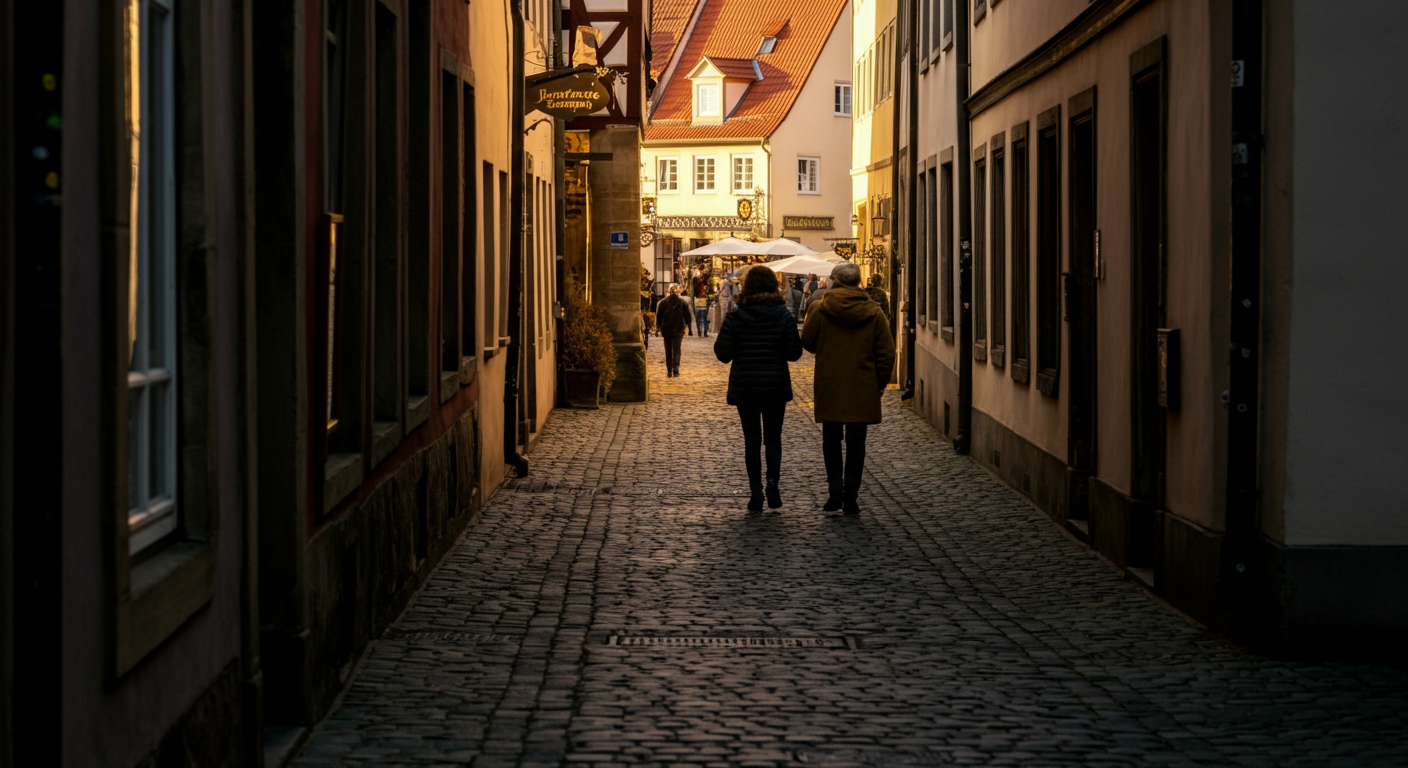
Zwickau's old town is an open-air museum. Here you will find numerous places worth visiting in Zwickau that invite you to stroll and explore. The historic town centre combines medieval architecture with the everyday life of a lively city centre.
Hauptmarkt as the Centre
The Hauptmarkt forms the heart of the old town and is surrounded by magnificent townhouses:
The Renaissance town hall with its striking tower
Historic patrician houses with colourful façades
Cosy cafés and restaurants
Regular markets and events
Lanes and Squares Worth Seeing
Kornmarkt: Medieval square with historic buildings
Domhof: Quiet square around St. Mary's Cathedral
Muldegasse: Romantic lane leading down to the Mulde
Katharinenstraße: Shopping street with historic flair
For a souvenir, it is worth taking a look at the small shops off the main thoroughfares – our article on the best gift shops in Zwickau shows where you are most likely to find something.
💡 Tip: Follow the historic city trail – the bronze plaques in the ground lead you to all the important sights in Zwickau.
📍 Discover more: Explore more recommendations for Zwickau on our city page.
Conclusion: Discovering the Sights in Zwickau Is Worth It
Zwickau surprises with a variety of sights that combine history, culture and technology. From the Gothic vaults of the cathedral and automotive history to Robert Schumann's musical legacy, the city offers every visitor their own way in.
The key takeaways for your visit to Zwickau:
Plan at least two days for the most important sights in Zwickau
Make use of the guided tours for interesting background information
Also visit the smaller museums – they often offer surprising insights
Enjoy the old town on a leisurely walk
Find out about current events at the various cultural venues
Zwickau proves that smaller cities, too, hold great cultural treasures. The sights in Zwickau invite you on a journey of discovery through centuries of German history and culture.
Frequently Asked Questions About Sights in Zwickau
Which sights in Zwickau can you see in one day?
In one day you can easily combine St. Mary's Cathedral, the Robert Schumann House, the Priests' Houses and the old town. These Zwickau highlights are all in the city centre and within walking distance.
When are the most important sights in Zwickau open?
Most museums and sights are open Tuesday to Sunday from 10 am to 5 pm, and many venues are closed on Mondays. Check the current opening hours before your visit, as they may change seasonally.
Are there combined tickets for several attractions in Zwickau?
Yes, the city offers various combined tickets that let you visit several museums at a lower price. You can get information at the tourist information office on the Hauptmarkt.
Which top attractions in Zwickau are suitable for families with children?
Particularly family-friendly are the Priests' Houses with their hands-on stations, the Automobile and Clock Museum and Osterstein Castle. Many sights also offer special guided tours for children.
How do I get to the most important places worth visiting in Zwickau?
Most sights are in the city centre and can be reached on foot. For destinations further away, such as Osterstein Castle, it is best to use public transport or a car.

Annika Voß
Annika hat ein Faible für inhabergeführte Läden und alles, was sich vom Filialensortiment abhebt. Sie porträtiert Boutiquen, Buchhandlungen, Concept Stores und Wochenmärkte. Ihr Anspruch: zeigen, warum sich der Weg in die Innenstadt noch lohnt.