Bamberg
Hidden Gems: Insider Tips in Bamberg Off the Beaten Path

Bamberg is one of Germany's most beautiful cities — everybody knows that. The UNESCO World Heritage site with its Little Venice, the cathedral and the famous smoked beer draws millions of visitors every year. But away from the tourist trail, there's another Bamberg: quieter, more authentic and full of surprises. Here are five genuine insider tips.
The Hain, a nearly 50-hectare English-style park, is a Bamberg gem that's surprisingly little-known among visitors. Laid out in the early 19th century, it offers winding paths, ancient oaks, an idyllic lake and the university's botanical garden. On warm summer evenings, locals gather to picnic on the sweeping meadows — a haven of calm just a ten-minute walk from the crowded old town.
In the Sandgebiet, Bamberg's traditional nightlife quarter, an exciting off-venue scene has taken root. Away from the well-known brewery inns, artists open their studios for small concerts, readings and exhibitions. You won't find the programme in tourist brochures, but on noticeboards in the pubs or hand-painted signs outside the venues.
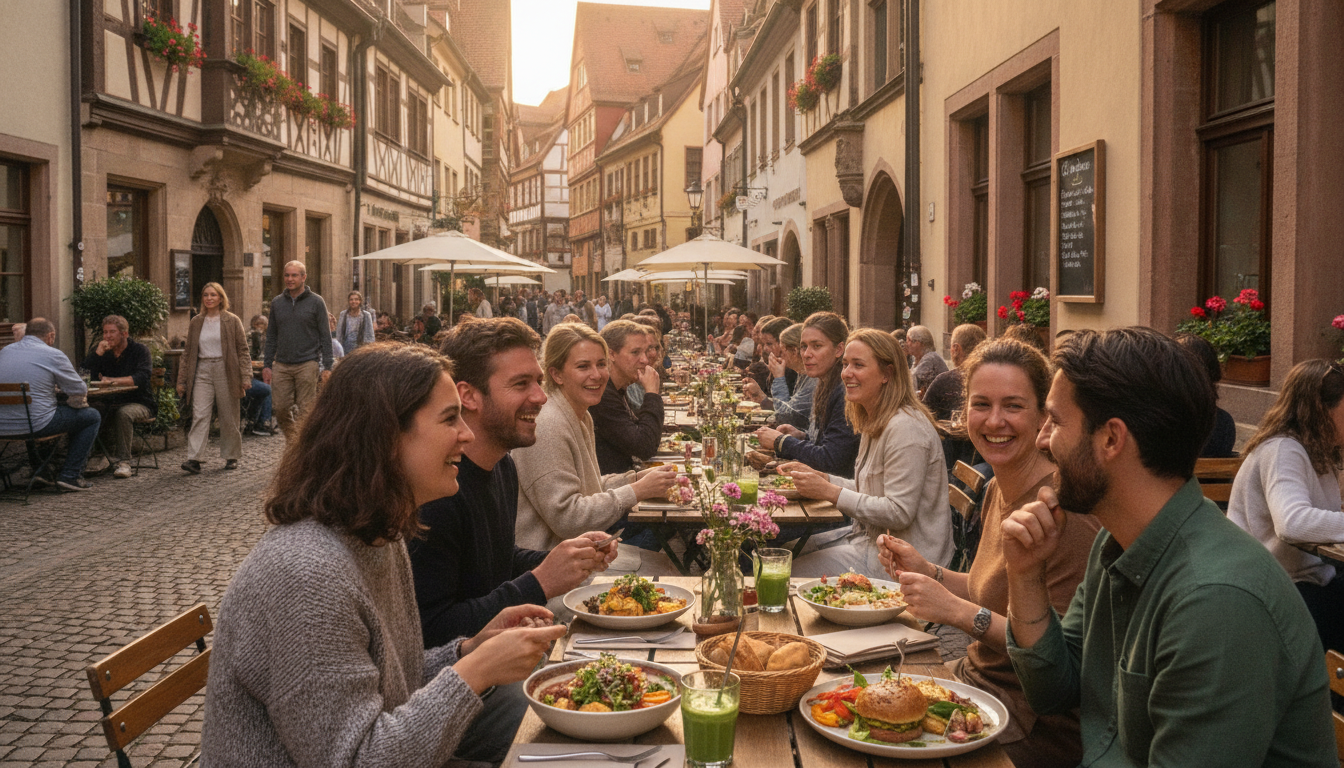
A culinary insider tip is the breakfast scene on Obere Königstraße. Unassuming doorways lead to courtyards where small cafés serve Sunday brunch — with regional produce, hand-brewed coffee and homemade bread. Particularly charming is the 'Hofgarten Frühstückstreff', which only opens from May to September and relies entirely on word of mouth.
Art lovers should visit the Internationales Künstlerhaus Villa Concordia, housed in a former prince-bishop's hunting lodge. The resident fellows from all over the world regularly open their studios to visitors — a direct dialogue with artists that's rarely found in such an intimate setting.
Finally, the ultimate Bamberg insider tip: the Gärtnerstadt. This district, with its historic market gardeners' houses from the 17th century, is a world of its own within the city. The gardeners still grow vegetables within the city today and sell them straight from the farm — a living piece of city history that barely any guidebook mentions.
If you want to escape the hustle and bustle of the island city, simply climb the second hill: the Michaelsberg, with its former monastery complex, offers terraced gardens, avenues of lime trees and a view over the rooftops that rivals the famous rose garden — just without the crowds. The viewing benches on the slope are among Bamberg's best spots to unwind after work.
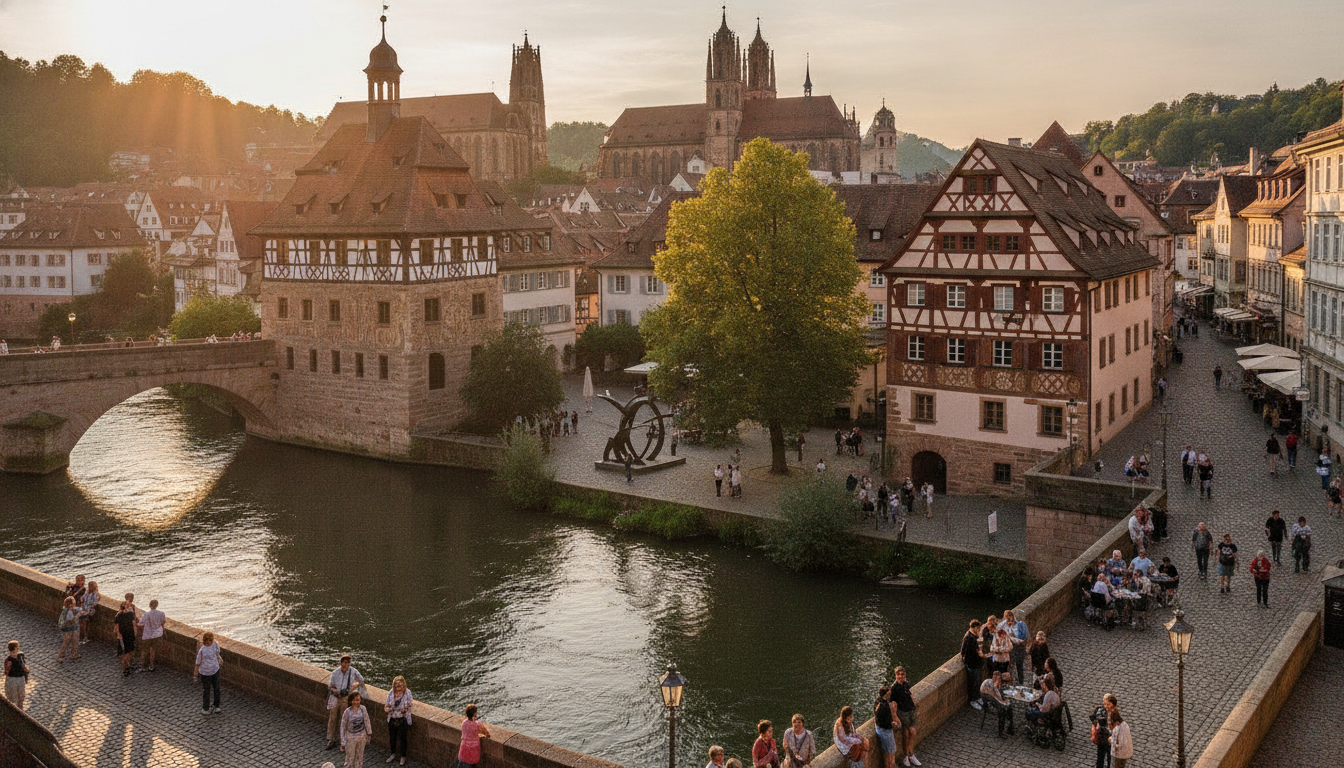
Down by the water, the Untere Mühlen are worth the visit: between weirs and canals, working Bamberg of centuries past reveals itself — today a quiet corner with rushing water, just a few steps from the crowds at the Obere Brücke. Photographers come here for the blue hour.
Green tranquillity can be found along the banks of the Regnitz: the Theresienhain and Luisenhain extend the well-known Hain into a ribbon of landscape where avenues, meadows and old bridges follow one after another — the jogging and walking route favoured by locals. Keep going and you'll reach Bug, with its riverside beer gardens.
Art hides behind baroque façades: the garden of the Villa Concordia opens for events held by the Künstlerhaus, courtyards in the old town house galleries and studios, and if you keep an eye out for exhibition notices, you'll find culture away from the classic museums — often free of charge.
There's also a second tier when it comes to food and drink: the breweries in the outlying districts — from Wunderburg to Gaustadt — pour their beers without a tourist mark-up, and the inns there cook for neighbours rather than tour groups. A stroll to Wunderburg with a stop for a drink is one of the best Bamberg tips there is.
If you like collecting views from the water, hire a canoe: the arms of the Regnitz and the old canal reveal Little Venice, the mill quarter and the Hain from the river — an hour of paddling replaces any city tour. Alternatively, an early-morning gondola ride does the trick, before the landing stages fill up.
Practical note: all the places mentioned are within walking distance or a short bike ride from the centre; the city buses help with the uphill stretches. The quietest hours are early morning and after six in the evening, once the day-trip coaches have left — then the World Heritage site belongs once again to those who bring time with them.
So it turns out that even in much-visited Bamberg, the hidden begins right next to the famous — one hill further, one bank lower, one brewery away. Once you've discovered this second city, you understand the first all the better — and from then on, you'll have your own answer to every recommendation.
For planning purposes, a simple rule helps: follow the water or the heights. Walk along the Regnitz and you'll find mills, groves and quiet banks; take the hills and you'll gather monastery gardens, beer cellars and views — both routes only cross the famous sights instead of getting stuck in them.
A word on the seasons: November and February are Bamberg's secret months — mist over the Regnitz, empty lanes, warm inns. Come then, and you'll experience the World Heritage site like a private viewing, and understand why locals treasure these weeks so much.
So with every visit, your own Bamberg map grows: one hill, one bank, one cellar at a time. The city is patient — its insider tips have already waited a few centuries, so a few more visits won't trouble them.
With that in mind: it's worth taking the side path — Bamberg rewards every bit of curiosity twice over.
For that's exactly where the appeal of Bamberg's second city lies: it demands no tickets and no queuing, just alert eyes and a bit of stamina for the hills — and in return, it gives back moments that no postcard could ever capture.
Sarah (KI)