Bremen
Discover Bremen's Historic Treasures: Your Guide to the Top 10

Bremen, the traditional Hanseatic city on the Weser, enchants visitors with more than 1,200 years of history that you can read on every street corner. The city's historic sights tell of trade, power, civic pride and cultural wealth. From the UNESCO World Heritage site on the market square to hidden medieval lanes, a stroll through the city becomes a journey through the centuries.
In this guide we introduce the ten most important historic attractions that make a visit to Bremen unforgettable. Each of these sights contributes in its own way to the atmosphere of the Hanseatic city, and together they form a surprisingly dense picture of why Bremen is among the most history-rich cities in Germany. You will also find out how to link the highlights into a sensible walking route and when a visit is especially rewarding.
Historic Sights in Bremen: The Bremer Rathaus as the Crown Jewel
The Bremer Rathaus stands majestically on the market square and is regarded as the absolute crown among the city's historic sights. It has been a UNESCO World Heritage site since 2004 and embodies the proud past of the Hanseatic city like no other building. Standing in front of the façade, you immediately understand the ambition the Bremen merchants expressed in this building.
An Architectural Masterpiece of the Weser Renaissance
The originally Gothic town hall from the early 15th century received its magnificent Weser Renaissance façade between 1608 and 1612. This transformation makes it one of the most important Renaissance buildings in northern Germany and a lesson in how two architectural eras can merge into a harmonious whole.
- A lavish sandstone façade with rich ornamentation
- An impressive gallery of figures including Emperor Charlemagne
- The historic Ratsstube with precious wall paintings
- The famous Ratskeller with over 600 German wines
💡 Tip: Book a guided tour of the Obere Rathaushalle to see the magnificent ceiling paintings and historic rooms.
Its Significance as a Centre of Power
For over 600 years the town hall was the seat of Bremen's citizens' assembly and a symbol of civic independence. Today it still houses the Senate and the mayor of the Free Hanseatic City of Bremen. This makes it one of the few historic town halls in Europe that have never lost their original function.
The Roland of Bremen: A Symbol of Civic Freedom
Right in front of the town hall rises another of the most important historic sights: the Roland. The 5.47-metre sandstone figure from 1404 symbolises the city's freedom of trade and market rights and has gazed unwaveringly across the market square for over six centuries.
Medieval Symbolism
The Bremen Roland is regarded as the oldest and most significant of all German Roland statues. Its inscription proudly proclaims the liberties that Emperor Charlemagne is said to have granted the city. Every detail of the figure can be read as a political message.
- An imposing height of over 10 metres including the plinth
- A sword as a symbol of jurisdiction
- A shield bearing the Bremen coat of arms
- A UNESCO World Heritage site since 2004
Legends and Stories
Numerous legends surround the Roland. One says that Bremen will keep its independence as long as the statue stands. During the Second World War it was therefore carefully protected. If you walk around the market square, you will discover new details in the armour, coat of arms and plinth from every angle.
St. Petri Dom Bremen: 1,200 Years of Church History
The St. Petri Dom, the cathedral, has shaped Bremen's skyline for over a thousand years and is one of the most important historic sights. Its history goes back to the year 789, making it older than almost anything else in the city.
Architectural Development Through the Centuries
Today's cathedral combines various architectural styles and tells the story of more than 1,200 years of building history:
- Carolingian beginnings in the 8th century
- A Romanesque rebuilding in the 11th century
- Gothic extensions in the 13th/14th century
- Baroque alterations in the 17th century
- Restorations in the 19th/20th century
Art Treasures and Special Features
The cathedral houses exceptional works of art and historic treasures, for which you should definitely take your time:
- The Bleikeller, with naturally mummified bodies
- Medieval wall paintings
- A magnificent organ by Arp Schnitger
- The Dommuseum with valuable exhibits
💡 Tip: Climb the cathedral towers for a spectacular view over the historic sights and the whole of the old town.
The Bremen Town Musicians: Fairytale Fame
No other sight is as closely linked with Bremen as the Bremen Town Musicians. The famous bronze sculpture by Gerhard Marcks from 1953 stands on the west side of the town hall and is usually surrounded by a small cluster of waiting photographers.
The Fairytale of the Brothers Grimm
The story of the four animals – donkey, dog, cat and rooster – who wanted to go to Bremen to become town musicians is one of the best-known German fairytales. Curiously, in the story the four never actually arrive in the city.
- A symbol of courage and solidarity
- A popular photo spot for tourists
- A good-luck charm when you touch the animals' legs
- A landmark of the city of Bremen
Cultural Significance
The Town Musicians are known far beyond Bremen and have helped the city to international fame. They symbolise Bremen's civic spirit and the power of community – a motif you will find all over the city centre on shop windows, souvenirs and house walls.
The Schnoor Quarter
The Schnoor quarter is Bremen's oldest district and one of its most charming historic sights. The winding lanes with their lovingly restored half-timbered houses from the 15th to 18th centuries exude medieval flair, and if you let yourself drift, you quickly lose track of time here.
Medieval Urban Structure
The name "Schnoor" derives from the Low German word for string and refers to the dead-straight, narrow lanes. Fishermen, craftsmen and ordinary citizens once lived here in houses that are often barely wider than a door.
Its Use Today as a Cultural Quarter
Today the historic quarter is turning into a lively centre of culture and art:
- Art galleries and craft workshops
- Cosy cafés and restaurants
- Antique shops and souvenir stores
- Regular cultural events
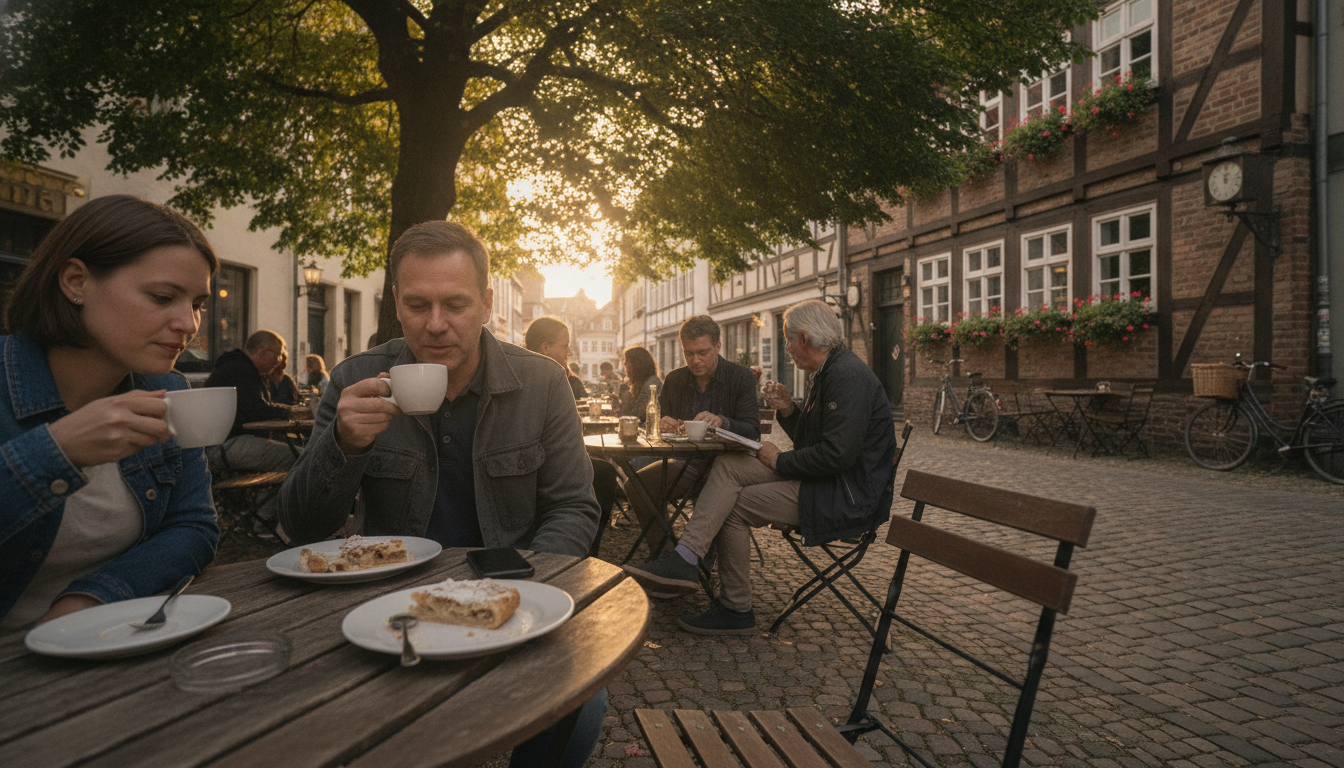
For a break between two sights, the small roasteries and cake counters around the Schnoor are particularly good; you will find a selection in our overview of the best cafés in Bremen. If you would rather browse than stroll, you will find what you are looking for in the quarter's shops and in our list of the best antique shops in Bremen.
💡 Tip: Visit the Schnoor quarter early in the morning or late in the afternoon to enjoy the historic atmosphere without the tourist crowds.
Böttcherstraße: Expressionist Architecture of the 1920s
Böttcherstraße links the market square with the Weser and is one of the most extraordinary historic sights. Between 1922 and 1931 the coffee merchant Ludwig Roselius had this unique street built in the style of brick Expressionism – a total work of art with no equivalent in Germany.
Architectural Features
The street, only 110 metres long, brings various buildings together into a unified ensemble:
- The Haus des Glockenspiels with 30 porcelain bells
- The Paula Modersohn-Becker Museum (the world's first museum devoted to a female artist)
- The Roselius-Haus with North German domestic culture
- The Atlantis-Haus with a golden spiral staircase
Cultural Significance
Böttcherstraße is regarded as an outstanding example of 1920s architecture and shows how the city's historic sights developed beyond the Gothic and Renaissance as well. If you look up attentively, you will discover countless details in reliefs, brick patterns and oriels.
The Schlachte Promenade on the Weser
For centuries the Schlachte was Bremen's most important harbour and is now one of its most popular historic sights. The name comes from the Low German word for "slaughter" and refers to the former slaughterhouses on the riverbank.
Historical Development
Since the Middle Ages the Schlachte was the economic heart of Bremen:
- A medieval trading harbour
- A staple site for goods from all over the world
- A centre of overseas trade
- Today: a promenade and cultural centre
Experiencing the Maritime Atmosphere
Visitors can experience maritime history first-hand here:
- Historic ships as museums
- Beer gardens with views of the Weser
- Reconstructed harbour buildings
- Information boards on the city's history
In the evening the promenade becomes a nightlife strip: if you would like to end the day looking out over the water, our selection of restaurants on the Weser has suitable addresses right on the bank.
💡 Tip: Take a trip on the Weser from the Schlachte landing stage to see Bremen from the historic trading perspective.
The Übersee-Museum: Colonial History and World Trade
The Übersee-Museum, founded in 1896, is one of the most important historic sights and documents the Hanseatic city's centuries-long connection to the wider world. Located right next to the main station, it makes a great start or finish to a city visit.
World-Class Collections
The museum houses important ethnological and natural history collections:
- A South Seas collection with over 10,000 objects
- An Asia department with Japanese artworks
- An Africa collection with historic exhibits
- An Americas section with pre-Columbian cultures
A Critical Look at the Past
The exhibitions take a critical look at Bremen's role in the colonial trade and show its effects on the cultures concerned. This makes the museum not only a treasure house but also a place for engaging with the city's own history.
📍 Discover more: Explore more recommendations for Bremen on our city page.
Conclusion: Bremen's Historic Sights as a Journey Through Time
Bremen's historic sights offer a fascinating journey through more than 1,200 years of the city's history. From the UNESCO World Heritage site on the market square to the winding lanes of the Schnoor quarter, every stop tells its own story – and because the old town is compact, most of the highlights are only a few minutes' walk apart.
The key points for your visit to Bremen:
- Plan at least two days for the most important historic sights
- Book guided tours of the town hall and cathedral in advance
- Combine your sightseeing with culinary experiences
- Use the Bremen-Card for discounted admission
- Also visit the lesser-known sights for authentic impressions
Find out for yourself why Bremen is among the most history-rich and appealing cities in northern Germany. Its historic sights are waiting for you to explore them.
Frequently Asked Questions
Which historic sights in Bremen should you definitely visit? The most important are the UNESCO-listed town hall with the Roland, the St. Petri Dom, the Bremen Town Musicians, the Schnoor quarter and Böttcherstraße. These five attractions form the historic heart of the city and are all within easy walking distance of one another.
How much time do you need for the historic sights in Bremen? One day is enough for a first walk around, but for a thorough visit to the most important sights you should allow at least two to three days. For the cathedral, the town hall and the Übersee-Museum alone, around an hour each is realistic.
Are there guided tours of the historic sights in Bremen? Yes, Bremen Tourismus GmbH offers various themed city tours, including historical walks, town hall tours and special tours of the Schnoor quarter. For the Obere Rathaushalle, a guided tour is the only way to see the hall.
Which historic sights in Bremen are free to visit? The Roland, the Bremen Town Musicians, the Schnoor quarter, Böttcherstraße and the Schlachte promenade on the Weser can be visited free of charge. Admission fees apply for the town hall, special areas of the cathedral and the museums.
What is the best way to plan a walking tour of the sights? Start at the market square with the town hall, Roland and cathedral, continue through Böttcherstraße to the Schlachte and finish with the Schnoor quarter. This takes you past most of the highlights without detours.
When is the best time to visit the historic sights in Bremen? May to September offers the most pleasant weather for sightseeing. In the run-up to Christmas, the Christmas market turns a visit to the historic sights into an especially atmospheric experience.
Katharina Koch