Deutschland
Buying a House Near Berlin: Full Buyer's Guide 2026
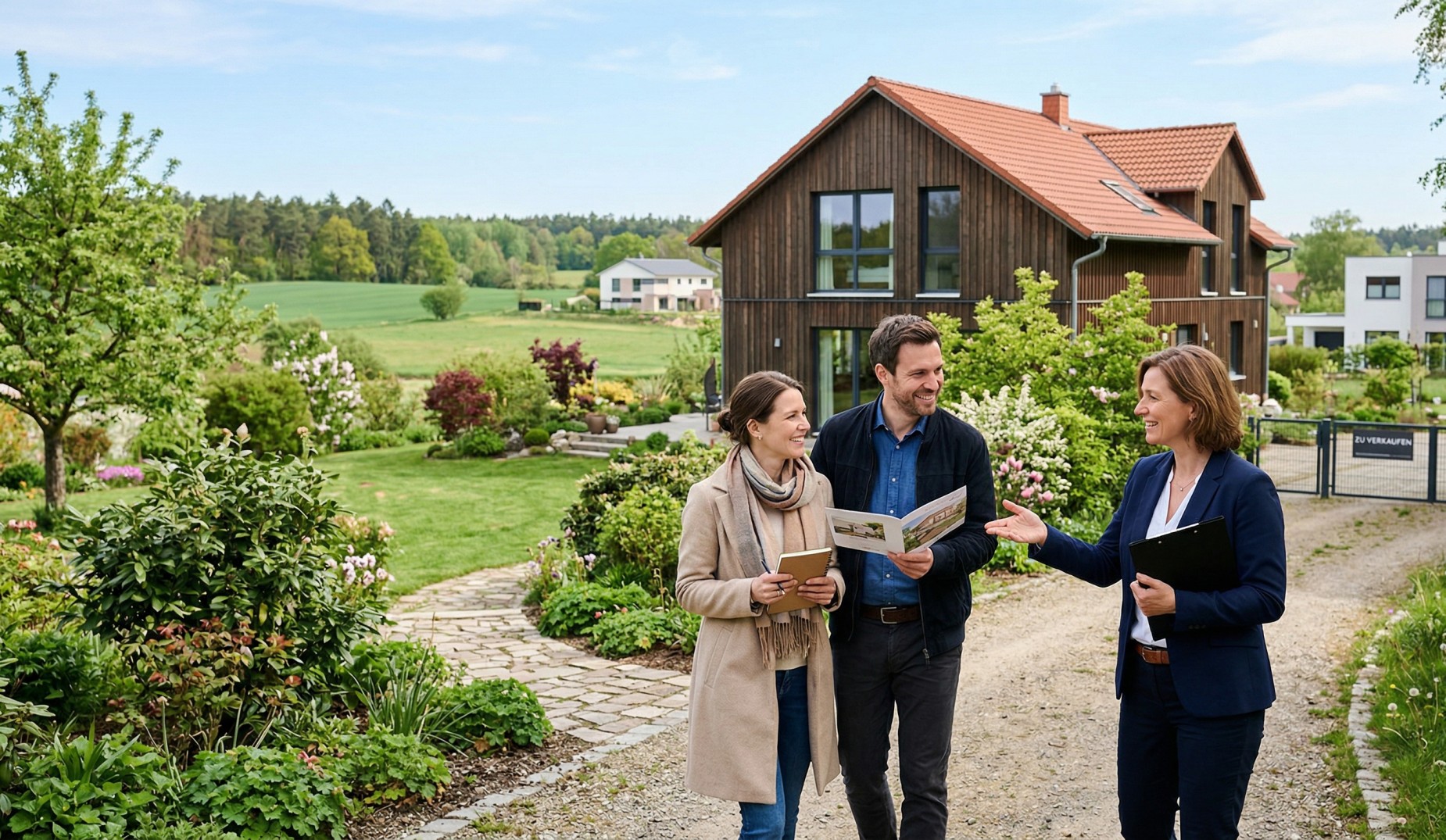
The area surrounding Berlin is becoming increasingly popular among house buyers. While houses in the capital have become unaffordable for many families, the surrounding municipalities offer attractive alternatives with more space, nature and often a better quality of life. At the same time, the connection to Berlin remains well assured thanks to a well-developed transport network.
Many families consciously decide to buy a house in the Berlin area in order to escape the hustle and bustle of the big city. The so-called ‘Speckgürtel’ in Brandenburg offers a mix of rural idyll and urban accessibility – this guide shows what buyers should look out for in 2026.
The most popular municipalities in the Berlin area
When buying a house in the Berlin area, there are various attractive municipalities to choose from. Each region has its own advantages and characteristic features that make it interesting for different groups of buyers.
Potsdam is considered the pearl of the Berlin area. Brandenburg's state capital impresses with historical charm, cultural offerings and excellent infrastructure. Its proximity to Berlin and high quality of life make Potsdam one of the most sought-after – and most expensive – locations.
Kleinmachnow, Teltow and Stahnsdorf make up the so-called Teltow region. These municipalities are particularly popular with families, as they combine a quiet residential atmosphere with good transport links. The S-Bahn from Teltow Stadt makes the daily commute convenient.
Bernau bei Berlin has become a real insider tip. The medieval old town with its town wall, good infrastructure and comparatively moderate prices are attracting more and more house buyers. Falkensee in the west, Oranienburg and Hohen Neuendorf in the north, as well as Erkner and Königs Wusterhausen in the south-east, are similarly sought after.
Prices and market trends for buying a house in the Berlin area
Prices for houses in the Berlin area vary considerably depending on location, condition and energy efficiency. While price per square metre in sought-after municipalities such as Potsdam or Kleinmachnow reach Berlin levels, significantly cheaper offers can still be found in more peripheral locations beyond the S-Bahn ring.
Guide prices for asking prices in 2026 (euros per square metre of living space):
- Potsdam: around 4,500 to 7,000 euros
- Kleinmachnow: around 4,500 to 6,500 euros
- Falkensee: around 3,500 to 5,000 euros
- Bernau: around 3,000 to 4,500 euros
- Oranienburg: around 2,800 to 4,000 euros
- Fürstenwalde: around 2,200 to 3,500 euros
Following the rise in interest rates from 2022, prices in the surrounding area initially fell and have stabilised again since 2024; in 2026 they are rising moderately in sought-after locations. Unrenovated houses with poor energy ratings are sold at significant discounts – it's worth calculating renovation costs precisely here. The trend towards working from home continues to boost demand for houses in the surrounding area.
Transport links and infrastructure
A decisive factor when buying a house in the Berlin area is the transport connection. Most attractive municipalities have a direct S-Bahn or regional train connection to Berlin.
Best rail connections:
- S1: Oranienburg, Birkenwerder, Hohen Neuendorf
- S2: Bernau, Zepernick
- S7: Potsdam, Babelsberg
- S25 and S26: Teltow Stadt
- S3: Erkner
- Regional train: Falkensee, Königs Wusterhausen, Fürstenwalde, Werder
Journey times to central Berlin are usually between 30 and 60 minutes. Many commuters appreciate the opportunity to use the journey time productively or to relax. At the same time, having your own car allows for flexible mobility within the region – and local public transport has also become cheaper thanks to the Deutschlandticket.
Infrastructure in most of the surrounding municipalities is well developed. Schools, nurseries, doctors and shopping facilities are generally available, albeit not always as densely as in a big city. Before buying, check the local nursery and school situation as well as fibre-optic availability.
Advantages of buying a house in the Berlin area
Buying a house in the Berlin area brings numerous advantages that make life outside the capital attractive. These aspects should be taken into account when making a decision.
More space for less money is the most obvious advantage. For the price of a larger flat in Berlin, buyers in the surrounding area often get an entire house with a garden. This allows for more living comfort and scope for the whole family.
Better air quality and more greenery characterise the surrounding area. Forests, lakes and fields are often within walking distance. This significantly improves quality of life and offers ideal conditions for families with children.
A quieter residential atmosphere without traffic noise and the hustle and bustle of the big city is appreciated by many residents. At the same time, Berlin's cultural and professional opportunities remain accessible thanks to good transport links.
Disadvantages and challenges
Despite all the advantages, buying a house in the Berlin area also brings some challenges. A realistic assessment of these aspects is important for making an informed purchasing decision.
Longer commuting times can become a strain in the long run. Delays and cancellations in local public transport have a greater impact than they would on short city journeys. Dependence on timetables limits flexibility.
Limited cultural offerings in smaller municipalities can be a disadvantage for people interested in culture. Theatres, museums and concerts are usually only available in Berlin or larger cities such as Potsdam.
Higher running costs due to longer commutes and potentially higher heating costs for detached houses should be factored into your calculations. Garden maintenance and upkeep also incur additional costs and effort – plan to set aside around one per cent of the purchase price annually for reserves.
The buying process: tips for a successful house search
A systematic approach is crucial when buying a house in the Berlin area. Good properties near the S-Bahn remain highly sought after, so buyers should be well prepared and seek professional support.
Sorting out financing early on is the first important step. A financing confirmation from the bank gives you an advantage in negotiations and shows sellers that you are a serious buyer. Additional purchase costs in Brandenburg amount to around 10 to 12 per cent of the purchase price, including 6.5 per cent property transfer tax, notary and land registry fees, and, where applicable, estate agent commission. Families with children should look into the KfW ‘Wohneigentum für Familien’ (home ownership for families) programme.
Professional estate agent support can make the search process considerably easier. Experienced estate agents in Berlin are also familiar with the surrounding market and often have access to properties that are not publicly listed. Our estate agent comparison for Berlin shows you how to find the right agent.
Planning viewings strategically saves time and energy. A pre-selection based on listings, energy certificates and online tours helps you to only view promising properties in person. For existing houses, it's worth hiring a surveyor to assess the building's condition and any renovation needs – find out more in our article on property valuation in Berlin.
Future prospects and investment potential
The Berlin area offers attractive long-term prospects. Various developments point to stable value growth in the coming years.
Demographic trends show an ongoing migration from Berlin to the surrounding area. Families are looking for more space and better living conditions for their children. This trend is expected to continue, keeping demand stable.
Infrastructure expansion in the region continues to improve the area's appeal. The expansion of railway lines as part of the i2030 project, new business settlements such as in Grünheide, and growing numbers of nurseries and schools are enhancing quality of life and, with it, property values.
Working from home has permanently reduced the importance of the daily commute. Many employees can work more flexibly and are less dependent on being close to their workplace. This significantly widens the radius of potential places to live.
Buying a house in the Berlin area represents an ideal solution for many people, combining quality of life with affordability. With the right preparation and professional advice, the dream of owning a house outside Berlin can be successfully realised. Those who prefer to stay in the city will find helpful guidance in our article on buying property in Berlin in 2026.
Frequently Asked Questions about buying a house in the Berlin area
Where can you still find an affordable house in the Berlin area?
In 2026, living is cheaper than in the inner Speckgürtel in places such as Fürstenwalde, Oranienburg, Strausberg or Nauen – usually with a regional train connection and a journey time of 40 to 60 minutes to central Berlin.
How high are the additional purchase costs in Brandenburg?
Property transfer tax is 6.5 per cent, plus around 1.5 to 2 per cent for notary and land registry fees, as well as up to 3.57 per cent estate agent commission. In total, you should budget for 10 to 12 per cent of the purchase price.
Which surrounding municipalities have the best connections to Berlin?
Potsdam, Teltow, Bernau, Oranienburg, Hohen Neuendorf and Erkner are directly on S-Bahn lines. Falkensee and Königs Wusterhausen can reach the main station by regional train in around 30 minutes.
Is it worth buying an unrenovated house in the surrounding area?
Often yes, if the price discount covers the renovation costs. Have the heating, roof, windows and insulation checked by a surveyor before buying, and factor in grant programmes for energy-efficient renovation.
Are there any grants available for families buying a house?
Yes, the KfW ‘Wohneigentum für Familien’ (home ownership for families) programme offers low-interest loans for households with children below certain income thresholds, but only for new builds or first-time purchases of energy-efficient houses. For purchases of existing properties, there is the ‘Jung kauft Alt’ (young people buy old) programme.
Also read: Estate agents in Berlin – the best agents for buying and renting as well as more articles on our Germany page.
Stefan Fischer