Deutschland
Student Housing Berlin 2026: Cheap Flats & Best Areas
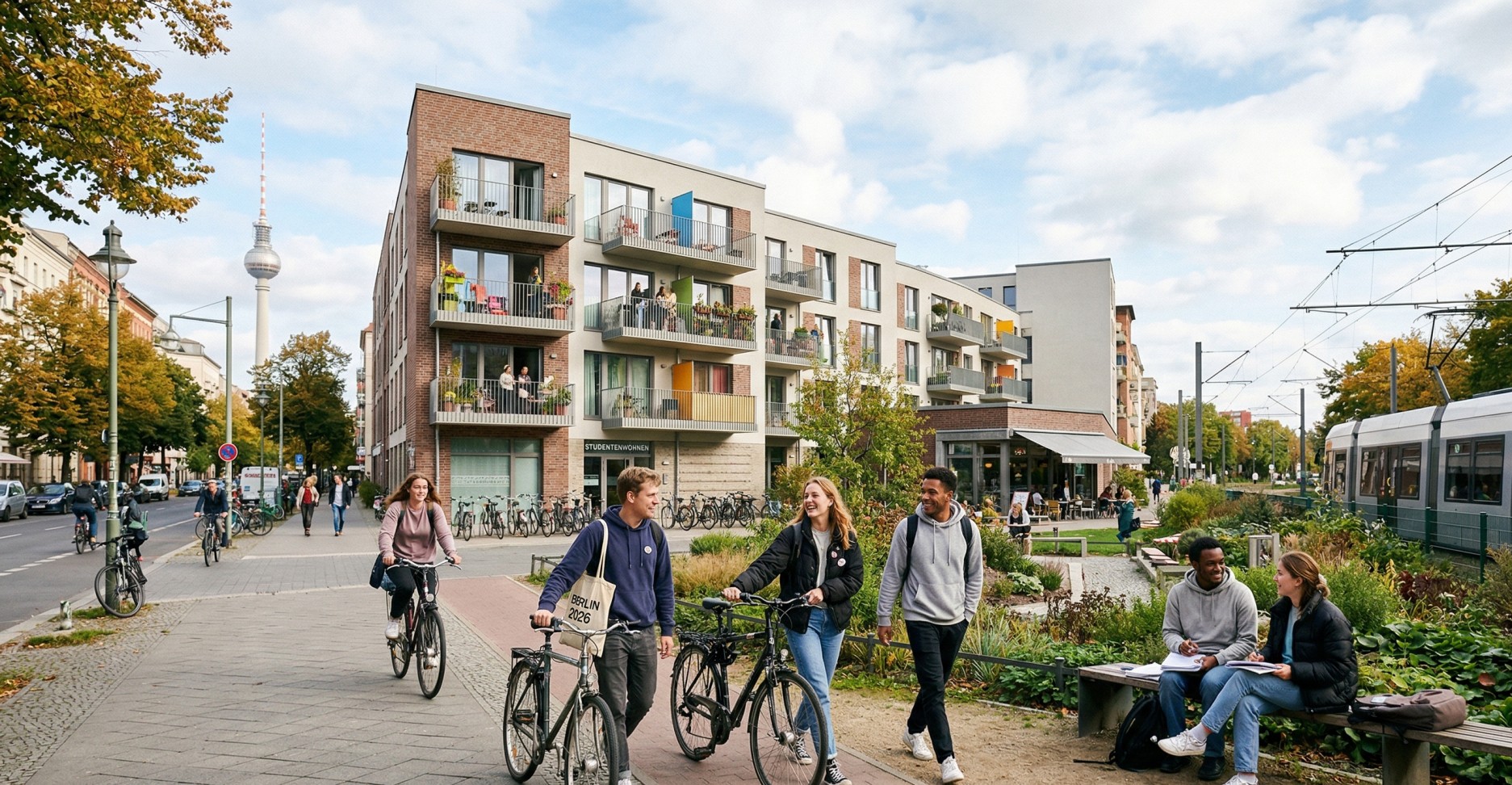
Berlin attracts thousands of students from all over the world every year. With around 200,000 students at more than 40 higher education institutions, the capital is Germany's largest university city. Yet finding somewhere to live is becoming increasingly difficult and expensive.
Rising rents and a shortage of housing present major challenges for students. While rents in Munich remain even higher, Berlin's asking rents have now caught up with Hamburg and Frankfurt. Even so, there are still affordable alternatives and clever strategies for the flat hunt.
For more on living in the capital, see our comprehensive guide Living in Berlin – rents, districts and finding a flat in 2026.
Current rental prices for student housing in Berlin
Rental prices for students in Berlin vary considerably depending on the district and type of accommodation. A room in a shared flat typically costs between €500 and €700 a month including bills for new lets – putting Berlin among Germany's pricier cities for shared housing. Small one-room flats usually range from €600 to €1,000.
In popular districts such as Mitte, Prenzlauer Berg, Kreuzberg or Friedrichshain, students should expect to pay more. Here, rooms in shared flats often cost €600 to €800, while single flats can quickly reach €900 to €1,200.
Cheaper alternatives can be found in the outer districts. In Spandau, Marzahn-Hellersdorf, Reinickendorf or Lichtenberg, rooms in shared flats can be found from as little as €400 to €500. Longer commutes to university should be factored in, though.
Best districts for student housing in Berlin
Friedrichshain-Kreuzberg
Friedrichshain and Kreuzberg are absolute student strongholds. The lively nightlife, numerous cafés and central location make these districts particularly attractive. Their proximity to several universities is another plus point.
However, rents are correspondingly high. Rooms in shared flats here usually cost between €550 and €750. In return, students benefit from short distances and an authentic Berlin lifestyle.
Neukölln
Neukölln has developed into a popular student district in recent years. The northern parts around Hermannplatz and Schönleinstraße in particular offer slightly cheaper rents than neighbouring districts, while still enjoying good transport links.
Rents here are around €50 to €100 lower than in Friedrichshain. At the same time, a lively cultural and nightlife scene is developing. Many international students appreciate the district's diversity.
Wedding and Moabit
Wedding and Moabit are still considered insider tips for budget-conscious student living in Berlin. Rents are cheaper than in the trendier districts, while transport links remain good.
Wedding in particular is currently experiencing a boom, with new cafés and cultural venues. Rooms in shared flats are often available from as little as €450 to €550. The proximity to Humboldt University, the Charité and the Beuth or Berlin University of Applied Sciences is an added advantage.
Lichtenberg and Adlershof
Anyone studying at the HTW in Oberschöneweide or on Humboldt University's Adlershof campus will find cheaper accommodation near the university in Lichtenberg, Köpenick and Adlershof – often in refurbished prefab blocks or new student housing developments.
Types of accommodation for students in Berlin
Shared flat rooms – the classic choice
Shared flats remain the most popular form of accommodation for students. They offer not only cheaper rents but also social connections. Most shared flats have two to four residents and share a kitchen and bathroom. You can find all the details on searching for a shared flat in our guide to shared flats in Berlin.
When looking for a shared flat, students should pay attention to the atmosphere and shared interests. Purely practical shared flats tend to be less complicated, while shared flats built around joint activities offer more of a sense of community.
Student halls of residence
Berlin has numerous halls of residence with around 25,000 places in total – not a great deal given 200,000 students. Rents through the Studierendenwerk are usually between €300 and €500 for a single room. However, waiting lists are often long, so it's worth applying as early as possible.
Largest providers of student halls of residence:
- Studierendenwerk Berlin (around 9,500 places across more than 30 residential complexes)
- Church and charitable organisations such as Evangelisches Studienwerk or Katholische Hochschulgemeinde
- International student houses and foundations
- Private providers such as THE FIZZ, Milestone or Cube Life with furnished flats
- New halls of residence projects run by state-owned housing associations
Small flats
One-room flats offer maximum privacy but are correspondingly more expensive. Micro-flats of 20 to 30 square metres are marketed specifically at students, but often cost €700 to €1,000 – usually furnished and including bills.
More and more student housing developments are springing up near universities. These often offer additional facilities such as gyms, study areas or communal rooms.
Tips for a successful flat hunt
Making use of online platforms
Most students start their search online. WG-Gesucht.de is the main platform for shared-flat rooms. Studenten-WG.de, Housing Anywhere and Uniplaces specialise in student and international housing.
For single flats, ImmoScout24 and Immowelt are relevant. Facebook groups such as ‘WG Zimmer Berlin’ or ‘Wohnung Berlin’, as well as Telegram groups, offer additional options – though you should be wary of scam offers requiring upfront payment.
Preparing your application documents
A complete application folder significantly improves your chances. This should include your ID card, certificate of enrolment, proof of income or a guarantee from your parents, and a tenant self-disclosure form.
A personal covering letter can make all the difference. Students should describe their hobbies, course of study and expectations for shared living.
Making the most of viewings
Viewing checklist:
- Arrive on time and present yourself well
- Ask about house rules and service charges
- Check the condition of the kitchen, bathroom and communal areas
- Test the internet speed and mobile signal
- Check transport links to the university
- Check nearby shopping options
Financing student accommodation
BAföG and housing benefit
Students eligible for BAföG receive a housing cost allowance, which has stood at €380 a month since the winter semester 2024/25. Those who don't receive BAföG may, under certain circumstances, be able to apply for housing benefit (Wohngeld) – since the housing benefit reform, significantly more households are now eligible.
Combining different sources of funding is often necessary. Many students work part-time or receive support from their parents.
Money-saving tips for students
Bills can be reduced through mindful habits. Saving energy, choosing affordable internet contracts and shopping together in a shared flat all help cut monthly expenses.
The Deutschlandsemesterticket, which is included in the semester fee at Berlin's universities, covers the whole of local and regional public transport in Germany – meaning students don't need a car in Berlin.
Legal aspects of student housing in Berlin
Understanding tenancy agreements properly
There are various types of contract for rooms in shared flats. Main tenancy agreements offer more rights but also mean more responsibility. Sub-letting agreements are simpler but offer less protection. For furnished rooms, you should check whether the furniture surcharge is reasonable.
Students should watch out for hidden costs. Payments for furniture, excessive deposits and renovation clauses can significantly increase costs.
Deposit and service charges
The rental deposit may not exceed three months' net cold rent. For rooms in shared flats, one to two months' rent is common. The money must be held separately by the landlord and may be paid in three instalments.
Service charges should be clearly itemised. For rooms in shared flats, flat-rate rents including bills and internet are common – which makes budgeting easier.
Future outlook for student housing in Berlin
New housing projects
Berlin is planning to build further student halls of residence. Several thousand new places are expected to be created by 2030, including through the Studierendenwerk and state-owned housing associations. Private investors are increasingly developing student housing complexes with modern facilities.
Digitalisation is also changing the flat hunt. Virtual viewings and online contract signing are becoming more common – especially for international students searching from abroad.
Rental price trends
Experts expect rents to keep rising, though at a more moderate pace. The rent cap, extended until 2029, along with new regulations, is intended to prevent extreme increases.
Students should start looking for accommodation early. The best offers are often taken months before the semester begins – and competition is fiercest in September and October.
Student housing in Berlin remains challenging, but with the right strategy and timely planning, students can still find affordable flats in the capital. The city's diversity and lively student life make the effort of flat-hunting worthwhile. For areas where living costs are generally lower, see our article on Berlin's cheapest districts.
Frequently Asked Questions about student housing in Berlin
How much does a room in a shared flat cost in Berlin?
For new lets, rooms in shared flats usually cost between €500 and €700 a month including bills, more in trendy districts, and from around €400 in the outer districts.
How do I get a place in a student hall of residence?
Apply to Studierendenwerk Berlin as soon as you have your university offer – the earlier, the better. Listing several preferred halls of residence improves your chances. It's also worth applying to church and private providers.
Which districts are the cheapest for students?
Wedding, Moabit, Lichtenberg, Marzahn-Hellersdorf, Reinickendorf and Spandau offer the cheapest rents, usually with good transport links.
How much housing benefit or BAföG is available for housing costs?
The BAföG housing cost allowance is €380 a month. Students without BAföG entitlement may be able to apply for housing benefit under certain conditions.
When should I start looking for accommodation?
At least three to four months before the semester starts. For halls of residence places, the rule is: apply immediately after receiving your offer.
Discover more: You'll find further city guides on our Germany page.
Also read: Living in Berlin – rents, districts and finding a flat in 2026
Jonas Schneider