Deutschland
From Pharmacy to Online Consultation: Healthcare in German Cities
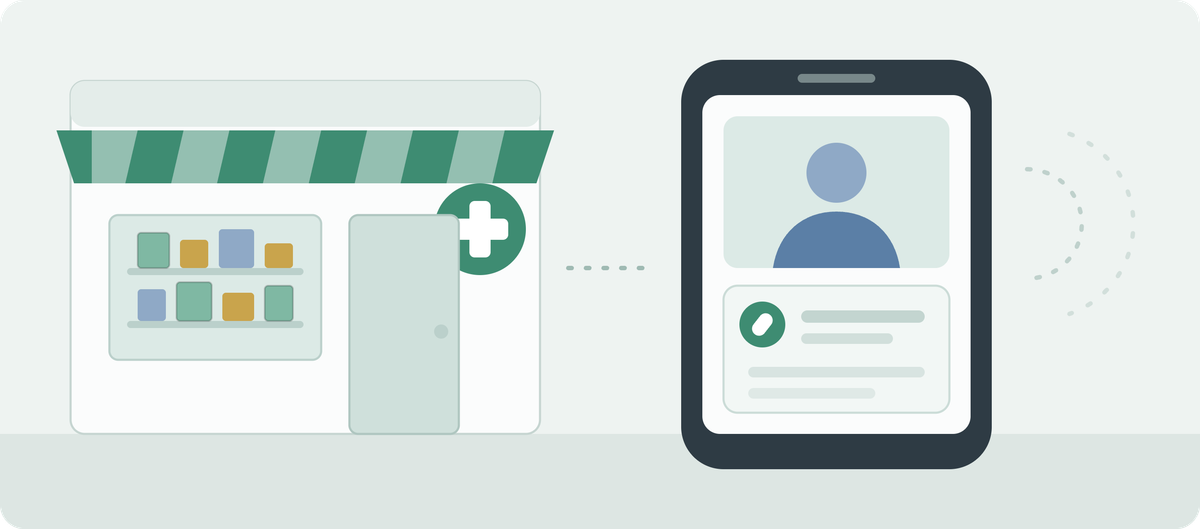
For decades, the pharmacy on the corner was taken for granted. It was the place to go for the prescription from the family doctor, for advice on a cold and for the question of whether two medicines can be taken together. For many people, it was also the lowest-threshold contact with the healthcare system of all: no appointment, no waiting room, no registration.
This role is changing right now – not because demand is falling, but because the routes people use to meet it are shifting.
The Local Pharmacy: Figures on an Institution in Upheaval
At the end of March 2026, there were still 16,541 pharmacies nationwide – 60 fewer than at the turn of the year. In this period, 19 openings were offset by 79 closures. This puts the number of pharmacies at its lowest level in almost 50 years.
What is remarkable here is what the decline is not: a demand problem. In 2025 alone, pharmacies recorded around a billion patient contacts.
The chairman of the German Pharmacists' Association, Hans-Peter Hubmann, assesses the situation like this: supply is still secure, but it cannot go on like this for long. Every closed pharmacy means longer journeys for thousands of patients. He names the cause not as individual wrong decisions or tougher competition, but as chronic underfunding.
Specifically, this concerns the fixed fee of 8.35 euros per pack, which has remained unchanged since 2013. The industry is calling for an increase to 9.50 euros.
In a European comparison, Germany is not well off: there are about 20 pharmacies per 100,000 inhabitants here, compared with 31 on average in the EU.
For cities, this means little noticeable change for the time being – the distances remain short. In rural areas and on the periphery, the picture is different.
Why More and More People Look Online First
Alongside the shrinking network, patients' behaviour has changed. Three reasons are driving the development.
Time Pressure and Opening Hours
Anyone who works from eight to six on weekdays has practically only the lunch break for a doctor's visit and a trip to the pharmacy. Digital services are not tied to opening hours – this is the advantage that users name most often.
Waiting Times for Specialist Appointments
For many, the waiting time for an appointment is the real bottleneck. For concerns that do not require a physical examination, the prospect of waiting weeks seems increasingly disproportionate.
Discretion on Sensitive Topics
The third reason is rarely named openly, but it is effective. There are complaints that many people do not want to discuss at the pharmacy counter while a queue stands behind them. Erectile dysfunction is one of them, as are hair loss and weight problems.
Health services research has long shown that some of those affected do not seek any treatment at all for such issues – not because of a lack of suffering, but out of shame. For this group, digital access changes the threshold considerably.
What Digital Services Add
The E-Prescription as Infrastructure
Since 1 January 2024, the e-prescription has been mandatory for prescription-only medicines in statutory health insurance. By April 2026, around 1.3 billion digital prescriptions had been redeemed.
This is the real foundation of the change: without a digital prescription, a fully digital treatment chain would not be possible at all.
Telemedicine
Remote treatment is now regularly permitted in Germany. Under certain conditions, doctors may treat and prescribe exclusively via communication media. It is used mainly for repeat prescriptions, clearly defined conditions and follow-up checks.
Alongside the video consultations offered by a doctor's own practice, platforms have become established that map the entire path digitally, from medical history through medical assessment to prescription. Providers such as apomeds.com/de work with questionnaires that are reviewed by licensed doctors; in a suitable case a prescription follows, otherwise a recommendation to be seen in person.
What Digital Services Cannot Do
This limitation is part of putting things in context. A remote diagnosis does not replace a physical examination. Where something has to be palpated, listened to or looked into the ear, the scope for remote treatment ends. Even with unclear complaints where the diagnosis itself is open, the way leads to the practice.
Reputable providers mark this limit and reject enquiries they cannot assess with confidence. This is a useful quality indicator: a platform that prescribes everything deserves less trust than one that turns cases away.
When Which Route Is the Right One
The question is less "digital or in person" than "what suits this concern".
Situation | Suitable route |
|---|---|
Acute complaints with unclear cause | Local doctor's practice |
Fever, pain, injuries | Practice or emergency service |
Advice on interactions | Local pharmacy |
Medicine needed immediately | Local pharmacy |
Questions about use and dosage | Local pharmacy |
Repeat prescription with known diagnosis | Digital possible |
Recurring treatment, stably managed | Digital possible |
Sensitive topics, first contact | Digital possible |
Vaccination advice, blood pressure measurement, medication analysis | Local pharmacy |
The right-hand column makes clear what is often overlooked: the local pharmacy has tasks that simply cannot be replicated digitally. Pharmaceutical advice on multiple medications, a look at interactions, the assessment of whether a symptom calls for self-medication or a visit to the practice – no questionnaire can do that.
Conversely, it makes little sense to take a morning off work for a repeat prescription for a treatment that has been stable for years.
What to Look Out for with Digital Services
Anyone using an online service should check a few points:
Licensed doctors, ideally stating in which country they are licensed
Legal notice and a physical address for service – a minimum standard for health services
Transparent handling of health data, which is particularly protected under the GDPR
Recognisable limits: Does it point out cases that cannot be treated digitally?
Mail-order pharmacy with German or EU authorisation, verifiable via the DIMDI mail-order register
Transparent costs, broken down by medical service and medicine
One point that is often missing: for privately billed services, the statutory health insurance generally covers nothing. This should be clear before use.
Conclusion: Healthcare Is Becoming Hybrid, Not Digital
The obvious narrative – the dying pharmacy here, the rising platform there – does not match reality. What is actually happening is a division by occasion.
For everything that requires examination, immediate advice or immediate dispensing, on-site care remains irreplaceable. A billion patient contacts a year are not a dying model. For plannable, recurring and sensitive concerns, a second route is emerging alongside, lowering barriers to access – above all for people who have not sought any treatment at all so far.
The real question of the coming years is therefore not which route wins, but whether both routes can be connected so that patients do not have to switch between two separate systems. The e-prescription has shown that a shared infrastructure can work.
Pharmacies in your city with opening hours, emergency service and reviews can be found in the Die Besten der Stadt directory.

Max Schmidt
Lokaler Experte