Garbsen
Urban Development in Garbsen: New Projects and Districts 2026

Garbsen, the largest town in the Hannover region without a designated urban centre of its own, is undergoing a remarkable transformation in the summer of 2026. Several major projects are changing the face of the town and creating new living spaces for its growing population. Here's an overview of the most important schemes.
The most prominent project is undoubtedly the development of the new urban quarter ‘Grüne Mitte’ on the site of the former goods station in Garbsen-Mitte. Spanning 15 hectares, this urban mixed-use area will feature 600 residential units, a new primary school, a nursery and a local shopping centre. Particularly innovative is the fact that the entire quarter is being built according to the sponge city principle, with green roofs, permeable surfaces and a central rainwater reservoir that also provides cooling during hot summers. The first flats are scheduled to be ready for occupation in autumn 2026.
At the same time, the revitalisation of the Garbsener Schweiz, a local recreation area in the north of the town, is underway. The former quarry with its small lake has been renaturalised in recent years and will receive new paths, viewing platforms and a nature discovery trail for children in summer 2026. The project, which is co-financed with EU funding, is intended to noticeably improve quality of life in the densely populated north of Garbsen while also contributing to species conservation – rare amphibian species have already adopted the lake as a spawning ground.
There's economic progress too: a centre for sustainable packaging technology is setting up in the Berenbostel commercial area, expected to create around 200 jobs by the end of 2026. The first construction phase, comprising research and development laboratories, has already been completed. The new arrival is seen as an important boost for Garbsen as a technology location and could trigger further investment.
Another, somewhat quieter project is the redesign of the Planetencenter shopping centre. Rather than focusing purely on retail space, the new owner is opting for a mix of shops, restaurants, co-working spaces and public communal areas. The opening of the first redesigned sections is planned for late summer 2026 and is intended to significantly improve the quality of the public realm in the Auf der Horst district.
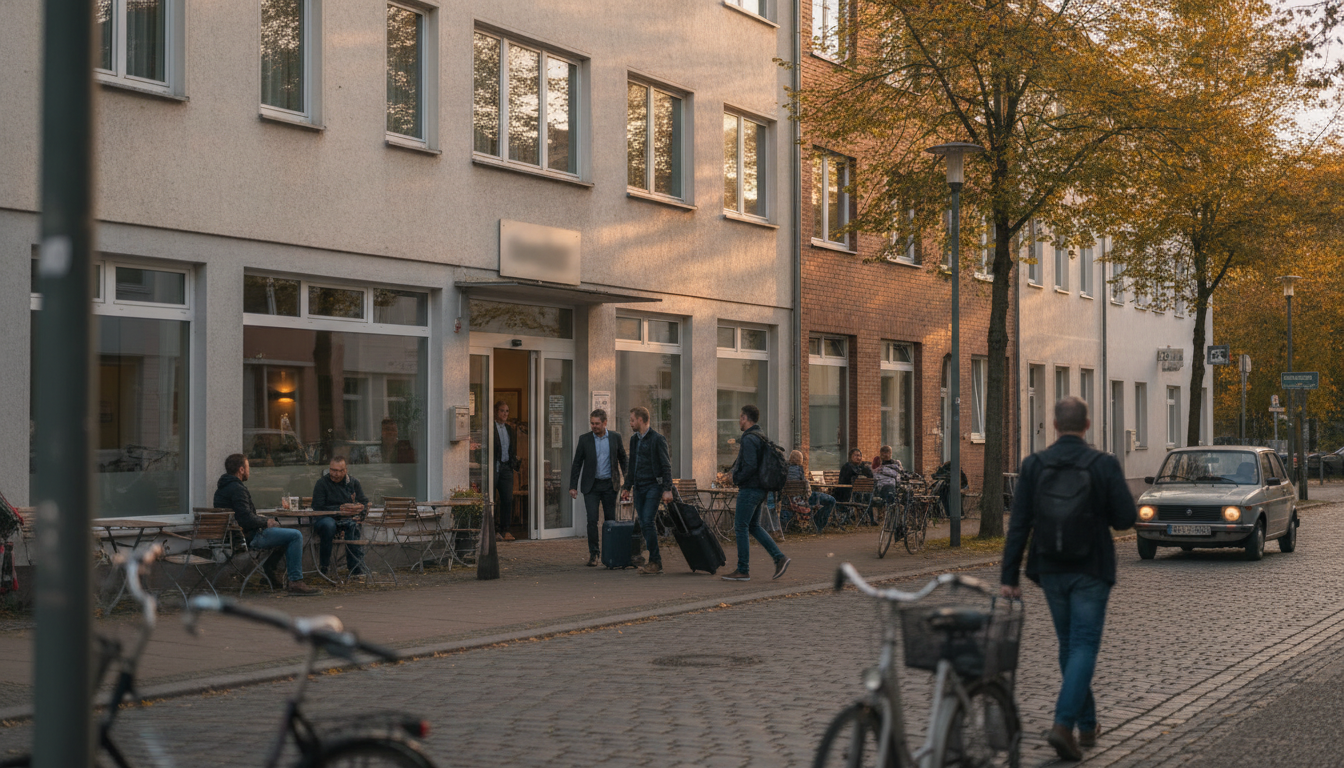
One key focus of Garbsen's development is the town centre: around the town hall and shopping centre, the functional centre is to become a genuine meeting place – with upgraded squares, more greenery, restaurants and cafés, and short distances between living, shopping and leisure. The town is deliberately focusing on public participation: residents are involved in workshop procedures before planning permission is granted, and temporary uses bring vacant spaces to life until the diggers move in.
One asset Garbsen can genuinely boast about is the Mechanical Engineering Campus of Leibniz Universität Hannover: since the faculty relocated to the edge of town, an innovation environment has developed there that attracts research institutions, start-ups and manufacturing businesses. For urban development, this means rising demand for housing for students and employees – and the opportunity to link science and town life more closely than before.
Mobility is also shaping the plans: the light rail line connects Garbsen directly with Hannover's city centre, and stop areas along the route are to be made denser and more attractive. At the same time, the town is investing in cycle paths and secure parking facilities so that short journeys can increasingly be made without a car. Anyone driving through the districts today will already see new cycle streets and redesigned junctions.
When it comes to housebuilding, Garbsen is pursuing a dual strategy: densification of existing areas where infrastructure is already in place, and careful expansion at the edges, where new districts with their own character can emerge. A fixed proportion of subsidised housing now applies, so that households with middle and lower incomes also have a chance on the market. Multigenerational projects and cooperative housing models complement the conventional offering.
Last but not least, green spaces play a major role: with the Stadtpark, the Blauer See and the landscape areas along the Leine, Garbsen has recreational areas that many larger cities would envy. The planning aims to preserve these qualities and connect them better – through green walking and cycling routes, tree planting along streets, and rainwater management that buffers heavy rainfall and improves the urban climate.
For residents and the curious alike: this transformation is not some abstract topic for the future, but is already visible in many places. Anyone wanting to follow developments can do so at public council meetings, information events and neighbourhood walks. Garbsen 2026 is thus a good example of how a second-tier town can make the most of its position in the metropolitan region – not as a dormitory town, but as an independent location with growing self-confidence.
The outlook for commercial areas also remains exciting: along the motorway connection, the town continues to develop sites for trades, logistics and technology companies, with new businesses increasingly having to demonstrate land efficiency and energy standards. Rooftop solar panels, green roofs and rainwater retention are now standard features of development plans.
So what does all this mean in concrete terms for the coming years? In the short term, it's mainly the building sites that will be visible – with everything that entails. In the medium term, however, a Garbsen is emerging that is denser, greener and more urban than in the past: a town that benefits from the region's growth without sacrificing its recreational qualities. Anyone following developments today will later be able to say they experienced the change from the very beginning – and helped shape it, since the town's participation formats are open to everyone.
Incidentally, this transformation is already worth seeing today: a walk from the town hall via the Stadtpark to the campus shows, over just a few kilometres, how existing districts, new development sites and the science location fit together. Anyone walking this route at the weekend will also experience just how intensively the people of Garbsen use their green spaces – the best argument for protecting them consistently, whatever growth may come.
Die Besten der Stadt