Soest
Vintage and Second-Hand in Soest: Tips for Browsing
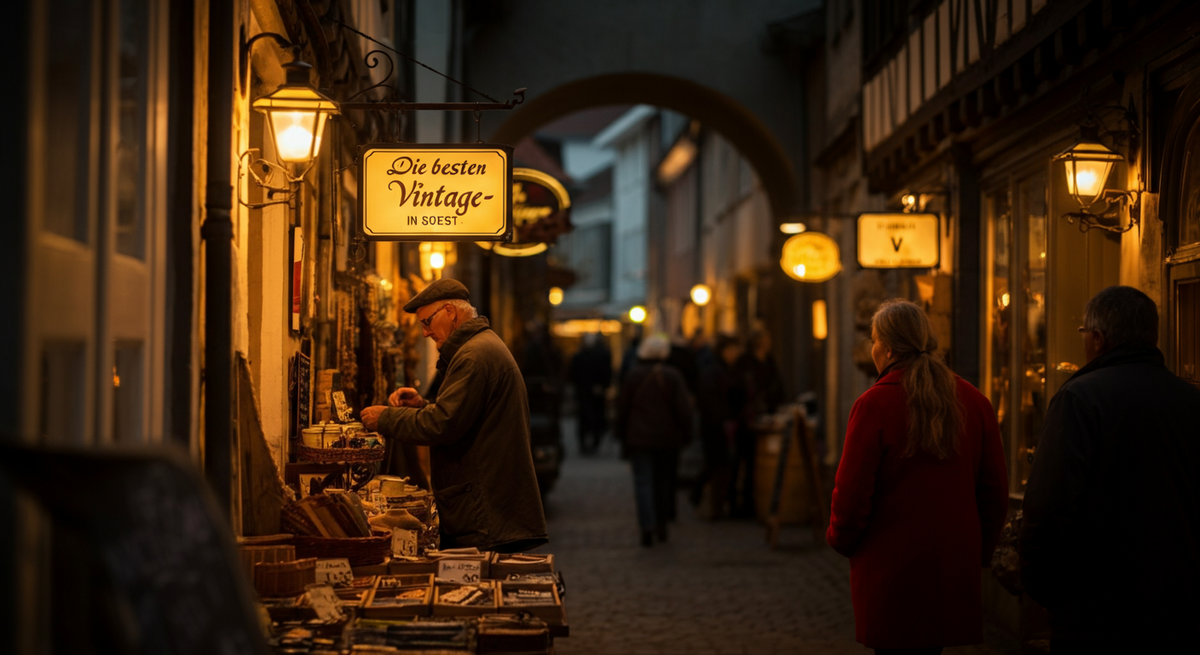
The Hanseatic city of Soest is known for its historic old town. If you enjoy strolling here, you can combine your walk with a search for something special: clothing from past decades, home accessories, books or records. In this guide you will learn what to look out for when browsing for vintage and second-hand pieces and how to plan your stroll well.
Vintage or Second-Hand?
The terms are often mixed up, but they do not mean the same thing:
- Vintage: Clothing or items that are usually at least 20 years old and carry the typical style of an era.
- Second-hand: All kinds of pre-owned goods, including more recent ones. The selection is usually larger and cheaper.
Many shops combine both. If you want to develop a feel for different styles first, you should visit several shops and compare.
💡 Tip: It is best to visit smaller shops on a weekday. It is quieter then, and you will have more time for questions.
A Stroll Through the Old Town
Soest's old town is compact and easy to explore on foot. Between half-timbered houses and churches there are small shops that you often stumble upon only by chance. So allow some time, look into the side streets and combine your browsing with a break in a café. A walk along the ramparts also makes a good finish.
What to Look Out for When Buying
With Clothing
- Try it on: Vintage sizes often come up differently from today's standard sizes.
- Check the condition: Look at the seams, zips, buttons, stains and the state of the fabric.
- Look at the labels: Original labels and manufacturer marks help with dating a piece.
- Ask about care instructions: Older fabrics often need gentle treatment.
With Furniture and Home Accessories
- Check the stability and the condition of the surfaces.
- Ask about its origin if that matters to you.
- Measure beforehand so that the piece will fit in your home later.
Genuine or Imitation?
Not everything that looks like it comes from the past is actually old. Reproductions in a retro look are widespread. Pointers to genuine vintage pieces are the workmanship, the quality of the materials and features typical of the period. If in doubt, ask in the shop; reputable dealers are happy to explain age and origin.
Prices and Haggling
Each shop sets its own prices. They depend on age, condition, brand and rarity. Everyday pieces are often cheaper than new items, while sought-after designer pieces can cost more. Whether a price is negotiable is up to each shop. Asking politely does no harm, especially if you are buying several items.
💡 Tip: Ask whether a shop also buys clothing. Each shop decides that for itself.
Shopping Sustainably
Pre-owned clothing and furniture extend the lifespan of products and reduce waste. This is a good alternative to fast-changing fashion. With a handful of well-preserved basics such as blazers, jackets or skirts, vintage pieces are easy to combine with modern clothing.
Caring for Your Finds
- Follow any existing care instructions.
- For delicate fabrics, choose a low-temperature hand wash or professional cleaning.
- Air-dry delicate pieces rather than using a tumble dryer.
- Store clothing in breathable garment bags, protected from direct sunlight.
📍 Discover more: Explore more recommendations for Soest on our city page.
Conclusion
Soest is well suited to a relaxed stroll with an eye for something special. Take your time, try things on, compare several shops and check the opening hours in advance.
Frequently Asked Questions
How can I recognise genuine vintage pieces?
Look at the labels, workmanship and material. Reputable dealers can usually explain age and origin.
Are vintage pieces more expensive than new items?
That depends on the piece. Rare designer items can cost more, while everyday clothing is often cheaper.
Can I also sell in the shops?
Each shop decides that for itself. It is best to ask directly about the terms.
When are the shops open?
Each shop sets its own hours. Check them in advance, especially for Mondays and Sundays.

Tobias Reinhardt
Tobias stammt aus einer Handwerkerfamilie und weiß, worauf es bei einem guten Betrieb ankommt. Er schreibt über Tischler, Elektriker, Dachdecker und alle, die mit den Händen arbeiten. Besonders am Herzen liegen ihm kleine Familienbetriebe, die seit Generationen bestehen.