Deutschland
Berlin Wall – Discover Its History and Landmarks
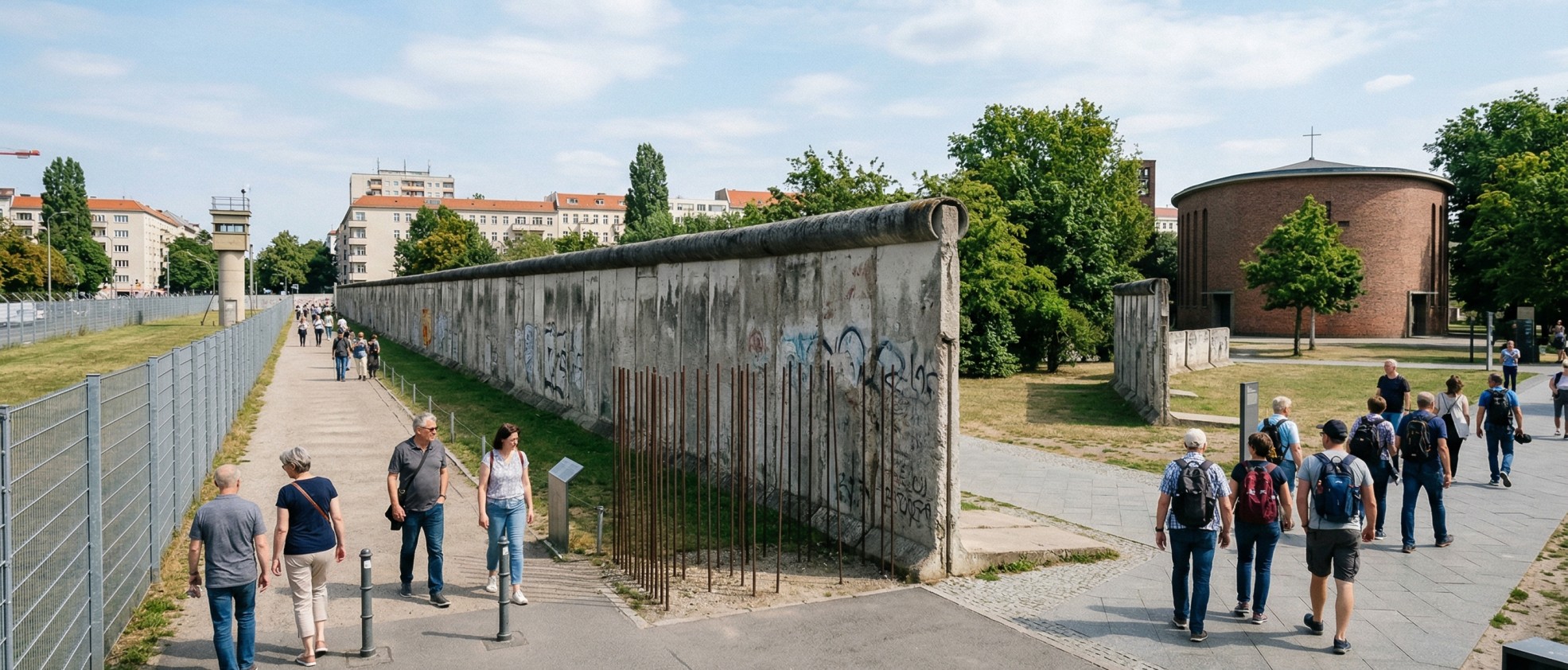
The Berlin Wall is one of the most significant Sehenswürdigkeiten Berlin and an essential part of any trip to Berlin. As a symbol of German division and the Cold War, it tells one of the most important stories of the 20th century.
Today, visitors can experience the history of the Wall up close at various locations across Berlin. From the famous East Side Gallery to moving memorial sites, the Berlin Wall offers unique insights into German history.
You'll find more historical Sehenswürdigkeiten Berlin – The Complete Travel Guide 2026 in our comprehensive guide.
History of the Berlin Wall: From 1961 to 1989
The Berlin Wall was erected on the night of 12 to 13 August 1961. The East German leadership wanted to stop the mass exodus of its citizens to the West. Overnight, a wall of barbed wire, and later concrete, divided a city and its people.
For 28 years, the Wall separated East and West Berlin. Families were torn apart, friendships destroyed and couples separated. The Wall became a symbol of the Cold War and the division of Germany.
On 9 November 1989, the Berlin Wall finally fell. Thousands of people flocked to the border crossings to celebrate the end of the division. This day marked the beginning of German reunification.
East Side Gallery: The world's longest wall museum
At 1.3 kilometres, the East Side Gallery is the longest surviving section of the Berlin Wall. After the Wall fell, 118 artists from 21 countries decorated the eastern side of the Wall with impressive artworks.
The most famous piece is the ‘Fraternal Kiss’ between Leonid Brezhnev and Erich Honecker by Dmitri Vrubel. Other well-known works include Birgit Kinder's ‘Trabi’ and Thierry Noir's colourful heads.
The East Side Gallery is located between Ostbahnhof and Oberbaumbrücke in Friedrichshain. Admission is free and the gallery is accessible around the clock.
Visitor tips for the East Side Gallery:
- Best time to visit: early morning or late afternoon
- Getting there: S-Bahn Warschauer Straße or Ostbahnhof
- Duration: 1–2 hours for the full walk
- Photography: allowed, but please treat the memorial with respect
Berlin Wall Memorial: Experience authentic history
The Berlin Wall Memorial on Bernauer Straße is the central site of remembrance for the German division. Here, visitors can experience the last surviving section of the Berlin Wall in its original depth and extent.
The visitor centre offers a comprehensive exhibition on the history of the Wall. Interactive stations, eyewitness accounts and historical documents paint a vivid picture of the years of division.
A 60-metre-high observation tower offers views over the former border area. From here, visitors can grasp the scale of the border fortifications and the death strip.
Checkpoint Charlie: The most famous border crossing
Checkpoint Charlie was the best-known border crossing between East and West Berlin. Here, American and Soviet soldiers controlled traffic between the two halves of the city.
Today, a replica of the original control hut stands on Friedrichstraße. The Wall Museum at Checkpoint Charlie documents the history of the division and spectacular escape attempts.
Although the site is very touristy, Checkpoint Charlie remains one of Berlin's most important historical landmarks. The atmosphere still conveys a sense of the tension of the Cold War.
Key information about Checkpoint Charlie:
- Location: Friedrichstraße/Zimmerstraße (Mitte)
- Museum opening hours: daily 9am–10pm
- Museum admission: adults €14.50
- Getting there: U-Bahn Kochstraße or Stadtmitte
Potsdamer Platz: From death strip to city centre
Before the war, Potsdamer Platz was one of the busiest squares in Europe. After 1961, the Berlin Wall ran through here and the square became a no-man's-land.
Today, Potsdamer Platz is once again a vibrant city centre with skyscrapers, shops and restaurants. Remnants of the Wall and information boards recall the years of division.
The Sony Center and the Kollhoff Tower showcase modern architecture, while the Deutsche Kinemathek museum documents film history. A visit combines history with the present day.
Mauerpark: Where history meets culture
Mauerpark in Prenzlauer Berg was created on a former border strip. Today, it's a popular meeting point for locals and tourists alike.
Every Sunday, a large flea market takes place here. The famous karaoke show at the amphitheatre draws hundreds of spectators. Graffiti artists legally decorate the surviving wall segments.
The park shows how Berlin has developed since reunification. What was once a symbol of division has become a place of encounter and creativity.
Other significant Wall sites in Berlin
Berlin offers numerous other locations where visitors can experience the history of the Wall. These sites perfectly complement the well-known attractions.
Important Wall memorial sites:
- Tränenpalast at Friedrichstraße station
- Invalidenfriedhof with remnants of the Wall
- Glienicker Brücke (the ‘Bridge of Spies’)
- Marienfelde: emergency reception camp for East German refugees
- Hohenschönhausen: former Stasi remand prison
- Topographie des Terrors
Each of these sites tells a different facet of Germany's history of division. Together, they form a complete picture of the Berlin Wall and its significance.
Practical tips for your Wall tour
Visiting the Berlin Wall sites requires good planning. The most important locations are spread across the whole city and have different opening hours.
Recommended visiting route:
- Start: Bernauer Straße Memorial (2–3 hours)
- Checkpoint Charlie and the Wall Museum (1–2 hours)
- Potsdamer Platz and Wall remnants (1 hour)
- East Side Gallery (1–2 hours)
- Optional: Mauerpark (depending on the day of the week)
Getting there and transport:
- Berlin ticket for public transport
- Bicycle hire for flexible exploring
- Guided tours for detailed information
- Audio guides in various languages
Plan at least a full day for the most important Wall attractions. Many sites offer free information, while museums charge admission.
The Berlin Wall is more than just a historical landmark – it's a symbol of freedom and overcoming division. A visit offers important lessons on German history and European unity.
Also read: Sehenswürdigkeiten Berlin – The Complete Travel Guide 2026
Florian Lange