Deutschland
The 10 Best Cities for Families in Germany 2024
The 10 Best Cities for Families in Germany 2024
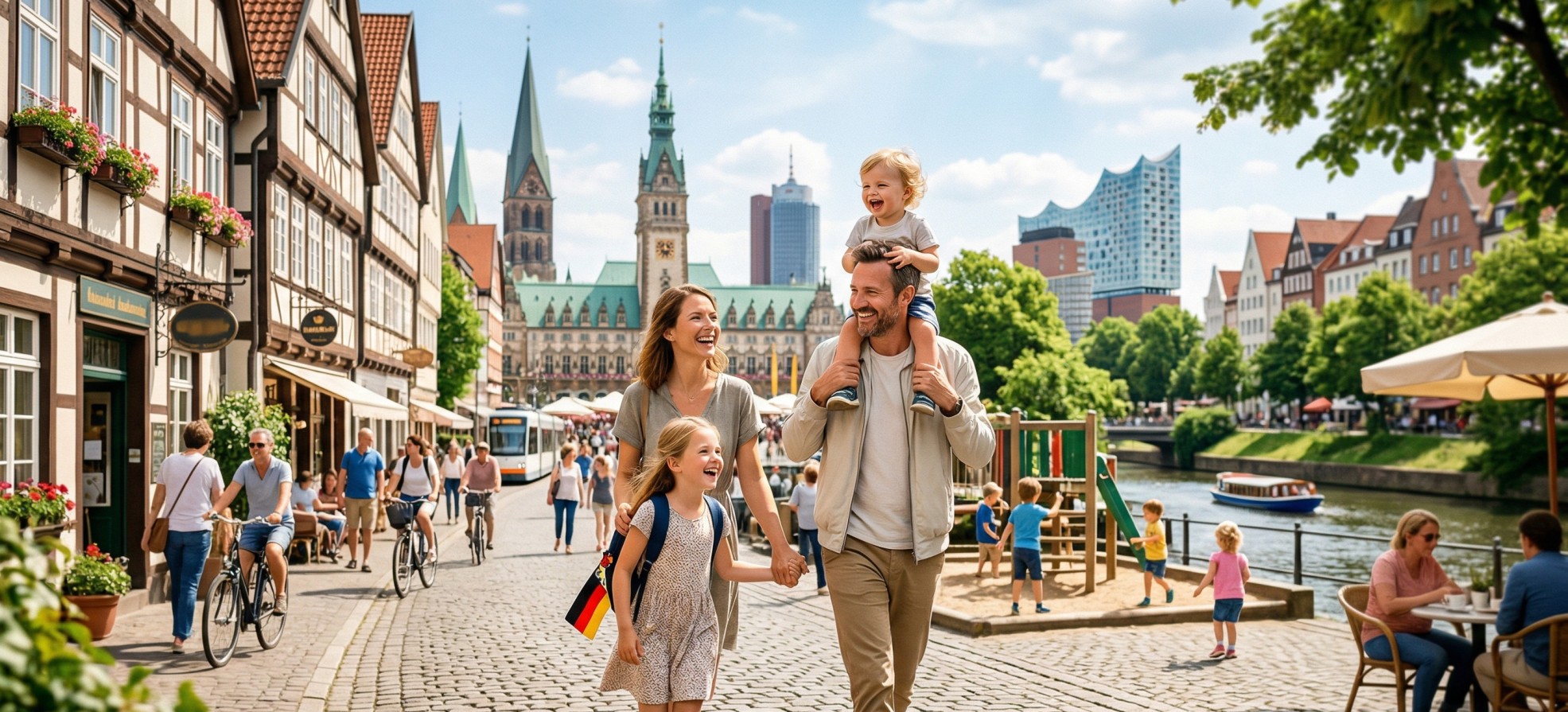
Choosing the right place to live is one of the most important decisions for families. Alongside career opportunities, factors such as childcare, school quality and leisure facilities play a crucial role.
Germany offers numerous cities that stand out for their family-friendliness. From infrastructure to cultural offerings, the right city can significantly enrich family life.
What makes a city family-friendly?
A family-friendly city is defined by various criteria. The availability of childcare places comes first. At the same time, well-equipped schools and a safe living environment are essential.
Other important factors include affordable housing costs and a healthy work-life balance. Green spaces, playgrounds and cultural activities for children round off the picture of a family-friendly city.
Good connections to public transport make everyday life considerably easier. Short distances to important facilities such as doctors, shops and leisure amenities are also of great importance.
The top 10 most family-friendly cities in Germany
1. München - Bavarian quality of life
München regularly ranks among the top spots in family rankings. The Bavarian capital scores highly with excellent schools and a high density of childcare facilities.
The city offers numerous parks and green spaces such as the Englischer Garten. The cultural offering for families is exceptionally varied, from museums to children's theatre.
However, the cost of living in München is above average. Rental prices in particular pose a challenge for many families.
2. Freiburg im Breisgau - A green oasis in the southwest
Freiburg is regarded as one of the most environmentally friendly cities in Germany. The city on the edge of the Black Forest offers a unique combination of urban living and closeness to nature.
The childcare provision rate is well above the national average. The mild climate allows for outdoor activities with the family all year round.
The university shapes the city's character and creates a lively, youthful atmosphere. The proximity to France and Switzerland opens up additional cultural opportunities.
3. Münster - Cycle-friendly university city
Münster is known as Germany's most cycle-friendly city. The flat terrain and well-developed cycle path network make the bicycle the ideal mode of transport for families.
The university provides a young, dynamic atmosphere. At the same time, the city offers a high quality of life with plenty of green spaces and cultural attractions.
The crime rate is low, which is an important safety factor for families. Childcare provision is well developed and the schools have a good reputation.
4. Heidelberg - Romantic university city
Heidelberg combines historic charm with modern family amenities. The city on the Neckar is internationally known for its university and picturesque townscape.
The education landscape is excellent, with many renowned schools and educational institutions. The cultural offering for families is diverse and of high quality.
Its location between Frankfurt and Stuttgart offers career flexibility. The surrounding countryside is ideal for family outings and hikes.
5. Erlangen - Modern technology city
Erlangen is shaped by the Friedrich-Alexander-Universität and major technology companies such as Siemens. This combination creates an innovative and family-friendly location.
The city invests heavily in education and childcare. Jobs in the technology sector offer families financial security.
Despite its proximity to Nürnberg, Erlangen has retained its own, quieter character. Quality of life is high, while living costs remain moderate.
Criteria for assessing family-friendly cities
Several factors play a role when choosing a family-friendly city:
- Childcare: availability of nursery places and opening hours
- Education: quality of schools and further education institutions
- Safety: crime rate and road safety
- Housing costs: rental and purchase prices for family-suitable housing
- Leisure facilities: parks, playgrounds, cultural venues
- Transport links: public transport and cycling infrastructure
- Healthcare: availability of paediatricians and hospitals
- Job market: employment opportunities and work-life balance
Focus on northern German family cities
Hamburg - Maritime flair and city living
As Germany's second-largest city, Hamburg offers urban living with a maritime character. The Hanseatic city scores highly with an excellent education landscape and diverse cultural offerings.
The many waterways and green spaces create a high quality of life. At the same time, the job market offers a wide range of opportunities for parents.
Childcare provision is well developed, though the cost of living in the Hanseatic city is above average. Public transport is well developed and family-friendly.
Lübeck - A Hanseatic city with charm
Lübeck combines a historic atmosphere with modern family amenities. The UNESCO World Heritage city offers a manageable size alongside good infrastructure.
Its proximity to the Baltic Sea opens up a wide range of leisure opportunities for families. Living costs are significantly lower than in Hamburg or München.
Educational institutions are good, even if the offering is not as diverse as in larger cities. In return, families benefit from short distances and a more relaxed atmosphere.
Southern German alternatives for families
Stuttgart - Car city with a family tradition
Stuttgart is shaped by the automotive industry and offers correspondingly good career prospects. The city invests heavily in education and childcare.
Its location in a basin creates a distinctive townscape but can also lead to air quality issues. The surrounding vineyards and the Black Forest offer opportunities for relaxation.
The cultural offering is diverse, ranging from the Staatsoper to children's museums. Public transport is well developed and designed with families in mind.
Karlsruhe - A fan-shaped city with a future
Karlsruhe stands out for its unique urban planning. The "fan city" offers short distances and easy orientation.
The Technical University and various research institutions shape the city. This creates an innovative, education-focused environment for families.
Childcare provision is well developed and the schools have a good reputation. Living costs are moderate, while quality of life is high.
Practical tips for moving with a family
Moving to a new city with your family requires careful planning. Visit potential places to live at different times of day to get a realistic picture.
Find out about childcare places and school registrations early on. Many popular facilities have waiting lists, which require long-term planning.
Use online platforms and local Facebook groups to network with other families. Exchanging views with people who know the area well can provide valuable insights.
Check the transport links to your workplace and important facilities. The availability of doctors, especially paediatricians, should also factor into your decision.
Future prospects for family cities
German cities are increasingly investing in family-friendly infrastructure. Digitalisation in schools and administration will further simplify everyday life for families.
Sustainability and environmental protection are becoming increasingly important. Cities with green concepts and good air quality are becoming more attractive to families.
The growing flexibility of working life through home working opens up new possibilities. Families can increasingly consider smaller, more affordable cities without suffering career disadvantages.
For more information on life in German cities and further valuable tips, see our comprehensive Life in Germany City Guide – The Ultimate Guide to Living, Costs and Quality of Life.
Choosing the right city for your family is a long-term decision. Take the time to thoroughly consider the various options and involve all family members in the decision.
Also read: Life in Germany City Guide – The Ultimate Guide to Living, Costs and Quality of Life
Jonas Hoffmann