Deutschland
Brandenburg Gate Berlin
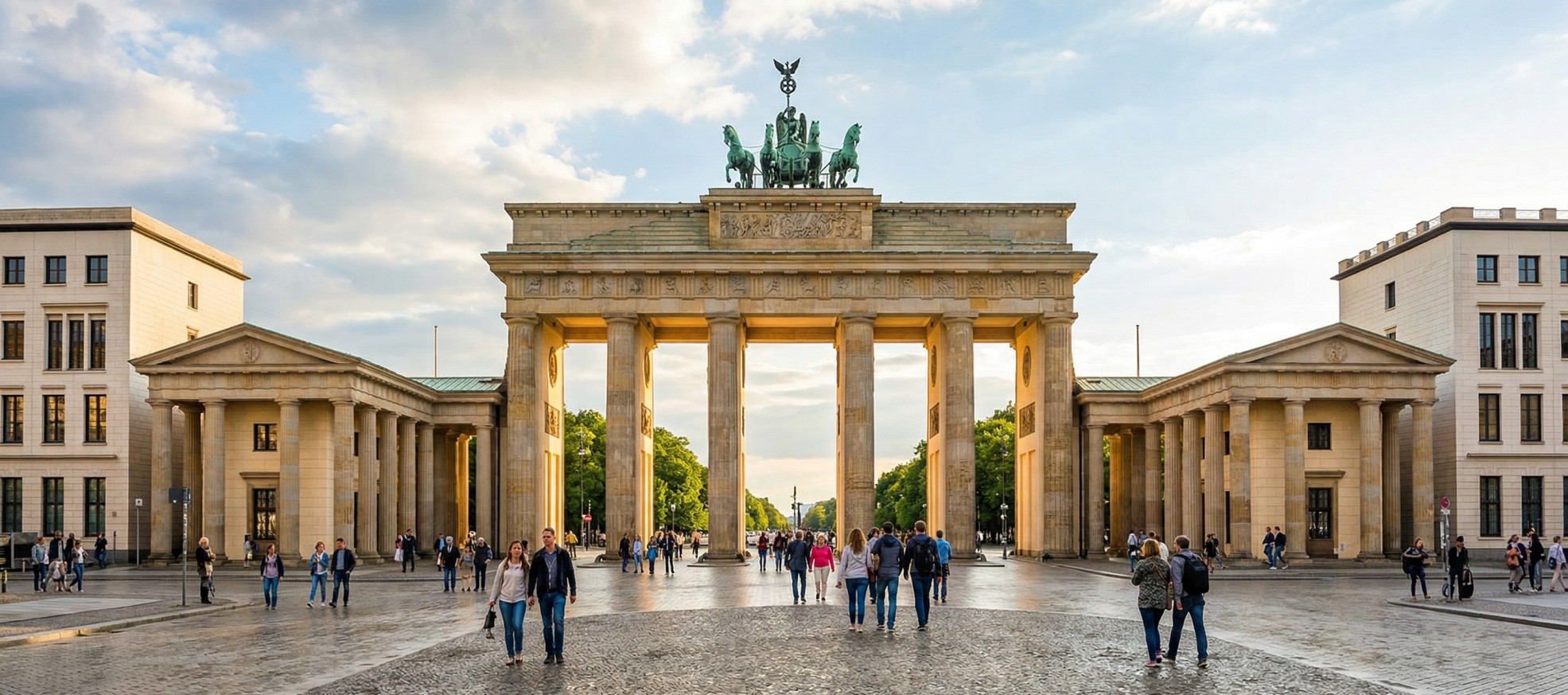
The Brandenburg Gate stands majestically on Pariser Platz and is without doubt Berlin's most famous landmark. As a symbol of Germany's division and later its reunification, this monumental structure has witnessed a turbulent history and today draws millions of visitors from all over the world.
No visit to Berlin is complete without seeing the Brandenburg Gate. It's the perfect starting point for exploring the German capital and offers countless photo opportunities. In our comprehensive Berlin sights travel guide, you'll find further highlights of the city.
History of the Brandenburg Gate – From customs post to symbol of freedom
The Brandenburg Gate was built between 1788 and 1791 to designs by Carl Gotthard Langhans, commissioned by King Friedrich Wilhelm II. As one of the first neoclassical buildings in Germany, Langhans drew inspiration from the Propylaea of the Athenian Acropolis.
Originally, the gate served as a grand terminus for the street Unter den Linden and as a customs post. With its five archways, it was the largest of Berlin's original 18 city gates. The central, widest archway was reserved exclusively for the royal family.
During the period of German division from 1961 to 1989, the Brandenburg Gate stood in the restricted zone between East and West Berlin. No one could pass through it – it became a symbol of Germany's division. After the fall of the Berlin Wall on 9 November 1989, it became an emblem of German unity and freedom.
Architecture and Quadriga – A masterpiece of neoclassicism
The Brandenburg Gate impresses with its neoclassical architecture and monumental scale. Standing 26 metres high, 65.5 metres wide and 11 metres deep, it dominates Pariser Platz.
The structure is built from sandstone and is supported by twelve Doric columns, forming five passageways. Particularly striking are the reliefs on the inner sides of the columns, depicting scenes from Greek mythology.
The absolute highlight is the Quadriga at the top of the gate. This sculpture depicts the Roman goddess of victory, Victoria, on a chariot drawn by four horses. The original Quadriga was created in 1793 by Johann Gottfried Schadow. After several instances of damage and removal by Napoleon, a reconstruction from 1958 now stands atop the gate.
Visiting the Brandenburg Gate and nearby attractions
The Brandenburg Gate is accessible around the clock and admission is free. For the best visit, keep the following points in mind:
Best times to visit:
- Early morning (before 9am): Fewer tourists, better photo opportunities
- Evenings at sunset: Romantic lighting
- At night: Spectacular illumination of the gate
Photo spots and perspectives:
- Directly in front of the gate on Pariser Platz
- From the Reichstag (especially from the dome's roof)
- From the street Unter den Linden
- From the side, for architectural details
Inside the Brandenburg Gate you'll also find the ‘Room of Silence’, a place for reflection open daily from 10am to 6pm. Here, visitors can find a moment of calm amid the hustle and bustle.
Surroundings and nearby attractions
The location of the Brandenburg Gate makes it an ideal starting point for further sightseeing:
Pariser Platz:
- Hotel Adlon Kempinski (legendary luxury hotel)
- Akademie der Künste
- French Embassy
- US Embassy
Sights within walking distance:
- Reichstag (5 minutes)
- Holocaust Memorial (3 minutes)
- Potsdamer Platz (10 minutes)
- Unter den Linden with the State Opera House and Humboldt University (5 minutes)
- Tiergarten (directly adjacent)
The adjoining Tiergarten invites you to enjoy relaxed strolls and offers a green oasis in the heart of the city. Here you'll also find the Victory Column, another significant Berlin landmark.
Events at the Brandenburg Gate
The Brandenburg Gate is not just a historic monument but also the setting for major events:
Regular events:
- New Year's Eve party: Germany's biggest New Year's Eve celebration, with up to a million visitors
- Marathon: Finish line of the Berlin Marathon
- Concerts and festivals during the summer months
- Political rallies and state receptions
Historic moments:
- 1987: Ronald Reagan's famous speech, ‘Tear down this wall!’
- 1989: Opening after the fall of the Wall
- 2002: Reopening after a two-year restoration
Especially during football World Cups, the Brandenburg Gate becomes the centre of public viewing events, drawing hundreds of thousands of fans.
Practical information for your visit
Getting there and transport links:
- S-Bahn: S1, S2, S25 to Brandenburger Tor
- U-Bahn: U55 to Brandenburger Tor
- Bus: Routes 100, 200, TXL
- On foot: Central location, easily reached from most hotels in Mitte
Parking options: Direct parking spaces at the Brandenburg Gate are very limited. Recommended options include:
- Parkhaus Adlon (paid car park)
- Underground car park at Potsdamer Platz
- Park and Ride at S-Bahn stations outside the city centre
Accessibility: The Brandenburg Gate is accessible to wheelchair users. The wide passageways allow for easy access, and there are accessible toilets nearby.
Safety and tips:
- Keep an eye on your valuables in the tourist area
- Watch out for pickpockets in large crowds
- Respect the historical significance of the site
- Make use of official tourist information at Pariser Platz
Souvenirs and shopping: Around the Brandenburg Gate you'll find numerous souvenir shops. Particularly recommended is the official Berlin Shop, with authentic products related to the city's history.
The Brandenburg Gate is more than just a photo opportunity – it's a living symbol of German history and a must-see for every visitor to Berlin. Allow plenty of time to soak up the atmosphere and appreciate the historical significance of this unique landmark. In our complete Berlin travel guide, discover further fascinating sights of the German capital.
Lena Weber