Deutschland
Living in Hamburg: Housing, Costs and Quality of Life
Living in Hamburg: Everything About Housing, Costs and Quality of Life
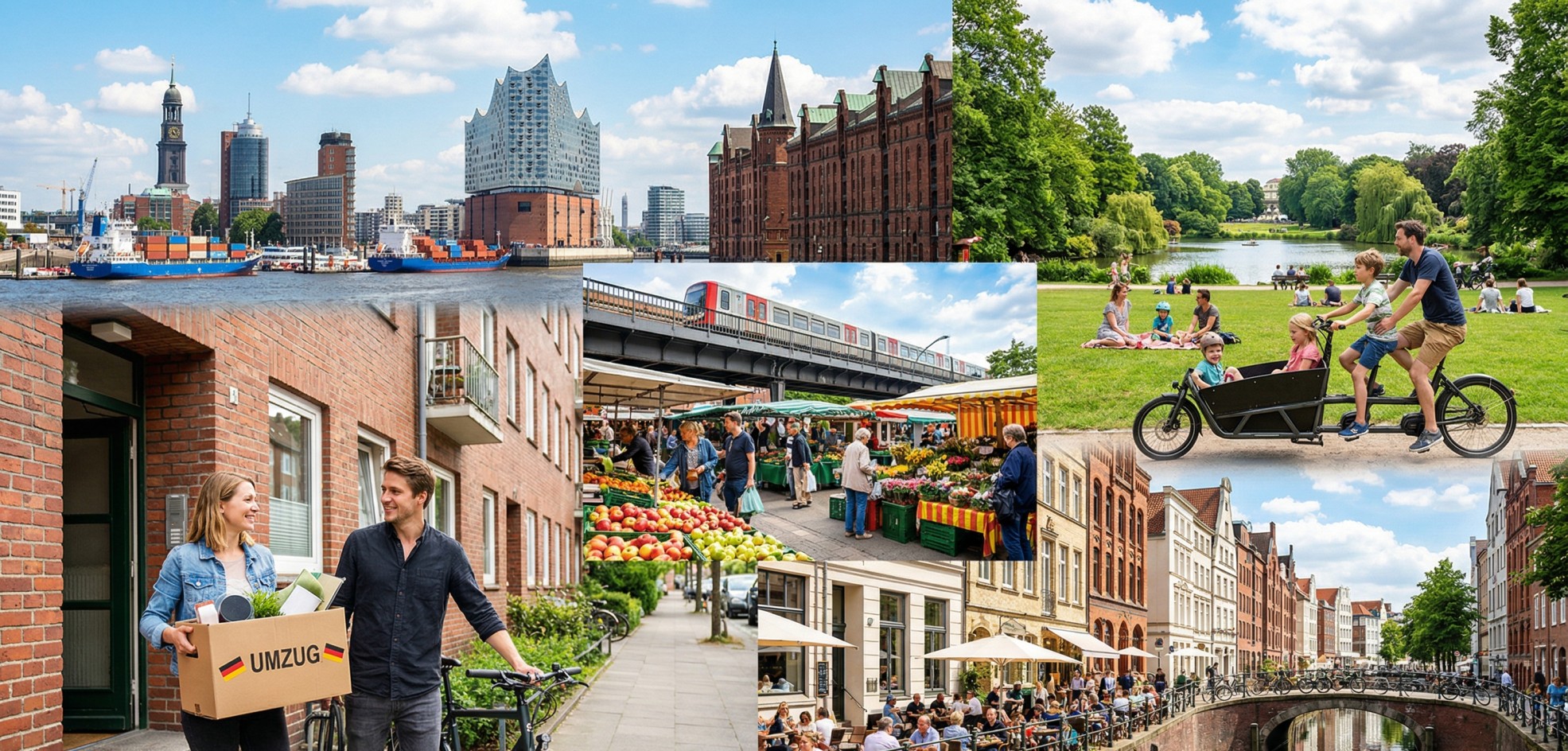
Hamburg, the pearl of the north, attracts thousands of new residents every year. The Hanseatic city offers a unique combination of maritime charm, a buzzing nightlife and economic opportunities. As Germany's second-largest city, Hamburg combines urban living with northern German ease.
The city on the Elbe is considered one of the most liveable metropolises in Germany. With its diverse districts, famous harbour and vibrant culture scene, Hamburg has something to suit every lifestyle. This comprehensive guide will help you understand all the key aspects of living in Hamburg.
Living in Hamburg: Districts and the Housing Market
Hamburg's housing market is characterised by high demand and correspondingly high prices. Rents vary considerably depending on the district and location. Particularly popular areas such as the Schanze, Ottensen or Prenzlauer Berg command top prices.
Finding a flat requires patience and good preparation. Online portals such as ImmobilienScout24 or WG-Gesucht are popular starting points. Many landlords expect a complete application folder including proof of income and a Schufa credit check.
Hamburg's most popular districts:
- Altona: Trendy and multicultural with lots of restaurants and bars
- Schanze: A creative, alternative hotspot with plenty of character
- Eppendorf: An upmarket residential area with Art Nouveau architecture
- Ottensen: Family-friendly with plenty of green spaces
- Winterhude: Quiet and green, ideal for families
- Hafencity: Modern and central, but expensive
- St. Georg: International and lively
- Blankenese: Exclusive, set on the Elbe slopes
Cost of Living in Hamburg
The cost of living in Hamburg is above the German average, but below that of München or Frankfurt. A one-bedroom flat costs an average of 700-1000 euros including bills, with larger flats costing correspondingly more.
Alongside rent, there are other monthly costs to factor in. Groceries in Hamburg are around 10-15% more expensive than the national average. Restaurants and cafés sit in the higher price bracket, especially in touristy areas.
Average monthly costs for singles:
- Rent (one-bedroom flat): 700-1000 euros
- Utility bills: 150-200 euros
- Groceries: 300-400 euros
- Public transport: 85 euros (HVV card)
- Leisure activities: 200-300 euros
- Miscellaneous: 150-250 euros
Total costs: 1,585-2,235 euros per month
Job Market and Career Opportunities
Hamburg is a key economic hub with diverse job opportunities. The harbour, the third-largest in Europe, provides jobs in logistics and trade. The media industry is well represented, with publishers, advertising agencies and production companies.
The aerospace industry, with Airbus as the largest employer, shapes the north of the city. The IT sector is also growing steadily, particularly in e-commerce and start-ups. The average gross salary is around 45,000-55,000 euros a year.
Popular job portals include StepStone, Xing and local listings from the Hamburger Abendblatt. Networking events and industry meet-ups take place regularly. The unemployment rate is below the national average.
Public Transport and Mobility
The HVV network (Hamburger Verkehrsverbund) reliably connects the city and surrounding areas. The U-Bahn, S-Bahn, buses and ferries cover the entire city area. Services run frequently even in the evenings and at weekends.
A monthly ticket covering all zones costs 85 euros, with students paying around 60 euros. Many people in Hamburg use bikes as an additional means of transport. The cycle network is being continually expanded, although there's still room for improvement.
Car-sharing services such as Car2Go or DriveNow complement public transport. Owning a car is often impractical and expensive in the city centre. Parking spaces are scarce and chargeable.
Culture and Leisure Activities
Hamburg offers a rich cultural programme to suit all tastes. The State Opera, the Schauspielhaus and the Elbphilharmonie all enjoy international acclaim. Nightlife is centred on St. Pauli, home to the famous Reeperbahn.
The Speicherstadt and the modern Hafencity are perfect for strolling. Numerous museums, such as the Kunsthalle or the Maritime Museum, offer plenty of variety. Parks such as Planten un Blomen or the Stadtpark are popular spots to relax.
Hamburg's cultural highlights:
- Elbphilharmonie: An architectural masterpiece and concert hall
- Miniatur Wunderland: The world's largest model railway
- Fischmarkt: A Sunday morning tradition since 1703
- Speicherstadt: A UNESCO World Heritage Site
- Reeperbahn: An entertainment district with clubs and bars
- Alster: An inland lake for water sports and walks
- Schanzenviertel: Alternative culture and street art
- Planten un Blomen: A botanical garden in the heart of the city
Education and Childcare
Hamburg has a well-developed education system. Nursery places are in high demand, so early registration is essential. From a child's first birthday, there's a legal right to a childcare place.
The University of Hamburg and the HAW (University of Applied Sciences) attract students from across Germany. International schools and private educational institutions are also available. The school system follows a two-tier model with Stadtteilschulen (district schools) and Gymnasien (grammar schools).
For families, Hamburg offers plenty of child-friendly activities. Playgrounds, swimming pools and sports clubs are all easily accessible. The "Hamburg Card" provides discounts at many family attractions.
Healthcare and Medical Services
Medical care in Hamburg is excellent. The University Medical Centre Hamburg-Eppendorf (UKE) is one of the best hospitals in Germany. Specialists and GPs are available throughout the city.
Getting an appointment at popular practices can take several weeks. Online portals such as Doctolib make it easier to find doctors and book appointments. Emergency care is available around the clock.
There are pharmacies in every district, many of which offer an emergency service. Health insurance provision is extensive, with both statutory and private insurers having local branches. Many providers run prevention schemes and health courses.
Tips for Newcomers
Getting started in Hamburg is easier with good preparation. You should register with the Bürgeramt (residents' registration office) within two weeks of moving. A bank account makes finding a flat considerably easier.
Language skills are important, even though many people in Hamburg speak English. You'll still occasionally hear Plattdeutsch (Low German), especially among older residents. The northern German mentality tends to be reserved, but warm-hearted.
You can make social contacts through clubs, language courses or hobby groups. Apps such as Meetup or Facebook groups help with networking. Hamburg's weather calls for weatherproof clothing - a rain jacket and sturdy shoes are a must.
This article is part of our comprehensive guide Living in Germany City – The Ultimate Guide to Housing, Costs and Quality of Life. There you'll find further valuable information about living in major German cities and practical tips for your move.
Also read: Living in Germany City – The Ultimate Guide to Housing, Costs and Quality of Life
Stefan Schmidt