Deutschland
Quality of Life Comparison: Germany's Best Cities 2024
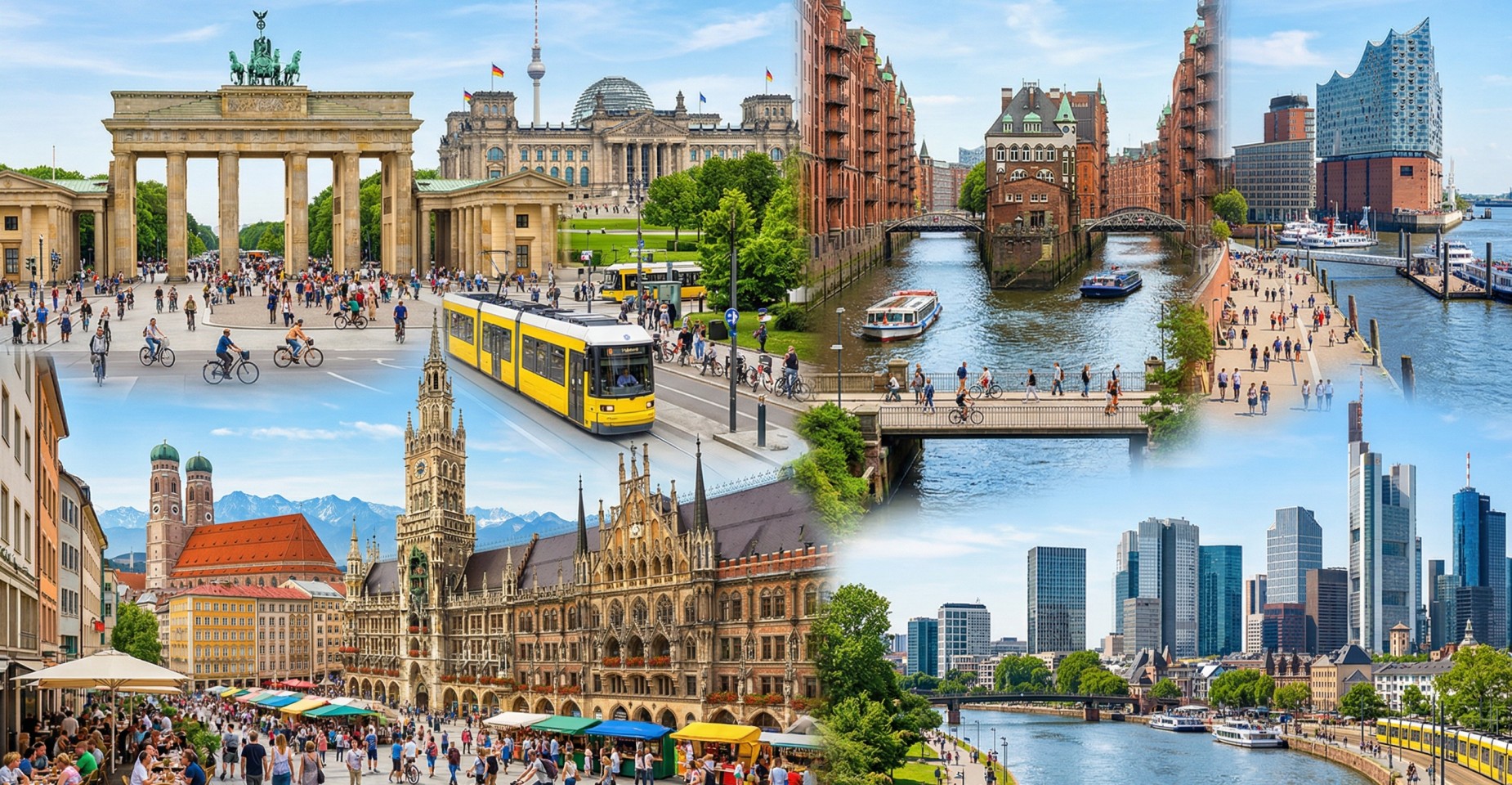
Quality of Life City Comparison: The Best German Cities 2024
Choosing the right city for your new home is one of the most important life decisions. Germany offers a wide range of attractive cities with different strengths and characteristics. Our comprehensive quality of life city comparison helps you find the perfect city for your individual needs.
The quality of life in a city is determined by various factors: housing costs, the job market, infrastructure, education, leisure options and environmental quality. These aspects vary considerably between German cities and have a significant impact on your day-to-day life.
Top cities for quality of life in Germany
München: Bavarian lifestyle meets economic strength
München regularly tops the quality of life rankings. The Bavarian capital offers a unique combination of tradition and modernity. With its strong economy, particularly in technology and finance, München attracts skilled professionals from all over the world.
The city scores highly for excellent infrastructure, a comprehensive public transport network and its proximity to the Alps. However, the cost of living is among the highest in Germany. The average cold rent is around 18 euros per square metre.
Hamburg: Maritime atmosphere and media hub
Hamburg impresses with its maritime flair and its role as a media hub. The Hanseatic city offers a high quality of life thanks to its green parks, proximity to the North Sea and a rich cultural scene. The job market is diverse, with strong sectors in logistics, media and renewable energy.
Housing costs are moderate compared to München, averaging 12-15 euros per square metre. Hamburg is particularly appealing to families thanks to good schools and plenty of leisure opportunities along the Elbe.
Frankfurt am Main: Financial hub with international flair
Frankfurt am Main is Germany's financial centre and offers excellent career opportunities. The city stands out for its international atmosphere, short distances and one of Europe's most important airports. Average salaries are well above the German average.
The cost of living is high, but this is often offset by good earning potential. Frankfurt offers a compact city centre with short distances to work, shops and leisure activities.
Factors for the quality of life city comparison
Housing costs and the property market
Housing costs vary considerably between German cities. While München and Frankfurt are among the most expensive, cities such as Leipzig or Dresden still offer affordable housing. When making comparisons, you should consider not just the absolute rent level but also how it relates to local salaries.
An important aspect is the availability of housing. In popular cities, finding a flat can take several months. So allow plenty of time for your search and find out about local peculiarities of the property market.
Job market and career opportunities
The local job market is a decisive factor for quality of life. Different cities have different sector strengths:
- München: Technology, automotive, finance
- Hamburg: Media, logistics, renewable energy
- Frankfurt: Finance, consulting, aviation
- Berlin: Start-ups, technology, the creative industries
- Stuttgart: Automotive, mechanical engineering, high-tech
- Köln: Media, insurance, chemicals
Find out about salary structures in your sector and the availability of jobs. A higher salary can offset a higher cost of living.
Infrastructure and mobility in city comparison
Public transport
A well-developed public transport network is essential for quality of life. German cities offer varying levels of quality:
Leaders in public transport:
- München: Dense S-Bahn, U-Bahn and bus network
- Hamburg: Well-developed U-Bahn and bus system
- Berlin: Comprehensive network of U-Bahn, S-Bahn and trams
- Frankfurt: Efficient S-Bahn system with regional connections
Monthly ticket prices range from 60 to 100 euros. Many employers offer subsidies for public transport.
Digital infrastructure
A good internet connection is essential in the digital working world. Most major German cities offer widespread broadband internet. München, Hamburg and Frankfurt are particularly well equipped.
The availability of co-working spaces and the digitalisation of public services also vary between cities. Berlin and München often top the rankings here.
Education and family life in city comparison
Schools and universities
For families, education options are an important factor. Germany offers a high standard of education, but there are regional differences:
Cities with excellent education options:
- München: Excellent universities and research institutions
- Hamburg: Diverse range of higher education institutions
- Berlin: A wide choice of universities and universities of applied sciences
- Heidelberg: Traditional university city
Private and international schools are more commonly available in major cities. Costs vary considerably, with München and Frankfurt offering the most expensive options.
Childcare
The availability and quality of childcare differs between cities. North Rhine-Westphalia and Bavaria often have well-developed childcare provision. The cost of nursery places varies depending on the city and provider.
In Berlin, childcare is free from the age of one, while other cities charge fees. Plan registration early, as waiting lists are common.
Leisure and culture: what German cities have to offer
Cultural scene
German cities offer a rich cultural scene, but with different focuses:
Cultural highlights by city:
- Berlin: World-class museums, vibrant art scene
- München: Traditional and contemporary culture
- Hamburg: Maritime culture, musicals
- Köln: Art galleries, museums
- Dresden: Historic architecture, opera
- Frankfurt: Museum embankment, international art
Most cities offer culture passes or discounts for students and families.
Sport and recreation
Sporting opportunities and green spaces make a considerable contribution to quality of life. München scores highly thanks to its proximity to the Alps and the Englischer Garten. Hamburg offers watersports on the Elbe and Alster.
Berlin impresses with large parks such as the Tiergarten and a wide range of sporting facilities. Most German cities have well-developed cycle path networks and public sports facilities.
Environment and sustainability in city comparison
Air quality and environmental protection
Environmental quality is becoming increasingly important to many people. German cities have made significant progress in recent years:
Germany's most environmentally friendly cities:
- Freiburg: A pioneer in renewable energy
- München: High air quality, plenty of green spaces
- Hamburg: European Green Capital 2011
- Münster: The most cycle-friendly city
Many cities have introduced low-emission zones and are promoting electric mobility. Particulate matter pollution has fallen in most major German cities.
Green spaces and local recreation
Parks and green spaces are important for quality of life. München leads with 17.9 square metres of green space per resident. Hamburg and Berlin follow with similarly high figures.
Proximity to recreational areas varies considerably. While München has the Alps on its doorstep, Hamburg offers the North Sea. Berlin scores well with its Brandenburg lake district.
Cost-benefit analysis for your move
Total cost of living
When assessing quality of life, you should take all cost factors into account:
Main cost items in city comparison:
- Rent and utility costs (30-40% of income)
- Groceries and daily necessities
- Transport and mobility
- Leisure and culture
- Childcare and education
Create a detailed budget based on your personal needs. Also take into account hidden costs such as higher insurance premiums in major cities.
Return on investment
Moving to a more expensive city can pay off through higher salaries and better career opportunities. Don't just calculate the short-term costs — also consider the long-term benefits.
You should also take into account soft factors such as quality of life, work-life balance and personal satisfaction. These are hard to quantify, but are crucial to your wellbeing.
Conclusion: The right city for your needs
The perfect quality of life city comparison depends on your individual priorities. While München and Frankfurt offer high salaries, other cities score points with lower living costs or particular advantages.
Create a personal list of priorities featuring the factors that matter most to you. Visit potential cities before moving and talk to locals about their experiences.
Remember that cities are constantly evolving. What holds true today may have changed in a few years' time. Stay flexible and open to new possibilities.
For a detailed analysis of all aspects of city living in Germany, visit our Living in Germany City Guide – The Ultimate Guide to Housing, Costs and Quality of Life. There you'll find comprehensive information on all the key topics relating to life in German cities.
Also read: Living in Germany City Guide – The Ultimate Guide to Housing, Costs and Quality of Life
Michael Wolf