Deutschland
Rent Prices Prenzlauer Berg 2026: Costs & Housing Market
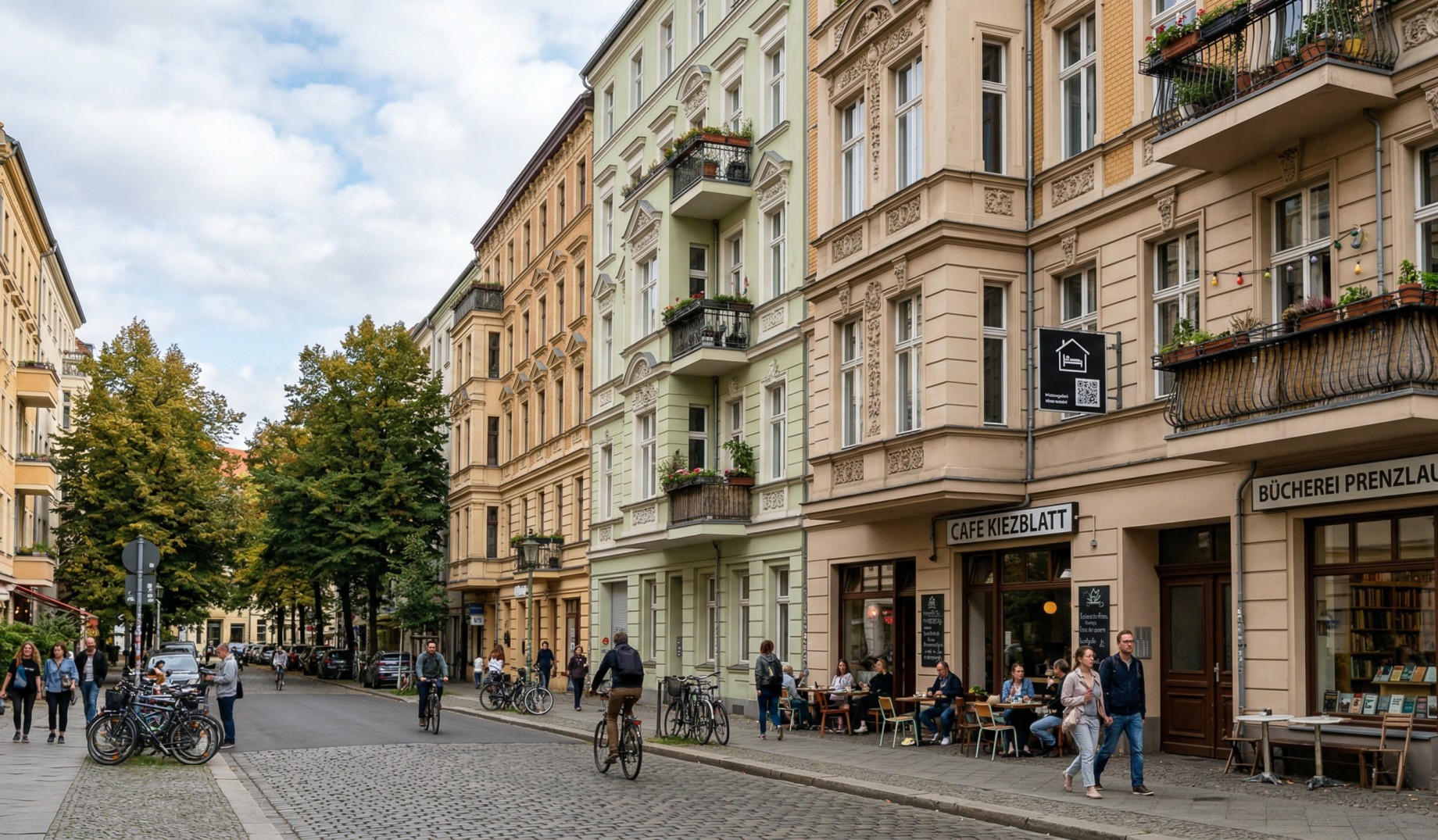
Prenzlauer Berg has evolved from an alternative, bohemian neighbourhood into one of Berlin's most expensive districts. This former insider tip in the northeast of the city, now part of the Pankow borough, attracts families, creatives and well-earning professionals alike.
The combination of historic buildings, a vibrant cultural scene and excellent infrastructure makes the district particularly appealing. At the same time, high demand is driving asking rents ever higher – and 2026 is no exception.
Current rental prices in Prenzlauer Berg at a glance
Rental prices in Prenzlauer Berg are significantly above the Berlin average. Anyone looking to sign a new lease should expect the following asking rents:
Typical asking rents per square metre (cold rent, rough guide):
- 1-bedroom flat: around 18 to 24 euros/m²
- 2-bedroom flat: around 16 to 21 euros/m²
- 3-bedroom flat: around 15 to 20 euros/m²
- 4 bedrooms or more: around 14 to 19 euros/m²
Renovated period flats with high ceilings, ornate plasterwork and a balcony are especially sought-after. These can fetch top prices well above 20 euros per square metre, with furnished flats costing even more. Existing tenants on older contracts, by contrast, often pay only half as much – the local rent index shows considerably lower comparative rents for the district.
Price trends over recent years
Prenzlauer Berg has undergone a dramatic transformation. As recently as around 20 years ago, the district was considered an affordable alternative to Mitte or Charlottenburg; today it's one of the city's most expensive places to live.
Asking rents have risen continuously since 2010. The increase was particularly sharp between 2015 and 2020, as numerous investors flocked to the district and many rental flats were converted into owner-occupied properties.
The rent brake and Berlin's rent cap – struck down by the Federal Constitutional Court in 2021 – temporarily slowed this development. Once the rent cap ended, asking rents rose sharply again. Nevertheless – or perhaps because of this – Prenzlauer Berg remains one of Berlin's most expensive districts.
Popular neighbourhoods and their rental prices
Prenzlauer Berg is divided into several distinct neighbourhoods, each with its own character and price structure:
Kollwitzkiez (the most expensive area):
- Asking rents: around 19 to 25 euros/m²
- Particularly family-friendly
- Close to Kollwitzplatz, the weekly market and the Wasserturm
Helmholtzkiez:
- Asking rents: around 17 to 22 euros/m²
- Lively nightlife around Helmholtzplatz
- Plenty of restaurants, cafés and bars
Bötzowviertel:
- Asking rents: around 16 to 20 euros/m²
- Quieter and less touristy, right by the Volkspark Friedrichshain
- Good transport links via the tram
Winsviertel and Gleimviertel:
- Asking rents: around 15 to 20 euros/m²
- Established residential neighbourhoods with period buildings and local shops
- Close to the Kulturbrauerei, Mauerpark and Arnimplatz
Factors driving high rental prices in Prenzlauer Berg
Several factors are pushing rental prices up in Prenzlauer Berg. The central location between Mitte and Friedrichshain makes the district especially attractive.
Excellent infrastructure, including the U2 line, the Ringbahn and numerous tram lines, allows for quick connections to every part of the city. At the same time, Mauerpark, Kollwitzplatz, the Kulturbrauerei and the Volkspark Friedrichshain all contribute to a high quality of life.
Key factors behind high rents:
- Central location and good transport links
- Historic period buildings, largely renovated
- Family-friendly atmosphere with plenty of nurseries, schools and playgrounds
- Rich cultural offering and dining scene
- Limited housing availability, with hardly any new-build space
- High demand from international professionals and well-earning workers
Flat-hunting in Prenzlauer Berg: tips and strategies
Flat-hunting in Prenzlauer Berg requires patience and the right approach. The market is fiercely competitive, and good flats are often snapped up within a few hours.
Responding quickly to listings is crucial. Complete application documents and a convincing cover letter significantly improve your chances.
Tips for a successful flat search:
- Set up search alerts on all relevant portals
- Activate your network and make use of personal contacts
- Offer flexible move-in dates
- Have your Schufa credit report, proof of income and rent debt clearance certificate ready
- Attend viewings as soon as possible
- Set realistic price expectations
- Enquire with housing cooperatives that have properties in Prenzlauer Berg
New builds vs. period buildings: price differences
Period buildings from the Gründerzeit era dominate the streetscape in Prenzlauer Berg – the district is considered one of Germany's largest contiguous Gründerzeit quarters. New-build projects are rare and correspondingly expensive.
Period flats often offer more charm, with high ceilings, ornate plasterwork and wooden flooring. However, heating costs and renovation needs can be higher.
New-build flats score points with modern fittings and energy efficiency. However, cold rents are often several euros per square metre higher than for comparable period properties – especially as new builds constructed after October 2014 are exempt from the rent brake.
Outlook: rental price trends in the coming years
Experts expect asking rents in Prenzlauer Berg to keep rising, albeit at a slower pace. The rent brake, extended until the end of 2029, and Berlin's rent cap – limiting increases to 15 percent over three years – will restrict rent rises on existing contracts.
At the same time, demand remains high while supply stays limited. Moderate annual increases in the low single digits are considered realistic.
The trend towards smaller flats and shared flat rooms is likely to continue. Families are increasingly moving out to Pankow, Weißensee or more affordable outer districts.
Alternatives to Prenzlauer Berg
Anyone wary of the high rents in Prenzlauer Berg will find attractive alternatives in neighbouring districts. Friedrichshain offers a similar atmosphere at somewhat lower prices.
Wedding and Gesundbrunnen are becoming popular alternatives for young professionals. Pankow, Weißensee and Lichtenberg also offer good living quality at more moderate prices – to see which districts are the most affordable, check out our article on Berlin's most affordable districts. If you'd like to compare prices in the city centre, you'll find the relevant figures in our overview of rental prices in Berlin-Mitte.
Frequently Asked Questions about rental prices in Prenzlauer Berg
How high are rents in Prenzlauer Berg in 2026?
For new leases, asking rents usually range between 15 and 22 euros per square metre cold, with prices in prime locations such as Kollwitzkiez even higher. Existing rents are considerably lower.
Which neighbourhood in Prenzlauer Berg is the most expensive?
Kollwitzkiez, around Kollwitzplatz and the Wasserturm, is the most expensive, followed by Helmholtzkiez. Bötzowviertel, Winsviertel and the areas towards Pankow are somewhat cheaper.
Does the rent brake apply in Prenzlauer Berg?
Yes, it applies across the whole of Berlin. For new leases, rent may not exceed the local comparative rent by more than 10 percent – exceptions apply to new builds from 2014 onwards and extensively modernised flats.
Why is Prenzlauer Berg so expensive?
A central location, almost entirely renovated Gründerzeit buildings, plenty of green space, excellent infrastructure for families and consistently high demand paired with very little new housing are all driving up prices.
What more affordable alternatives are there nearby?
Weißensee, Pankow, Wedding, Gesundbrunnen and Lichtenberg offer similarly good connections at lower rents.
For more information on rental prices in other Berlin districts, see our comprehensive guide Living in Berlin – rental prices, districts and flat-hunting in 2026. You'll find more city guides on our Germany page.
Also worth reading: Living in Berlin – rental prices, districts and flat-hunting in 2026
Sophie Müller