Deutschland
Museum Island Berlin: UNESCO World Heritage Site
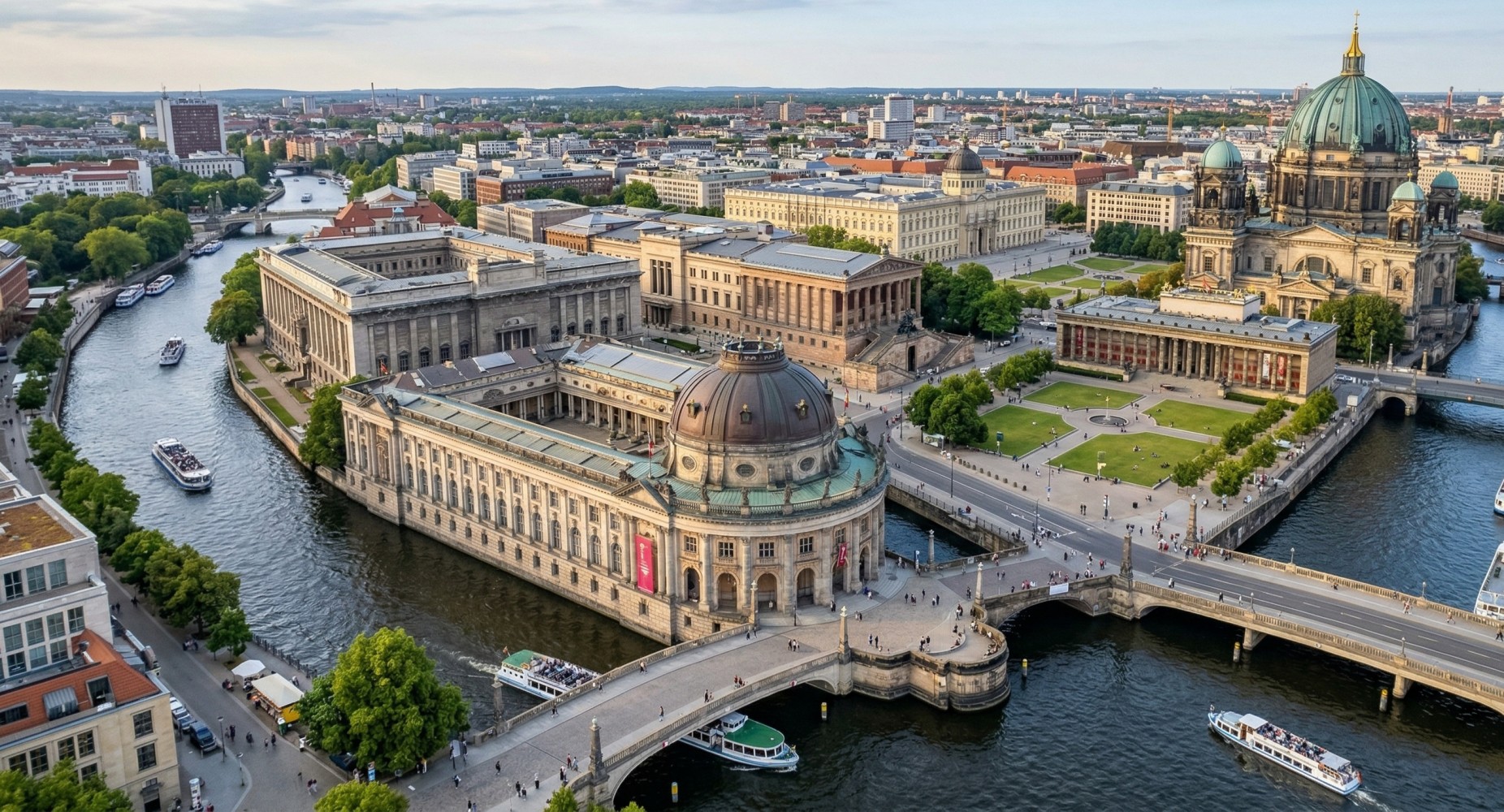
Museumsinsel Berlin is one of the most significant museum complexes in the world and has been a UNESCO World Heritage Site since 1999. On the northern tip of the Spree island in the historic centre of Berlin, you'll find five world-famous museums that together house a unique collection spanning 6,000 years of art and cultural history.
Museumsinsel is not only a cultural highlight but also an architectural masterpiece. It was built between 1830 and 1930 and embodies the vision of a "sanctuary of art and science". For visitors to the German capital, it's an absolute must and ranks among the most important Sights in Berlin – The Complete 2026 Travel Guide.
The Five Museums of Museumsinsel Berlin at a Glance
Each of the five museums on Museumsinsel has its own character and houses unique collections:
Pergamonmuseum
The island's best-known museum houses monumental architecture from antiquity. The famous Pergamon Altar, the Ishtar Gate of Babylon and the Mshatta Façade are just a few of the spectacular exhibits.
Neues Museum
Here you'll find the world-famous bust of Nefertiti, as well as the Egyptian Museum and the Papyrus Collection. The museum was masterfully reconstructed by David Chipperfield after its destruction in the Second World War.
Alte Nationalgalerie
The "Acropolis of the Arts" showcases 19th-century painting and sculpture. Works from Romanticism, Impressionism and the Berlin Secession can be admired here.
Bode-Museum
Located at the northern tip of the island, it houses the Sculpture Collection, the Museum of Byzantine Art and the Coin Cabinet. Its magnificent dome is visible from afar.
Altes Museum
The oldest museum on the island, built by Karl Friedrich Schinkel, displays the Collection of Classical Antiquities featuring Greek and Roman artworks.
Highlights and Must-See Exhibits
Museumsinsel houses some of the world's most valuable cultural treasures:
Pergamonmuseum:
- Pergamon Altar (2nd century BC)
- Ishtar Gate of Babylon (6th century BC)
- Market Gate of Miletus (2nd century AD)
Neues Museum:
- Bust of Nefertiti (1345 BC)
- Berlin Green Head (4th century BC)
- Xanten Boy (Roman bronze statue)
Alte Nationalgalerie:
- Caspar David Friedrich: "Monk by the Sea"
- Adolph Menzel: "The Iron Rolling Mill"
- Auguste Rodin: "The Thinker"
Bode-Museum:
- Donatello Collection
- Byzantine ivory works
- One of the largest coin collections in the world
Altes Museum:
- Praying Boy (Hellenistic bronze)
- Roman portraits from the imperial era
- Greek vase collection
Practical Information for Your Visit
Opening Hours and Prices
The museums are open daily except Mondays from 10:00 am to 6:00 pm, and until 8:00 pm on Thursdays. A day ticket for all five museums costs 19 euros (concessions 9.50 euros). Individual tickets are available for 12 euros.
The Museumspass Berlin offers free admission to over 30 museums for three days, priced at 29 euros. Children and young people under 18 get in free.
Getting There and Location
You can conveniently reach Museumsinsel by public transport:
- S-Bahn: Hackescher Markt (S3, S5, S7, S9)
- U-Bahn: Friedrichstraße (U6)
- Bus: routes 100, 200, 300
- Tram: M1, M12
The island lies between the districts of Mitte and Friedrichshain-Kreuzberg and is easily reachable on foot.
History and Origins of Museumsinsel
The vision of a museum island first emerged in the early 19th century under King Friedrich Wilhelm III. The first museum, today's Altes Museum, opened in 1830 based on designs by Karl Friedrich Schinkel.
Its development spanned an entire century. The Altes Museum was followed by the Neues Museum (1855), the Alte Nationalgalerie (1876), the Bode-Museum (1904) and finally the Pergamonmuseum (1930).
The Second World War left severe damage. The Neues Museum in particular was almost completely destroyed. Reconstruction work took decades, and it wasn't until 2009 that the Neues Museum reopened following its reconstruction by David Chipperfield.
Architectural Masterpieces
Each museum building is an architectural highlight in its own right:
Karl Friedrich Schinkel created a Neoclassical building of timeless elegance with the Altes Museum. The 18 Ionic columns of its entrance hall have become a landmark.
Friedrich August Stüler designed the Neues Museum and the Alte Nationalgalerie in the Neo-Renaissance style. The Alte Nationalgalerie, with its temple front, is particularly impressive.
Ernst von Ihne created the Bode-Museum in the Neo-Baroque style. Its distinctive dome and location at the tip of the Spree make it one of Berlin's most photogenic buildings.
Alfred Messel designed the Pergamonmuseum as a monumental three-wing building that fittingly presents the grand architecture of antiquity.
Visitor Tips for Museumsinsel Berlin
Planning Your Time
Plan at least a full day for Museumsinsel. Each museum deserves 2-3 hours of attention. Alternatively, you can spread your visit over several days.
Audio Guides and Tours
All museums offer audio guides in several languages. Public guided tours take place regularly and offer deeper insights into the collections.
Restaurants and Cafés
The café at the Bode-Museum offers a wonderful view of the Spree. The Pergamonmuseum has a restaurant, and you'll find numerous other dining options nearby.
Photography
Photography without flash is permitted in most areas. However, do pay attention to the signage, as photography bans may apply to certain special exhibits.
The Future of Museumsinsel: Masterplan 2030
Museumsinsel is in a state of continuous change. Masterplan 2030 envisages extensive renovations and modernisation:
James-Simon-Galerie: The new visitor centre, designed by David Chipperfield, opened in 2019 and serves as the central reception area.
Pergamonmuseum: A comprehensive renovation is planned, to be completed in several phases by 2037. Parts of the museum will remain open during this time.
Connecting passages: Underground connections between the museums are intended to improve the visitor experience and make access easier.
Digitalisation: Modern technologies and digital formats will complement the traditional museum experience.
Why Museumsinsel Berlin Is Unique
Museumsinsel Berlin is more than just a collection of museums. It's a living testament to German and European cultural history. The unique concentration of world culture in such a small space makes it one of the most significant cultural sites in the world.
The collections span an arc from the Stone Age to the 19th century. Nowhere else can visitors experience 6,000 years of human history so compactly and intensely.
Museumsinsel also embodies the vision of the Enlightenment: making education and culture accessible to all. This democratic idea still shapes the self-conception of Berlin's museums today.
Museumsinsel is essential for your visit to Berlin. It combines history with the present, education with experience, and makes the German capital one of the most important cultural travel destinations in Europe. Allow plenty of time to properly appreciate this extraordinary world-class collection.
Also read: Sights in Berlin – The Complete 2026 Travel Guide
Laura Weber